
The herbs to plant in March in the Arizona low desert are cilantro, parsley, dill and chamomile. Hold basil, Thai basil, lemongrass and epazote until April or later, when the soil and the nights warm up.
Key takeaways
- Plant cilantro, parsley, dill and chamomile in March, while soil at 4 inches is still roughly 55°F to 65°F.
- Basil and Thai basil want soil near 70°F and nights above about 50°F, which usually points to April.
- Lemongrass and epazote go in during April to May, once the soil has warmed to at least 65°F.
- A March planting of cool-season herbs gives roughly 6 to 10 weeks of harvest before heat sends them to seed.
- Water new seedlings every 2 to 3 days at first, and probe for caliche within the top 12 inches before you dig.
Why does March split herbs into two groups?
Cool-season herbs germinate in soil as cool as about 50°F, while basil and other warm-season herbs stall below roughly 65°F to 70°F. In Queen Creek, March soil at a 4-inch depth often sits between 55°F and 65°F, which suits the first group and starves the second.
A bed against a south-facing block wall can warm a week or two ahead of a shaded bed on the north side of the house. An inexpensive soil thermometer pushed 4 inches deep in the morning tells you what your bed is doing, because a 45°F night can follow an 80°F afternoon and leave the soil cold. Check it before you plant.
Cool-season herbs have a short run here. Highs reach the 90s by late April or May, and the University of Arizona Cooperative Extension publishes a vegetable planting calendar for Maricopa County that lists planting windows for the area.
Which four herbs can I plant in March?
Cilantro, parsley, dill and chamomile all go in during March, though cilantro and chamomile are close to the end of their best window. These are varieties we commonly carry in spring, and availability changes week to week and season to season, so browse our herbs, vegetables and berries department and ask us what is available.
Cilantro
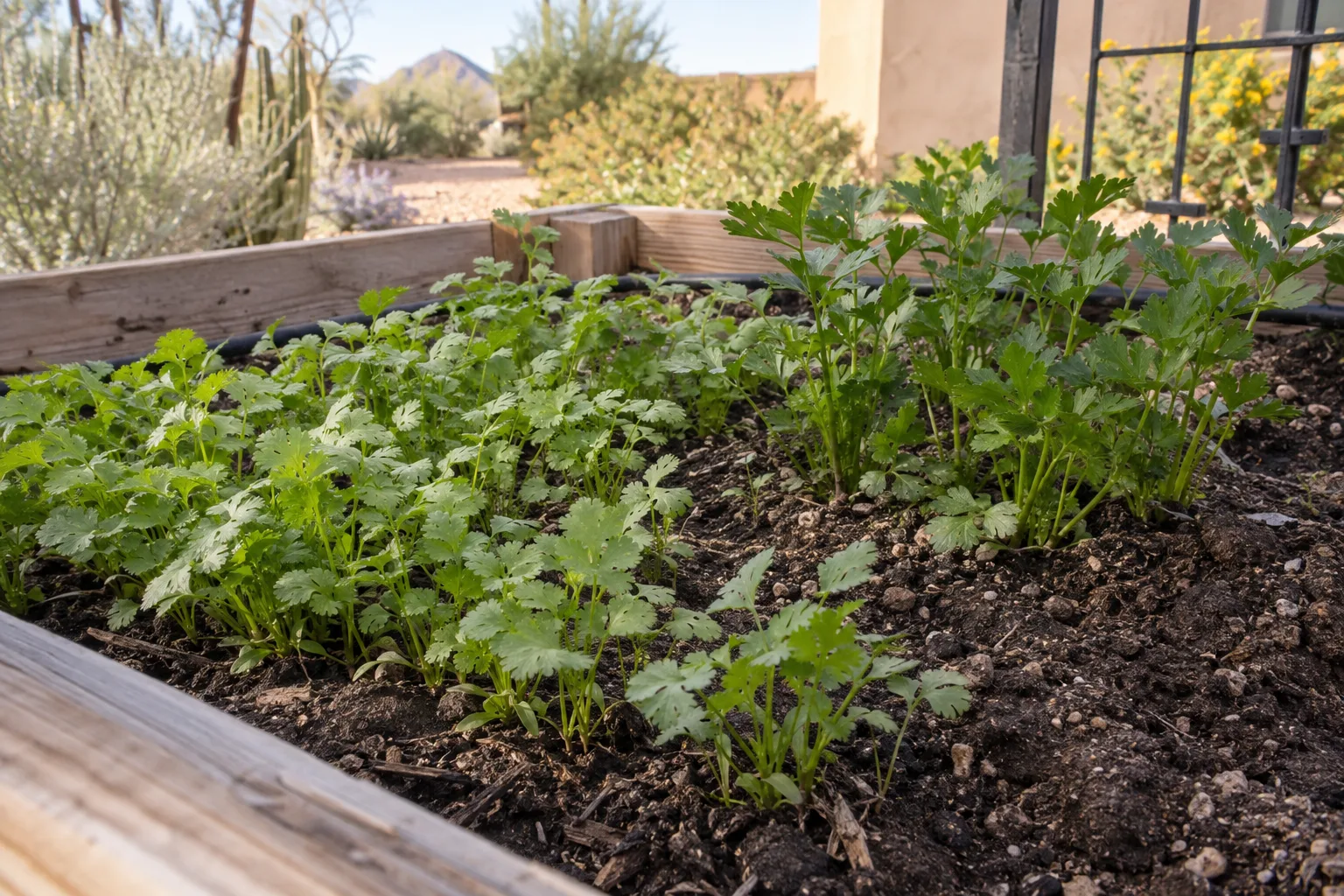
Coriandrum sativum has a long taproot that resents transplanting, so sow seed directly and thickly in early March. Sow a new row every 2 weeks. Give it afternoon shade, and cut leaves often. Once highs hold in the upper 80s to 90s, it flowers, and you can let it set seed for coriander.
Parsley
Petroselinum crispum, flat-leaf or curly, takes 2 to 4 weeks to germinate from seed, so transplants save time in March. Plants hold up through May and sometimes into early June with afternoon shade. Parsley is a biennial, so a plant that overwintered sends up flower stalks in spring, and the blooms draw pollinators and other beneficial insects.
Dill
Anethum graveolens also dislikes root disturbance, so direct-seed it by mid-March. Plants reach about 2 to 3 feet before they flower. Dill self-seeds freely, and volunteers often appear the following fall or winter. It matures on about the same schedule as cilantro, so the two are easy to harvest together.
Chamomile
German chamomile (Matricaria chamomilla) needs light to germinate, so press the seed onto the soil surface without covering it. Keep it moist for the first 1 to 2 weeks. It grows about 1 to 2 feet tall and produces small daisy-like flowers you can dry for tea. March is late for it, since fall sowing is more usual in the low desert, but a March planting can still flower in April and May before the heat ends it.

Which four herbs should wait until April or later?
Basil, Thai basil, lemongrass and epazote all stall or suffer in cool soil, so they go in during April and May. Seedlings set out in March sit yellow and stunted for weeks, and a night near freezing can kill them outright, so waiting a few weeks costs you very little.
Basil
Ocimum basilicum germinates best in soil near 70°F to 85°F and sulks when nights drop below about 50°F. Frost kills it. In most East Valley yards, April is the safe time for transplants, once nights stay in the 50s, and growth takes off quickly after that.
Thai basil
Ocimum basilicum var. thyrsiflora follows the same timing as sweet basil, with soil above 70°F. It has purple flower spikes and holds up to summer heat better than sweet basil when watered consistently. Pinch the spikes to keep leaves coming.
Lemongrass
Cymbopogon citratus is a tropical perennial that forms a clump 3 to 5 feet tall and wide. Plant it in April to May in full sun, once soil is above about 65°F. Frost burns the leaves, so cut back dead growth in late winter and expect new shoots when the soil warms.
Epazote
Dysphania ambrosioides is a warm-season annual used in Mexican cooking, growing 3 to 4 feet tall. Sow it in April once soil is above about 65°F. It tolerates heat and dry spells once established and reseeds readily, so plant it where volunteers will not crowd other beds. The flavor is strong, so start with a small amount in beans.

When does each herb go in the ground?
Each herb has a planting window, and March falls inside it for only four of the eight. The table lists the lowest soil temperature each herb tolerates for germination and the months that usually work in the East Valley, with fall the better season for the cool-season group.
| Herb | Plant in March? | Minimum soil temperature | Usual planting window |
|---|---|---|---|
| Cilantro | Yes, early | About 50°F | October to early March |
| Parsley | Yes | About 50°F | October to March |
| Dill | Yes, by mid-March | About 50°F | October to mid-March |
| Chamomile | Yes, but late | About 45°F | October to November, or early March |
| Basil | No | About 70°F | April to June |
| Thai basil | No | About 70°F | April to June |
| Lemongrass | No | About 65°F | April to May |
| Epazote | No | About 65°F | April to June |
Use it as a guide.
What should I do in the herb bed in March?
Prepare the bed, plant the cool-season herbs and set up watering before the weather turns hot. The steps take an afternoon for a small bed.
- Measure soil temperature at 4 inches in the morning. Soil at 50°F or higher is enough for cilantro, parsley and dill.
- Work 2 to 3 inches of compost into the top 6 to 8 inches. It improves drainage in heavy soil and holds moisture in sandy soil.
- Probe for caliche. If you hit a hard, whitish layer within 12 inches, break through it with a digging bar or build a raised bed at least 12 inches deep so roots stay above it.
- Choose a spot with morning sun and shade from about 2 p.m. on, because afternoon sun above 90°F hurries bolting.
- Sow or transplant, then water deeply enough to wet the top 8 inches of soil.
- Mulch with about 1 inch of straw or fine compost, and start harvesting early, taking no more than a third of a plant at a time.

If you prefer pots, a container 12 inches wide or larger holds moisture better than a small one, and you can slide it out of afternoon sun. Our pottery and planters department is a good place to look.
How often should I water herbs planted in March?
Water new seedlings and transplants every 2 to 3 days for the first 2 weeks, then stretch to every 3 to 5 days as roots deepen. Check the soil rather than the calendar. When the top 1 to 2 inches feels dry, it is time to water again.
Water in the early morning and aim at the soil. Drip irrigation delivers water to the root zone with little waste. Pots dry out faster than beds and may need daily water by April, and hard irrigation water leaves salts behind, so water until it runs from the drainage holes each time.
What should I leave alone in March?
Leave basil, lemongrass and epazote for April, and leave bolting cilantro and dill in place until they finish setting seed. Plants that flower have stopped producing good leaves, but the seed heads give you coriander and dill seed, and any seed that drops may sprout in fall.
Mint belongs in a pot, since it spreads by runners and takes over beds. Skip new cilantro or dill sowings after March, because plants that start in April bolt before they grow much.
Our gardening calendars help you plan the months ahead, and our classes and events page shows any hands-on workshops on the schedule.
Frequently asked questions
Can I start basil indoors in March?
Yes, basil seed germinates well indoors in March if you keep it at about 70°F to 80°F near a bright window or grow light. Move the seedlings outdoors in April once nights hold above about 50°F. Harden them off by setting them outside for a few hours a day over about a week, starting in shade, before planting.
Will a late frost hurt herbs planted in March?
Cilantro, parsley and dill usually tolerate a light frost, but young seedlings can be damaged in a hard freeze in the 20s. Cover plants with frost cloth or an old sheet the evening before a cold night and remove it in the morning. Basil and lemongrass need protection from any frost.
Can I grow these herbs in pots?
Yes, all eight grow in containers, though lemongrass and epazote need a large pot because they reach 3 to 5 feet. Use a pot with drainage holes, choose a light color if you can to keep roots cooler, and expect to water daily once highs pass the 90s. Cilantro and dill do best in pots at least 12 inches deep.
Will these herbs survive summer?
Basil, Thai basil, lemongrass and epazote can produce through summer when watered consistently, and lemongrass usually returns each year. Cilantro and dill finish by May or June. Parsley may linger into early summer in afternoon shade but declines when highs stay above 100°F. Chamomile fades by late spring.
When do I plant cool-season herbs again for fall?
Plant them again from about October into November, when highs fall below about 90°F. Fall plantings grow slowly in cool weather but usually last longer, giving harvests into the following spring. Sow cilantro and dill seed directly, and set out parsley as transplants.
Is planting herbs in March worth it?
Yes, if you cook with cilantro, parsley or dill and can give them morning sun and afternoon shade. March gives them about 6 to 10 weeks before heat ends the harvest, and warm-season herbs planted a month later will carry you through summer. Skip the March planting if you travel often in April and May, because seedlings need watering every few days, or if you only want basil, which belongs in April. Visit us at the nursery in Queen Creek and we will help you match herbs to the light in your yard.