
Vegetables keep growing in Arizona’s extreme heat when they are heat-adapted crops, such as okra, cowpeas and sweet potatoes, planted from late April to early June, mulched, and watered deeply. Tomatoes and lettuce are not built for July.
Key takeaways
- Okra, southern peas, sweet potatoes, Armenian cucumbers, Malabar spinach and yard-long beans keep producing when highs pass 105°F.
- Sow okra, southern peas and yard-long beans from seed between late April and May so roots are established before the hottest weeks.
- Spread 3 to 4 inches of mulch right after planting, because bare soil can get far hotter than the air.
- Water deeply at the root zone every 2 to 4 days in summer, and check 3 inches down before you water again.
- Start fall transplants in August and set them out once nights stay consistently below about 85°F.

Why do most vegetables stop producing in extreme heat?
Most garden vegetables stop setting fruit once days pass roughly 95°F and nights stay warm. Pollen dries out before it can fertilize the flower, so tomatoes, bean blossoms and many peppers drop without making fruit.
Low humidity adds to the problem. In May and June, air in the East Valley can be very dry, so leaves lose water faster than roots can replace it. Alkaline soil makes it worse by tying up iron and manganese, which shows up as yellow leaves with green veins. Plants adapted to hot climates handle all three stresses better.
How do heat-tolerant vegetables cope with 110°F?
Heat-adapted crops use a few built-in tricks. Many close the pores on their leaves during the hottest part of the afternoon to save water, then reopen them in the evening. Midday leaf droop in these plants is often a temporary response, not a sign they need more water right away.
Deep roots help too. Southern peas can send roots down a foot or more, reaching cooler, moister soil than shallow-rooted crops ever touch. Corn and amaranth use a more water-efficient form of photosynthesis, which lets them keep making sugars in heat that slows lettuce and spinach.
Which vegetables grow best in the Arizona low desert in summer?
Okra, southern peas, sweet potatoes, Armenian cucumbers, Malabar spinach and yard-long beans are the most dependable summer crops here. Peppers also hold on through summer once they are established. These are crops we commonly carry, though availability changes week to week and season to season.
Okra
Okra (Abelmoschus esculentus) is a West African native that likes heat. Sow seed from late April through May, and expect to pick pods every day or two once it is producing. Cut them young, because large pods turn woody. Its drawback is that the leaves can irritate bare skin when you harvest.
Southern peas
Southern peas (Vigna unguiculata), also sold as black-eyed or crowder peas, flower and set pods through summer heat and tolerate poor soil. Sow from late April to early June. They are low-maintenance, but the vines sprawl, so give them room or a short trellis.
Sweet potatoes
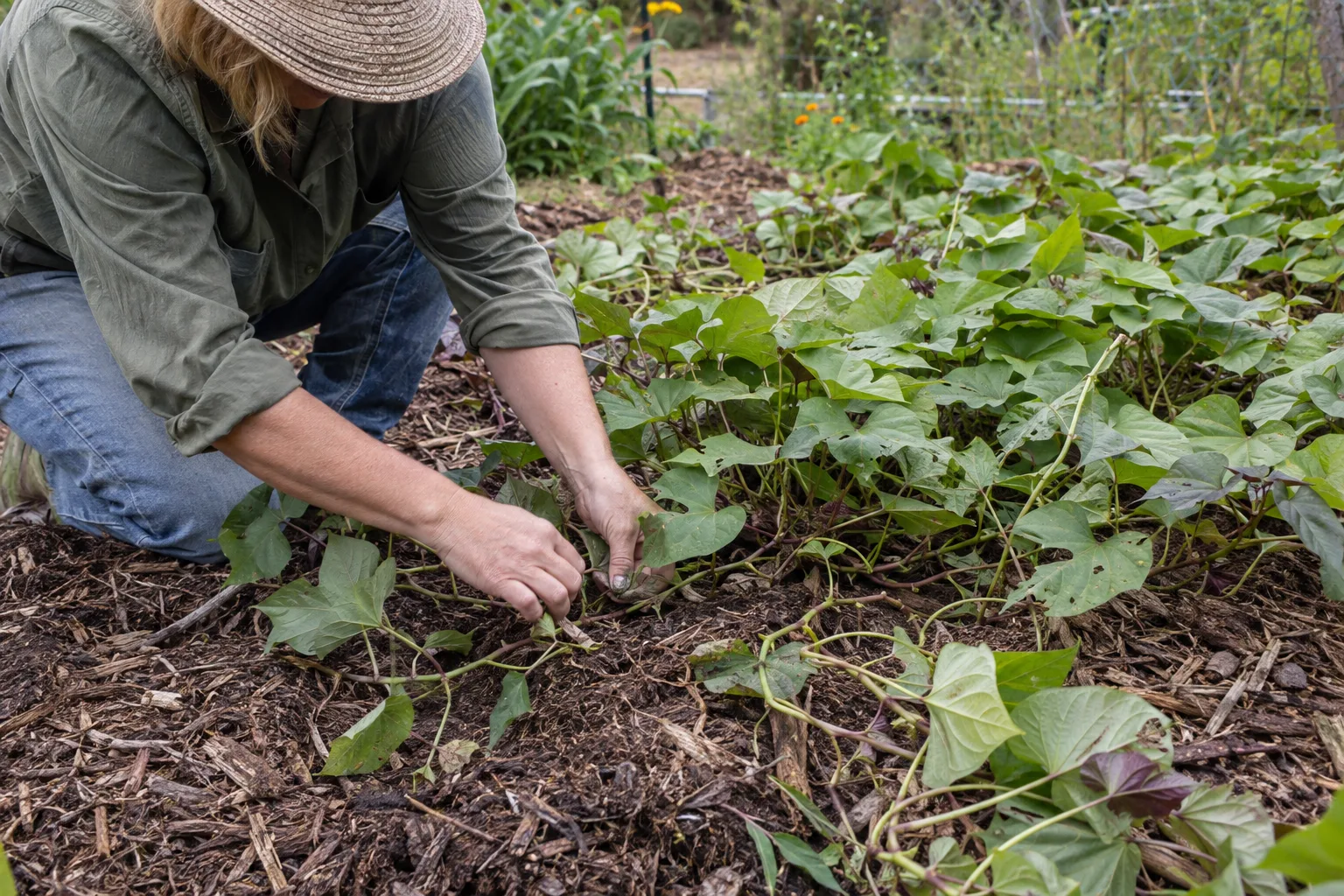
Sweet potato (Ipomoea batatas) vines cover the ground in summer and the young leaves can be cooked as greens. Plant slips from May into June and dig tubers in fall. The drawback is the long wait, since roots need several months underground.
Armenian cucumber
Armenian cucumber (Cucumis melo var. flexuosus) is a type of melon eaten like a cucumber. It keeps setting fruit through warm nights that stop standard cucumbers. It needs more frequent water than the others here, so it dries out fastest in a hot spell.
Malabar spinach
Malabar spinach (Basella alba) is a climbing vine with thick, glossy leaves that stand in for spinach in cooked dishes. It needs a trellis and steady moisture. Its drawback is a mild flavor and a slimy texture that some people dislike.
Yard-long beans
Yard-long beans (Vigna unguiculata subsp. sesquipedalis) tolerate heat that wrecks regular snap beans. They need a sturdy trellis and consistent water. Pick the pods while they are slender, because they get tough as they fatten.
How do I get my soil ready for summer vegetables?
Work 4 to 6 inches of compost into the top foot of soil before planting. Most East Valley soil is alkaline and often sits on caliche, a hard calcium carbonate layer that blocks drainage and roots.
If you hit caliche, break through it with a digging bar so water can drain below the root zone. Standing water over caliche rots roots even when the surface looks dry. A soil test tells you whether pH is high enough to need sulfur. Yellowing between leaf veins usually points to iron, and a chelated iron product made for high pH soils can help.
How often should I water vegetables in a Queen Creek summer?
Most summer crops do well with a deep soaking every 2 to 4 days, with Armenian cucumbers needing water more often. Drip irrigation at the base of each plant delivers water to the root zone without wetting the leaves.
Water early in the morning. Before watering again, push a finger 3 inches into the soil. If it is still moist, wait a day. Soggy soil in summer heat can rot roots quickly, so more water does not mean a healthier plant.
| Crop | Typical summer watering | Best method |
|---|---|---|
| Okra | Every 2 to 3 days | Drip or basin |
| Sweet potato | Every 3 to 4 days | Drip |
| Southern peas | Every 3 to 4 days | Drip |
| Armenian cucumber | Every 1 to 2 days | Drip at the base |
| Malabar spinach | Every 2 to 3 days | Drip or hand water |
| Established peppers | Every 2 to 3 days | Drip |
Treat these intervals as starting points. Sandy beds, containers and windy spots dry out faster, and you can browse our herbs, vegetables and berries to see what is available for your own beds.
Does shade help vegetables survive the hottest weeks?
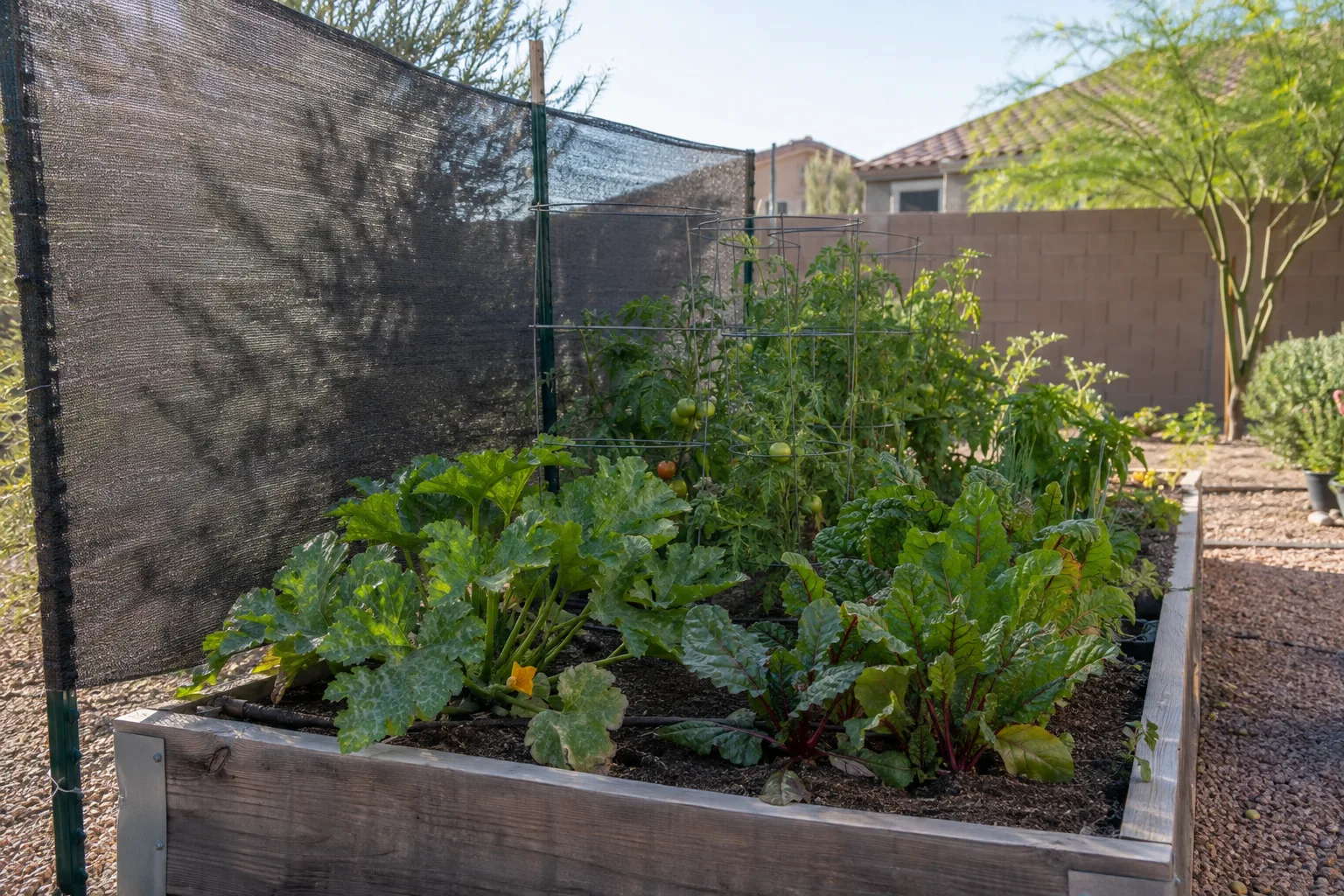
Yes. Afternoon shade from mid-June through mid-August reduces stress, even on heat-tolerant crops. Shade cloth rated around 30 to 40 percent on the west and southwest side blocks the harshest sun without starving plants of light.
Look at heat from walls, too. A bed against a south or west-facing block wall gets reflected heat long after the sun moves on. Metal raised beds heat up fast, so wood or light-colored block usually keeps roots cooler.
What changes during monsoon season?
Monsoon humidity eases water loss, but it also invites fungal problems like powdery mildew. The monsoon runs roughly July through September in the low desert.
Space plants so air moves through them and skip overhead watering. After a heavy storm, check that mulch has not washed away or packed down. A good half inch of rain can replace a watering, though gauge it by checking soil moisture instead of guessing.
How do I use summer crops to start a fall garden?
Keep summer crops going into fall and start fall transplants in August. Okra, peppers and sweet potatoes keep producing as highs drop below 100°F in September and October.
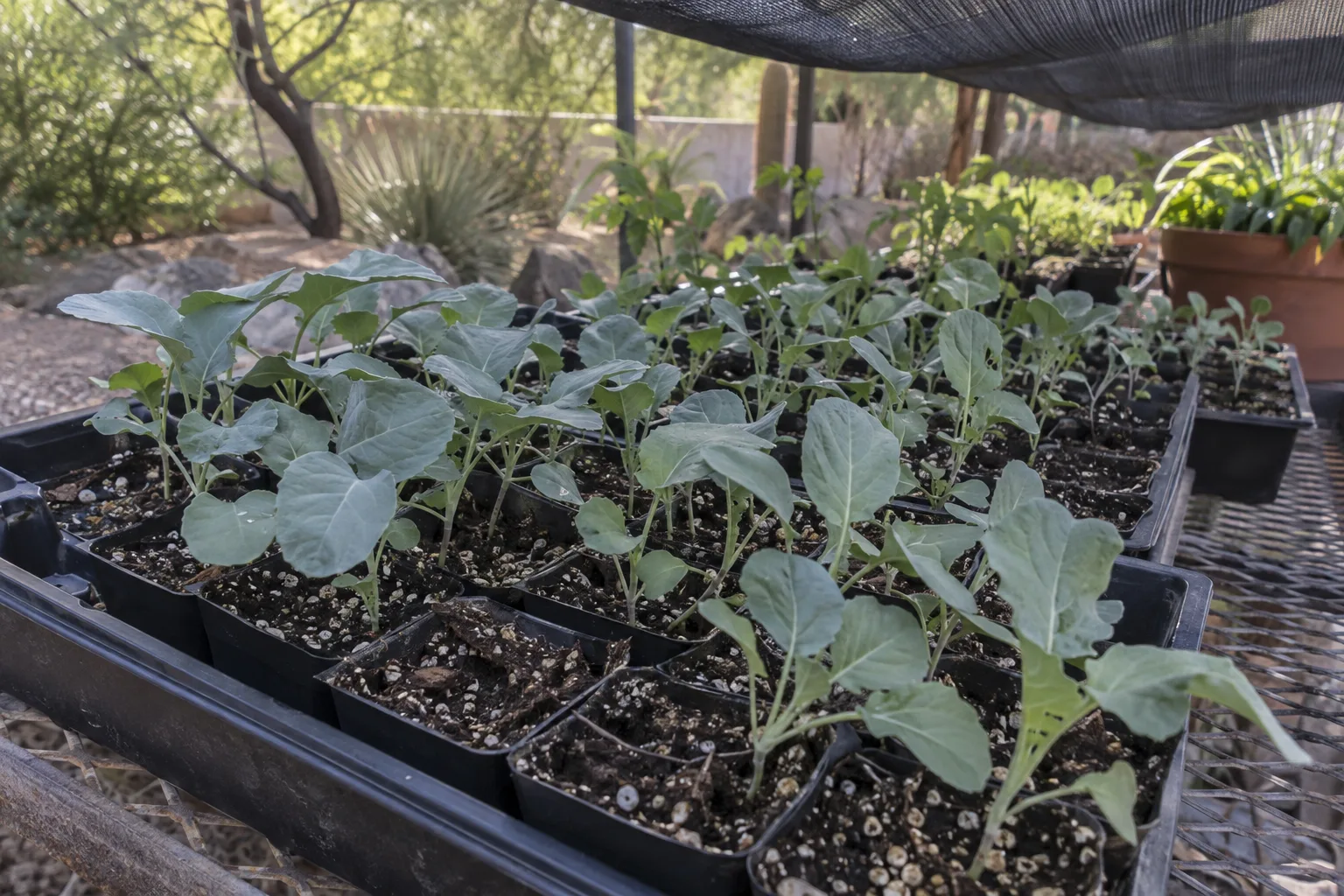
Start broccoli, cauliflower and other cool-season transplants in a shaded spot, then set them out when nights are consistently cooler. The University of Arizona Cooperative Extension publishes a vegetable planting calendar for Maricopa County with sowing dates for each crop. For month-by-month reminders, see our gardening calendars.
Frequently asked questions
Can I grow tomatoes through an Arizona summer?
Standard tomatoes generally stop setting fruit in the heat of June through August. Plant them in late winter for a spring crop or in late summer for a fall crop. Some varieties bred for heat set fruit better, but they still struggle at peak summer temperatures.
Should I fertilize vegetables in summer?
Use a light hand. Heavy nitrogen pushes soft, leafy growth that wilts easily and attracts aphids and whiteflies. Use a balanced feed, apply it to moist soil in the morning, and skip feeding any plant that is visibly wilting from heat.
Can I grow lettuce in summer with shade cloth?
It rarely works. Lettuce, spinach and most brassicas bolt once air temperatures settle in the 90s, and shade cloth cannot offset 110°F air. Swiss chard is the exception, since it tolerates afternoon shade and steady water, though growth slows considerably.
Why do my okra leaves droop in the afternoon?
Afternoon droop is often a temporary heat response. Check moisture 3 inches down. If the soil is damp, the plant is fine and will perk up in the evening. If it is dry, water deeply at the base.
Can I grow these vegetables in containers?
Yes, but containers dry out faster and the soil heats more. Choose large pots, keep them out of reflected afternoon heat, mulch the surface, and check moisture daily. Our pottery and planters include larger sizes suited to this.
Is a summer vegetable garden worth it in the low desert?
It is worth it if you choose heat-adapted crops and commit to mulching and deep watering. Okra, southern peas and sweet potatoes reward modest effort. It is not worth it if you want tomatoes, lettuce or peas in July, or if you cannot water consistently. Skip the summer bed in that case and plan a strong fall planting instead. Stop by our nursery in Queen Creek and we will help you pick crops for your yard.