
The best succulents for Arizona heat are Parry’s agave, century plant, aloe, smooth agave, Desert Spoon, elephant bush, red yucca and gopher plant. Each needs little water once established, and each needs fast-draining soil to get through our monsoon.
Key takeaways
- Plant from late March through April or in September and October, so roots settle before summer highs above 110°F or winter cold.
- Established plants usually need a deep soak every 2 to 4 weeks in spring and early summer, and often none during an active monsoon.
- Drainage decides survival. Caliche within 12 to 18 inches of the surface is a common cause of rot.
- Smooth agave, elephant bush and aloe vera can be damaged when lows approach 32°F, so keep frost cloth handy.
- Several of these have sharp tips or irritating sap, so place them away from play areas and pet paths.
What makes a succulent suited to Arizona heat?
A succulent that handles low-desert summers stores water in thick or waxy leaves and keeps its roots shallow to catch brief rain. Many popular succulents, including echeverias and haworthias, come from cooler or shadier habitats and scorch in open sun when highs pass 110°F, especially beside a block wall that throws heat back at the plant. The eight below come from dry regions with heat of their own.
Rot causes more losses than heat. Soil that stays wet after a monsoon storm can kill roots in a single season, and caliche under a planting hole holds water right where the roots sit. These are varieties we commonly carry, though availability changes week to week and season to season, so browse our plants department to see what is in.
Which succulents handle Arizona heat best?
These eight range from 2-foot mounds to agaves 8 feet wide, and each suits a different spot in an East Valley yard. Sizes are typical ranges, and plants vary with soil, water and exposure.
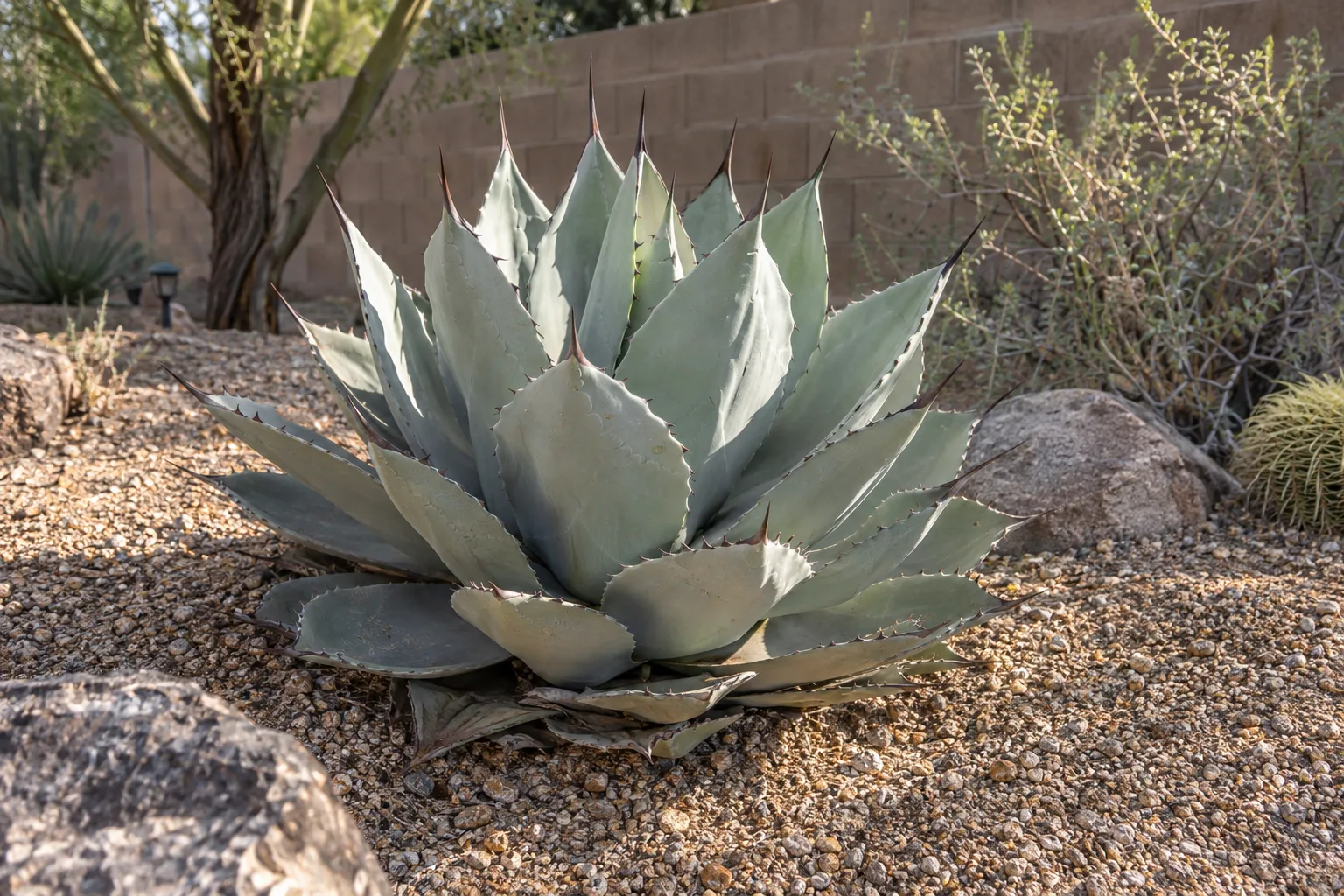
Agave parryi (Parry’s agave)
Parry’s agave forms a tight blue-gray rosette 2 to 3 feet tall and 3 to 4 feet wide. It takes full sun, including reflected heat, and a deep soak every 3 to 4 weeks is usually enough once it is established. It is hardy through typical East Valley winters. The drawback is the needle-sharp tip on every leaf, so keep it back from walkways. Like other agaves, it flowers once after many years and then dies, usually leaving pups you can replant.
Agave americana (century plant)
Century plant makes a bold focal point at 5 to 6 feet tall and 8 to 10 feet wide, in full sun with water mostly from rainfall after its first year or two. The drawback is size. Give it a spot where the full spread will not crowd a path, because the leaf tips are hard and sharp, and the plant dies after its tall flower stalk finishes.
Aloe vera
Aloe vera stays about 2 feet tall and wide and prefers morning sun with afternoon shade through summer, since full afternoon sun above 110°F can bleach and scorch the leaves. Water every 2 to 3 weeks in warm months and less in winter. Its drawback is cold: frost can damage the leaves. The ASPCA lists aloe as toxic to dogs and cats if eaten, so place it with that in mind.
Agave desmettiana (smooth agave)
Smooth agave grows 3 to 4 feet tall and about 4 feet wide, with arching leaves that are softer than most agaves, though each still ends in a small tip. It does well in full sun or light afternoon shade and needs water every 2 to 4 weeks once established. It works in the ground or in a pot. The drawback is frost tenderness, so cover it when a freeze is forecast.
Dasylirion wheeleri (Desert Spoon)
Desert Spoon makes a silver-green fountain 3 to 5 feet tall and 4 to 5 feet wide. It is often grouped with succulents even though it is not a true one. It takes full sun and gets by mostly on rainfall once established, with an occasional deep soak in the hottest, driest weeks. It is native to the Sonoran and Chihuahuan deserts. The drawback is the small hooked teeth along each leaf edge, which snag skin and clothing.
Portulacaria afra (elephant bush)
Elephant bush is a fine-textured shrub, roughly 4 to 6 feet tall and wide, with small round leaves on reddish stems. Established plants take full sun, though afternoon shade helps them through their first summers. Water every 2 to 3 weeks and let the soil dry between soaks. The drawback is frost. A hard freeze can kill branches back, and plants in cold pockets of a yard suffer first.
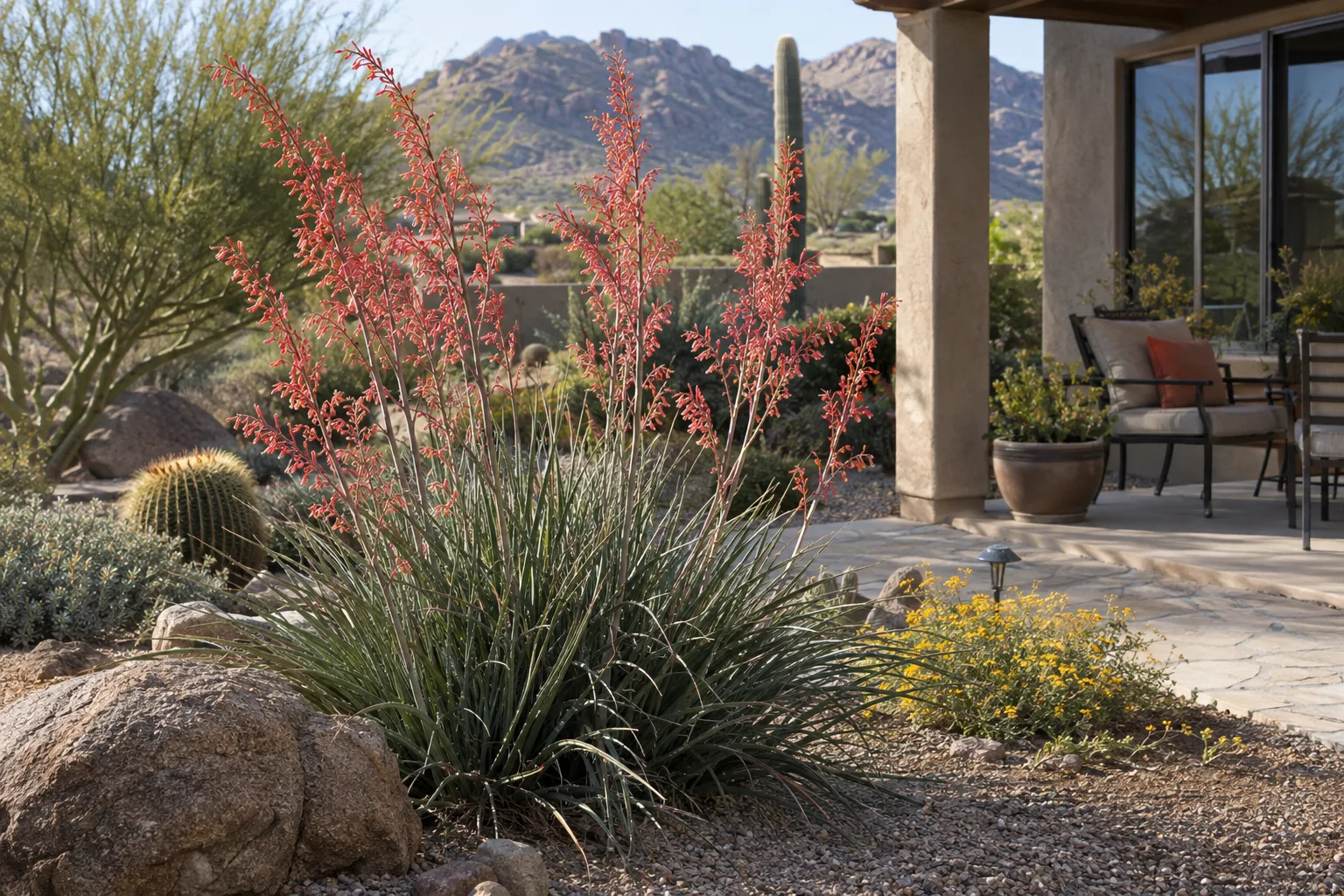
Hesperaloe parviflora (red yucca)
Red yucca is related to agaves and belongs to a different genus than true yuccas. It forms a grassy clump about 3 feet tall and 3 to 4 feet wide, and sends up coral-red flower stalks 4 to 5 feet tall from spring into summer that hummingbirds visit. It tolerates full sun and reflected heat, and a deep soak every 2 to 4 weeks is enough. The drawback is tidiness. Spent stalks need cutting back, and the clump widens over the years.
Euphorbia rigida (gopher plant)
Gopher plant forms a mound of blue-green, upright stems 1.5 to 2 feet tall and 2 to 3 feet wide, topped with chartreuse bracts in late winter and early spring. It takes full sun to light shade and needs water about every 3 to 4 weeks once established. The drawback is the milky sap, which irritates skin and eyes. Wear gloves and eye protection when cutting it, and avoid planting it where children play.
How much sun and water does each one need?
Most of these want full sun and a deep soak every 2 to 4 weeks once established, with aloe vera and elephant bush appreciating afternoon shade in summer. This table lines up the differences.
| Plant | Mature size (height x width) | Sun | Water once established |
|---|---|---|---|
| Parry’s agave | 2 to 3 ft x 3 to 4 ft | Full sun | Every 3 to 4 weeks |
| Century plant | 5 to 6 ft x 8 to 10 ft | Full sun | Mostly rainfall |
| Aloe vera | About 2 ft x 2 ft | Morning sun, afternoon shade | Every 2 to 3 weeks in warm months |
| Smooth agave | 3 to 4 ft x about 4 ft | Full sun to light shade | Every 2 to 4 weeks |
| Desert Spoon | 3 to 5 ft x 4 to 5 ft | Full sun | Mostly rainfall |
| Elephant bush | 4 to 6 ft x 4 to 6 ft | Full sun, afternoon shade helps | Every 2 to 3 weeks |
| Red yucca | About 3 ft x 3 to 4 ft | Full sun | Every 2 to 4 weeks |
| Gopher plant | 1.5 to 2 ft x 2 to 3 ft | Full sun to light shade | Every 3 to 4 weeks |
How do I plant succulents in caliche and alkaline soil?
Plant in native soil on a slight mound, after confirming the hole drains. Our soil is alkaline, and these plants tolerate that well. Rich potting mix or compost in the hole holds moisture around the crown and invites rot.

- Choose your window: late March through April or September through October, which gives roots a mild season to establish.
- Dig the hole about twice as wide as the root ball and no deeper than it. Probe the bottom for caliche, the hard white layer, and break through it with a digging bar if you find it.
- Fill the hole with water. If it is still standing after about 4 hours, pick another spot or plant on a raised mound.
- Set the plant so the crown sits at or slightly above the surrounding soil. Backfill with the native soil and firm it gently.
- Build a low basin around the plant and soak it deeply.
- Spread 2 inches of decomposed granite over the root zone, keeping it a few inches from the crown.
Planting too deep is the mistake we would steer you away from first, because a buried crown stays wet and rots.
When should I water succulents in the low desert?
Water deeply and infrequently, then let the soil dry before the next soak. For the first 2 to 3 months after planting, expect to water about once a week, then stretch the interval as the plant settles in. The ranges below suit established plants in the ground, and a soil probe or dowel tells you more than a calendar does.
- December to February: every 3 to 4 weeks, or skip it after rain.
- March to May: every 2 to 3 weeks as plants push new growth.
- June, before the monsoon: every 10 to 14 days during the driest, hottest stretch.
- July to September: skip irrigation when storms are delivering regular rain, and check drainage after heavy ones.
- October to November: taper back toward every 3 to 4 weeks.
Our gardening calendars can help you track seasonal tasks alongside your watering.
Can I grow these in pots through summer?
Yes, the smaller ones do well in containers: Parry’s agave, aloe vera, smooth agave, elephant bush and gopher plant. Pots let you move a plant out of afternoon sun, which helps aloe in particular. Dark containers in full sun can heat the root zone enough to damage roots, so choose light-colored ceramic or glazed pots and keep them off hot pavement.

Every pot needs a drainage hole. Use a gritty cactus mix and water until it runs out the bottom, then wait until the mix is dry a few inches down. Our pottery and planters include a range of sizes and finishes to compare.
Which of these need care around kids and pets?
Century plant, Parry’s agave and Desert Spoon have sharp tips or teeth, and gopher plant and aloe vera can cause problems if handled or eaten. Place spiny plants well back from paths, play areas and spots where dogs run.
Gopher plant sap irritates skin and eyes, so wear gloves and eye protection when pruning it. For questions about a specific pet or child, check with your veterinarian or the ASPCA animal poison resources, since we cannot give medical advice. Smooth agave has softer leaf edges than most agaves, but it still has a tip.
Frequently asked questions
Can I plant succulents in July?
Waiting until September is better, because a new plant has to grow roots in soil that can top 100°F. If you must plant in summer, do it in the early morning, shade the plant with cloth for the first few weeks, and water weekly. Expect some leaf scorch on aloe and elephant bush.
Do these succulents need fertilizer?
Most need very little. In-ground plants usually do fine on native soil. A light feeding in early spring can help potted plants, since nutrients wash out with watering. Skip high-nitrogen products, because they push soft, fast growth that is more prone to rot and heat damage.
How can I tell if I am overwatering?
Soft, translucent or yellowing leaves and a mushy base point to too much water. Leaves that look wrinkled and thin can mean too little. Push a finger or dowel several inches into the soil. If it comes out damp, wait. If the crown of an agave is already soft, the plant usually cannot be saved.
How do I protect tender succulents from frost?
Cover them with frost cloth or an old sheet before sundown when lows approach 32°F, and remove the cover the next morning. Aloe vera, smooth agave and elephant bush are the most tender here. Planting them near a south-facing wall or under a tree canopy also reduces cold exposure.
How far apart should I space them?
Space each plant at about its mature width, using the ranges in the table above. A century plant needs 8 to 10 feet, while Parry’s agave or gopher plant fits in 3 to 4 feet. Crowded agaves hold moisture between leaves and make pruning and cleanup a painful job.
Are low-water succulents right for your yard?
They suit you if you have a sunny spot with decent drainage and want structure and bloom with little upkeep. They are a poor match if your yard stays soggy after storms and you cannot mound the soil, if you want a soft, lush look, or if small children or pets use the space daily and you cannot keep spiny plants out of reach. Stop by our Queen Creek nursery and we will help you match a plant to your exposure.