Plants that bounce back fast after Arizona’s intense heat include lantana, yellow bells, Texas sage, red yucca, blackfoot daisy, desert willow, palo verde and agave. Most look rough in August and push new growth within two to six weeks once highs stay under 100°F.
Key takeaways
- Wait until daytime highs stay under 100°F, usually late September to October, before any real cleanup.
- Scratch a stem with your fingernail. Green tissue underneath means the plant is alive, even if every leaf has dropped.
- Hold hard cutbacks on lantana and yellow bells until late February or March, after frost risk has passed.
- Water deeply and less often as nights cool, and skip a watering when soil is still moist 2 inches down.
- Spread 3 to 4 inches of organic mulch over the root zone, kept a few inches away from trunks and crowns.

Which plants bounce back fastest after Arizona’s heat?
The plants below recover quickly because they are built for the low desert: deep roots, small or waxy leaves, or the ability to go semi-dormant in July and push growth when nights cool. These are varieties we commonly carry, though availability changes week to week and season to season. You can browse the full range on our plants page. Sizes are typical mature ranges.
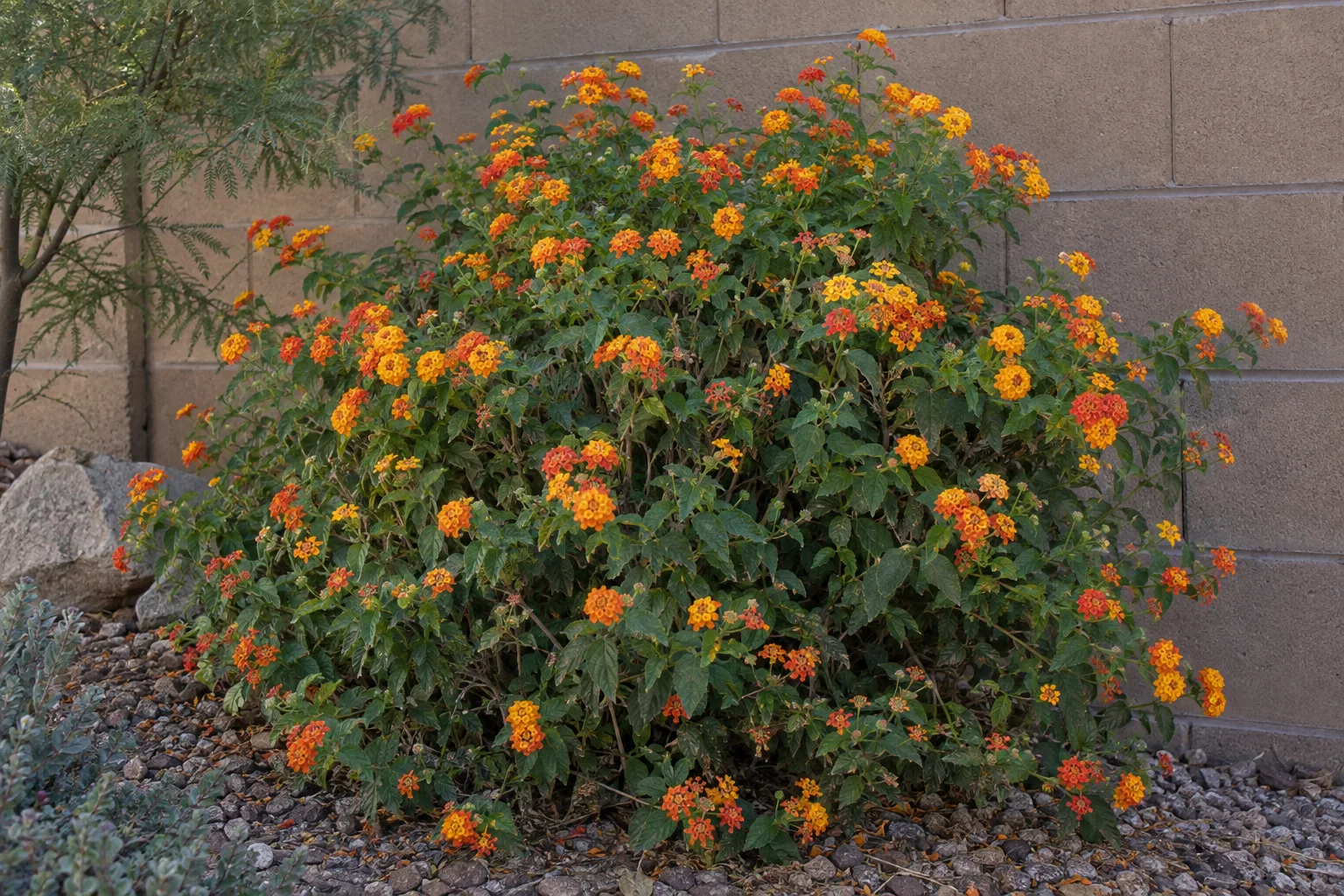
Lantana (Lantana camara)
Lantana returns from a hard summer faster than almost any shrub here, often with fresh flowers three to five weeks after the weather cools. It reaches 3 to 5 feet tall and wide in full sun and wants a deep soak about once a week in summer heat once established. The drawback is frost, which browns the tops, so leave the damaged stems in place until spring.
Yellow bells (Tecoma stans)
Yellow bells can drop leaves and look dead in extreme heat, yet the stems stay green underneath and the plant refoliates in fall. Expect 6 to 10 feet tall and 5 to 8 feet wide in full sun, with a deep watering every one to two weeks in summer once established. It is frost tender, and the seed pods it drops can sprout where you do not want them.
Texas sage (Leucophyllum frutescens)
Texas sage handles 110°F days with little fuss and often flushes with purple flowers after monsoon humidity arrives. It grows 5 to 8 feet tall and wide in full sun and needs a deep watering only every two to three weeks in summer once established. The drawback is wet feet. Overwatering or heavy soil that drains slowly leads to root rot, and shearing it into a tight ball weakens the shrub.
Red yucca (Hesperaloe parviflora)
Red yucca barely reacts to summer highs, apart from some brown leaf tips after an extreme stretch. The clump stays 3 to 4 feet tall and wide, with coral flower stalks that reach up to 5 feet, and it prefers full sun and low water once established. It fills in slowly, so plan on a few seasons before it looks full. A light trim of browned tips tidies it in October.
Blackfoot daisy (Melampodium leucanthum)
Blackfoot daisy often looks sparse by late summer, then covers itself in small white flowers once temperatures ease. It forms a mound 1 foot tall and 1 to 2 feet wide, wants full sun, and does best with low water and fast-draining soil. Its drawback is a short life. It declines quickly in beds that stay wet, so keep it away from lawn or vegetable irrigation zones.
Desert willow (Chilopsis linearis)
Desert willow looks thin and tired in late summer, but its deep roots carry it through, and it often blooms again in September and October. It grows 15 to 25 feet tall and 10 to 20 feet wide in full sun, with a deep watering every two to four weeks in summer once established. It is bare in winter and drops long seed pods that need raking. Our desert trees include other low-water choices for similar spots.
Desert Museum palo verde (Parkinsonia ‘Desert Museum’)
Palo verde keeps photosynthesizing through its green bark when the leaves drop, so it never fully stops working. Plan on 20 to 30 feet tall and wide in full sun with low water once established. The tree litters tiny leaves and yellow petals each spring. Heavy, unthinned canopies can also lose branches in monsoon winds, so structural pruning in its early years is worth the effort.
Parry’s agave (Agave parryi)
Parry’s agave stores water in thick leaves, so outer sunburn rarely reaches the growing center. It forms a rosette 2 to 3 feet tall and wide in full sun and needs a deep watering every two to four weeks in summer once established. The terminal spine is sharp, so keep it away from walkways and play areas. New plants moved from shade can scorch, which is why we suggest settling them in during fall.
How can I tell a heat-stressed plant from a dead one?
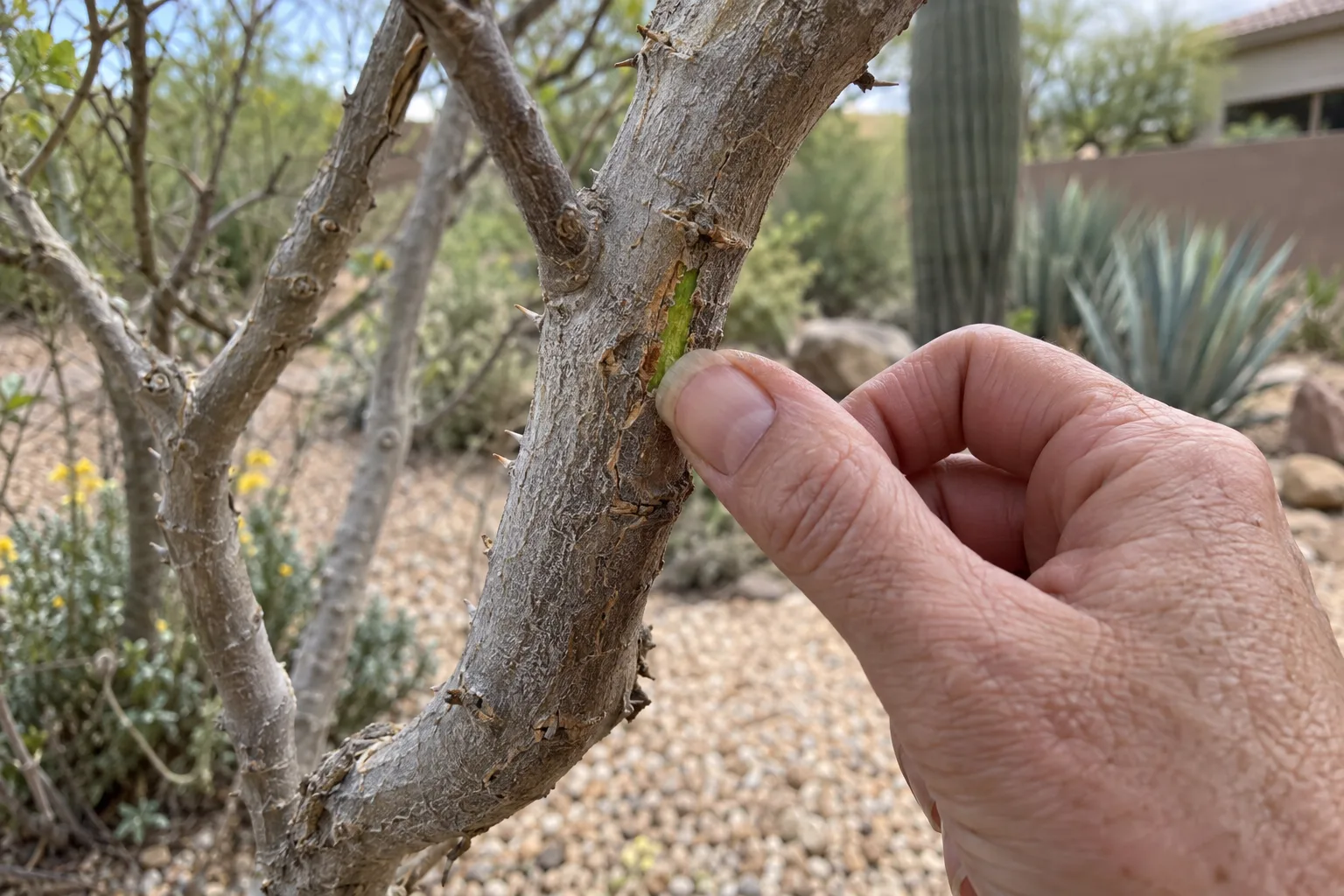
Scratch a small patch of bark on a branch with your fingernail. Green or pale moist tissue underneath means the branch is alive, while dry brown tissue means that branch is dead. Test several branches, because a plant can lose some limbs and keep the rest.
A plant with no leaves in August is often dormant rather than finished, and desert willow, yellow bells and lantana are known for looking this way. Give it until October before you judge it, and give frost-tender plants until spring.If the scratch test shows green only near the base, leave the plant in place and keep watering on schedule, because new growth often starts from the crown.
When should I prune and feed after the summer heat?
Do light cleanup in late September to October, once highs stay under 100°F, and save hard cutbacks for late winter. Pruning in 105°F weather exposes inner stems to sunburn that the leaves were shading.
Remove clearly dead or broken branches back to live wood in October, and trim browned tips on red yucca and agave. Lantana and yellow bells are different. A hard cutback in fall pushes tender growth that a December or January frost can burn, so wait until late February or March, after frost risk has passed. Our gardening calendars lay out monthly timing.
Desert natives such as palo verde, desert willow and Texas sage rarely need fertilizer. Non-native flowering shrubs may benefit from a light slow-release feeding in October, after active growth begins. Never feed a plant that is wilting in the heat, since fertilizer salts can burn stressed roots.
How much should I water while plants recover?
Water deeply and less often, and stretch the interval as nights cool. Deep watering sends roots downward, where soil stays cooler and holds moisture longer, while frequent shallow watering keeps roots near the surface where heat reaches them.
For established shrubs, a slow soak that wets the soil 18 to 24 inches down is a good target, and trees need water that reaches deeper. Check the soil with a trowel or screwdriver. If it is still moist 2 inches below the surface, wait another day or two. Roots recovering from heat need oxygen as much as water, and overwatering in the shift from summer to fall is a common way to lose a plant the heat did not.
After a soaking monsoon storm, skip your next scheduled irrigation. Make changes to run times gradually, about 10 to 15 percent at a time, rather than switching abruptly.
Does soil or mulch change how fast plants recover?
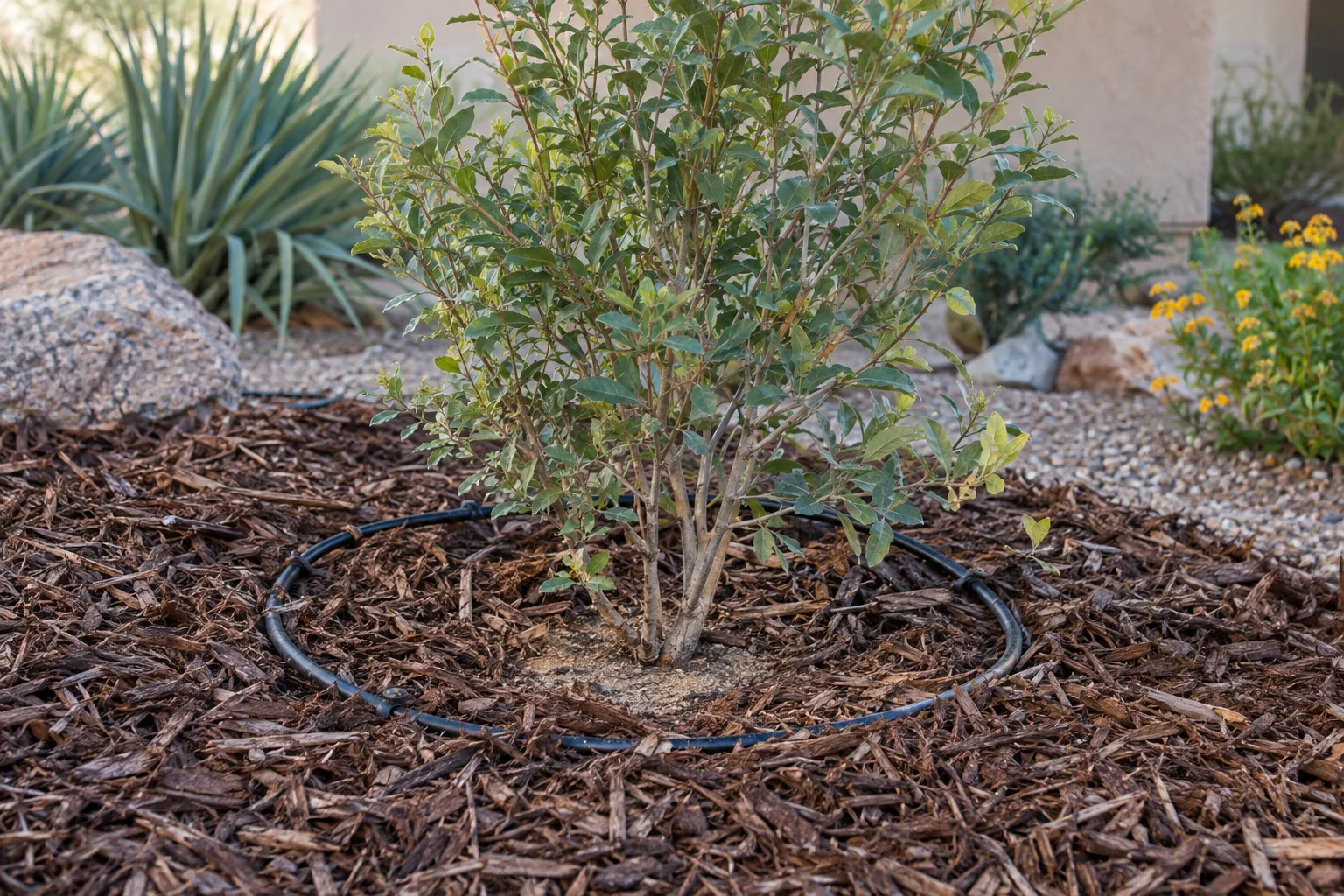
Yes. Mulch cools the soil and slows evaporation, and soil that drains well keeps roots healthy. Low desert soil is typically alkaline, often in the range of 7.5 to 8.5 pH, and caliche layers can slow drainage and push roots into a shallow, hot zone.
Spread 3 to 4 inches of organic mulch such as shredded bark over the root zone and keep it a few inches from trunks and crowns. Hard irrigation water leaves salts behind, and a deep soak now and then flushes them below the roots. If new leaves come in pale yellow with green veins, that can signal iron chlorosis, which is common in alkaline soil. Bring a leaf sample to the nursery and we can talk through options.
What mistakes slow recovery after a hot summer?
Most setbacks come from doing too much too soon. These are the ones to avoid:
- Pruning hard while highs are still above 105°F.
- Fertilizing a plant that is already wilting or scorched.
- Pulling a plant that looks dead in August without trying the scratch test.
- Planting new shrubs in the worst of July heat instead of waiting for the October to March window.
- Sharply changing irrigation run times in one step.
Patience pays off here. Some plants take four to six weeks to show visible recovery, and extra water or fertilizer will not speed that up.
Frequently asked questions
How long does a plant take to show new growth after the heat breaks?
Most hardy desert plants show new growth within two to six weeks once highs stay below 100°F and nights cool into the 60s. Palo verde and agave often move faster, while woody shrubs like lantana can take the full six weeks. Plants in their first year may look tired until winter.
Can I plant new shrubs in September?
Late September works for tough desert natives, but October through March is the better window for most plants here. Soil is still warm enough for roots to establish while the air is mild. Water new plants every few days at first, then taper as nights cool. Avoid planting during the 110°F stretch.
Should I cut lantana to the ground in fall?
No, wait until late February or March. A fall cutback triggers tender growth that December or January frost can burn, and the old stems protect the crown. In fall, remove only clearly dead or broken branches. After frost risk passes, cut frost-damaged plants back hard to about 6 to 12 inches.
Why do plants look worse after monsoon storms?
Monsoon humidity and soggy soil can stress roots, especially in heavy or caliche soils that drain slowly. Roots sitting in wet soil run short of oxygen, so leaves yellow or wilt even though the ground is wet. Skip your next irrigation after a good storm, and check that water drains within a day.
Is decomposed granite or organic mulch better for recovery?
Organic mulch such as shredded bark helps recovering plants most, because it cools soil and adds organic matter as it breaks down. Decomposed granite suits dry desert plantings and needs less replacing, but it adds no nutrients. Whichever you choose, keep it a few inches away from trunks and plant crowns.
Are heat-recovery plants right for your yard?
Yes, if your yard gets full sun, you can water deeply instead of often, and you can accept that plants may look rough in August. Skip them if you want lawn-like green all summer or if your planting bed holds standing water after storms, since most of these plants decline in soggy soil. A shaded, heavily irrigated bed suits other plants better. Stop by our nursery in Queen Creek and we can help you match plants to your yard.