

Harvest winter vegetables in the Arizona low desert when size, firmness and color say so, not when the calendar does. Broccoli heads should be tight and dark green, carrot shoulders about 3/4 inch across, and loose-leaf lettuce leaves 4 to 6 inches long.
Key takeaways
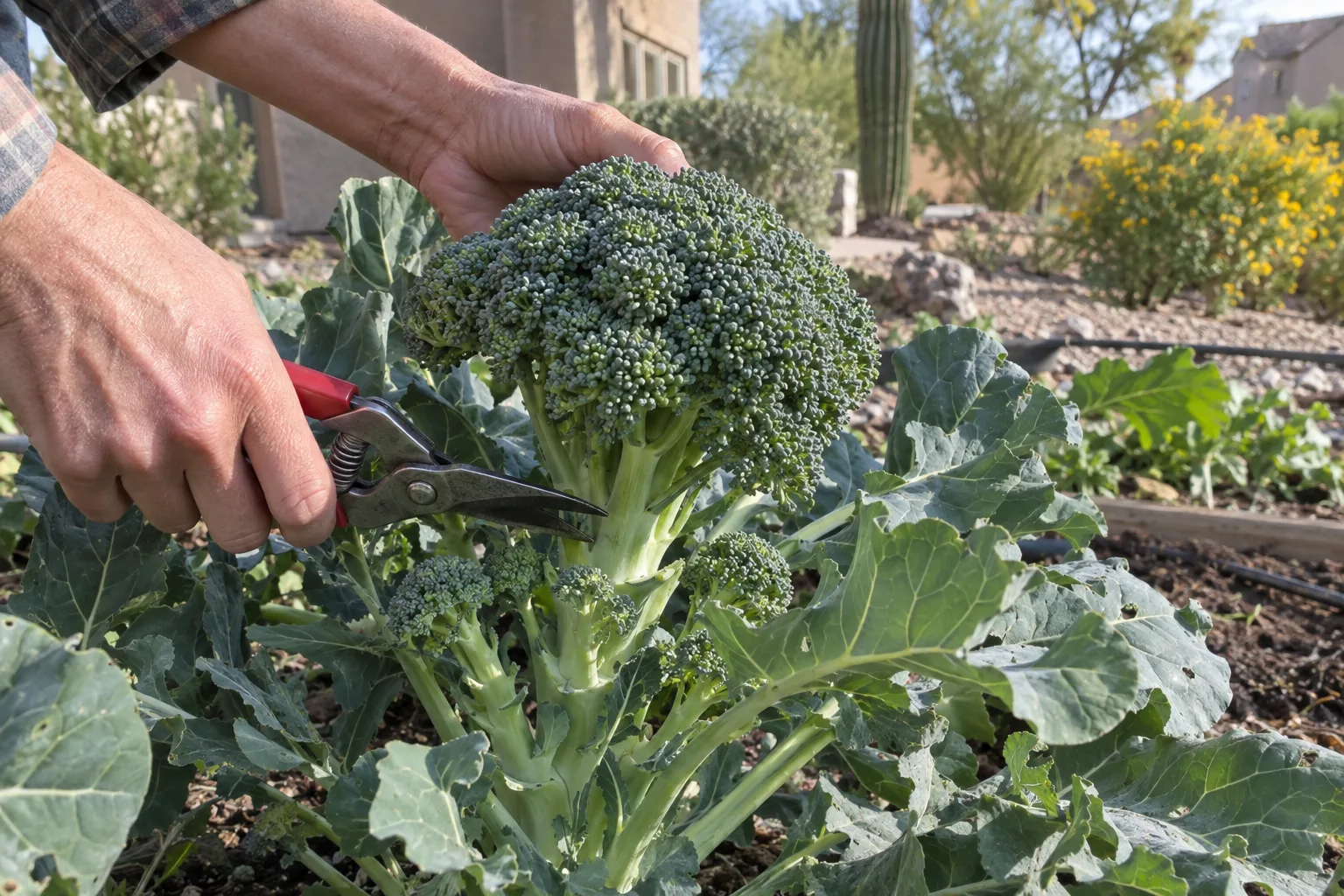
- Cut broccoli while the beads are still tight, about the size of a match head, and before any yellow petals show.
- Harvest carrots when the shoulder at the soil line measures about 3/4 inch across, and beets at 1.5 to 3 inches.
- Pick loose-leaf lettuce when outer leaves reach 4 to 6 inches, taking outer leaves first so the plant keeps producing.
- Check greens and brassicas daily when January or February afternoons climb into the 70s, because ready can turn into bolted within a few days.
- Harvest in the morning after a cool night, using clean, sharp snips or a knife.
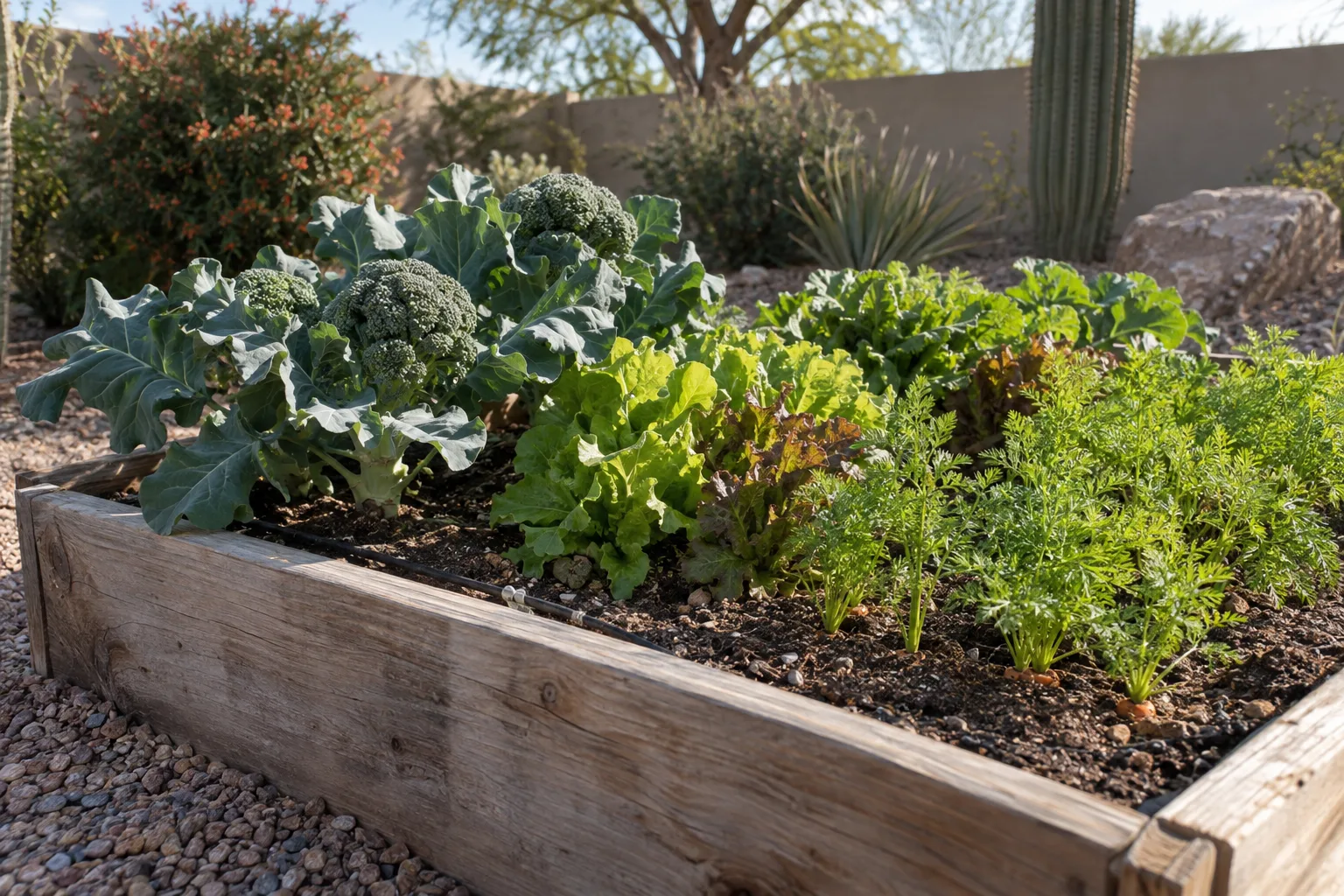
When are broccoli, cauliflower and cabbage ready to cut?
Cut them when the head is firm and compact, before it starts to open. Each crop gives its own signal. We commonly carry cool-season starts in our herbs and vegetables department, and availability changes week to week and season to season.
Broccoli
Broccoli (Brassica oleracea var. italica) is ready when the head is deep green and the beads are still tightly closed, roughly the size of a match head. If you see yellow petals starting to show, the head is opening, so cut it that day. Leave the plant in the ground afterward. Side shoots form over the following weeks and give you smaller florets.
Cauliflower
Cauliflower (Brassica oleracea var. botrytis) is ready when the white curd is 6 to 8 inches across, firm and smooth. A bumpy, separated curd has waited too long. If you tied the outer leaves over the head to keep it white, peek underneath every couple of days during warm weather, since the curd can go from perfect to overmature in under a week.
Cabbage
Cabbage (Brassica oleracea var. capitata) is ready when the head feels solid and heavy for its size when you squeeze it with both hands. A loose head needs more time. Heads split after a heavy watering or rain, so cut one as soon as you see a crack. Split cabbage stores poorly.
How can you tell when lettuce, spinach and chard are ready?
Pick leaves once they reach usable size, and do not wait for a full head on loose-leaf types. Regular picking keeps the plant producing for more weeks.
Lettuce (Lactuca sativa) in loose-leaf form is ready when outer leaves reach 4 to 6 inches. Cut those and leave the center intact so it keeps growing. Head types are ready when the center feels dense and firm under a gentle squeeze. If the center leaves stretch upward instead of curling inward, the plant has started to bolt, and you should harvest it right away.
Spinach (Spinacia oleracea) is best at 3 to 6 inches, when the leaves are tender and mild. Older leaves taste sharper. When the center begins sending up narrow, pointed leaves in place of broad, rounded ones, cut the whole plant.
Chard (Beta vulgaris subsp. cicla) is ready when outer stalks reach 8 to 10 inches. Cut them at the base and leave the inner rosette. Chard usually holds on into early spring longer than lettuce or spinach, which makes it a useful crop in a bed that is warming up.

How do you check root vegetables without pulling them?
Brush soil back from the top of the root and judge the shoulder. Beets, radishes and turnips often push up above the soil, so you can see their size without digging.
Our alkaline, sometimes caliche-laden soil can slow root expansion, so go by shoulder width instead of the days listed on a seed packet. Raised beds or deep planters give roots loose soil to fill out.
Carrots (Daucus carota) are ready when the shoulder is about 3/4 inch across and the tops are still bright green and upright. Yellowing tops usually signal a root past its best.
Beets (Beta vulgaris) are ready when the exposed shoulder measures 1.5 to 3 inches. Larger roots can turn woody in the center. Take a few outer leaves for cooking while the root keeps growing.
Radishes (Raphanus sativus) mature in about 22 to 30 days. Pull one as a test once the round shoulder shows. If it is marble-sized or larger and firm, harvest the row. Radishes left too long turn hollow, pithy and very hot.
Turnips (Brassica rapa) have the best texture at 2 to 3 inches across. Their greens are usable at any size.
Onions (Allium cepa) planted in fall are ready in late winter to spring, when the tops yellow and fall over. Once about half the tops are down, stop watering for a week, then lift the bulbs. Green onions can be picked at any size, and are most tender at 6 to 8 inches tall.

Why do winter crops bolt so fast in the East Valley?
Warm spells and lengthening days push cool-season plants to flower and set seed, a process called bolting. Once it starts, lettuce turns bitter, broccoli loosens and spinach toughens.
Our winter weather swings widely, with chilly mornings and afternoons that can reach the 70s in January and February. A run of those afternoons can move broccoli from weeks away to days away from opening. Check your beds daily during warm stretches. Weekly checks miss the window.
Staggering plantings every two to three weeks starting in fall spreads the harvest so everything is not ready at once. The University of Arizona Cooperative Extension publishes a vegetable planting calendar for Maricopa County with sowing windows for each crop, and our gardening calendars list what to plant and do each month.
A 30 to 40 percent shade cloth draped over greens in the afternoon can slow the heat buildup. It will not stop bolting for good, but it may buy you a couple of extra weeks. Frequent picking of outer leaves also helps leafy crops stay productive longer.
How do you harvest winter vegetables step by step?
Work in the morning with sharp, clean tools and a shaded place to set what you pick. You need snips or a knife, a garden fork for roots and a basket or tray.
- Note your planting date and the days to maturity on the tag. Treat that number as a starting window, not a deadline.
- Walk the bed after a cool night and look at color, size and shape for each crop.
- Use your hands. Squeeze cabbage gently, brush soil from carrot and beet shoulders, and check that broccoli beads are tight.
- Harvest one test plant. Pull a radish or carrot, or cut one lettuce leaf, and taste it.
- Cut leafy greens above the crown and brassicas with a short length of stem. Loosen root crops with a fork before lifting rather than pulling on the tops, which can snap off.
- Keep harvested produce in shade while you finish, then trim root tops before refrigerating and wrap greens in a damp towel.
What are the harvest signs for each crop at a glance?
This table pairs the usual days to maturity with the sign that a crop is ready and the sign it has waited too long. Days vary with planting date and weather, so lean on the signs.
| Vegetable | Days to maturity | Ready when | Overdue sign |
|---|---|---|---|
| Loose-leaf lettuce | 45 to 60 | Outer leaves 4 to 6 inches | Center leaves stretching upward |
| Broccoli | 60 to 80 | Tight, dark green beads | Beads loosening, yellow petals |
| Cauliflower | 70 to 85 | Firm, smooth curd, 6 to 8 inches | Bumpy, separated curd |
| Cabbage | 70 to 90 | Heavy, solid head | Splitting |
| Carrots | 70 to 80 | Shoulder about 3/4 inch | Yellow tops, cracked roots |
| Beets | 55 to 70 | Shoulder 1.5 to 3 inches | Woody center |
| Radishes | 22 to 30 | Firm, marble-sized or larger | Hollow, very hot flavor |
| Spinach | 40 to 50 | Leaves 3 to 6 inches | Narrow, pointed center leaves |
What harvest mistakes should you avoid?
Most losses come from waiting too long or checking too rarely. A few habits prevent that.
- Days to maturity on a seed packet is an estimate for average conditions. A bed in full afternoon sun matures faster than one in shade.
- Broccoli heads in one row ripen at different rates, so cut each as it is ready.
- Irregular watering splits cabbage and roots. A layer of mulch evens out soil moisture in our dry air.
- Produce left in the sun loses sugar quickly, even in mild weather, so carry a shaded tray.
- Seed packet sizes are a guide only. Taste a test plant before pulling the whole bed.
Frequently asked questions
Do carrots taste sweeter after a frost?
Yes, a light frost makes carrots taste sweeter because the roots convert some starch to sugar. Our valley sees occasional frost between December and February. Harvesting after a cold night is a good choice, though a hard freeze can damage exposed shoulders, so cover them if the forecast drops well below freezing.
How long can carrots stay in the ground past maturity?
In cool weather and well-drained soil, carrots can often wait a couple of weeks past their expected date without much loss. Warm weather shortens that. Watch the tops for yellowing and the shoulders for cracks, and lift the crop if either appears.
Why does my lettuce taste bitter even though it looks fine?
Bitterness usually means heat stress or the start of bolting, even before the plant looks different. Harvest the whole plant and chill it for a few hours to soften the flavor. Next time, plant earlier and shade the bed with 30 to 40 percent cloth during warm afternoons.
How should I store freshly harvested vegetables?
Trim the tops from carrots, beets and radishes before refrigerating, since greens pull moisture from the roots. Wrap leafy greens in a damp paper towel inside a bag in the crisper drawer. Keep broccoli and cabbage cold and unwashed until you cook them.
What should I do with split cabbage or cracked roots?
Use them within a day or two, because splits invite rot and store poorly. Rinse well, since soil can lodge in cracks. The cause is usually a dry spell followed by heavy watering, so keep soil moisture steady and mulch the bed.
Are you ready to harvest by touch instead of by calendar?
If you can check your beds every day in January and February, reading the plants will give you better flavor and longer harvests than counting days. If your schedule allows only a weekly look, plant crops that forgive delay, like chard, beets and cabbage, and skip finicky heads of lettuce. Gardeners with heavy caliche should add raised beds before growing carrots. Stop by our Queen Creek nursery and we can help you plan a winter bed.