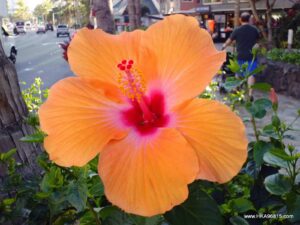

The best plants for hanging baskets in Arizona full sun are portulaca, angelonia, trailing lantana, sweet potato vine and vinca for summer, plus calibrachoa and bacopa for the cooler months. Use a large, light-colored basket and plan on watering daily in summer.
Key takeaways
- Portulaca, angelonia, trailing lantana, sweet potato vine and vinca keep growing when summer highs pass 110°F.
- Calibrachoa and bacopa are cooler-season plants that fade once highs stay above about 100°F.
- A basket 12 to 16 inches wide holds more soil and dries out more slowly than a small one.
- Expect to water daily from June through September, and sometimes twice a day on a west-facing wall.
- Plant spring baskets from late February through April and fall baskets from mid-September through October.

Why do hanging baskets struggle in the low desert?
A hanging basket holds a small amount of soil that is exposed to heat on every side. Nothing cools the roots from below, and wind and reflected heat from block walls and stucco pull moisture out of the mix fast. When highs pass 110°F in July, a small basket in direct sun can dry out in a single day.
Hard irrigation water adds to the strain. Salts and alkalinity build up in a small volume of mix between flushes, and some plants show yellow leaves with green veins as a result. Plant choice solves most of this, and placement handles much of the rest.
Which plants handle hanging baskets in Arizona full sun?
Seven plants earn a place in a full-sun basket here, and five of them keep growing through July and August. You can browse them in our annual flowers and foliage department. These are varieties we commonly carry, though availability changes week to week and season to season.
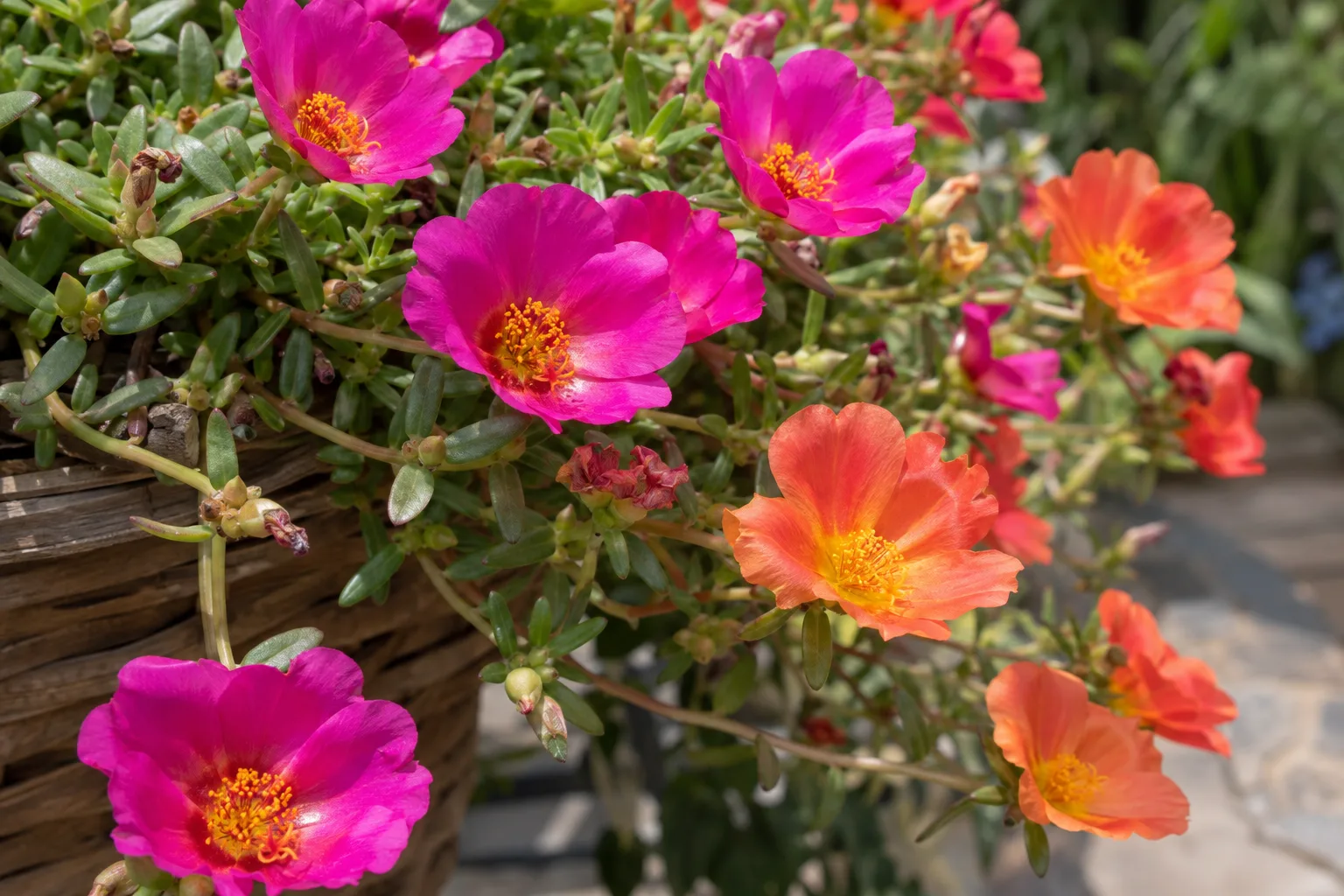
1. Portulaca
Portulaca grandiflora, also called moss rose, stays 4 to 8 inches tall and spreads 12 to 18 inches. It wants full sun, at least 6 hours a day. The thick, succulent stems store some water, so it forgives a missed watering better than most basket plants. Its drawback is that the flowers close in the evening and on cloudy days, and the plant is frost tender.
2. Angelonia
Angelonia angustifolia, sometimes sold as summer snapdragon, grows 12 to 24 inches tall and 12 to 18 inches wide. It takes full sun and keeps producing spikes of purple, pink or white flowers through the heat. Water deeply whenever the top inch of mix is dry. Because it grows upright, it works as the center of a basket and will not trail over the edge.
3. Trailing lantana
Lantana montevidensis reaches 12 to 18 inches tall and trails 2 to 3 feet. It likes full sun and reflected heat, and it blooms in lavender or white clusters for much of the warm season. It attracts butterflies and bees. In a basket it needs water much more often than lantana planted in the ground. Its drawback is toxicity: poison control resources list lantana, especially the berries, as harmful if eaten, so hang it out of reach of children and pets.
4. Sweet potato vine
Ipomoea batatas is grown for chartreuse, burgundy or bronze leaves rather than flowers. It trails 3 to 6 feet over a season and takes full sun if the mix stays evenly moist. Leaf edges scorch when a basket dries out completely. It grows so quickly that it will overrun slower neighbors unless you pinch it back every few weeks.
5. Vinca
Catharanthus roseus, often called annual vinca or periwinkle, grows 8 to 14 inches tall and 12 to 24 inches wide, and it keeps blooming in heat above 110°F. It is a different plant from the cool-season groundcover Vinca minor. Let the top inch of mix dry between waterings. Vinca is prone to root and stem rot when the mix stays wet, so it dislikes overwatering and long, soggy monsoon spells.
6. Calibrachoa
Calibrachoa hybrids, sold as million bells, grow 6 to 10 inches tall and trail 12 to 24 inches, covered in small petunia-like flowers. Expect the best show from February through May and again from September through November. They need regular water and full sun to light afternoon shade. In summer they fade, and high pH water can turn the leaves yellow.
7. Bacopa
Sutera cordata stays 4 to 6 inches tall and trails 12 to 24 inches with small white or lavender flowers. It is a cool-season plant here, best from about October through April. Give it afternoon shade after that. Its drawback is thirst, since it wilts quickly if the basket dries out.
When should I plant hanging baskets in Arizona?
Plant warm-season baskets from late February through April, and plant fall baskets from mid-September through October. Planting in June or July puts young roots under peak heat before they establish. Frost can still show up in February in parts of the East Valley, so keep tender plants near the house or ready to cover.
| Plant | Best months | Summer full sun |
|---|---|---|
| Portulaca | March to October | Handles it |
| Angelonia | March to October | Handles it |
| Trailing lantana | March to November | Handles it |
| Sweet potato vine | March to October | Handles it with steady water |
| Vinca | April to October | Handles it if drainage is good |
| Calibrachoa | February to May, September to November | Needs afternoon shade |
| Bacopa | October to April | Needs afternoon shade |
Our gardening calendars list what to plant in each month of the low desert year.
How often should I water a hanging basket in summer?
Water a basket every day from June through September, and twice a day if it is small and sits against a west wall. In spring and fall, every one to two days is usually enough. Water early in the morning so the mix is full before the afternoon heat arrives.
Lift the basket to judge it. A fully watered basket feels noticeably heavier than a dry one, and after a few days you can tell without touching the soil. Water until it runs out of the drainage holes, then let it drain. Many people connect each basket to a small drip emitter on a timer, which keeps up with summer demand better than hand watering.
What soil and fertilizer work for desert hanging baskets?
Use a bagged potting mix, never soil dug from the yard. Native soil here is alkaline and often has caliche, and it compacts into a hard block inside a container. Blending in roughly 20 percent perlite helps the mix drain quickly enough to avoid root rot during monsoon humidity.
Containers lose nutrients every time you water. Mix a slow-release fertilizer into the soil at planting, then add a liquid fertilizer at half the label strength every one to two weeks during active growth. If new leaves turn yellow with green veins, that is iron chlorosis from high pH, and a chelated iron product or an acidifying fertilizer can help. Our classes and events page shows what workshops are on the schedule.
How do I build a full-sun hanging basket?
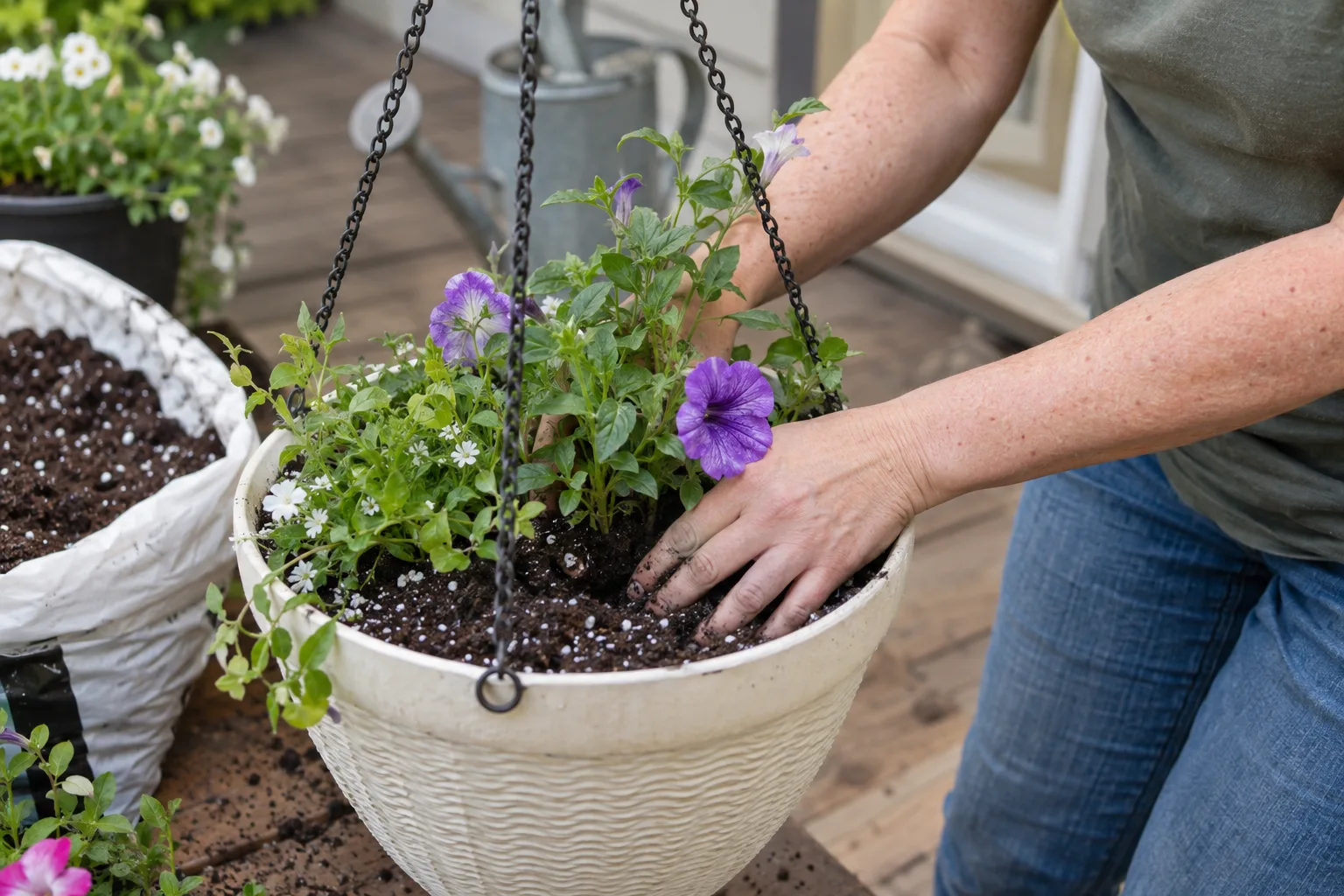
Start with a 12 to 16 inch basket in a light color, fill it with a well-drained mix, and combine one upright plant, one mounding plant and one trailing plant. Follow these steps.
- Pick a light-colored or coir-lined basket, since dark plastic and metal absorb heat. Our pottery and planters include options in several sizes.
- Fill the basket with potting mix blended with perlite, and stir in slow-release fertilizer.
- Set an upright plant such as angelonia in the center.
- Place a mounding plant such as portulaca or vinca around it, then add a trailing plant such as sweet potato vine or trailing lantana at the edge.
- Leave about 1 inch of space below the rim so water soaks in rather than running off.
- Water until it drains freely, then hang the basket and check it twice a day for the first two weeks.
Where should I hang a basket on my patio?
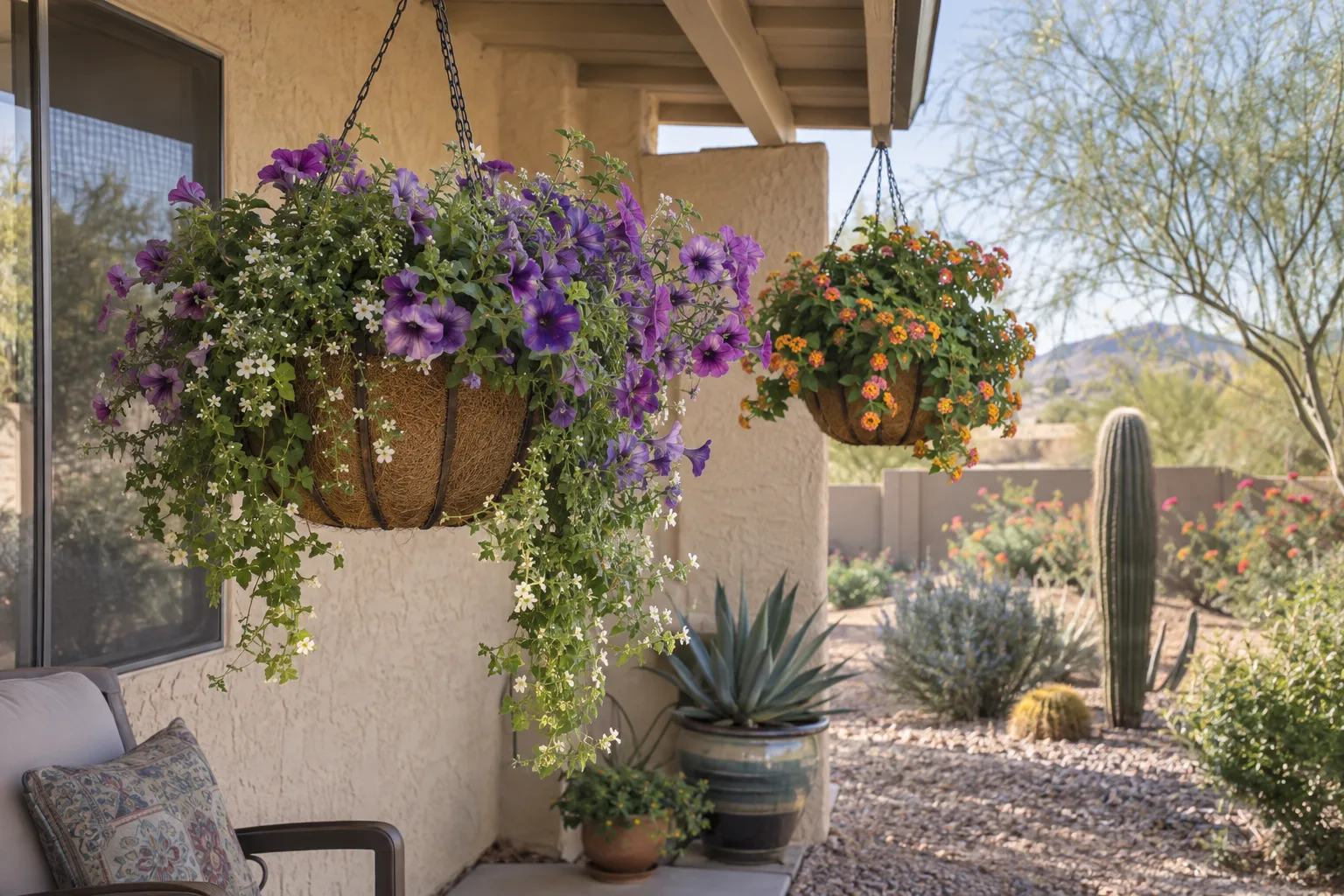
Hang baskets where they get morning sun and shade after about 1 or 2 p.m. East-facing walls and the east side of a patio cover are the most forgiving. A west or south wall adds reflected heat, which can push a basket past what even tough plants will take in July.
Hang baskets from a wooden pergola rather than against dark stucco or block, where the surface radiates heat. If your only spot faces west, choose portulaca or vinca and expect to water more often.
What mistakes shorten a basket’s life here?
- Planting cool-season flowers such as petunias, impatiens or fuchsias for summer, when they decline in heat.
- Watering once a day by habit when a small basket needs it twice.
- Using native soil, which compacts and drains poorly.
- Choosing a basket under 10 inches wide for a summer planting.
- Skipping fertilizer, which leaves plants pale and slow to bloom.
- Planting calibrachoa or bacopa after early May, so they meet summer heat before they establish.
Frequently asked questions
Can petunias handle a full-sun basket in summer here?
Petunias fade in a full-sun basket once highs stay above about 100°F. They bloom well from about October through April, so treat them as a cool-season choice and use portulaca, vinca or angelonia in summer. To stretch them into May, hang them where they get shade after about 1 p.m.
Do hanging basket plants need deadheading?
Portulaca, calibrachoa and sweet potato vine need little or no deadheading. Angelonia and vinca benefit from a light trim when flowering slows, which pushes new growth. Pinch sweet potato vine every few weeks so it does not cover its neighbors, and cut leggy lantana back by about a third.
Can I leave baskets out during the monsoon?
Yes, if the basket drains freely. Check the mix before irrigating and skip a day after a good rain. Vinca is the most likely to rot in wet mix, so hang it where it dries between storms. Secure hooks well, since monsoon winds can knock baskets down.
Do I need to protect baskets from frost?
Portulaca, angelonia, vinca and sweet potato vine are frost tender, so move them under a patio cover or against the house when a forecast low nears 32°F to 35°F. Trailing lantana often survives light frost but may lose leaves. Calibrachoa and bacopa tolerate cool nights better.
Can I put baskets on a drip line?
Yes, one small drip emitter per basket on a timer is a reliable way to keep up with summer demand. Use a separate zone from your yard irrigation, since baskets need water far more often than shrubs. Check emitters weekly for clogs from hard water.
Are hanging baskets worth the work in a full-sun spot?
Yes, if you can water daily from June through September and you choose plants for the heat. Portulaca, angelonia, vinca, sweet potato vine and trailing lantana reward that routine with color through the hottest months. Skip baskets if you travel often in summer or have no way to automate watering. An in-ground planting or a large pot will be easier to keep alive. Come by the nursery in Queen Creek and we will help you match plants to your patio.