

To handle a bobcat in your Arizona yard, stay calm, keep 30 to 40 feet away, bring pets and children inside, and let it leave on its own. Then remove the food, water and shelter that drew it in.
Key takeaways
- Keep 30 to 40 feet between you and the bobcat, and watch from indoors. Most wander off within 10 to 20 minutes.
- Bring in cats and dogs under about 20 pounds, since they fall in the size range a bobcat may treat as prey.
- Build poultry and rabbit runs with welded hardware cloth that has openings of 1 inch or smaller, a buried or outward skirt, and a solid roof.
- Bobcats follow prey, so clear brush piles, fallen fruit and spilled seed that attract pack rats, rabbits and quail.
- Call Arizona Game and Fish for a bobcat that acts sick, approaches people or has bitten or scratched someone.
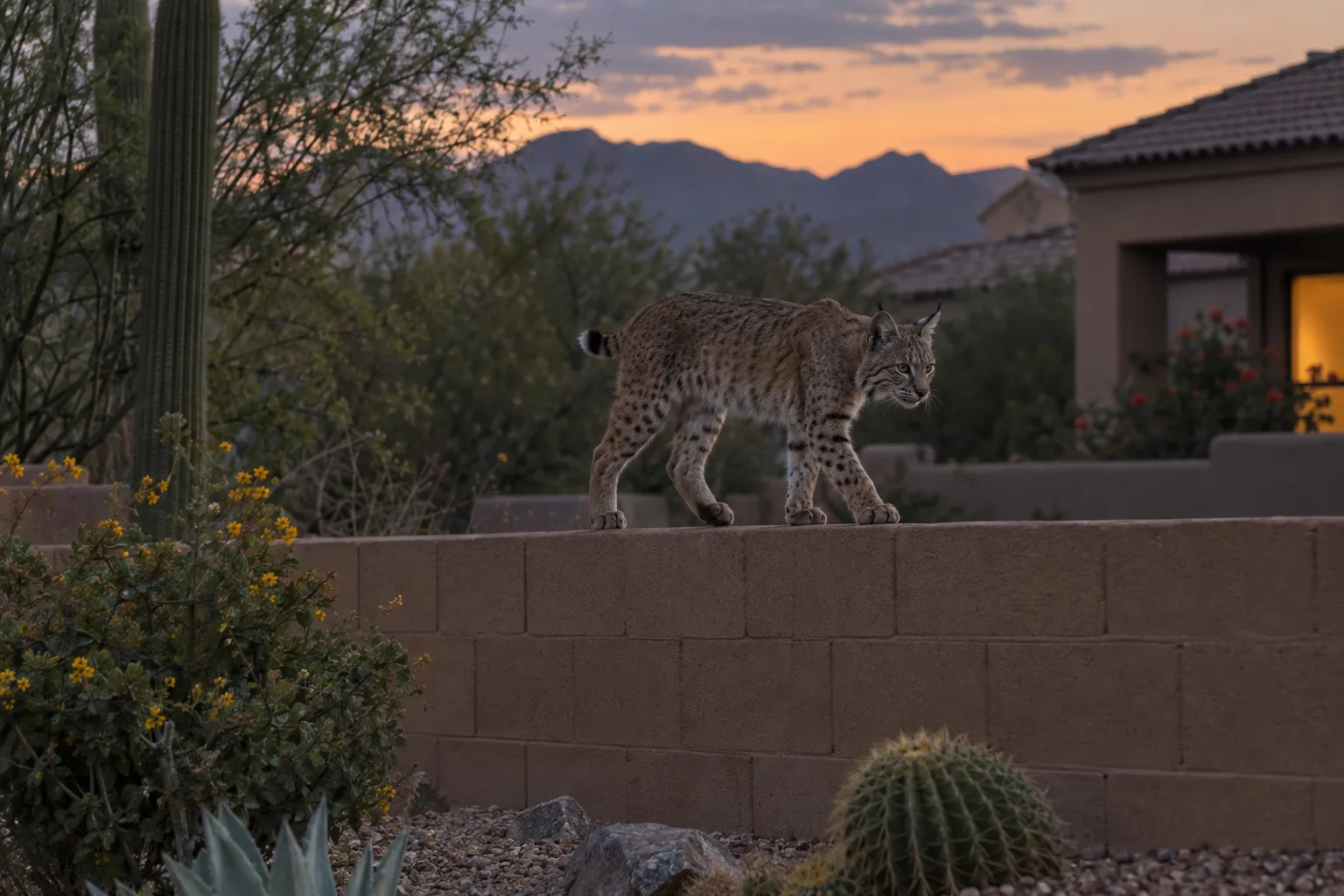
Is it normal to see a bobcat in Queen Creek?
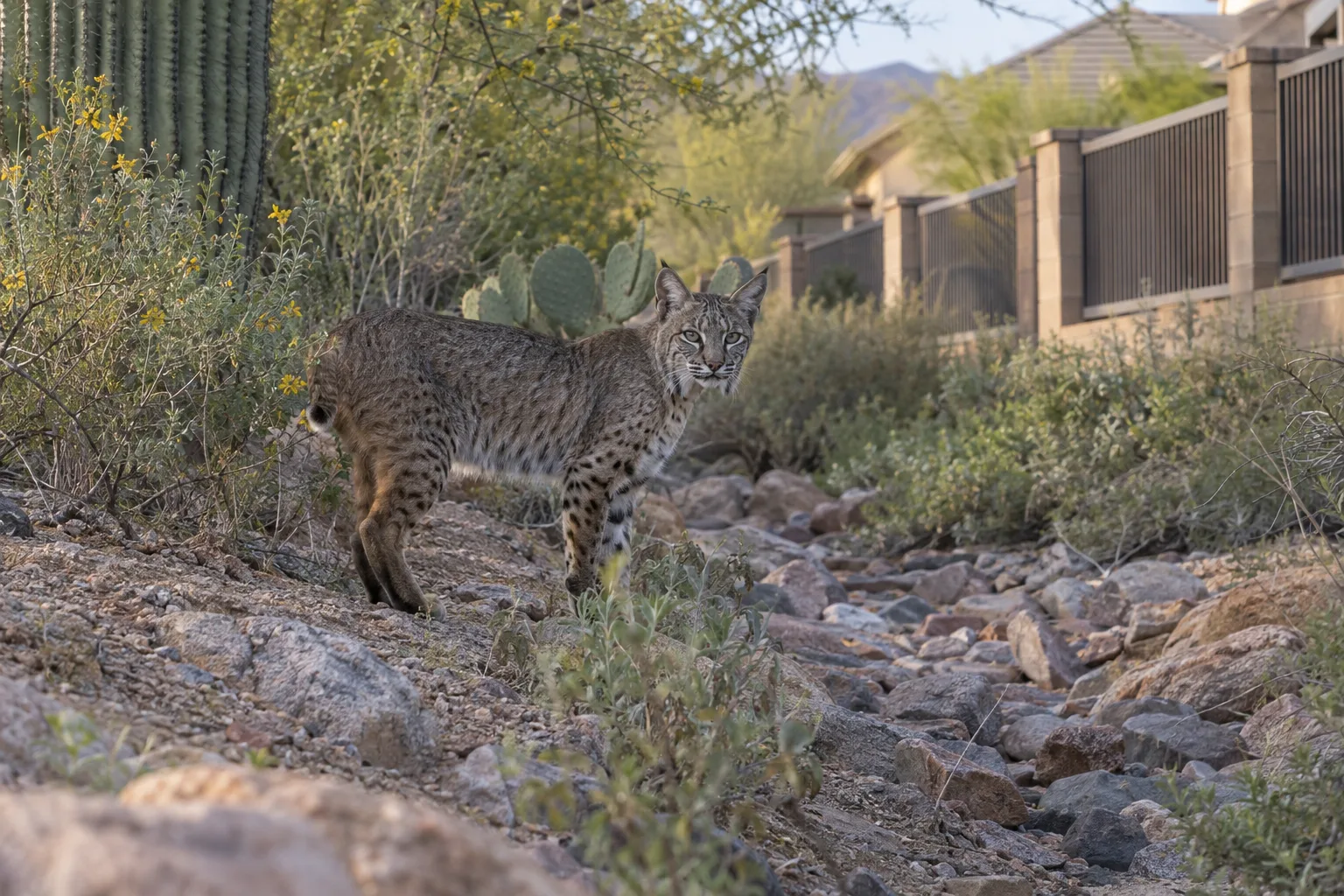
Yes. Bobcats (Lynx rufus) are native to Arizona, and they travel washes, canal banks and desert edges all around the East Valley. Adults commonly weigh 15 to 35 pounds and have short bobbed tails, tufted ears and spotted tan coats. They hunt mostly at dawn and dusk, though daytime sightings happen, especially in cooler months.
A healthy bobcat trots away once it notices you. One that stumbles, circles, looks confused or walks toward people without hesitation may be sick. That calls for a call to the state wildlife agency, covered near the end of this post.
Bobcats come for food, water and cover. Pack rats, cottontails, ground squirrels and quail all live in East Valley yards, and a bobcat follows them. With summer highs above 110°F, a pool, fountain or pet bowl is also an easy drink.
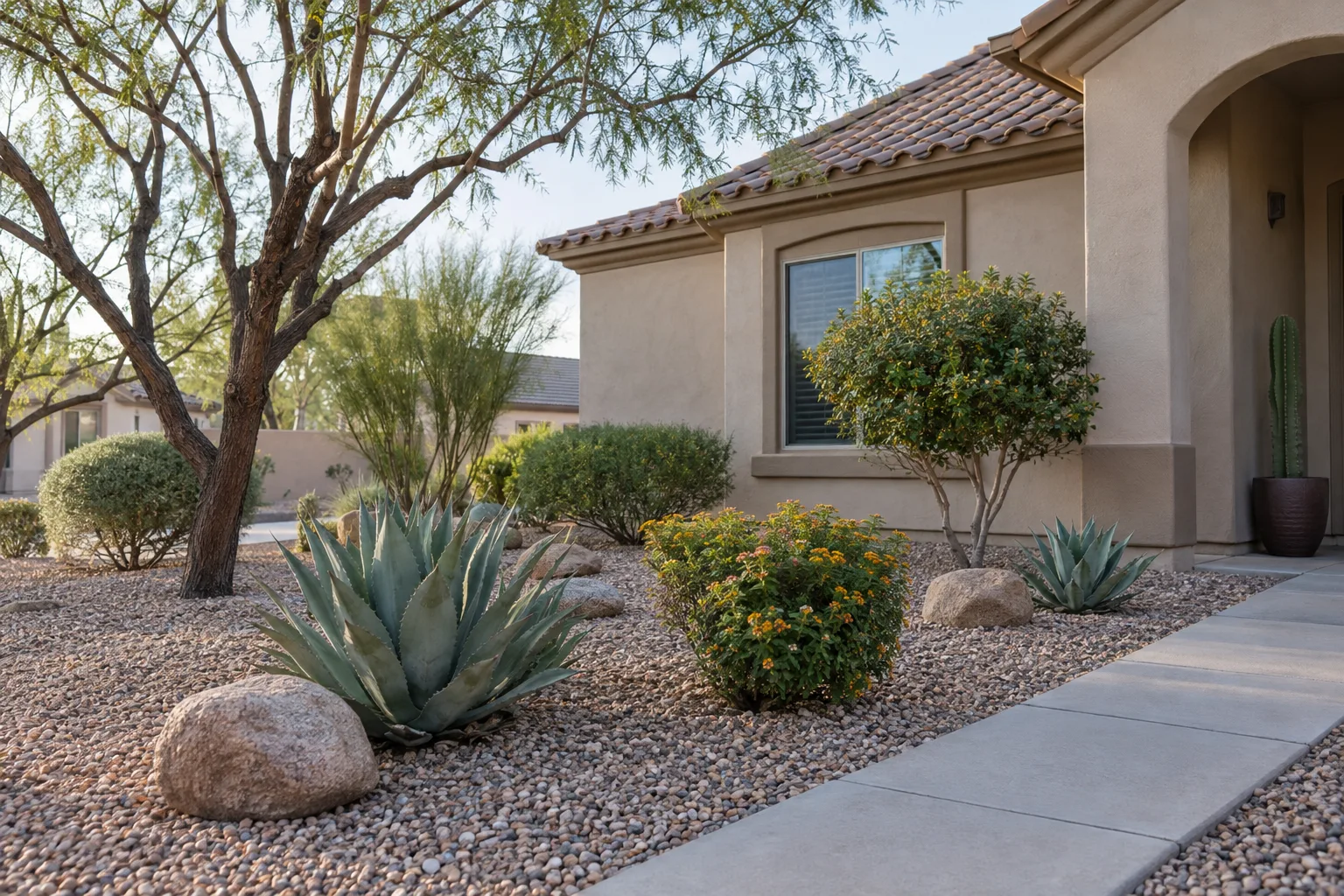
Dense low shrubs give prey a place to hide. When you pick new plantings, browse our plant selection for shrubs and accents you can prune up off the ground so the base stays open.
What should I have ready before a bobcat shows up?
A few inexpensive items turn a surprise visit into a routine one. You can gather all of them in an afternoon, and most of them keep working every night after that.
- A flashlight, so you can check the yard before letting pets out after dark
- Motion-activated lights along fence lines and near gates
- Welded hardware cloth with 1 inch or smaller openings for any coop, hutch or run
- Trash cans and compost bins with tight lids
- The number for your regional Arizona Game and Fish Department office, saved in your phone
What are the 9 ways to handle a bobcat in your yard?
Work through these in order. They start with your first few seconds of seeing the animal and end with what you do after it leaves.
- Stay calm and keep your distance. Hold 30 to 40 feet away and avoid sudden movements or running. Running or rushing at the animal can trigger a defensive reaction.
- Read its behavior. Is it moving away, standing still or approaching? A bobcat that leaves quickly is behaving normally.
- Look bigger if it approaches. Raise your arms or open your jacket, and do not crouch or turn your back.
- Make noise without confronting it. Clap, or speak in a firm, loud voice. Stay at a distance while you do it.
- Bring small pets and children inside. Use a calm, even voice rather than shouting.
- Back toward your door and watch from a window. Keep pets in until you are confident the bobcat has left the area.
- Leave it an exit. If a bobcat is inside a garage or a gated patio, open the exit, step well back and wait.
- Remove attractants once it is gone. Bring in pet food, empty outdoor water dishes overnight, and close up trash and compost before dusk.
- Report the sighting. Contact the Arizona Game and Fish Department, especially if the animal looked sick or acted oddly.
What should I never do around a bobcat?
Three mistakes cause most of the trouble. All three turn a passing wild animal into a risk for you and for the bobcat.
Feeding it
Leaving food out teaches a bobcat that people mean meals. Animals that lose their wariness tend to return daily and become a hazard, and wildlife officials may then have to step in. Arizona Game and Fish discourages feeding wildlife, so check with the department about the rules that apply to you.
Cornering or chasing it
Even a small bobcat has sharp claws and teeth that can cause deep puncture wounds. A cornered one defends itself. Open a path and back away.
Trapping or relocating it yourself
Bobcats are managed as wildlife by the state, and trapping or moving one is a job for the Arizona Game and Fish Department, not a homeowner. A bite or scratch also means medical care and a possible rabies exposure review, so call the department instead of improvising.
How do I protect chickens, rabbits and pets from a bobcat?
The enclosure is your main defense. Welded hardware cloth with openings of 1 inch or smaller holds up where chicken wire does not, because a hungry predator can tear through or reach through thin wire.
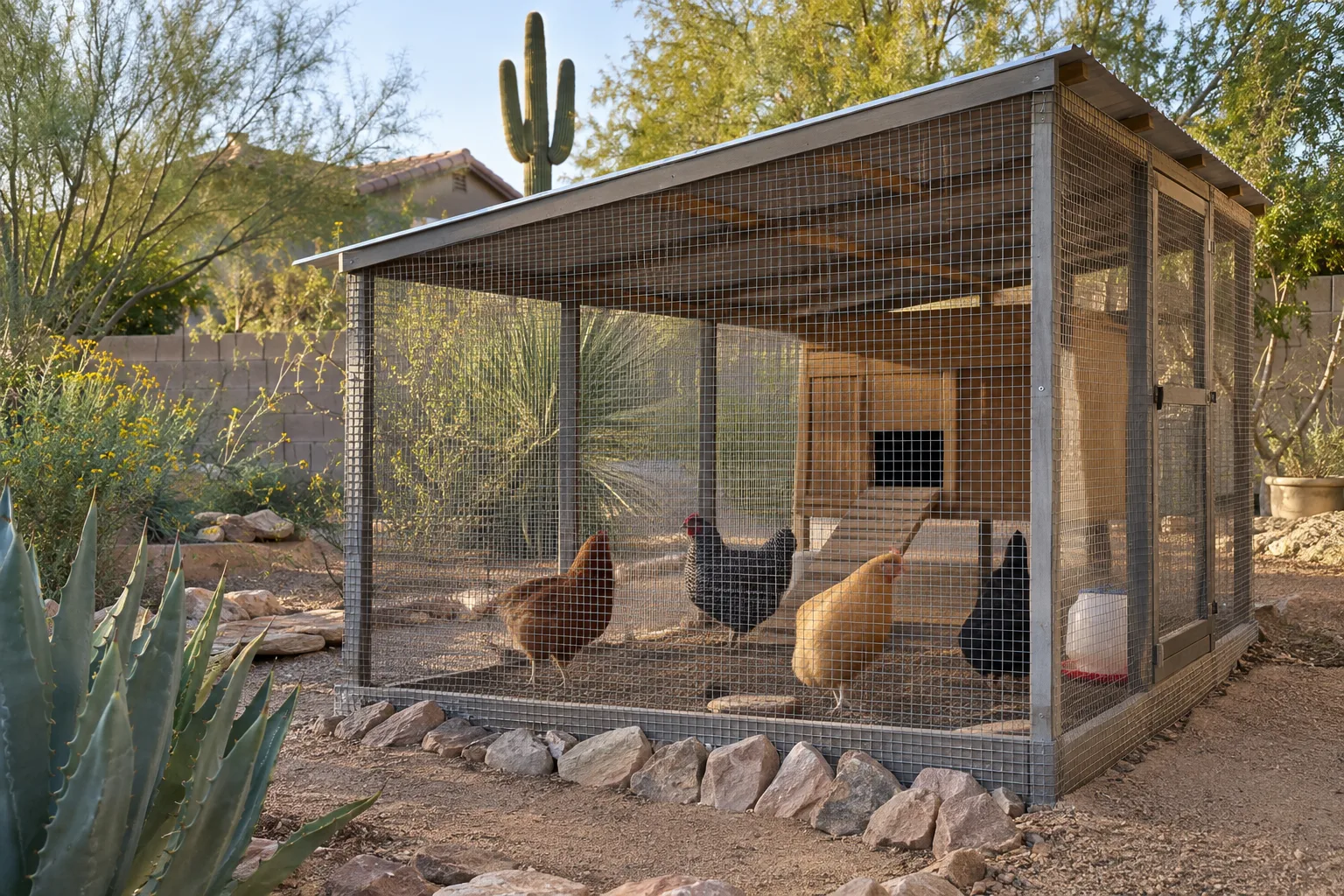
- Skirt or bury the base. Extend hardware cloth about 12 inches outward or down so nothing can dig under it.
- Cover the top. A solid roof or hardware cloth overhead keeps out a cat that climbs or jumps.
- Latch it well. Use a carabiner or double latch rather than a hook and eye.
- Lock birds in every night. Dawn and dusk are the busiest hours for bobcats.
Bobcats can climb and jump, and a standard 6-foot block wall may not stop a determined one. Roller systems that mount along wall tops are sold to make footholds harder, though results vary.
Small dogs and cats should be supervised outside and kept in around dawn and dusk. A screened outdoor cat enclosure gives an outdoor cat safe fresh air.
Which yard changes make bobcats lose interest?
Remove what feeds their prey. A bobcat that finds no pack rats, rabbits or quail has little reason to return.
Pack rats build large nests in dense or spiny plantings, storage areas and woodpiles. Move firewood away from walls, clear brush piles, and thin the lowest branches of shrubs so you can see through to the ground. If you grow citrus, pick up fallen fruit, which draws rodents (browse our citrus trees if you are planning a new one). Seed on the ground draws quail, so use tube feeders and bring them in at night.
Water is the other draw. Decorative fountains are fine for most yards, but consider turning one off overnight during the hottest months and emptying pet bowls after dark.
Motion-activated lights along fences may startle a visitor and are worth installing. The evidence that lights keep bobcats away for good is limited, so treat them as one layer among several.
When should I call Arizona Game and Fish?
Call when a bobcat shows signs of illness, has contact with a person or pet, or stays on your property. Most visits need no call at all.
- It staggers, circles, seems confused or approaches people without fear
- It has bitten or scratched a person, or hurt a pet
- The same bobcat returns daily after you have removed attractants
- You find kittens or a den under a shed, deck or other structure
- You find a dead bobcat or one that looks badly injured
If a person or pet has been bitten or scratched, get medical or veterinary care first, then report the incident. Let the department decide whether to trap, test or move an animal.
Frequently asked questions
Are bobcats dangerous to people?
Healthy bobcats rarely threaten adults and usually retreat when given room. The risk rises when an animal is cornered, injured or sick, and bobcats can carry rabies like other wild mammals. Keep your distance, keep small children close, and report any bobcat that shows no fear of people.
Will a bobcat eat my vegetables or citrus?
No. Bobcats are carnivores, so your garden beds and lemon tree are of no interest to them. If one hangs around the garden, it is hunting rabbits, pack rats or ground squirrels that moved in nearby. Fix the prey problem and the bobcat usually moves on.
Will the bobcat come back?
It may, especially if food, water or shelter remain. Many bobcats patrol a regular route, and your yard might sit along it. A visit every few weeks with no lingering is normal. A daily visit points to something worth fixing, such as a rodent nest or an unsecured coop.
Does a motion-activated sprinkler keep bobcats out?
It might startle a visitor, but the evidence is limited. A sudden spray can also fail to bother a thirsty animal in summer heat. If you try one, use it alongside lights, secured enclosures and prey cleanup rather than as your only defense.
What should I do if a bobcat has kittens under my shed?
Leave them alone and call Arizona Game and Fish for guidance. Keep pets and children away, and do not block the entrance or try to move the kittens. The mother often leaves the den for hours to hunt and may relocate her young on her own.
Is a bobcat in the yard a problem you need to solve?
Usually not. A single bobcat passing through at dusk is part of living at the edge of the desert, and calm distance is the whole response. It becomes a problem when pets or poultry are exposed, when food is left out, or when the animal acts sick. Households with free-roaming small pets or an unsecured coop need to act soon. Everyone else can tidy the yard and enjoy the sighting. If you want help choosing open, easy-to-maintain plants, come visit us at the nursery in Queen Creek.