
You can succeed at growing tomatoes in Arizona by planting in two short windows, choosing heat-tolerant varieties, and keeping roots cool with mulch and deep watering. These nine tips cover timing, soil, water and heat for Queen Creek and the East Valley.
Key takeaways
- Set spring transplants out from about late January to mid-February, and fall transplants from late July through August.
- Blossoms tend to drop when days run above roughly 90 to 95°F or nights stay above about 75°F, so fruit sets in the cooler windows.
- Spread mulch 3 to 4 inches deep and pull it back 2 to 3 inches from the stem.
- Check the soil 2 to 3 inches down before you water, instead of following a fixed schedule.
- Mix compost into alkaline, caliche-heavy ground, or plant in a raised bed about 12 inches tall.
When should I plant tomatoes in Arizona?
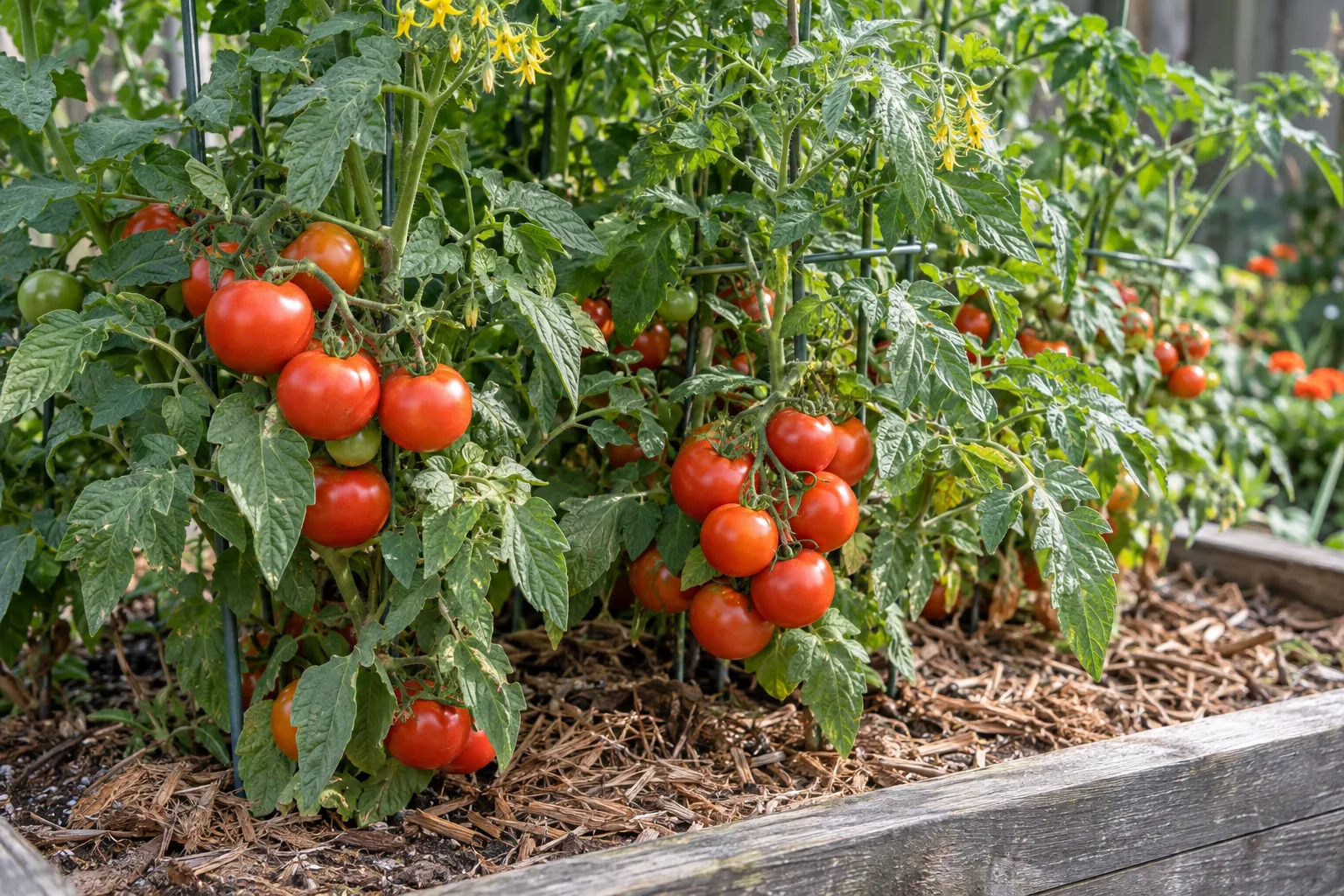
Plant spring transplants from roughly late January to mid-February and fall transplants from late July through August. Those are the two stretches when tomatoes can flower and set fruit in mild weather. The University of Arizona Cooperative Extension publishes a vegetable planting calendar for Maricopa County worth checking against these dates, and our gardening calendars give month-by-month reminders.
Tip 1: Use both the spring and fall windows
Spring plants need to be producing fruit before highs settle into the 100s, which usually happens by mid-May. Frost can still reach Queen Creek in late winter, so keep frost cloth handy for the first few weeks. Fall plants go in while it is still hot, which feels backward, but they grow into cooling weather and fruit from about October into December.
| Season | Transplants go in | Harvest window | Main challenge |
|---|---|---|---|
| Spring | Late January to mid-February | March to May | Heat arrives early and ends fruit set |
| Fall | Late July to August | October to December | Heat while plants are small, then monsoon humidity |
Which tomato varieties and transplants work best in the low desert?
Short-season, heat-tolerant varieties started from nursery transplants give the best odds. Large beefsteak types bred for cooler regions tend to stall here. Choosing well at the start saves you more trouble than any later fix.
Tip 2: Choose heat-tolerant, short-season varieties
Look for varieties that mature in roughly 55 to 75 days for spring, and for tags that mention heat-setting fruit. Early Girl (about 57 days), Celebrity (about 70 days), Solar Fire, Heatmaster and Sweet 100 cherry are varieties we commonly carry, though availability changes week to week and season to season. Cherry types usually handle heat well because small fruit ripen quickly. Browse what is available in our herbs, vegetables and berries department.
Tip 3: Start with transplants
Seed adds six to eight weeks before you even reach the 55 to 90 days most tomatoes need, and the spring window does not allow for that. Buy transplants about 6 to 10 inches tall with thick stems and green lower leaves. Skip plants already loaded with flowers or fruit, since they are stressed and slow to settle in. Harden them off for 3 to 4 days in bright shade before planting.
How do I prepare soil for tomatoes in Queen Creek?
Loosen the ground, mix in compost, and deal with caliche before you plant. Our native soil is alkaline, often above pH 7.5, and caliche layers can sit 12 to 18 inches down and hold water around roots. Hard irrigation water can push pH higher over time.
Tip 4: Amend the soil or build up
Work 3 to 4 inches of compost into the top 12 inches of soil, and break through any caliche you hit with a digging bar. A raised bed about 12 inches tall filled with a quality mix sidesteps both problems. Large pots work too, and you can find them in our pottery and planters. Test your soil before adding sulfur, because more is not better.
Tip 5: Plant deep and add supports on day one
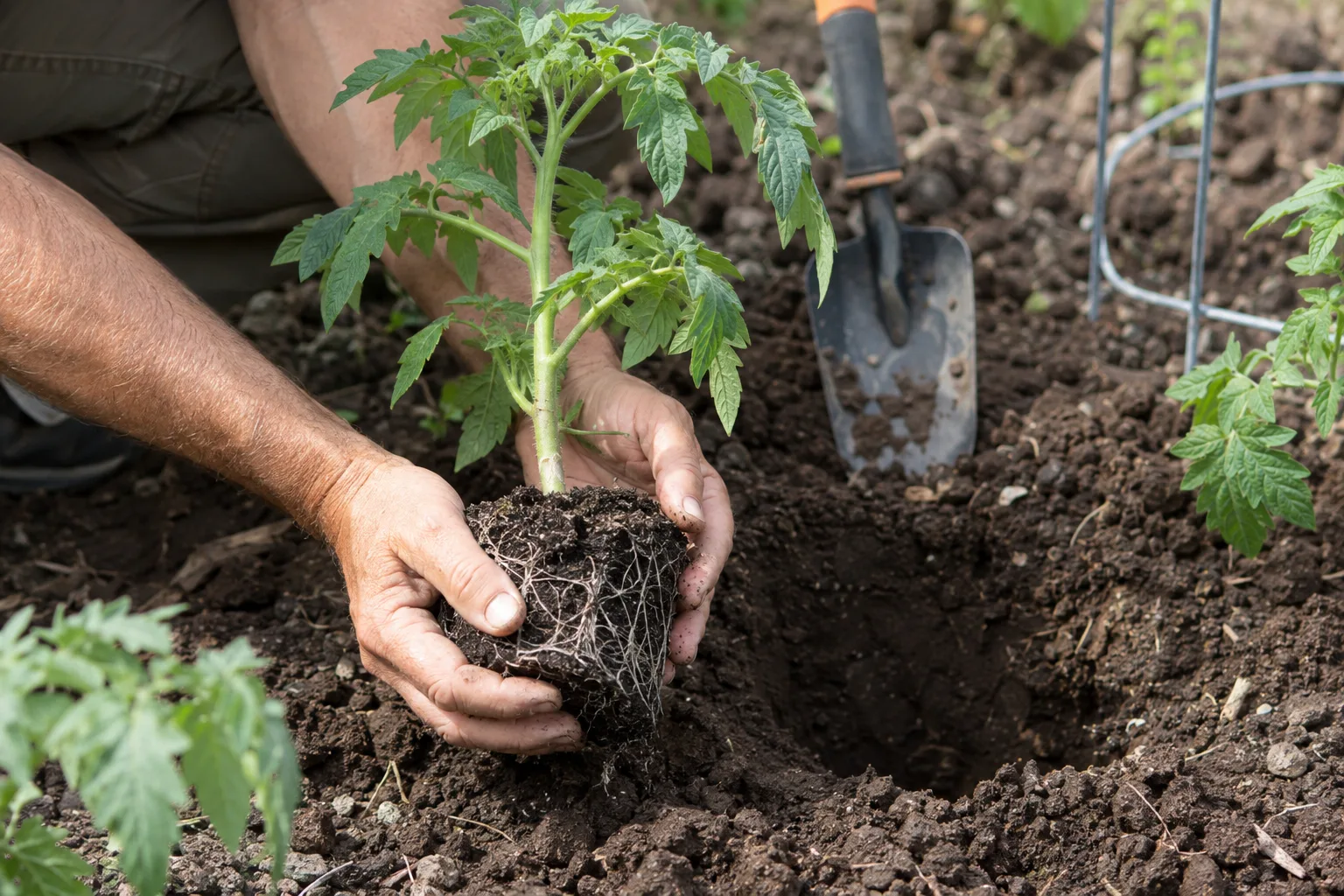
Tomato stems sprout roots wherever they are buried, so deep planting builds a larger root system. Follow these steps for either season.
- Water the transplant in its pot an hour before planting.
- Dig a hole deep enough to bury the stem 2 to 4 inches below the pot line.
- Strip the lower leaves that would sit underground.
- Mix a little balanced fertilizer into the backfill, not against the roots.
- Set the cage or stake now, so you do not damage roots later.
- Water deeply to settle the soil and remove air pockets.
- Mulch the same day.
How often should I water tomatoes in Arizona?
Water deeply and let the top inch or two of soil dry between sessions. As a rough guide, established in-ground plants often want water every 2 to 3 days in mild spring weather, daily once highs pass 100°F, and every 3 to 4 days in the cooler stretches of fall. Your soil and sun exposure will shift those numbers.
Tip 6: Water by feel
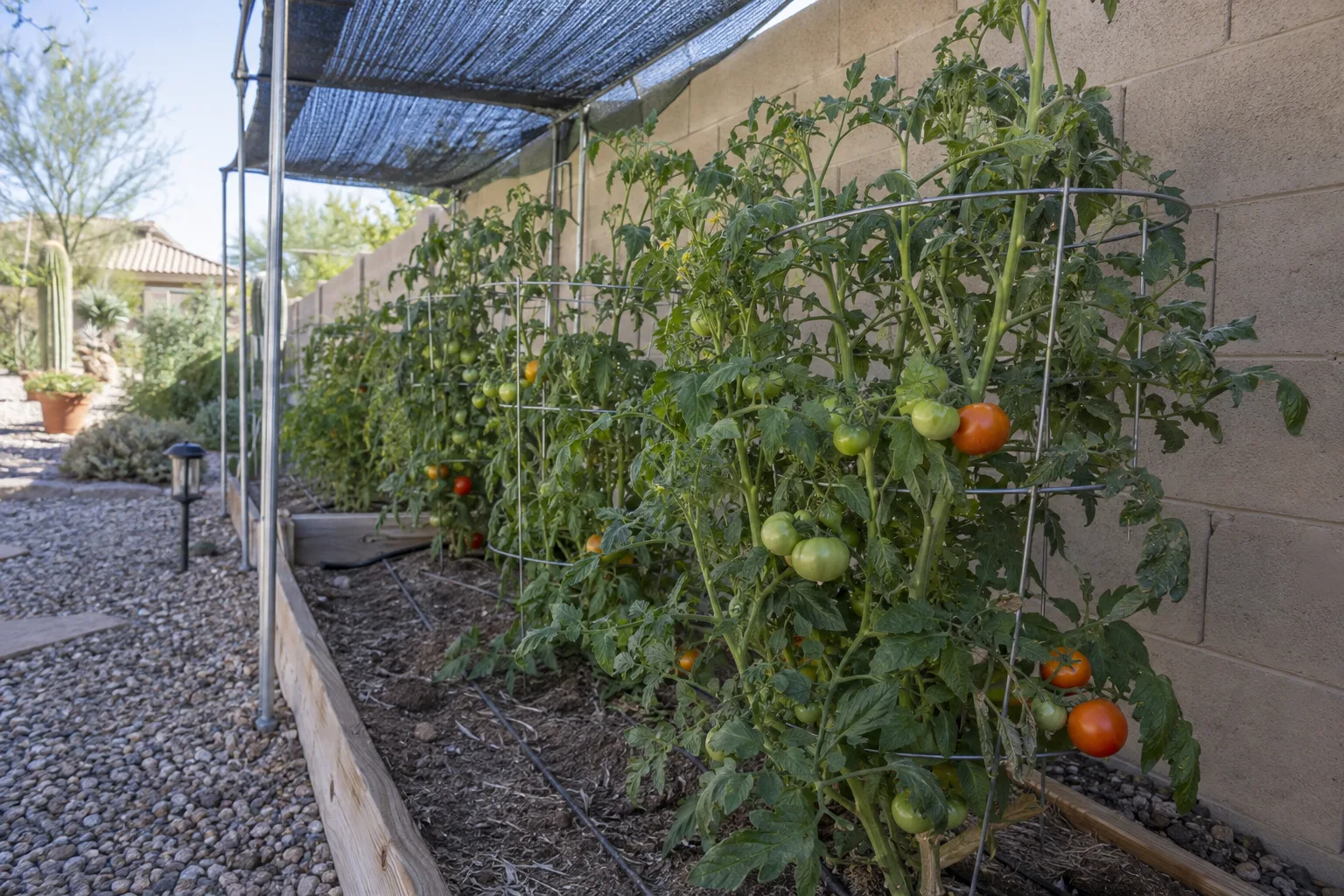
Push a finger 2 to 3 inches into the soil near the plant. Dry means water, damp means wait. Drip emitters set 6 to 8 inches from the stem put water on the roots and keep leaves dry, which lowers the odds of fungal disease. Shallow, frequent watering keeps roots near the hot surface, so favor longer, less frequent sessions.
Tip 7: Mulch every bed
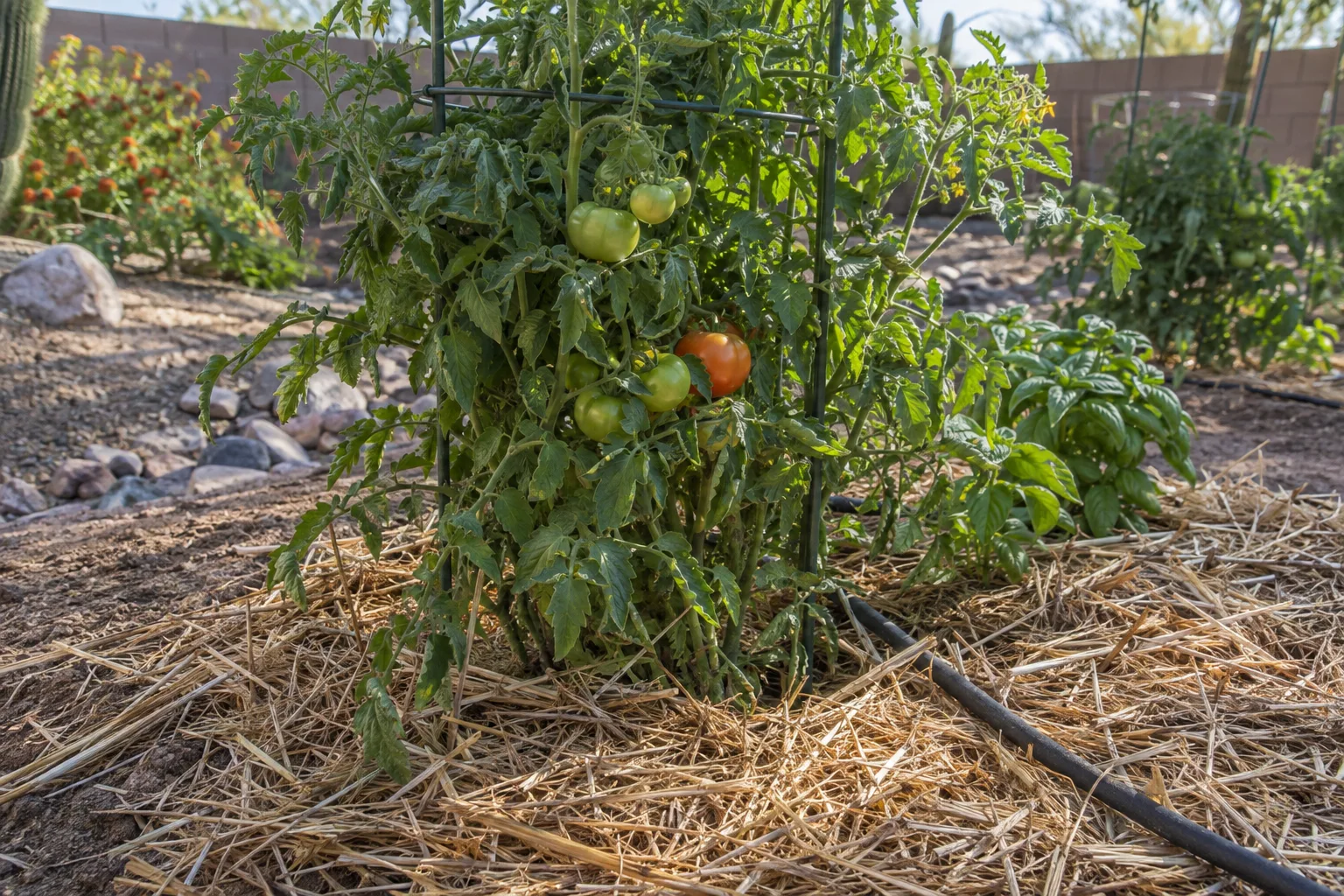
A 3 to 4 inch layer of straw, shredded wood or bark slows evaporation, keeps roots cooler, suppresses weeds and feeds the soil as it breaks down. Keep it 2 to 3 inches off the stem to prevent crown rot. Avoid rock mulch around vegetables, because stone absorbs and radiates heat. Top up the layer after monsoon storms, which can flatten it.
How should I feed tomatoes in the low desert?
Feed in stages, with balanced fertilizer at planting and a lower-nitrogen formula once flowers appear. Our fast-draining soils hold few nutrients, so tomatoes use up what you give them. Too much nitrogen late grows big leafy plants with little fruit.
Tip 8: Match feeding to growth
Mix a balanced granular fertilizer into the planting hole, then switch to a tomato formula at first flowering and repeat about every 3 to 4 weeks through harvest, following the label. Yellow new leaves with green veins point to iron chlorosis, which is common in alkaline soil. Chelated iron applied to the soil corrects it more reliably than a leaf spray.
How do I protect tomatoes from heat?
Give plants afternoon shade and an eastern exposure when you can. Tomato pollen loses viability in high heat, so flowers open and fall without setting fruit. Leaves may curl and plants wilt in late afternoon even when well watered.
Tip 9: Add shade before you need it
Hang 30 to 40 percent shade cloth over the plants or along the west and southwest sides as spring warms up. Morning sun with afternoon shade suits tomatoes best, and a spot beside a west-facing wall needs the most help. Shade cloth extends the harvest by a few weeks. It cannot rescue a crop through July.
What mistakes shorten a tomato harvest in the low desert?
Most losses trace back to timing, water or heat.
- Planting in March or April and expecting heavy fruit set before summer.
- Watering a little every day, which leaves roots shallow.
- Skipping mulch, so soil dries quickly and heats up.
- Pruning so hard that fruit is exposed to sunscald.
- Adding nitrogen after flowering starts.
Frequently asked questions
Can I grow tomatoes through an Arizona summer?
Rarely with good results. Highs of 105 to 115°F from June through August stop most fruit set and stress plants even under shade. Most gardeners pull spring plants once production ends in May or June, rest the bed under mulch, and replant in late July. Keeping plants alive under shade cloth as a bridge can work, but yields are uncertain.
What causes blossom end rot?
Blossom end rot, a dark, leathery patch on the bottom of the fruit, usually follows uneven watering that interrupts calcium uptake. Native soil often has plenty of calcium already. Even out your watering and add mulch before reaching for calcium products, and give the plant a few weeks to respond.
Why are my tomato leaves turning yellow?
Yellow new leaves with green veins usually mean iron chlorosis, common in alkaline soil, and chelated iron on the soil helps. Yellow lower leaves without a vein pattern can come from overwatering, low nitrogen or normal aging as the plant matures. Check the pattern and your watering before you treat anything.
Should I prune my tomato plants?
Prune lightly. Pinch off suckers on indeterminate varieties to keep plants manageable, but leave plenty of foliage, because leaves shade fruit from sunscald in our intense sun. Determinate varieties set fruit on a more compact frame and need little or no pruning. Remove only dead or yellow leaves from them.
Can I grow tomatoes in containers here?
Yes, if the pot is large, roughly 15 gallons or more, with good drainage. Dark containers heat quickly, so keep them out of full afternoon west sun and mulch the surface. Pots dry out faster than beds, so expect to check moisture daily once temperatures climb. Cherry types are a reliable choice for pots.
Are tomatoes worth growing in the Arizona low desert?
Yes, if you can plant in the two windows and water consistently. You can expect a good spring crop and often a stronger fall one. Skip them if you will not be around to water, if your only sunny spot bakes in full west sun with no way to shade it, or if you want fruit all summer. Stop by our Queen Creek nursery and ask our staff which tomatoes suit your yard.