

Growing cosmos in Arizona works when you plant in late winter or fall, hold back on fertilizer, and loosen caliche before planting. Six problems cause most failures: timing, too much nitrogen, alkaline soil, watering, heat and pests. Each one has a practical fix.
Key takeaways
- Plant cosmos from late February through March for spring bloom, or from late September into October for fall bloom.
- Skip high-nitrogen fertilizer, because rich soil produces tall, leafy plants with few flowers.
- Cosmos tolerate alkaline soil, but check for caliche 18 to 24 inches down before you plant.
- Water deeply, let the top inch of soil dry between waterings, and use drip emitters instead of sprinklers.
- Spring cosmos fade once highs hold above about 100°F, and afternoon shade buys a few extra weeks.
When should I plant cosmos in Arizona?
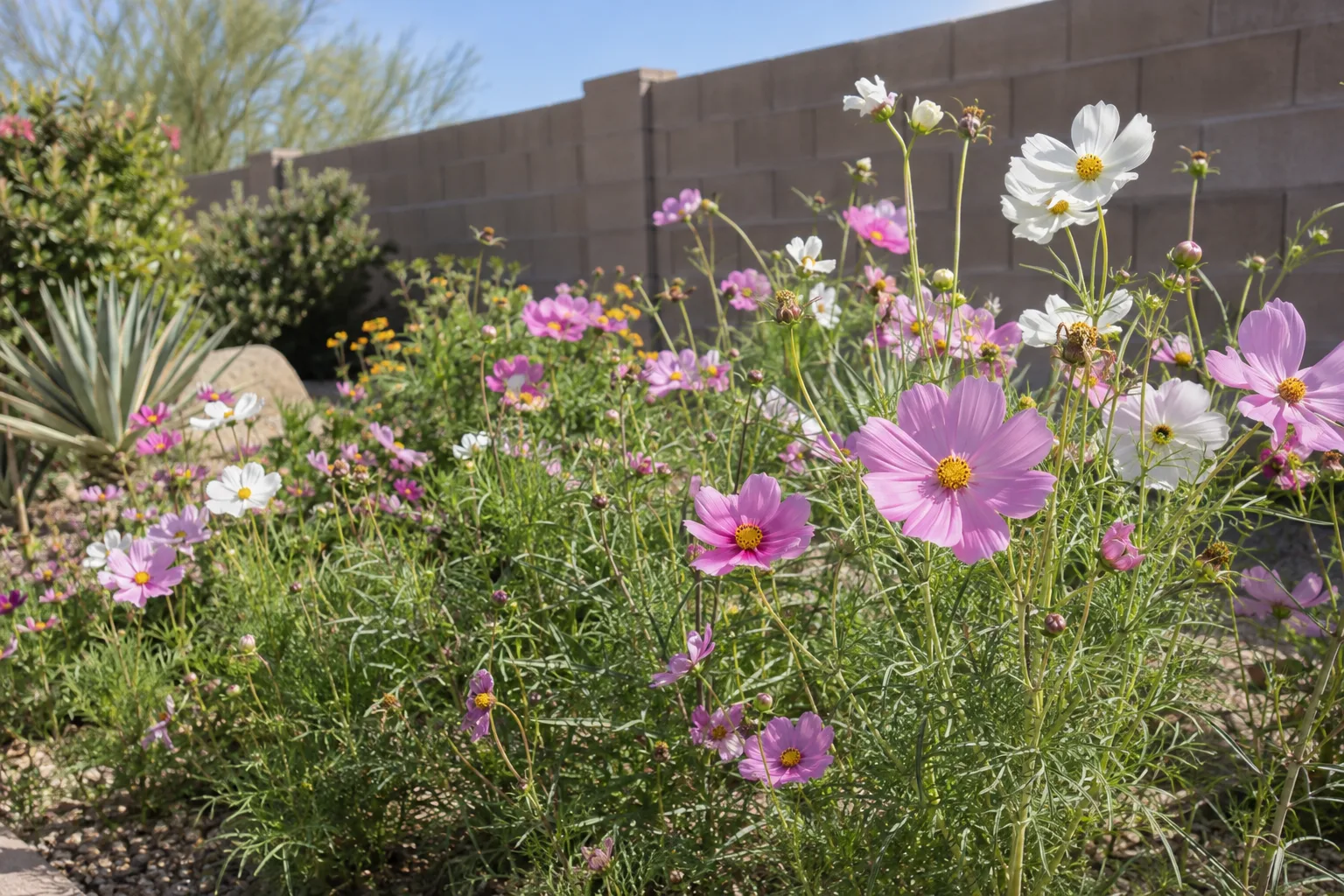
Plant cosmos from late February through March for spring bloom, or from late September into October for fall bloom. Cosmos are warm-season annuals, yet highs that hold above 100°F make them drop buds and fade. Timing decides how long they flower.
Spring plantings get roughly 10 to 12 weeks of good weather before the heat of May and June arrives. Wait until frost risk has passed in your yard, since cosmos are frost-tender and Queen Creek can see cold nights into late February or early March. Frost kills young plants fast. A planting made in April gets only a few weeks of flowers.
Fall is the underused window. Sow once daytime highs settle into the 90s or lower, which in many East Valley years happens in late September or early October, and the plants bloom into late fall until the first frost. Our gardening calendars show the monthly planting windows, and you can browse the annual flowers and foliage department for cosmos and good companions.
Why are my cosmos tall but not blooming?
Too much nitrogen is the usual cause. Cosmos come from Mexico, where they grow in lean, rocky soil, and a rich bed pushes them to make leaves and stems at the expense of flowers.
The fix starts at planting. Mix in no more than about 2 inches of compost, and skip routine feeding altogether. Beds next to lawns or roses often pick up extra nitrogen from the fertilizer meant for those plants, so give cosmos a spot away from them. Lush, soft growth also attracts aphids.
If plants are already tall and leafy without buds, stop all feeding and water deeply to move nutrients down past the roots. Give them two to three weeks. If you decide to feed at all, choose a bloom-type fertilizer with a low first number on the label, and use it once at most.
Can cosmos grow in alkaline soil and caliche?
Yes, cosmos tolerate alkaline soil well, but caliche can stop them. Many East Valley yards test between about 7.5 and 8.5 on the pH scale, and cosmos handle that range better than most flowers. A hard caliche layer is the bigger problem, because cosmos send down a taproot that needs room.
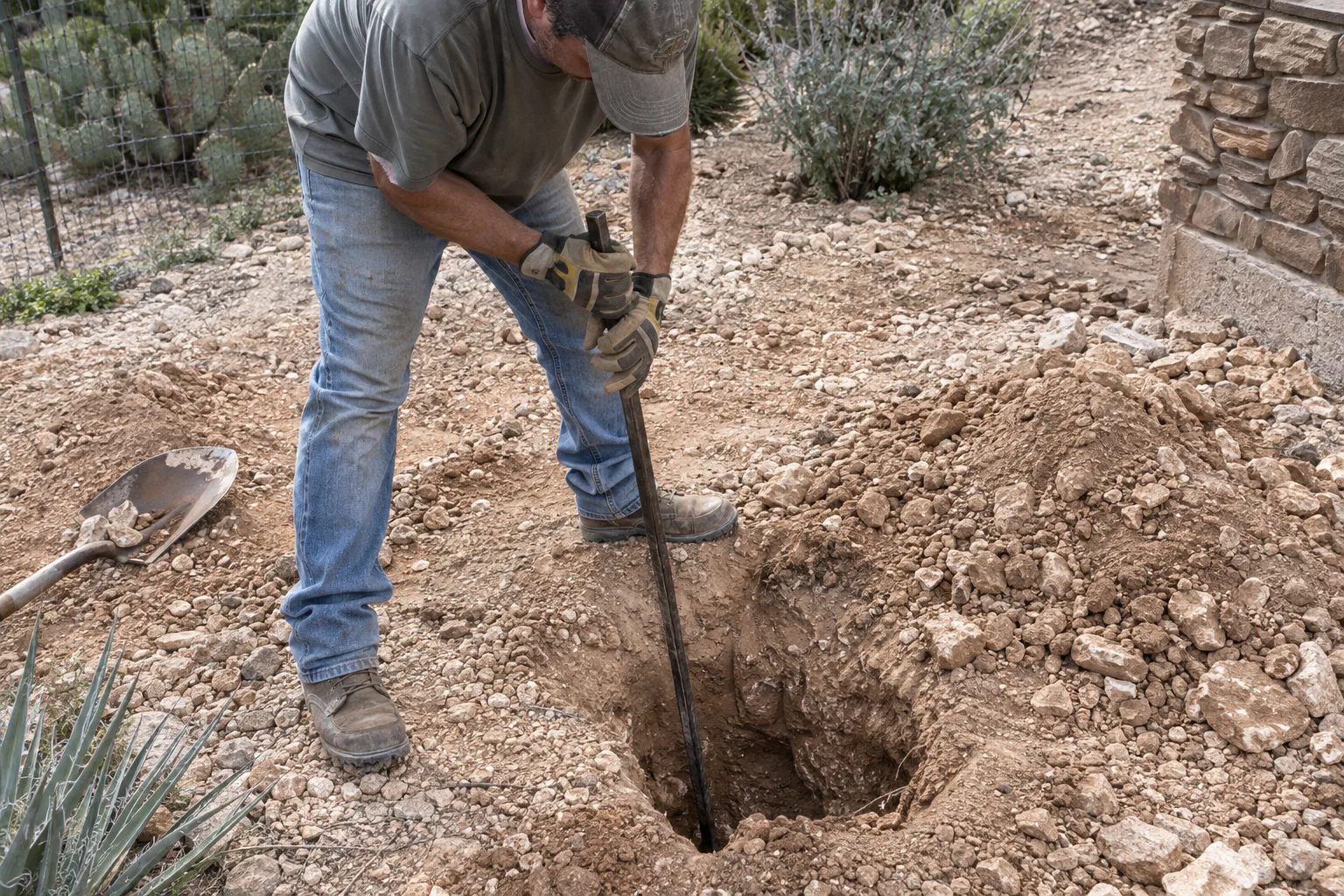
Caliche is a cemented layer of calcium carbonate that can sit anywhere from a few inches to several feet below the surface. Before planting, dig a hole 18 to 24 inches deep and fill it with water. If the water is still standing the next day, drainage is poor. You can break through the layer with a digging bar, or skip the problem and plant in a raised bed.
Leaves that turn yellow between green veins, mostly on new growth, point to iron chlorosis, which is common in alkaline soil. A chelated iron product used as the label directs corrects it quickly. Soil sulfur works too slowly to rescue a single season of cosmos.
How often should I water cosmos in the low desert?
Keep the soil evenly moist for the first three to four weeks, then water deeply and let the top inch dry out between waterings. In warm spring weather that often works out to every 2 to 3 days, and in cool fall and winter weather every 5 to 7 days. Your soil and exposure change the schedule.
Soggy soil kills cosmos faster than dry soil does. Wet roots in warm ground invite root rot, and the first signs are yellowing and wilting even though the soil is damp. Water slowly and deeply so roots follow the moisture down 12 inches or more. Light, frequent sprinkling keeps roots near the surface, where heat reaches them first.
Drip emitters placed a few inches from each plant keep foliage dry, which cuts down on leaf diseases. A September sowing can meet the tail end of monsoon storms, so choose a spot that drains well or use a raised bed.
How do I keep cosmos blooming as the heat arrives?
You can stretch spring bloom by a few weeks, but you cannot carry cosmos through a summer above 110°F. Plan to enjoy them while they last, then replace them.
Afternoon shade helps most. An east-facing bed that gets morning sun and shade after about 1:00 p.m. keeps flowers going longer than a west-facing bed against a hot wall. Shade cloth rated at roughly 30 to 40 percent also works. A 2-inch layer of straw or shredded bark, kept a couple of inches off the stems, slows moisture loss from the soil.
Remove spent blooms every few days to keep new buds coming. Once highs sit above 100°F and plants drop buds, pull them. Heat-tolerant annuals such as portulaca or vinca can fill the bed for summer.
Which pests and diseases attack cosmos here?
Aphids, spider mites and powdery mildew are the three to watch. Check the plants every week or so, because all three are easier to handle early.
Aphids
Aphids cluster on new growth and flower stems. A strong spray of water from the hose knocks off light infestations. For heavier ones, insecticidal soap works if you follow the product label for rates and timing.
Spider mites
Mites favor hot, dry weather and leave fine webbing and pale stippling on leaf undersides. Spray the undersides with water every few days, and pull plants that have declined past saving.
Powdery mildew
Mildew shows up as a white, dusty coating, usually on older lower leaves first. Space plants 12 to 18 inches apart for air flow, remove affected leaves, and keep water off the foliage. Any spray you choose, including neem oil, should be used only as the label directs.
Cosmos flowers also feed beneficial insects such as hoverflies, which eat aphids, so a row near the beds in our herbs, vegetables and berries department plants can help. It will not replace checking plants for pests. If a plant wilts while the soil is moist, or a pest spreads across several plants, bring clear photos to us or to your county Cooperative Extension office.
Which cosmos types suit the East Valley?
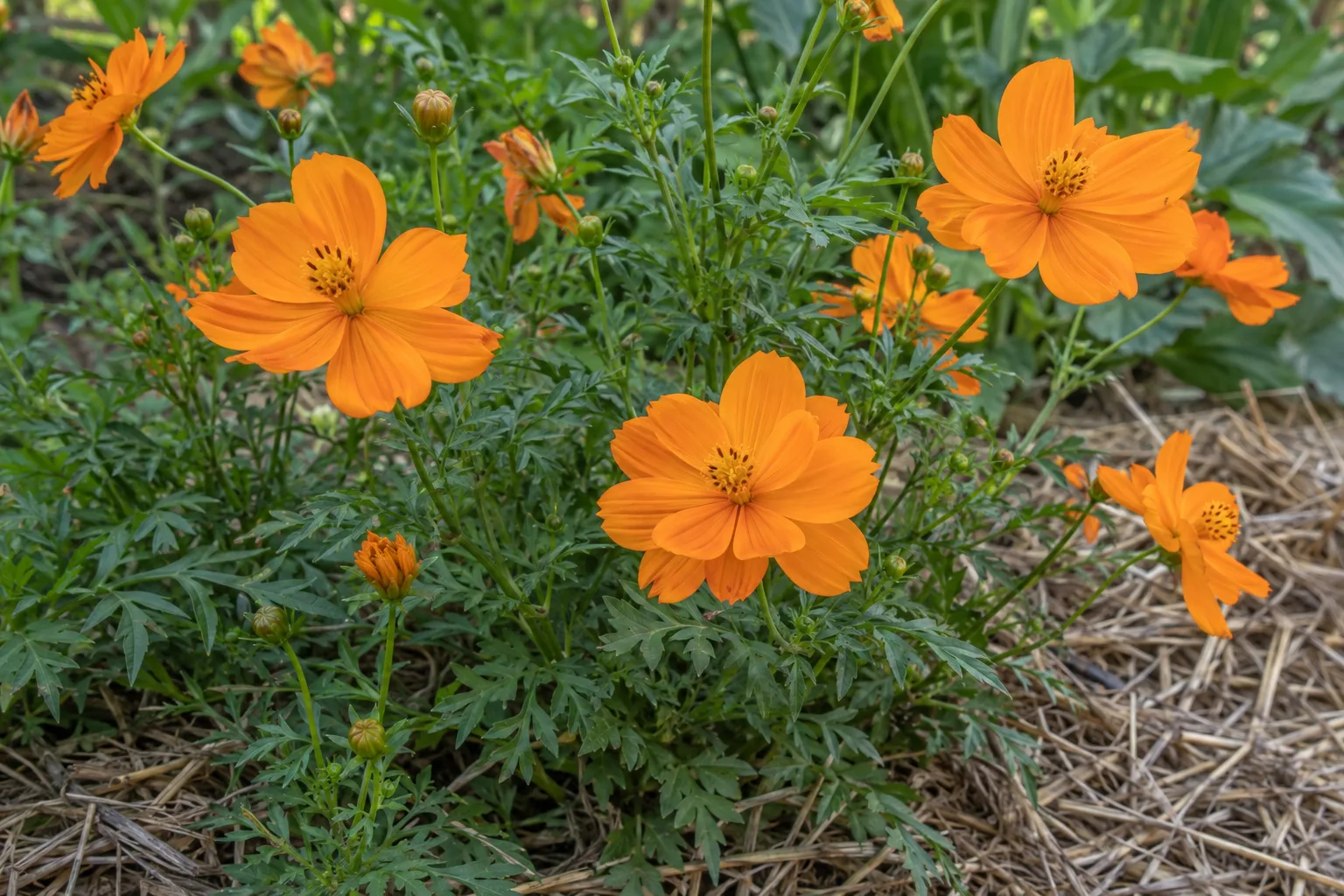
Cosmos sulphureus, called sulphur cosmos, is usually the better choice for heat. It bears orange, yellow and red flowers and tends to keep blooming into warmer weather than other cosmos do.
Cosmos bipinnatus is the classic feathery type in pink, white and crimson. It grows tall, often 3 to 5 feet, and can flop in spring wind, so stake it or plant it in close groups. It suits cool fall weather best.
Compact selections of either species stay near 2 feet and fit large pottery and planters on a covered patio. Sulphur cosmos and the classic bipinnatus types are varieties we commonly carry, but availability changes week to week and season to season.
Frequently asked questions
Should I start cosmos from seed or transplants?
Seed is the easier route. Cosmos sprout in about a week or two in warm soil, and the taproot dislikes disturbance. Sow seed about 1/4 inch deep and thin seedlings to 12 to 18 inches apart. Young transplants also work if you handle the roots gently and plant them at the same depth they grew.
Do cosmos come back every year?
Cosmos are annuals, so each plant lives one season. They reseed readily, though. Leave a few dried seed heads on the plants at the end of the bloom period and volunteers may appear in the next cool season. Thin them to proper spacing, because crowded seedlings produce weak plants and invite mildew.
Do cosmos need staking in Arizona?
Tall cosmos often need support. Varieties above 3 feet can topple in spring wind or after a heavy watering. Plant them in clumps so the stems prop each other up, or place a few stakes or a loose cage early. Compact types rarely need any support.
Can I grow cosmos in containers?
Yes, compact types do well in large pots with drainage holes. Container soil heats and dries faster than ground soil, so check moisture often in spring. Use a regular potting mix and little or no fertilizer. Move pots into afternoon shade as highs climb toward 100°F.
Where can I get help identifying a problem on my cosmos?
Bring clear photos or a bagged sample of an affected stem and leaves to our staff in Queen Creek, and we will help you identify what is going on. You can also check our classes and events page to see what gardening workshops are scheduled.
Are cosmos worth growing in the East Valley?
Yes, if you want fast, low-cost color in a sunny bed, cut flowers, or blooms that feed pollinators. They sprout quickly and bloom for weeks. Skip them if you expect color through summer, if your bed gets regular fertilizer, or if you want a permanent plant, since cosmos are short-season annuals. Time them for late winter or fall and they will do well. Stop by the nursery in Queen Creek and we will help you pick a spot and a type.