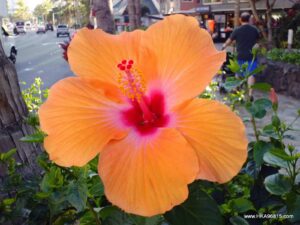

Bougainvillea grows well in containers in the Arizona low desert when you use a fast-draining mix, a pot 12 to 16 inches wide to start, full sun, deep but infrequent watering, and low-nitrogen feeding.
Key takeaways
- Start with a pot 12 to 16 inches wide that has several large drainage holes, and move up only 2 to 3 inches in diameter at each repotting.
- Use a fast-draining mix of roughly 60% cactus and succulent mix, 30% perlite and 10% coarse sand.
- Water about every 2 to 3 days in summer, every 5 to 7 days in spring and fall, and every 10 to 14 days in winter, after checking the top 2 inches of soil.
- Give the plant at least 6 hours of direct sun and feed with a low-nitrogen, higher-phosphorus fertilizer every 3 to 4 weeks from March through October.
- Move pots out of reach of temperatures near 32°F, and wait until frost danger passes before pruning hard.

When should I plant bougainvillea in a container in Arizona?
Late February through April is the best window, once nights stay above freezing and before summer heat arrives. September and October also work if the roots have time to establish before winter. Avoid June through August. A newly planted Bougainvillea hybrid has few roots to take up water, and highs above 110°F stress it quickly.
You can browse young plants in our plant department. Barbara Karst, Helen Johnson and Raspberry Ice are varieties we commonly carry, though availability changes week to week and season to season. Barbara Karst is a vigorous grower with deep magenta bracts, suited to a trellis. Helen Johnson stays more compact. Raspberry Ice has cream-edged leaves and is a little more cold-sensitive, so give it a protected spot.
What kind of pot works best for bougainvillea in the heat?
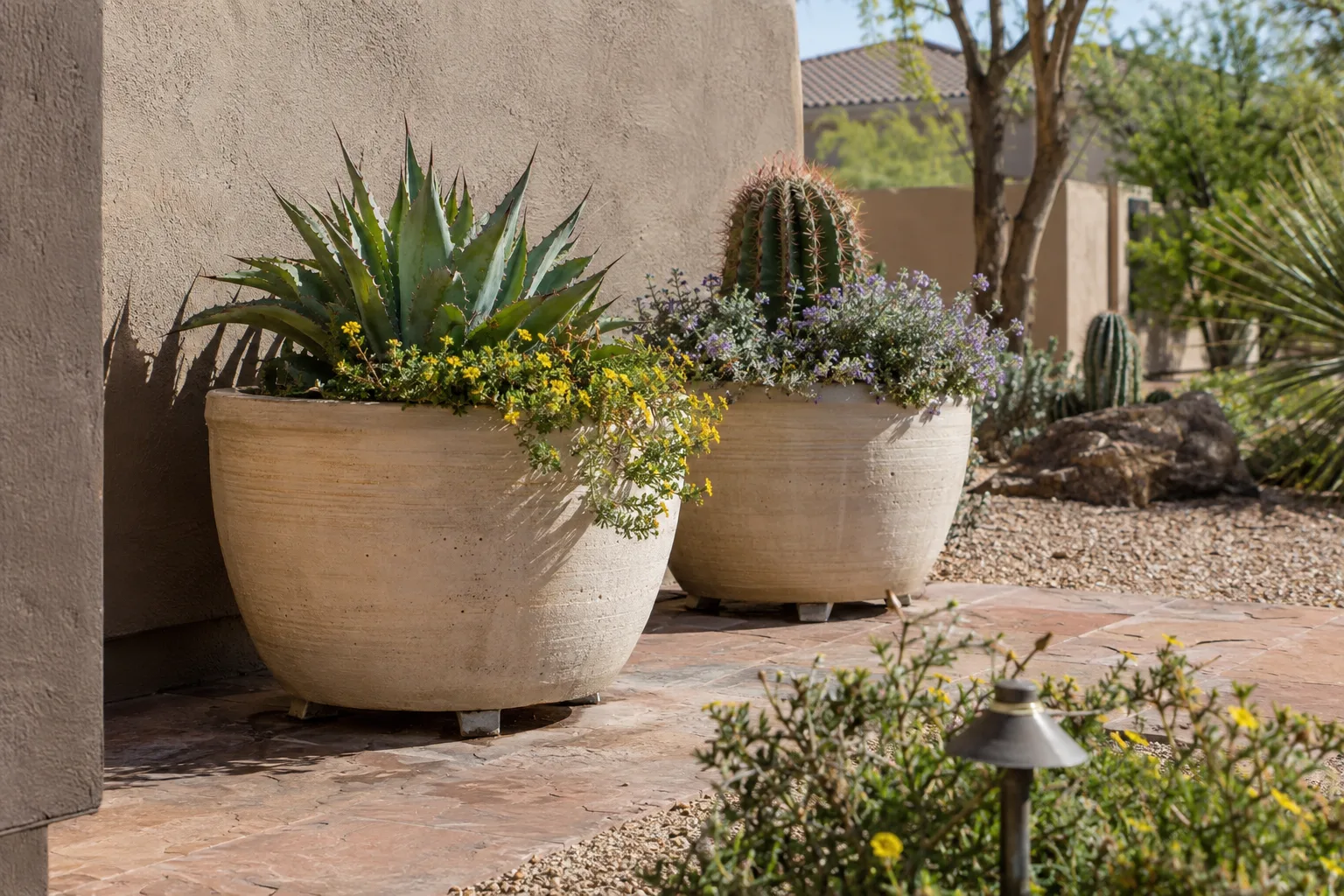
A thick-walled, light-colored pot with several large drainage holes works best. Glazed ceramic, fiberglass and heavy resin all insulate roots from the heat that a west-facing patio can build up in July. Our pottery and planters section is a good place to compare sizes and materials.
Unglazed terracotta looks good but dries so fast in summer that you may be watering daily. Thin black plastic pots absorb afternoon sun and can overheat the root zone well beyond what the leaves tolerate. If you love a pot without drainage holes, use it as a cachepot and keep the plant in a draining nursery pot inside it. Pot feet or a wooden platform lift the container off hot concrete.
Size matters too. A pot that is too large stays wet between waterings and pushes leaf growth over flowers, so start at 12 to 16 inches and step up gradually as the plant fills the pot over two or three years.
What soil mix does container bougainvillea need?
Bougainvillea needs a mix that drains within seconds of watering. A workable blend is roughly 60% cactus and succulent mix, 30% perlite and 10% coarse sand or fine decomposed granite. Straight bagged potting soil holds too much water for this plant and invites root rot.
Skip mixes with water-retaining crystals or a high share of peat. The plant evolved in thin, fast-draining soils, and wet roots are its fastest route to decline. Our alkaline water leaves salts behind in pots, so plan to flush the container with plain water every couple of months and refresh the mix when you repot.
How do I plant bougainvillea in a container?
Handle the roots gently, because bougainvillea roots are brittle and resent disturbance. Gather gloves (the thorns are sharp), a pot with drainage holes, your mix and pruners. The steps are the same for a new plant or a repotting.
- Water the plant the day before so the root ball holds together.
- Fill the bottom of the new pot with a few inches of mix.
- Slide the plant out by tipping the pot sideways, and avoid pulling on the canes.
- Trim only dead or mushy roots, and leave the rest of the root ball intact.
- Set the plant so the top of the root ball sits about 1 inch below the rim.
- Fill around the sides with mix and press gently to remove large air pockets.
- Water slowly until water runs from the drainage holes.
- Place the pot in full sun and let the mix dry before watering again.
Expect some leaf drop or wilting for one to two weeks. Repot every two to three years, or sooner if roots push out of the drainage holes.

How often should I water bougainvillea in a pot?
Water when the top 2 inches of mix are dry, then soak until water flows out the bottom. That rhythm shifts with the season, and a drip timer set once in spring will overwater the plant by winter.
| Season | Typical interval | Notes |
|---|---|---|
| June to September | Every 2 to 3 days | Smaller pots in full sun dry fastest |
| February to May, October to November | Every 5 to 7 days | Mild drought between waterings encourages bracts |
| December to January | Every 10 to 14 days | Keep roots barely moist, never wet |
These are starting points. Check the mix with your finger, because wind, pot size and sun exposure change how fast it dries. The monsoon, roughly July through September, raises humidity but rarely delivers enough rain to skip watering a pot for more than a day or two. Never leave the pot sitting in a saucer of water.
How do I get more blooms with feeding and pruning?
Use a fertilizer low in nitrogen and higher in phosphorus and potassium, and prune after frost danger passes. Too much nitrogen produces leafy growth with few of the colorful bracts, which are the part of the plant everyone is after.
Feed every 3 to 4 weeks from March through October, mixing liquid products at half the label strength. Stop feeding in November and December to give the plant a rest. Restart when new growth appears in late winter.
For pruning, cut back long, straggly canes by about one-third once frost danger has passed, usually late February to March in Queen Creek. After each bloom flush, pinch back the tips to encourage branching, since every new tip is a potential bloom site. A light shaping in September sets up a fall flush. Our gardening calendars help you keep the seasonal timing straight.
How do I protect container bougainvillea from heat and frost?
Shade the pot, not the plant, in summer, and cover or move the plant before temperatures approach 32°F. Bougainvillea wants full sun on its leaves, but the root zone cooks first. A pot against a west wall can use afternoon shade on the container itself, while light-colored pots and pot feet cut heat from the ground.
Winter frost does reach the East Valley, and cold air settles in low spots around Queen Creek, San Tan Valley, Gilbert and Mesa. Pots lose heat faster than in-ground plants because the root ball has no surrounding soil to buffer it. Before a cold night, move the container against a south-facing wall, tuck it under a patio cover, or wrap it with frost cloth. Small pots can go into a garage overnight.
Leaf drop in December and January is normal for this semi-deciduous plant. Frost-nipped tips can be trimmed once the weather warms.

What mistakes keep container bougainvillea from blooming?
Most no-bloom problems trace to too much water, too much nitrogen or too little sun. Fixing those three usually brings flowers back within one or two bloom cycles.
- Planting in a pot much larger than the root ball, which keeps the mix wet.
- Using all-purpose fertilizer high in nitrogen.
- Placing the pot where it gets fewer than 6 hours of direct sun.
- Repotting in July or August, when heat and root disturbance combine.
- Watering on a fixed schedule instead of checking the mix.
If your plant has a problem you cannot pin down, check the classes and events page for upcoming workshops.
Frequently asked questions
What are the colorful parts of bougainvillea?
The colorful parts are bracts, which are modified leaves. The true flowers are the small, pale tubes in the center of each cluster. Bracts last for weeks, which is why a healthy plant looks in bloom for months. Dropping bracts after a flush is normal, and pinching the tips afterward encourages the next round.
Why are my bougainvillea leaves turning yellow?
Yellow leaves usually point to overwatering, iron deficiency or both. Check drainage first, and if the mix stays wet longer than three days, it is too heavy. Yellow leaves with green veins suggest iron chlorosis, common in alkaline conditions, and a chelated iron product can help. Winter leaf drop is a separate, normal response to cold.
Can I grow bougainvillea on a covered patio?
Only if the spot gets about 6 hours of direct sun. Under a solid patio cover, the plant tends to grow long, weak stems with few bracts. A spot that gets full morning sun and afternoon light is better, with the pot itself shaded from late-day heat on very hot days.
Does container bougainvillea need a trellis?
No, but a trellis helps with the more vigorous varieties. Bougainvillea climbs by leaning rather than twining, so you tie the canes loosely to a support. Compact varieties can be pruned into a mound. Wear thick gloves when handling any of them, since the thorns are sharp.
How long can bougainvillea stay in the same pot?
A pot can last about three to five years if you refresh the top layer of soil each year. After that, salt buildup from hard water and a crowded root mass make water run straight through. Repotting into fresh mix resets the container, and moving up one size gives roots a little extra room.
Is bougainvillea in a container right for your patio?
It is a good fit if you have a spot with 6 or more hours of direct sun, can tolerate thorns and a messy bract drop, and are willing to water by feel instead of by habit. It is a poor choice for a shaded patio, for anyone who wants a tidy evergreen year round, or for a gardener who prefers a weekly watering schedule. Stop by our Queen Creek nursery and we can talk through pots and varieties for your space.