
Growing blanket flowers in Arizona works well when you give them full sun, fast drainage and little water once they are established. These seven points cover plant types, sun, soil, planting time, watering, pruning and the problems to watch for.
Key takeaways
- Plant in fall (October to November) or early spring (February to March), so roots establish before summer highs above 110°F.
- Give plants at least 6 hours of direct sun a day for steady bloom, and 8 hours for the heaviest flowering.
- Drainage matters most. Water that stands around the crown after irrigation or rain is the usual cause of crown rot.
- Water deeply and infrequently once plants are established, and skip irrigation after heavy monsoon storms.
- Deadhead spent flowers every week or two during bloom, and cut plants back by about one-third in late winter.
What are blanket flowers, and which kinds suit Arizona?
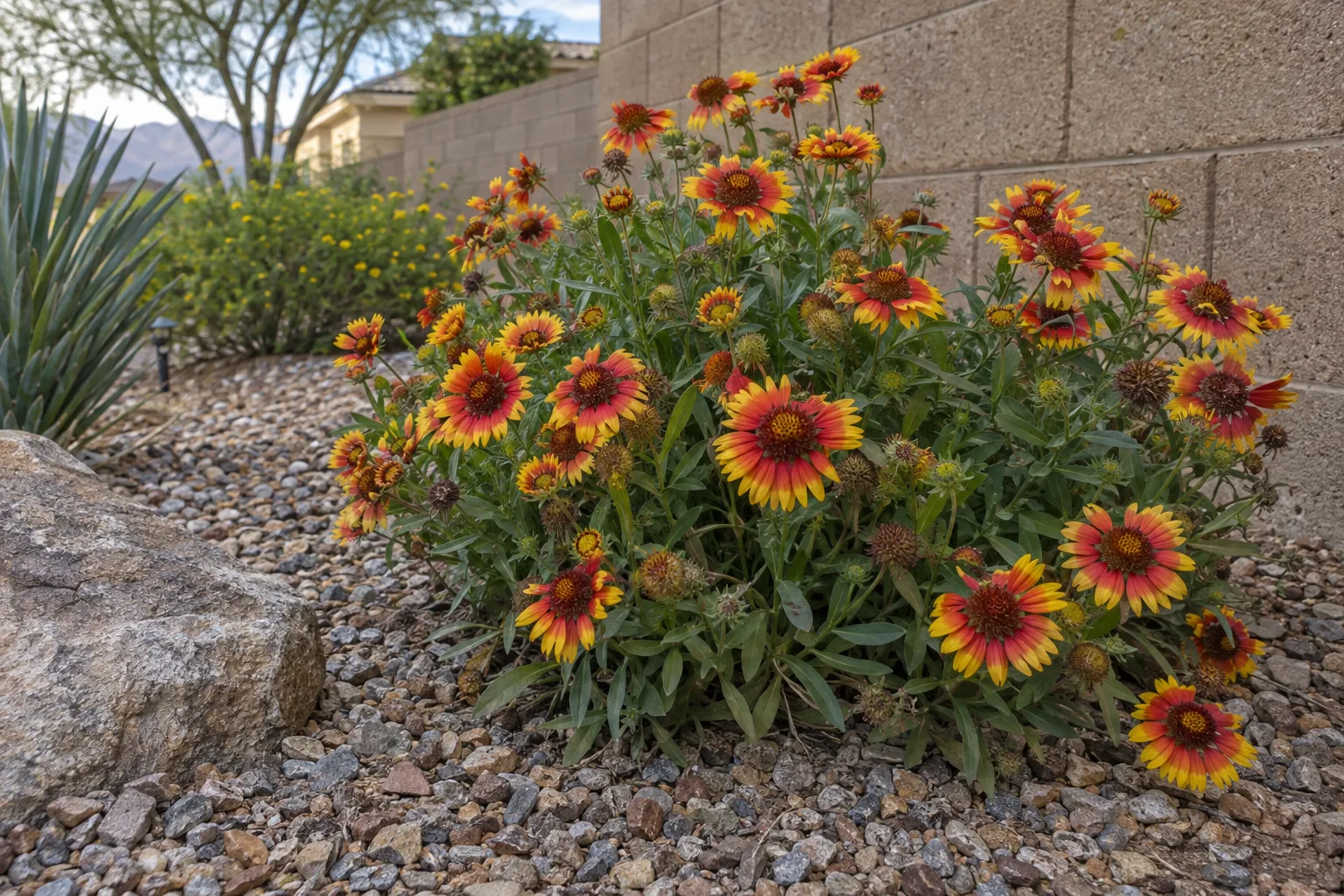
The blanket flower (Gaillardia) is a daisy-like plant with red, orange and yellow petals, native to North and South America. Two types matter in our gardens. Both handle low desert sun, but they behave differently once they are in the ground.
Gaillardia pulchella, the annual
This is the annual species, and it reseeds easily. It grows up to about 2 feet tall and bears rounded blooms in red, orange and yellow. Leave some seed heads on the plant in fall and you will often find volunteers the next spring. You can browse our annual flowers and foliage for other color that handles the same conditions.
Gaillardia x grandiflora, the hybrid perennial
Hybrids are compact, usually 10 to 24 inches tall, and they flower from spring into fall. They are often short-lived perennials, so expect a few good years and consider letting a few seeds drop to replace them. Varieties we commonly carry can include ‘Arizona Sun’, ‘Goblin’ and ‘Fanfare’, though availability changes week to week and season to season. Our full plant selection is the place to see what is on hand.
How much sun and heat can blanket flowers take?
Blanket flowers need full sun, at least 6 hours a day, and they handle summer highs above 110°F better than most flowering perennials. Eight hours gives the heaviest bloom. In July the plants may look tired and loose, but they rarely scorch the way softer annuals do.
Plan around reflected heat. Beside a south or west block wall, a stucco facade or a concrete driveway, the ground can run far hotter than the air, and that stored heat lingers into the night. An east-facing bed with some afternoon relief keeps plants flowering with less stress. North-facing spots usually get too little light for steady bloom.
What soil do blanket flowers need in the East Valley?
Blanket flowers need fast-draining soil, and they tolerate lean, alkaline ground well. Rich, soggy beds are what harm them. Many Queen Creek yards have caliche, a whitish, cement-like layer of calcium carbonate that holds water above it like a bowl.
Test drainage before you plant. Dig a hole about 12 inches deep, fill it with water, and see how long it takes to empty. If water is still standing after a couple of hours, change the site. You have three options:
- Break through the caliche with a digging bar or tile spade so water can move down.
- Build a raised bed or mound about 10 to 12 inches high.
- Set the crown about an inch above the surrounding grade so water runs away from it.

Heavy compost is rarely needed, since these plants bloom well in modest soil. For a patio, a container works if it is at least 12 inches wide, has several drainage holes and holds a fast-draining mix such as a cactus blend. Our pottery and planters include options with generous drainage.
When should I plant blanket flowers in Arizona?
Fall is the best time, from about October to November, and February to March is the second choice. Fall planting gives roots a full cool season to spread before the first summer. Spring plantings have less time, so they need closer watering through their first June.
Set the plant so the crown sits level with or slightly above the soil, backfill, firm gently and water slowly until the soil is wet 8 to 10 inches down. A thin layer of decomposed granite over the root zone slows evaporation, but keep it about an inch back from the crown so moisture does not collect there. Our gardening calendars help you line up planting dates with the rest of your yard.
How often should I water blanket flowers?
Water new plants every 3 to 4 days for the first 4 to 6 weeks, then move to a seasonal schedule and stretch the gaps between deep soaks. Check the soil 3 to 4 inches down before each watering. If it is still damp, wait another day or two.
| Season | Typical interval for established plants | Notes |
|---|---|---|
| Fall (October to November) | Every 7 to 10 days | Best planting window; roots build before summer |
| Winter (December to February) | Every 14 to 21 days | Growth slows; water lightly |
| Spring (March to May) | Every 5 to 7 days | Peak bloom; steady moisture helps flowering |
| Early summer (June) | Every 3 to 5 days | Hottest, driest stretch; check the soil first |
| Monsoon (July to September) | Let rain do the work | Skip irrigation after heavy storms |
These intervals are starting points, and soil type, exposure and plant size change them. Drip irrigation on a timer suits blanket flowers well, as long as the zone does not also feed plants that want water more often, such as vegetables or lawn. Extra water on top of monsoon rain is a fast route to rot.
How do I feed, deadhead and prune blanket flowers?
Feed lightly, deadhead often and cut the plants back once a year in late winter. Too much nitrogen produces leafy growth and fewer flowers. A light application of a balanced slow-release fertilizer once or twice a year is plenty, such as early spring and again after the monsoon.
To deadhead, snip each faded flower back to just above a leaf or side bud. Plants then put energy into new blooms instead of seed. During peak bloom in spring, plan on a pass every week or two. Stop in fall if you want the annual species to reseed.
In late winter, cut the whole plant back by about one-third to bring on fresh growth. Leave plenty of stem and foliage so the crown is never left bare to a late cold snap. Frost is occasional here, but it does happen.

What problems affect blanket flowers in Arizona?
Crown rot is the main one, followed by leggy growth, few blooms and the occasional pest. Most of these trace back to water or light, so check those two first before you buy anything.
Crown rot
The base of the plant turns soft and brown, and the whole plant can collapse within days. It follows poor drainage, overwatering or heavy monsoon storms on soil that stays wet. Severely rotted plants rarely recover. After a storm, check that water is not pooling, and add decomposed granite to raise the grade if it is.
Leggy plants and few blooms
Tall, floppy growth with sparse flowers usually means too little sun or too much nitrogen. Fewer than 6 hours of direct sun is the most common cause, and walls, trees and low winter sun angles can shade a bed more than you expect. Young plants may also need a full season before they flower heavily.
Aphids and spider mites
Aphids cluster on new growth, and a firm spray of water from the hose knocks most of them off. Spider mites show up on heat-stressed plants in dry weather, so steadier deep watering helps prevent them. If an infestation keeps coming back, bring us a clipping or photo and read any product label carefully before you treat.
The monsoon can also help. When plants come through June in good shape, the added humidity and rain often trigger a second flush of blooms in August and September.
Frequently asked questions
Do blanket flowers come back every year in Arizona?
Hybrid blanket flowers return for several years in the low desert, though they are often short-lived perennials. The annual species finishes in one season but usually reseeds. Wet soil shortens the life of both far more than cold does, so drainage decides how long a plant stays in your yard.
Can I grow blanket flowers in pots?
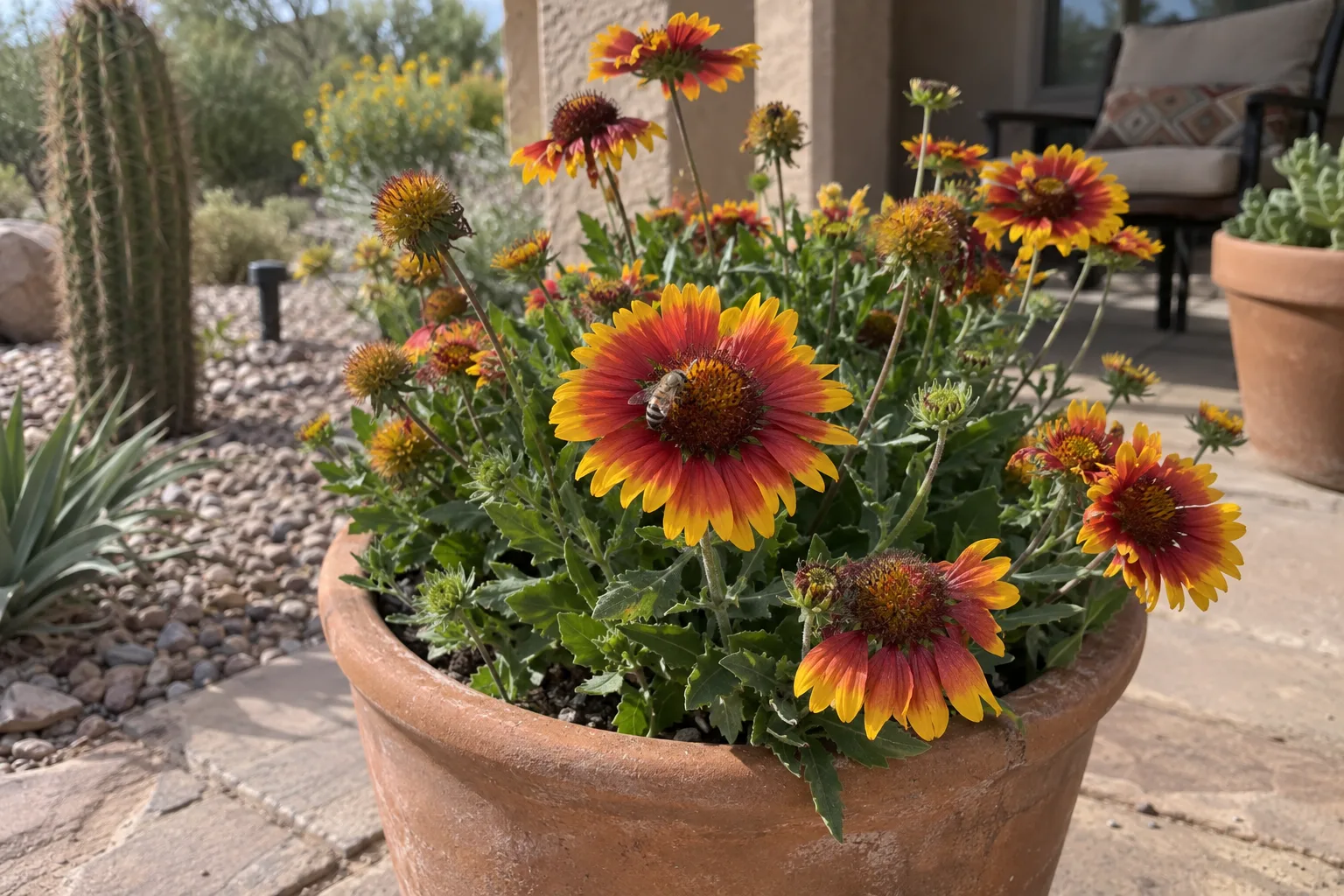
Yes, a pot works well if it holds fast-draining mix and has several drainage holes. Choose a container at least 12 inches wide, and favor lighter colors or terracotta because dark pots absorb heat. Pots dry out faster than beds, so check the soil every few days in summer.
Do blanket flowers attract pollinators?
Yes, the open, daisy-like flowers give bees and butterflies easy access to pollen and nectar. Honey bees, native bees and several butterfly species visit them during bloom. Pairing blanket flowers with other plants that flower at different times keeps food available over a longer part of the year.
How tall do blanket flowers get?
Most hybrid blanket flowers stay between 10 and 24 inches tall and about as wide, depending on the variety. The annual species can reach about 2 feet. The plant tag for the specific variety is the best guide, so check it before you place plants behind shorter ones.
Will blanket flowers reseed in my yard?
The annual species reseeds readily, and hybrids may drop some seed too. Leave a few spent flower heads on the plant in fall if you want volunteers next spring. Seedlings from hybrids can differ from the parent plant, so expect variation in color and size.
Are blanket flowers right for your yard?
Blanket flowers suit sunny beds with fast drainage and a gardener who waters deeply and then leaves them alone. They fit borders along block walls, gravel gardens and bright patio containers. Skip them if the spot gets under 6 hours of sun, sits low where monsoon runoff collects, or shares a zone with lawn sprinklers, because those conditions often rot the crown. Come see what is in bloom at our nursery in Queen Creek.