
You can grow wandering jew in Arizona indoors year-round and outdoors in shade. Give it morning sun, afternoon shade and fast-draining soil, water often in summer, and protect it from temperatures above 110°F and below 32°F.
Key takeaways
- Plant outdoors in March and April or September and October, when air temperatures stay well below 100°F.
- Outdoors, give it morning sun and afternoon shade, because summer sun from about 2 PM to 6 PM scorches the leaves.
- Use a container at least 12 inches wide with drainage holes, since caliche and alkaline soil hold water badly.
- Water when the top inch of soil is dry, which can mean daily for outdoor pots in July and about weekly in winter.
- Cover or move plants when the forecast reaches 32°F, and cut back frost damage once the cold has passed.

Which wandering jew varieties grow best in Arizona?
Purple heart (Tradescantia pallida) handles the most sun and heat outdoors, while Tradescantia zebrina suits shade and indoor pots. "Wandering jew" is a common name shared by several Tradescantia species from the warmer parts of the Americas, and they differ in how much sun they accept. These are varieties we commonly carry in our annual flowers and foliage section, though availability changes week to week and season to season.
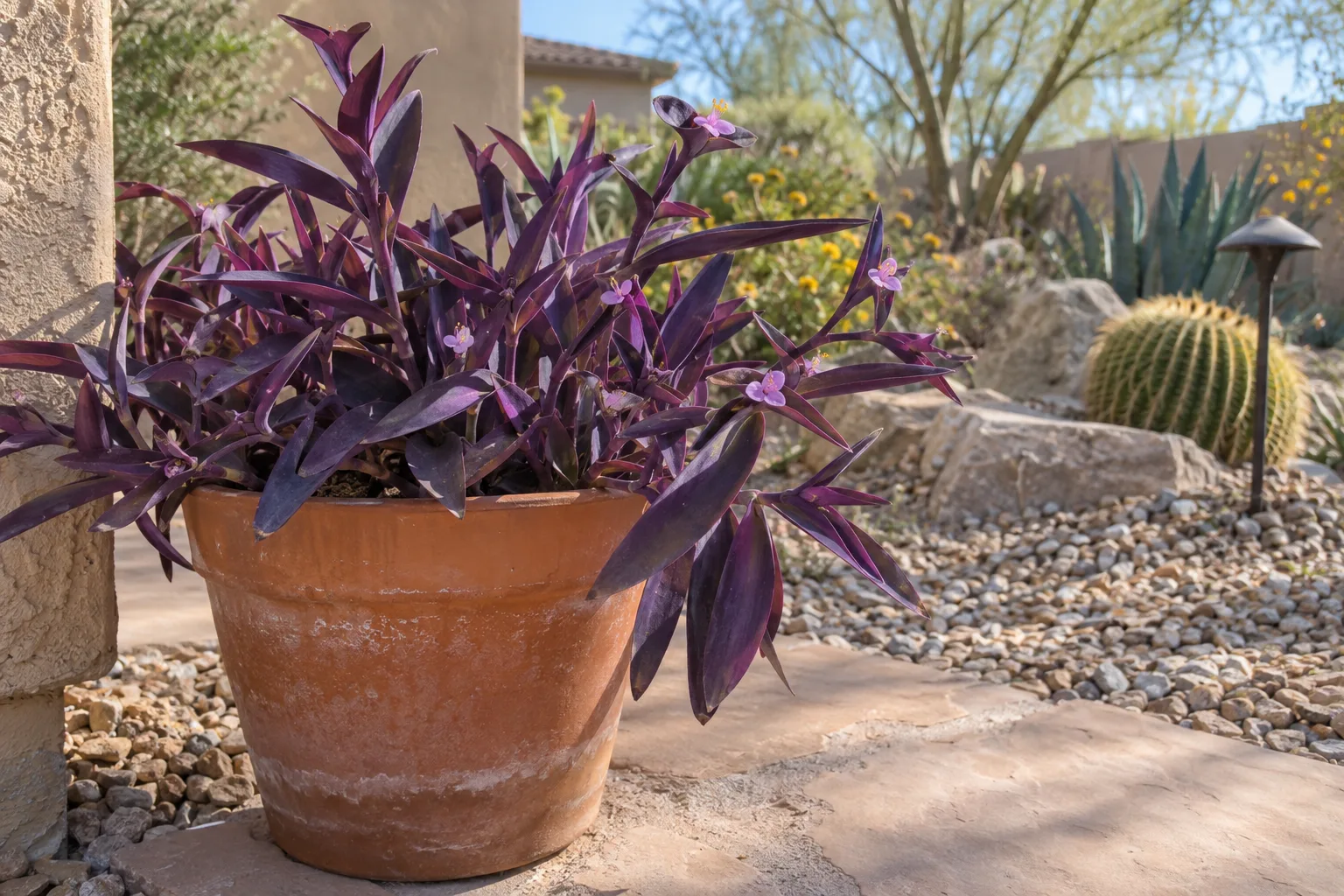
Tradescantia pallida (purple heart)
Purple heart grows 12 to 18 inches tall and spreads wider. It takes morning sun in summer and more sun in the cooler months, and its purple color deepens with light. Water it regularly. The drawback is that it freezes back in hard frost and can look ragged by August.
Tradescantia zebrina
This is the silver and purple striped trailer most people picture, with stems that trail 1 to 2 feet. It likes bright filtered light and regular water, and it adapts well to hanging baskets and indoor shelves. Its drawback is leaf scorch, which shows up fast in direct afternoon sun.
Tradescantia fluminensis
The standard form has small green leaves and stays low, around 6 to 10 inches tall. It tolerates more shade than the others and fills in bare ground under trees. Give it shade and regular water. The drawback is that it spreads aggressively in a well-watered bed and roots at every node, so it is hard to pull out later.
Tradescantia sillamontana (white velvet)
White velvet has fuzzy, silvery leaves on a plant 6 to 12 inches tall. It wants bright light and less water than its relatives, which suits mixed containers and sheltered rock gardens. Its drawback is that the fuzzy leaves hold moisture and can rot during monsoon humidity or with overhead watering.
When should I plant wandering jew in Arizona?
Plant outdoors in March and April or in September and October, when air temperatures stay well below 100°F and roots can settle in before extreme weather arrives. Frost is the limit in early spring, so wait until the risk has passed. That is usually by early March in the East Valley, though cold pockets in some yards can frost later.
Planting in June through August is possible, but young plants then need daily checks. Indoor plants can start in any month. Our gardening calendars show what else to plant each month. Pots are more forgiving than beds.
How much light does wandering jew need in Arizona?
Outdoors, wandering jew needs morning sun and afternoon shade, and indoors it needs bright indirect light within 3 to 4 feet of an east or west window. Direct sun from about 2 PM to 6 PM in summer bleaches and scorches the leaves, while deep shade gives pale, leggy stems with long gaps between leaves.
Good outdoor spots include an east-facing bed, the north side of the house, a covered patio, or the open canopy under a citrus tree. Indoors, keep the plant away from air conditioning vents, because the dry air from May through September browns leaf tips. Our houseplant section has other low-maintenance options for the same windows.
Stripes that fade while stems stretch mean the plant wants more light. Browning tips and a faded look mean it needs less. Turn indoor pots a quarter turn every week or two so the plant grows evenly.
What soil and containers does wandering jew need?
Wandering jew needs loose, fast-draining soil, and a container with drainage holes is the easiest way to provide it here. Native soil in Queen Creek is often alkaline, commonly above pH 7.5, and caliche layers a foot or two down can stop water from draining. Roots left in soggy soil rot even in the desert.
- A pot at least 12 inches wide with drainage holes, such as one from our pottery and planters
- Quality potting mix blended with perlite, roughly 4 parts mix to 1 part perlite
- Compost, for in-ground beds
- Organic mulch, about 2 inches deep
- Hand pruners and frost cloth
For in-ground planting, mix several inches of compost into the top 8 to 10 inches of native soil. If you hit caliche within about 18 inches, use a raised bed or a large container. Containers also let you move the plant out of the worst heat.
How do I plant wandering jew step by step?
Choose a spot with morning sun and afternoon shade, set the plant at its original soil level, and water it in well. The whole job takes about 15 minutes per plant.
- Confirm the location gets morning sun and afternoon shade, with open canopy overhead if you plant under a tree.
- Fill the container with potting mix and perlite, leaving about an inch below the rim for watering. For a bed, work in the compost first.
- Slide the plant out of its nursery pot and loosen any circling roots with your fingers.
- Set the root ball level with the soil surface or just slightly below it. Do not bury the stems, since buried stems rot.
- Space bed plants 12 to 18 inches apart. They fill gaps within one growing season.
- Water thoroughly until water runs out the drainage holes, which settles the soil around the roots.
- Add about 2 inches of mulch, keeping it off the stems.
- Check daily for the first two weeks and water whenever the top inch of soil is dry.
- Pinch the growing tips after 3 to 4 weeks to encourage branching instead of long, bare runners.

How often should I water wandering jew in Arizona?
Water wandering jew when the top inch of soil feels dry, which ranges from daily in a summer pot to about weekly in winter. The plant likes steady moisture but not standing water. Push a finger into the soil, water until it drains from the bottom if it is dry, and wait if it is still damp.
| Season | Outdoor pots in shade | Indoor pots | Note |
|---|---|---|---|
| Spring (March to May) | Every 2 to 3 days | Every 5 to 7 days | Growth speeds up as it warms |
| Summer (June to September) | Daily to every 2 days | Every 4 to 6 days | Check daily when highs pass 110°F |
| Fall (October and November) | Every 3 to 4 days | Every 6 to 8 days | Taper as nights cool |
| Winter (December to February) | Every 5 to 7 days | Every 8 to 10 days | Cold, wet soil rots roots |
Treat these intervals as starting points, because pot size, sun exposure and wind change how fast soil dries. Water outdoor pots early in the morning. Grouping pots together slows drying a little.
How do I protect wandering jew from summer heat and winter frost?
Move pots into shade when highs stay above 110°F, and cover or move them when the forecast drops to 32°F. Wandering jew is a tender plant from warm regions, so both extremes damage it. Brown leaf edges and a pause in growth by late July are common and do not mean the plant has died.
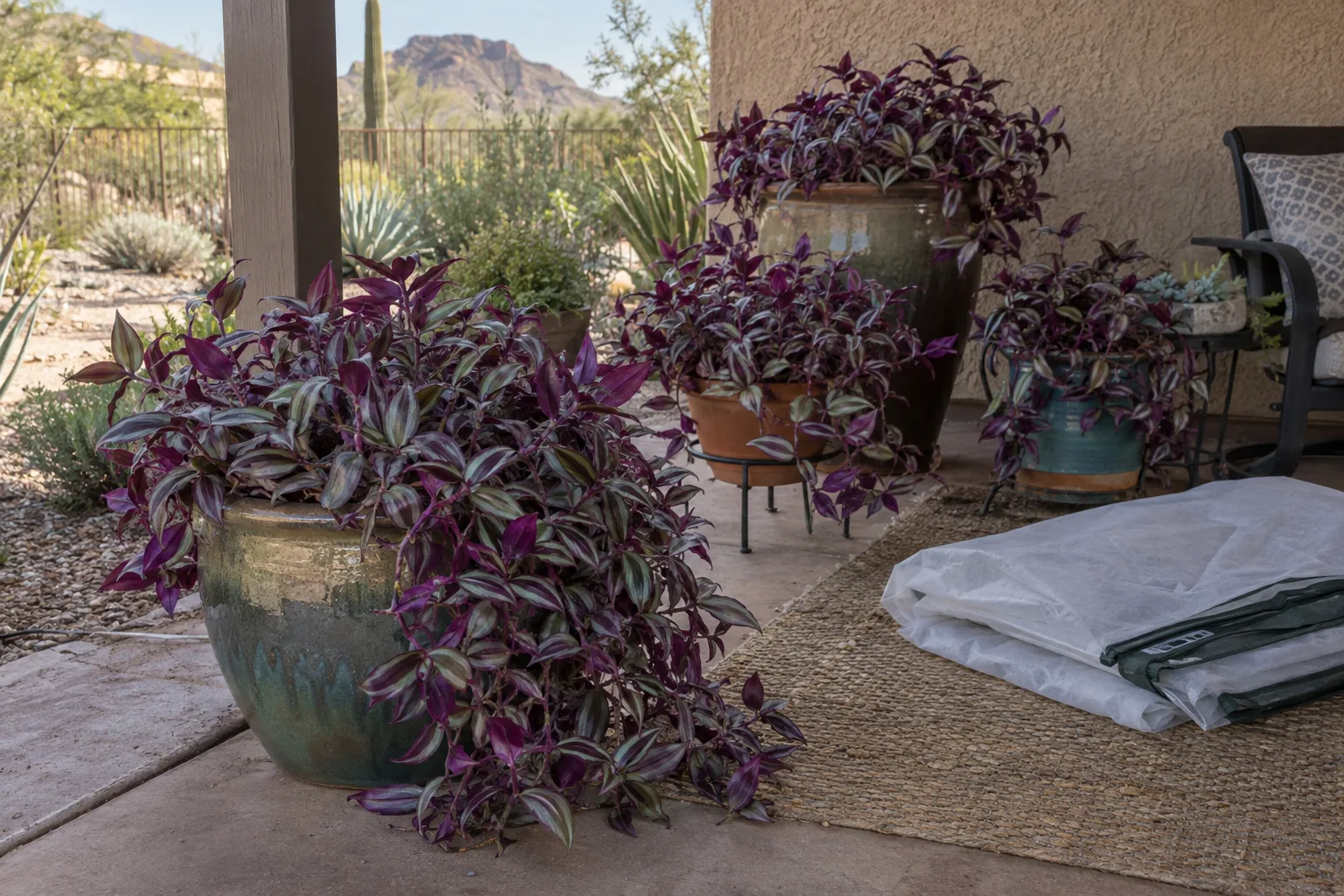
- Shift containers under a covered patio or breezeway during multi-day heat waves.
- Do not respond to scorch by overwatering, because soggy soil adds root rot to heat stress.
- Watch for fungal rot during monsoon humidity, roughly July through September, and give plants air circulation.
- Trim scorched or leggy stems in September, when nights cool and new growth returns quickly.
For frost, drape frost cloth over beds in the evening and remove it the next morning, or carry pots under an eave. If frost kills the top growth, leave it until the cold has passed, then cut back to healthy tissue. Roots often survive and send up new shoots in late winter or early spring.
What mistakes kill wandering jew in Arizona?
The most common causes of failure are afternoon sun, poor drainage and overwatering in cool months. Each is easy to avoid once you know it, and most damage shows up on the leaves before the plant is lost.
- Planting in full afternoon sun, which bleaches the leaves within about a week.
- Using a pot without drainage holes, or leaving a saucer full of water.
- Watering on a summer schedule through winter.
- Planting Tradescantia fluminensis in a rich, wet bed and expecting it to stay put.
- Keeping indoor plants right next to an air conditioning vent.
Frequently asked questions
Is wandering jew toxic to pets?
Wandering jew can irritate pets, and the ASPCA lists Tradescantia plants as toxic to cats and dogs. The sap can cause skin irritation, and chewing can cause drooling or an upset stomach. Keep baskets out of reach and call your veterinarian if your pet eats any.
How do I propagate wandering jew?
Cut a 4 to 6 inch stem, strip the lower leaves and set it in water or moist potting mix. Cuttings in water usually root within 1 to 2 weeks. Pot them once the roots are an inch or two long. Spring and fall cuttings root best.
When and how should I fertilize wandering jew?
Feed during active growth in spring and fall with a balanced liquid fertilizer at half the label strength, about every 3 to 4 weeks. Skip feeding from June through August, when heat stresses the plant, and again in December and January, when growth slows. Always follow the label directions.
How do I fix a leggy wandering jew?
Cut long, bare stems back hard, just above a leaf node, and new side shoots will grow from that point. Then pinch the tips every few weeks to keep growth full. If stems keep stretching, move the plant to brighter light, since low light is the usual cause of legginess.
What do I do about spider mites on wandering jew?
Rinse the plant, including the undersides of leaves, with a strong spray of water, and repeat every few days. Fine webbing and stippled, faded leaves point to spider mites, which favor dry indoor air. If rinsing is not enough, use insecticidal soap exactly as the label directs.
Is wandering jew right for your patio or garden bed?
Wandering jew suits you if you have a shaded patio, a hanging basket spot or a bright indoor window and want fast color with little fuss. It is easy to propagate and forgiving of a missed watering. Skip it for full-sun beds, for homes where pets chew on plants, or if you will not move pots or cover them in the hottest and coldest weeks. Stop by our nursery in Queen Creek and we will help you match a variety to your spot.