
To grow violas in containers in Arizona, plant transplants from mid-October through November in a pot at least 10 inches wide, with fast-draining potting mix, morning sun and water only when the top inch dries.
Key takeaways
- Plant transplants from mid-October through November, once daytime highs stay below about 90°F.
- Use a pot at least 10 inches wide and 8 inches deep, with drainage holes and fresh peat-based or coir-based potting mix.
- Give 4 to 6 hours of sun, mostly in the morning, and water about every 4 to 7 days in December and January.
- Feed every 2 weeks at half the label strength and pinch off spent flowers every few days.
- Expect blooms through March, then replace the plants once highs regularly pass 85°F.
When should I plant violas in containers in Arizona?
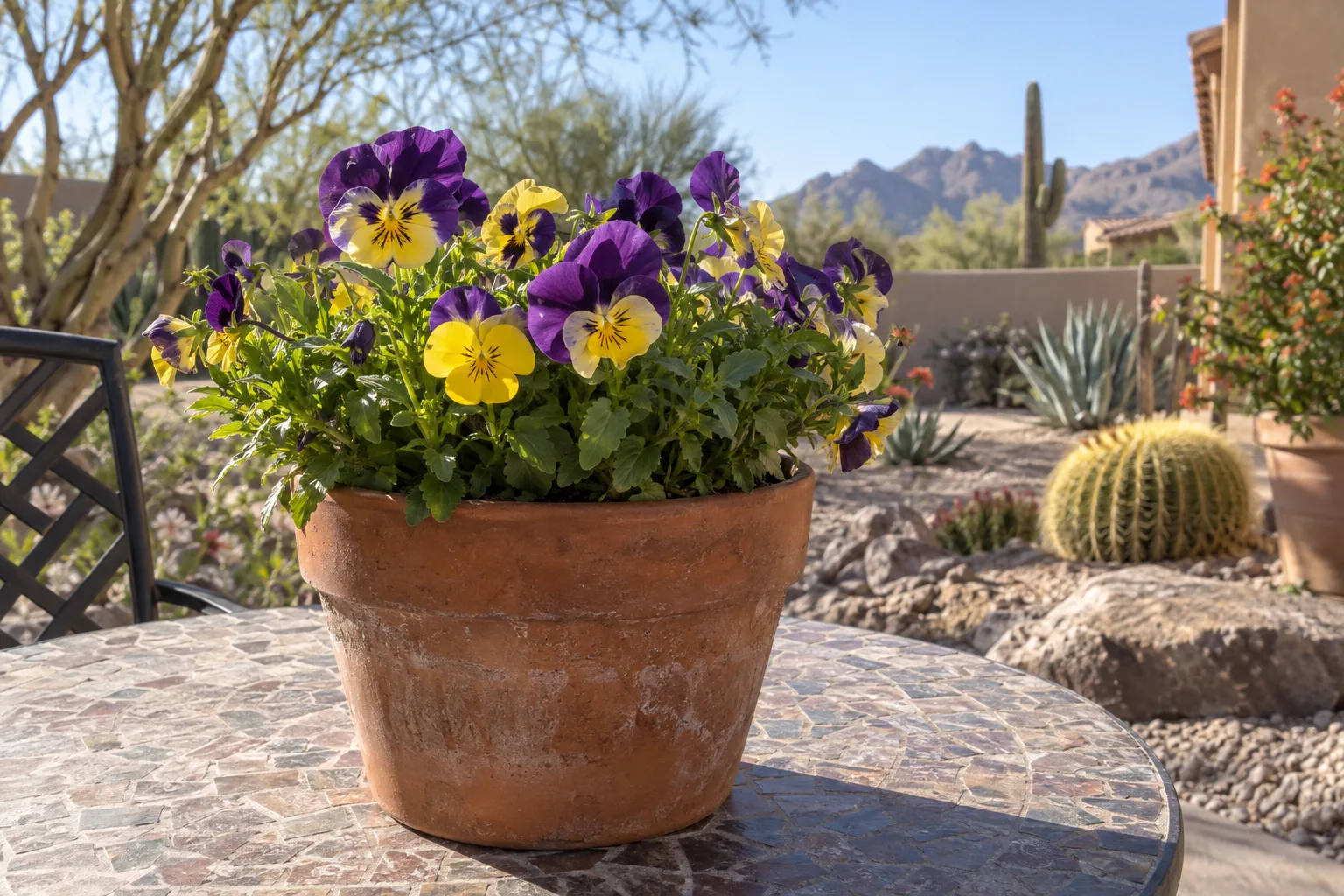
Plant violas from mid-October through November, when daytime highs hold below roughly 90°F and the soil has cooled. Planting in September, when highs still run 100°F or more, stresses young plants and many never recover. A December planting still works, though the bloom season is shorter because spring warms early in the low desert.
Violas handle light frost and are generally rated hardy to somewhere around 25°F, so a typical East Valley winter rarely harms them. On nights forecast below 28°F, move pots under an eave or cover them with frost cloth until morning. Cold, wet soil does more damage.
Violas belong with the cool-season color on our annual flowers and foliage page. The varieties we commonly carry change week to week and season to season. For month-by-month planting guidance, check our gardening calendars.
What size pot and potting mix do violas need?
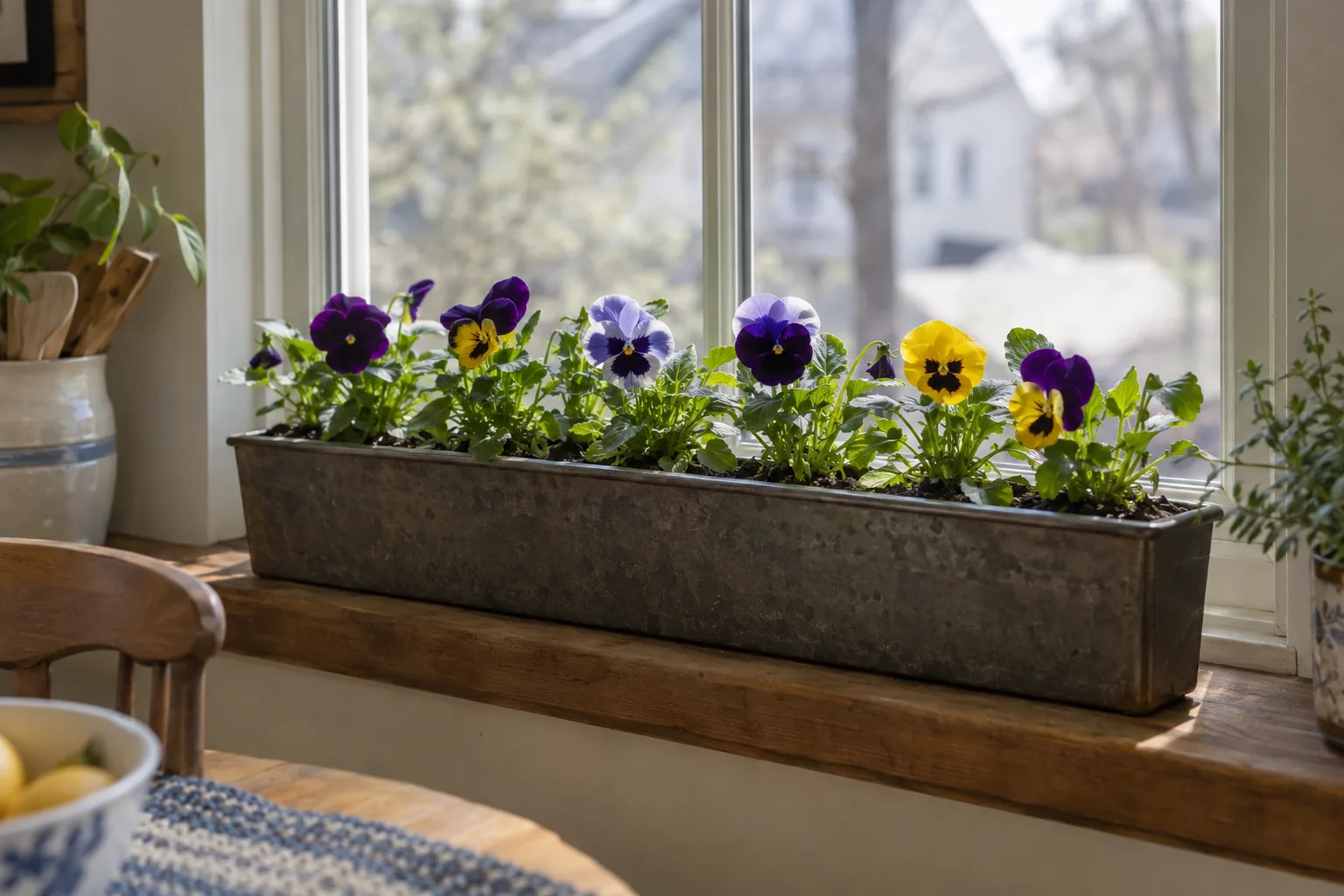
Choose a pot at least 10 inches wide and 8 inches deep with drainage holes, and fill it with fresh peat-based or coir-based potting mix. A larger pot holds moisture more evenly between waterings and has room for more plants. A window box 24 inches or longer fits 6 to 8 violas in a single ribbon of color.
Terra cotta breathes, which protects against soggy soil when cool weather slows the plants’ water use. Glazed ceramic, plastic and fiberglass also work. Dark metal can still overheat on a 70°F January afternoon in full sun. If you are choosing a new pot, our pottery and planters department is the place to compare materials and sizes in person.

Skip bags labeled garden soil or topsoil, which compact in containers and drain poorly. If the mix feels dense, blend in perlite at roughly 20 percent by volume. Stirring in a slow-release fertilizer made for flowering annuals gives the plants a baseline of nutrition from the first day.
Hard water leaves salts in a pot over time, and alkaline water slowly pushes the mix toward a higher pH that can lock up iron. Violas prefer a slightly acidic mix, roughly pH 5.8 to 6.5. Water deeply enough that liquid runs out the bottom each time to flush those salts. A cheap soil pH meter checked once a month shows whether iron trouble is likely.
How do I plant violas in a pot?
Fill the pot with mix, set the plants 6 to 8 inches apart, and water until it runs freely from the bottom. The whole job takes about 20 minutes.
- Pick compact transplants with dark green leaves and several buds or open flowers. Leave behind leggy, pale or badly root-bound plants.
- Scrub any reused pot with soapy water and rinse it well to remove old residue.
- Lay a piece of window screen over each drainage hole so mix stays in and water flows out.
- Fill with potting mix to about 2 inches below the rim. That gap keeps water from running off the top and leaves room to top-dress later.
- Loosen a compacted root ball gently, then set each plant at the same depth it grew in the nursery pot.
- Water slowly until it drains from the bottom, which settles the mix and removes air pockets around the roots.
- If afternoons are still warm, keep the pot in bright shade for a couple of days before moving it to its permanent spot.
How much sun and water do container violas need?
Give violas 4 to 6 hours of direct sun, with most of it in the morning, and water when the top inch of mix feels dry. Morning light is gentler and dries dew off the leaves. In October and early November, a south-facing or west-facing patio can still scorch petals, so give those pots afternoon shade until December, when the same spot usually suits them fine.
Summer habits need to change. A pot that dries out in a day in July may need water only every 4 to 7 days in December and January, depending on size, material and exposure. Push a finger an inch into the mix. Moist means wait, and dry means water slowly until it drains from the bottom. Water in the morning so the leaves dry before the cold night, which lowers the risk of powdery mildew and botrytis.
How often should I feed container violas?
Feed every 2 weeks with a water-soluble bloom fertilizer mixed at half the label strength, in addition to the slow-release granules at planting. Container plants depend on what you give them, and the granules typically last 8 to 12 weeks. Choose a formula with more phosphorus (the middle number) than nitrogen, since extra nitrogen grows leaves at the expense of flowers.
If young leaves turn yellow while the veins stay green, the cause is usually iron lockout in alkaline conditions. A chelated iron product applied at the label rate corrects it, and about once a month is enough in most cases.
Deadheading keeps flowers coming. Pinch each faded bloom off at the stem, just above the nearest set of leaves, every few days. It takes about five minutes.
Which violas and companion plants work best in a pot?
Compact, mounding violas suit most pots, and pairing them with taller or silvery companions makes a fuller container. Pick varieties by habit and flower color, and ask our team what is available, since selection changes through the season.
Viola varieties to look for
Sorbet violas stay compact and produce many small flowers in colors from white and lemon yellow to deep purple. Penny violas are also compact and cover themselves generously in blooms. Viola ‘Etain’ has cream to lavender petals edged in violet and gives a softer, cottage-garden look. These are varieties we commonly carry, though availability changes week to week and season to season.
Companions that share the same care
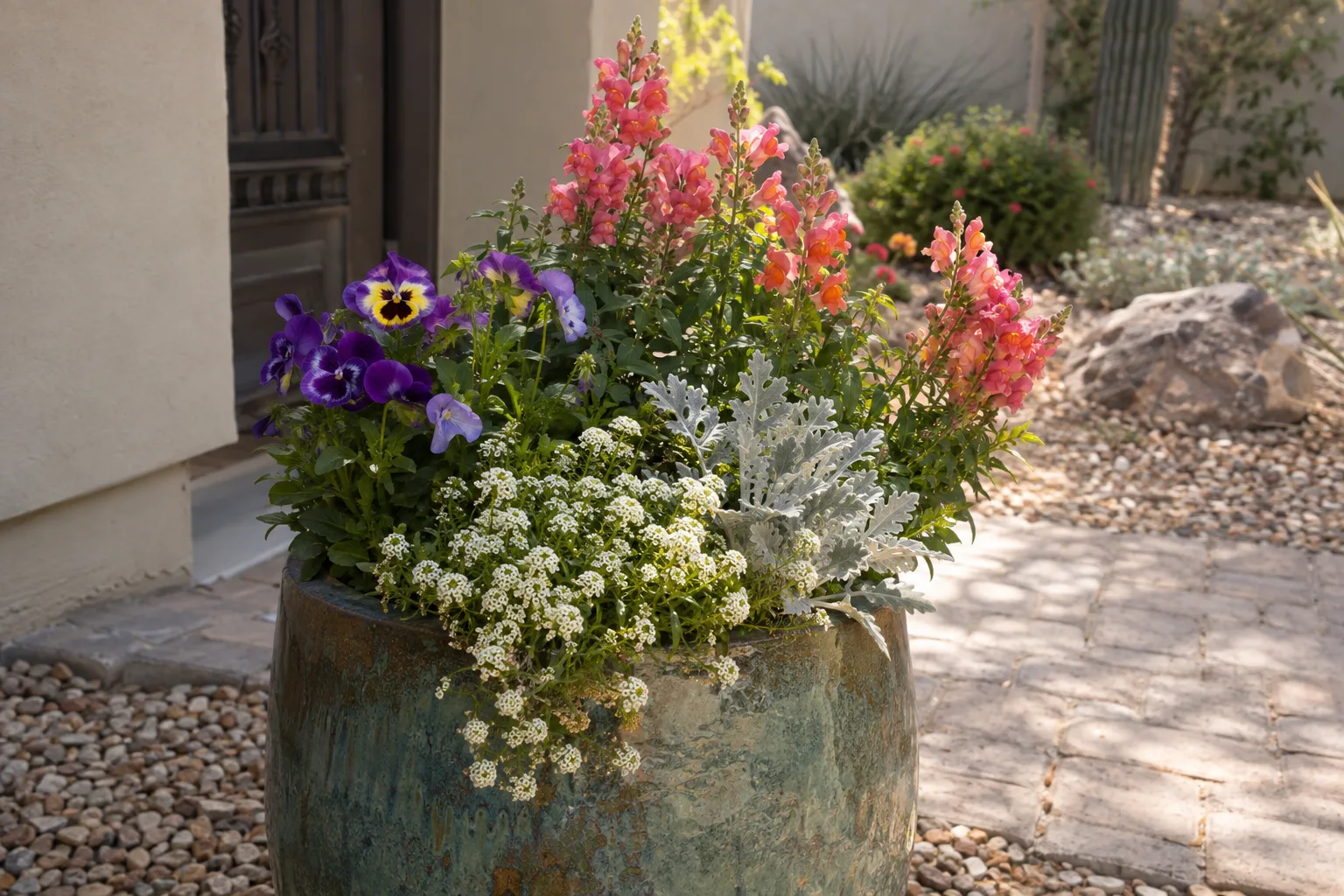
Snapdragons (Antirrhinum majus) add height at the back of a large pot. Sweet alyssum (Lobularia maritima) spills over the edge and carries a honey scent. Dusty miller (Jacobaea maritima) offers silver foliage that sets off purple and yellow violas, and it tolerates slightly drier mix. Stock (Matthiola incana) is a fragrant choice for the back of a big container, with violas filling the front.
What mistakes shorten the bloom season?
Planting too early, overwatering and too little sun cause most viola failures in containers. Each one is easy to spot and fix.
Planting in September
Transplants set out while highs still reach the upper 90s stall or die. Wait for consistent highs below about 90°F, even if the nursery benches already look colorful.
Letting the pot stay wet
Root rot shows up as sudden wilting in soil that feels moist, sometimes with a musty smell at the base of the plant. Let the mix dry out before the next watering and repot into fresh, well-draining mix if the plant is still firm. Prevention is easier, so check moisture before every watering.
Too little light
Plants that stretch toward the light and flower sparsely need a brighter spot. Pinching stems back by about one-third encourages bushier growth, with fuller plants in roughly two weeks.
Aphids
Aphids sometimes cluster on stems and buds during warm spells in October and November. A strong spray of water dislodges most of them. For persistent cases, use insecticidal soap and follow the label directions. Our classes and events page shows what workshops are scheduled if you want hands-on help with container planting.
Frequently asked questions
How long do violas bloom in Arizona?
Violas planted in mid-October usually bloom through March, and sometimes into early April in a cool, shaded spot such as a north-facing patio. Once daytime highs regularly pass 85°F, plants stretch, flower less and fade. Pull them at that point and replace them with a warm-season annual suited to the summer heat.
Can I start violas from seed?
Starting violas from seed is possible but impractical for most home gardeners. Seed would need starting indoors around late August or early September, when outdoor highs still reach 105°F or more. Buying transplants in October saves about two months of work. If you do sow seed, cover the tray, since violas germinate best in darkness at roughly 65°F to 70°F.
Are violas the same as pansies?
Violas and pansies belong to the same genus, Viola, and need similar care. Violas carry smaller flowers in greater numbers and are generally a little more tolerant of warm spells, while pansies have larger blooms and tend to fade a few weeks sooner in spring. Mixing the two in one pot works well if you accept that pansies will decline first.
Can I plant violas in the ground instead?
Violas grow in the ground too, but our alkaline, caliche-heavy native soil needs work first. Loosen the soil across a wide area and blend in compost so water drains instead of pooling. Containers skip that effort and let you control drainage and fertility, plus move plants as the winter sun angle changes.
Why are my violas not blooming much?
Too little sun is the most common reason violas stop flowering. They need at least 4 hours of direct light, so move the pot to a brighter spot. Also check for a nitrogen-heavy fertilizer, skipped deadheading, or yellowing leaves from iron deficiency in alkaline conditions. Change one thing at a time and give the plants 10 to 14 days to respond.
Are container violas worth planting in your yard?
Yes, if you want low-cost color from October through March and can give a pot 4 to 6 hours of sun. They suit patios, porches and balconies especially well. Skip them if your only spot gets full west-facing afternoon sun, or if you will not check the pot every few days. Violas do not carry through summer, so plan on replacing them when spring heat arrives. Stop by Desert Horizon Nursery in Queen Creek and talk with our team about which violas are available.