

To grow tulips in Arizona’s low desert, chill the bulbs in your refrigerator for 10 to 14 weeks, plant them from late December through January, and treat them as one season of color. Blooms open from late February into March.
Key takeaways
- Chill bulbs for 10 to 14 weeks at 35 to 45°F, and keep them away from apples, pears and other ripening fruit.
- Start chilling in October so the bulbs are ready to plant between late December and mid-January.
- Plant pointed end up, 6 to 8 inches deep, in a pot at least 12 inches deep or in a bed loosened to 12 inches.
- Expect one to two weeks of bloom, and fewer days if daytime highs climb into the 80s.
- Hybrid tulips usually bloom once here, while species tulips have a better chance of returning.

Why do tulips struggle in the low desert?
Tulips need a long stretch of cold soil before they can flower, and our winters do not supply it. Bulbs bred for colder regions expect roughly 10 to 16 weeks at 35 to 45°F, while winter soil in Queen Creek stays warmer than that for most of the season, even with an occasional frost. Without the cold, stems come up short or with no bloom at all.
The refrigerator solves that problem. Heat is the second one, because summer highs above 110°F leave the top foot or so of soil far too warm for a hybrid bulb to set a new flower. Most hybrids bloom once and do not return. Alkaline soil and caliche add a third problem, since bulbs rot wherever water sits. Those are the three things to plan around.
Because hybrid tulips give a single season of bloom, many gardeners plant them the way they plant annuals, in pots beside other cool-season color from our annual flowers and foliage department.
What do you need before you start?
You need bulbs, a refrigerator, a paper bag, a thermometer and a planting spot that drains fast. Gather everything in October, when the chilling clock starts.
- Firm, plump bulbs with no mold or soft spots. Larger bulbs generally bloom better.
- A refrigerator thermometer, because temperatures vary from shelf to shelf.
- Paper or mesh bags, which let bulbs breathe better than plastic.
- A pot at least 12 inches deep with drainage holes, or a bed you can loosen to 12 inches.
- Fast-draining mix, such as bagged potting soil blended with perlite or coarse sand.
- A low-nitrogen bulb fertilizer.
Containers are the easiest route in the East Valley because they sidestep caliche and alkaline native soil. Look through our pottery and planters for a deep pot, and favor lighter colors, which absorb less heat as spring warms.If you plant in the ground, dig 12 inches down, break through any caliche layer, and mix in compost and grit. Bulb varieties and availability change through the fall, so ask early.
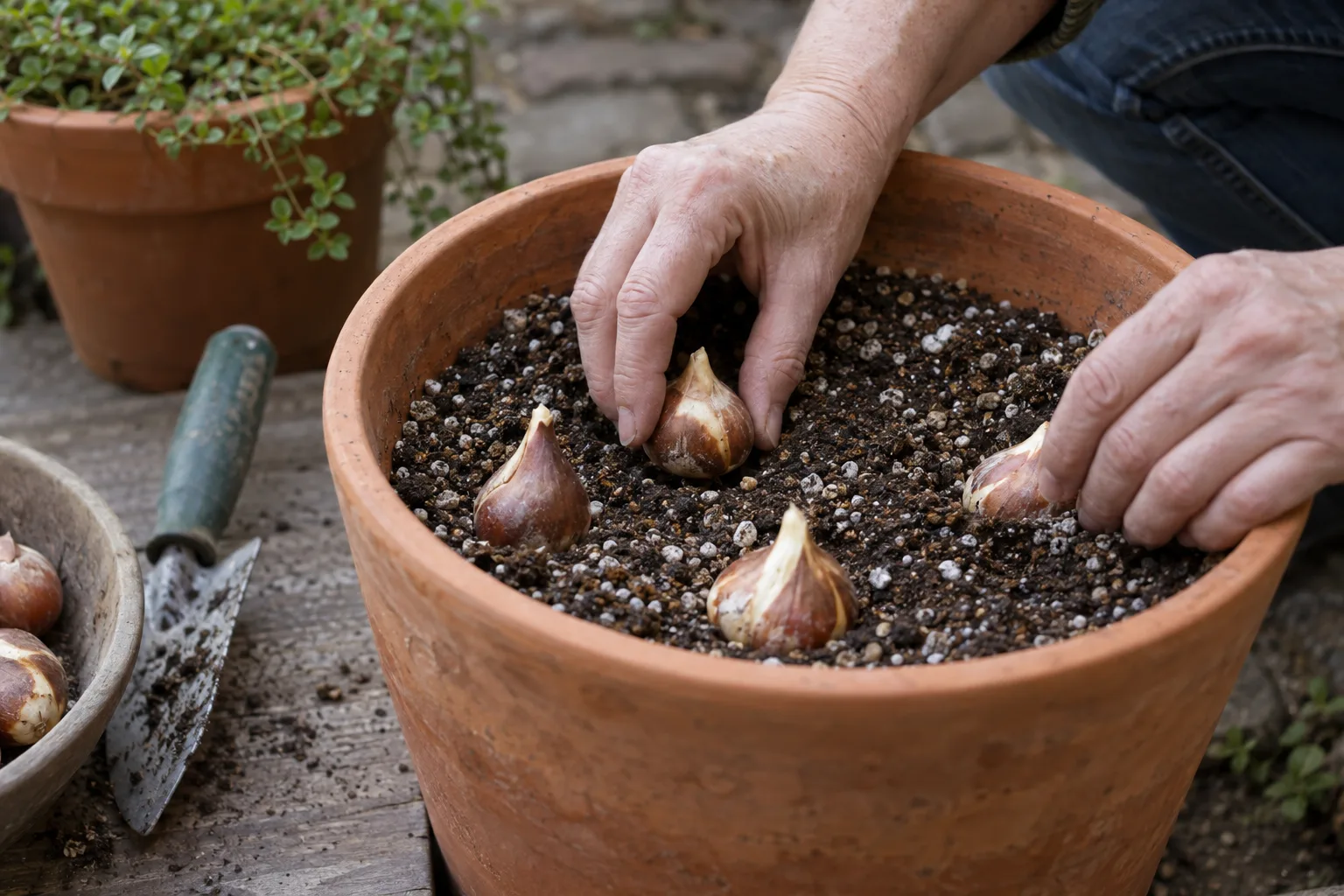
How do you chill and plant tulip bulbs in Arizona?
Chill the bulbs in the refrigerator for 10 to 14 weeks, then plant them 6 to 8 inches deep in fast-draining soil. Follow these steps in order.
- Buy bulbs in September or October. Choose firm, plump bulbs and reject any with mold or soft spots.
- Check your refrigerator with a thermometer. You want 35 to 45°F, which most refrigerators hold on a lower shelf or in a crisper drawer. Keep bulbs well away from the freezer compartment, because freezing kills the flower inside.
- Keep the bulbs away from apples, pears and other ripening fruit. Ripening fruit gives off ethylene gas, which can ruin the flower inside the bulb, so a drawer of their own works best.
- Put the bulbs in a paper bag, write the start date on it, and count 10 to 14 weeks forward on the calendar.
- Prepare the pot or bed during the wait. Fill the pot with fast-draining mix and leave the drainage holes open, or loosen the ground to 12 inches and blend in compost and coarse sand.
- Plant within a day or two of taking the bulbs out of the refrigerator. Set each bulb pointed end up, 6 to 8 inches deep and about 4 inches apart.
- Water deeply once to settle the soil, then spread a 1 to 2 inch layer of mulch such as shredded bark or straw.
- Water again only when the top 2 inches of soil feel dry. Once green shoots appear, water more often, keeping the soil moist but never soggy.
When should you plant tulips in Arizona?
Plant between late December and mid-January, after the chilling period ends. Bulbs that start chilling on October 1 reach 12 weeks around December 24, and bulbs started in mid-October reach 12 weeks in early January.
Planting later, into February, leaves less time before warm weather arrives. A run of days in the 80s can age tulip blooms in a few days, so the earlier the bulbs go in after chilling, the longer the flowers last. Tulip foliage tolerates cold well, and light frost in the East Valley is not a reason to delay.
Our gardening calendars list other cool-season tasks, which helps when you are planning the chilling dates around everything else in the yard.
Which tulips handle low-desert warmth best?
Early-blooming, compact types do best, because they finish before spring heat arrives. Varieties vary from fall to fall, so ask what is available when you shop.
Single Early and Double Early tulips
These bloom earlier than most hybrids and carry their flowers on short, sturdy stems. Double types have full, peony-like blooms. The drawback is a brief display, since even early tulips fade quickly once afternoons warm.
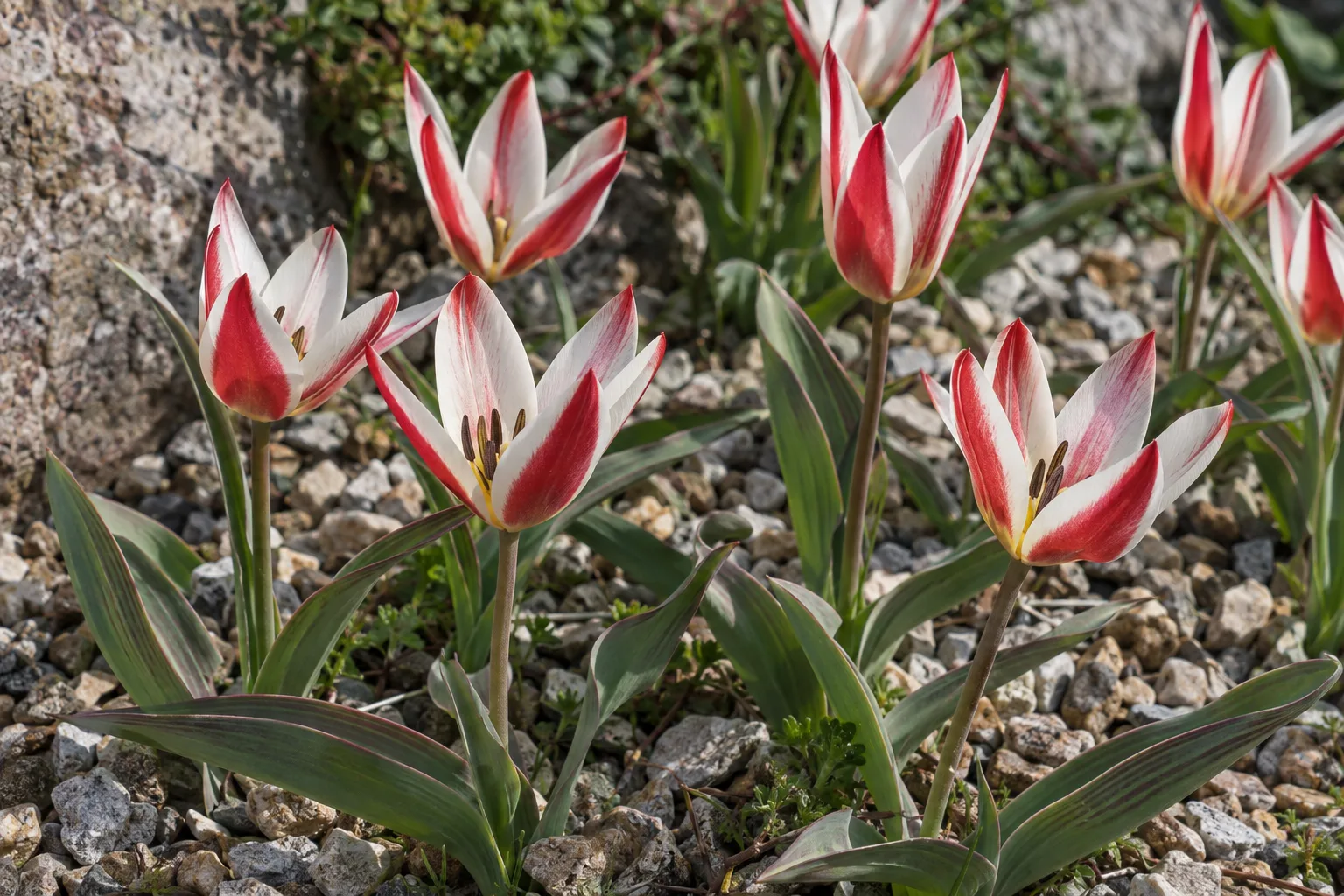
Species tulips, such as Tulipa clusiana
Tulipa clusiana and similar wild-type tulips have small, narrow flowers and come from dry, rocky ground with hot summers. They are the best bet for coming back a second year, as long as the bulbs stay in a well-drained spot that stays fairly dry in summer. Their flowers are smaller and less showy than a hybrid’s.
Greigii and Kaufmanniana tulips
These low growers bloom early and often have mottled leaves, which suit pots near an entry or patio. Their short stems keep them tidy in wind. They still need the full chilling period, and the flowers are modest compared with taller types.
Later-blooming types, such as Darwin hybrids and parrot tulips, are more of a gamble here. They open when March warmth can cut the show short, so plant a few early varieties alongside them.
How much should you water and fertilize tulips here?
Water when the top 2 inches of soil feel dry, and keep the moisture steady once buds form. Bulbs sitting in wet soil rot, while drought-stressed plants produce smaller flowers that fade sooner.
Pots dry out faster than beds on warm days, so check them more often. Hard water leaves salts behind in containers, which is why it helps to water until the excess runs freely from the drainage holes. Slow, deep watering encourages roots to go down rather than stay near the surface.
At planting, mix in a low-nitrogen bulb fertilizer at the rate on the label. Too much nitrogen pushes leaves at the expense of flowers. One light feeding when shoots emerge is optional.
What goes wrong with tulips in the low desert?
Most failures trace back to drainage, chilling time or heat. Each has a fix you can apply next season.
- Bulb rot comes from heavy soil or overwatering. Switch to a pot with drainage holes and a gritty mix, and let the top 2 inches dry between waterings.
- Stems with no flower usually mean too little chilling. Count the weeks next fall and aim for the upper end of the 10 to 14 week range.
- Blooms that collapse within a day or two follow a warm spell. Plant earlier next year, and move pots to afternoon shade once March warms up.
- Floppy, stretched stems point to too little light. Tulips need at least 6 hours of direct sun while they grow.
- Missing bulbs or chewed shoots suggest gophers or other animals. Wire mesh baskets around the bulbs at planting time keep most of them out.
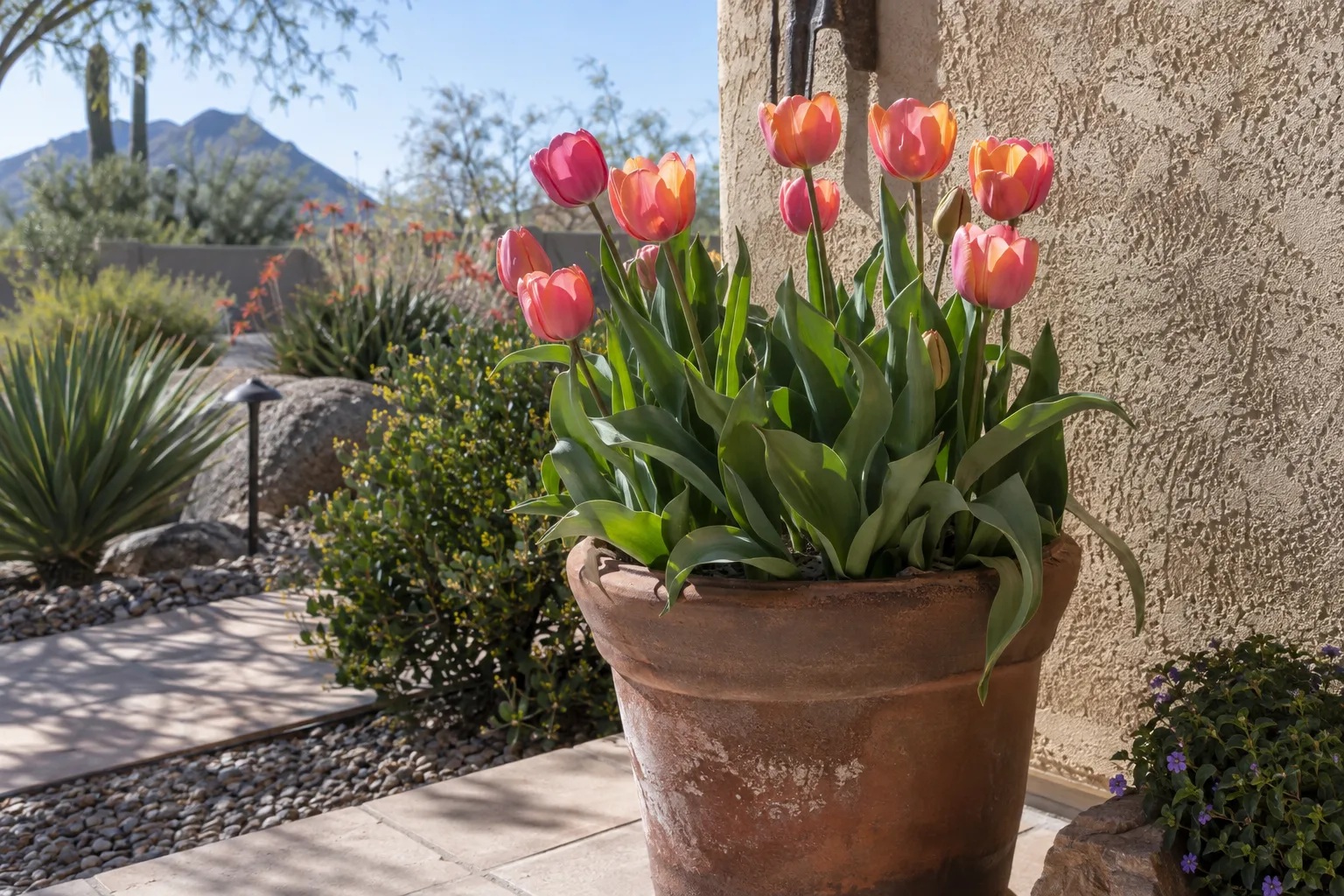
What should you do with tulips after they bloom?
Treat hybrid tulips as annuals, and plan to buy fresh bulbs next fall. Summer heat in our soil keeps most hybrids from flowering a second time, even when the bulbs survive.
Cut off faded flowers so the plant does not spend energy on seed. Leave the leaves in place until they turn yellow, usually 4 to 6 weeks after bloom, then pull the bulbs and compost them. If you grew species tulips, leave them where they are and keep that bed on the dry side through summer.
Check our classes and events page to see what is on the schedule.
Frequently asked questions
Can I skip refrigerator chilling if I buy pre-chilled bulbs?
Yes, if the bulbs were chilled by the supplier for the full period. Ask how many weeks they received and whether the chilling is complete. If nobody can tell you, assume you need to finish the job in your own refrigerator before planting them in December or January.
Can I put tulip bulbs in the freezer to shorten the wait?
No, freezing kills the flower inside the bulb. Tulips need cold, not frozen, conditions, with a steady 35 to 45°F range. A shortcut does not exist, and a shorter chill usually gives short stems or blind plants with leaves and no flower.
Do tulips need full sun in Queen Creek?
They need at least 6 hours of direct sun during the cool months to grow sturdy stems. Once March warms up, afternoon shade helps flowers last longer. Pots make this easy, since you can carry them from full sun to a spot that gets shade after midday.
Can I plant tulips in the ground instead of a pot?
You can, if the bed drains well. Loosen the soil 12 inches deep, break through caliche, and mix in compost and coarse sand. If water stands in the hole after a rain, choose a raised bed or container, because bulbs rot quickly in soggy ground.
How many bulbs should I start with?
Start with 10 to 20 bulbs. A small batch fits in one refrigerator drawer and in one or two large pots, so you can learn how your yard’s sun and heat affect bloom timing. Add more the following fall once you know which spot worked.
Are tulips worth growing in the Arizona low desert?
They are worth it if you enjoy a small project and can accept one to two weeks of bloom from bulbs you chill yourself. The reward is early color when little else is blooming. Skip tulips if you want perennial flowers that return on their own, or if you cannot spare refrigerator space for three months. Species tulips are the better pick for repeat bloom. Stop by our Queen Creek nursery and ask our staff about bulbs, pots and timing.