

Growing potatoes in Arizona takes about 60 to 100 days, depending on the variety. Plant seed potatoes from late January to mid-February for a spring crop, or from late September to mid-October for a fall crop, and dig once the vines yellow and die back.
Key takeaways
- Most potatoes (Solanum tuberosum) need 60 to 100 days from planting to a full harvest, and early varieties fit the East Valley’s short cool season best.
- Spring planting runs from late January to mid-February, and fall planting runs from late September to mid-October.
- Tuber growth slows once soil warms above roughly 80°F, so a spring crop planted after mid-February has less time to finish.
- Dig new potatoes about 2 to 3 weeks after flowering begins, and dig mature potatoes once the vines yellow and die back.
- Cure dug potatoes for 1 to 2 weeks in a dark, dry, ventilated spot at roughly 55°F to 65°F before storing them.
How long does it take to grow potatoes in Arizona?
Most potatoes need 60 to 100 days from planting to a full harvest, with early varieties at the short end. Late types that need 110 days or more run out of cool weather before the tubers finish sizing up, so early and mid-season varieties suit the East Valley best. Do the math before you buy.
| Variety type | Typical days to maturity | Best window here | Note |
|---|---|---|---|
| Early | 60 to 80 | Spring or fall | Best fit for spring because it finishes before the soil heats up |
| Mid-season | 80 to 100 | Fall, or early spring | Plant by late January or early February in spring |
| Late | 100 to 120 or more | Poor fit | Heat arrives before the tubers size up |
| Fingerling | 70 to 100, varies by type | Fall | Check the tag for days to maturity before choosing a window |
Varieties we commonly carry in the planting seasons include Red Norland (early), Yukon Gold and Red Pontiac (early to mid-season) and Kennebec (mid-season), though availability changes week to week and season to season. For cool-season edibles in general, start with our herbs, vegetables and berries department.
When should I plant potatoes in Queen Creek?
Plant seed potatoes from late January to mid-February for a spring crop, or from late September to mid-October for a fall crop. The University of Arizona Cooperative Extension vegetable planting calendar for Maricopa County shows the same two seasons, and our gardening calendars can help you plan the rest of the cool-season garden around them.
Spring planting (late January to mid-February)
Spring potatoes race the heat. Tuber growth slows once soil warms above roughly 80°F, and a planting made after mid-February leaves less time for the crop to finish. Put early varieties in first, and get mid-season types in the ground by late January or early February. Frost can still reach the East Valley that early, so keep frost cloth handy for newly emerged shoots.
Fall planting (late September to mid-October)
Fall potatoes grow into cooler weather instead of away from it. The soil is still warm at planting, so mulch the bed with straw or shredded leaves right away and keep it evenly moist so the seed pieces do not rot. Harvest typically falls in December or January, and a hard freeze can damage the foliage, so cover plants with frost cloth on cold nights.
What do I need to grow potatoes in alkaline soil and caliche?
You need loose, well-drained soil at least 12 inches deep, certified seed potatoes and compost. Native soil in Queen Creek is typically alkaline and often sits on caliche, a hard layer of calcium carbonate that tubers cannot push through. Dig first. A test hole 12 inches deep will show whether you hit white, rock-hard material, and if you do, a raised bed or a large container is an easier path than breaking through it.
Raised beds filled with garden soil and compost drain well and warm quickly in winter, which helps seed pieces sprout. Mix 2 to 4 inches of compost into the top 12 inches of any bed. Containers of at least 15 gallons with drainage holes also work, and our pottery and planters department is a good place to compare options.

How do I plant seed potatoes step by step?
Plant in trenches, cover lightly and hill the soil up as the vines grow. Hilling matters. Cut seed potatoes larger than an egg into pieces that each carry at least 2 eyes, then let the cut surfaces dry for 1 to 2 days in a shaded spot so they seal against rot.
- Loosen the bed 12 inches deep and mix in 2 to 4 inches of compost.
- Dig trenches about 4 inches deep, spaced 24 to 36 inches apart.
- Set the seed pieces in the trench cut side down with the eyes facing up, 10 to 12 inches apart.
- Cover with 3 to 4 inches of soil and water thoroughly once. After that, keep the soil barely moist until shoots appear, since soggy soil rots seed pieces.
- When shoots reach 6 to 8 inches tall, pull soil up around the stems and leave just the top few inches of foliage showing. Repeat once or twice as the plants grow.
- Mulch between the rows with straw or shredded leaves to hold moisture and keep the soil cooler.
- Write the planting date on a label and add your variety’s days to maturity to estimate the harvest window.

How often should I water and feed potatoes in the low desert?
Water every 3 to 5 days in the cool months, enough to keep the soil moist 2 to 3 inches down but never soggy. Frequency climbs to every 2 to 3 days as spring warms, and a drip line or watering at the base keeps the foliage dry and lowers the risk of leaf diseases such as early blight. Check with a finger first.
At planting, work a balanced granular fertilizer into the bed at the label rate. Once plants flower, ease off nitrogen, since extra nitrogen pushes leaf growth at the expense of tubers. Leaves that turn yellow between green veins point to an iron shortage, which is common in alkaline soil, and a chelated iron product used as directed on the label usually helps. Hard irrigation water leaves salts behind, so an occasional deep soaking helps move them below the root zone.
When do I harvest potatoes in Arizona?
Dig new potatoes about 2 to 3 weeks after flowering begins, and dig mature potatoes once the vines turn yellow and die back. New potatoes are small, thin-skinned and sweet but do not store well. Mature tubers keep much longer. Spring early varieties typically finish in April to early May, depending on planting date, and fall crops finish in December or January.
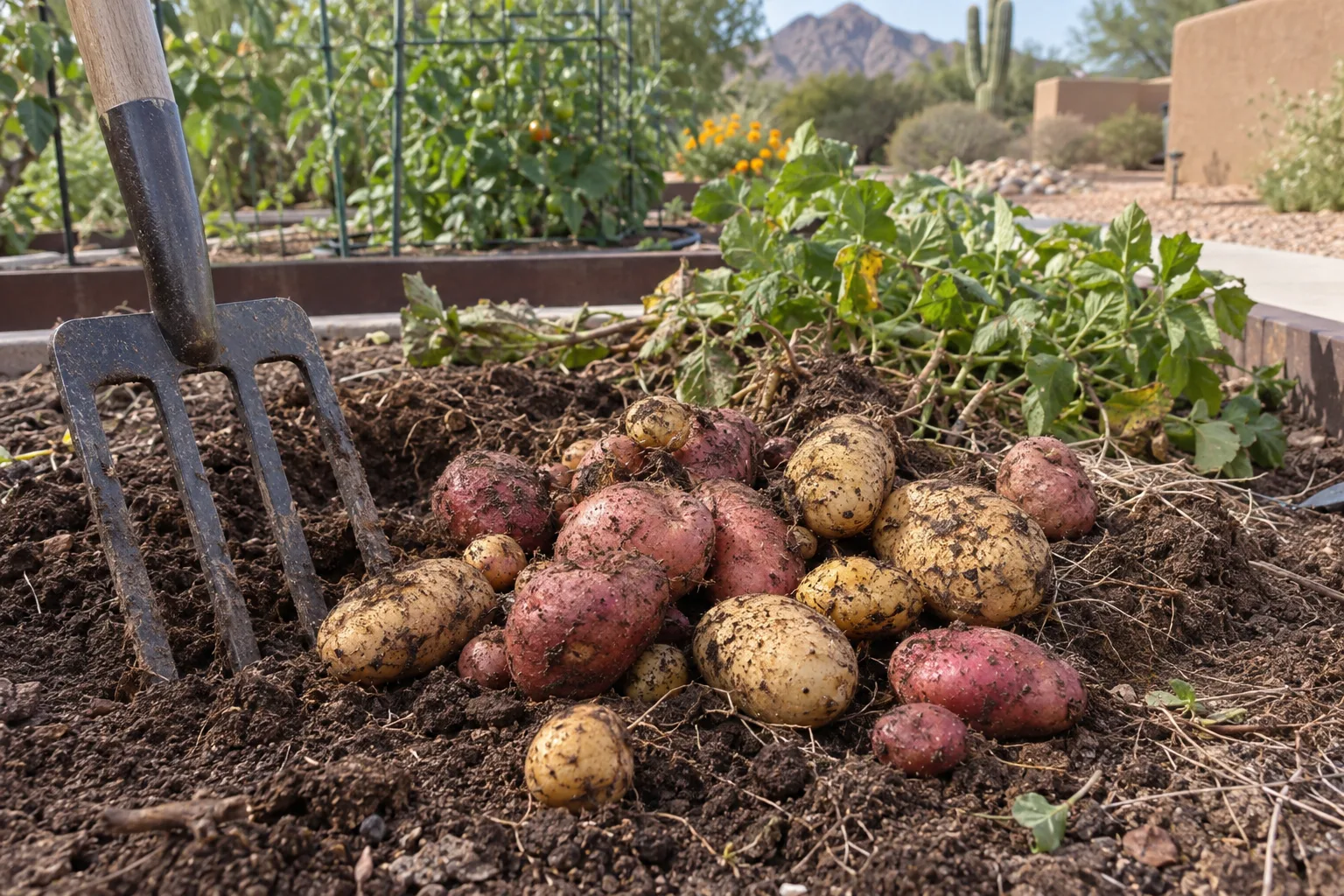
Once the vines die back, stop watering and leave the tubers in dry soil for 1 to 2 weeks so the skins set, but dig sooner if the soil is warming quickly in late spring. Harvest on a dry morning with a garden fork, inserting it about 12 inches from the plant and levering up so you do not spear tubers.
If warm weather arrives early and the vines collapse before dying back naturally, dig right away. The season is over. The potatoes already formed will be smaller but still good to eat.

How do I cure and store homegrown potatoes?
Cure freshly dug potatoes for 1 to 2 weeks in a dark, dry, ventilated spot at roughly 55°F to 65°F, then store them cool and dark. Brush off loose soil but leave them unwashed. Eat damaged ones first. A late spring harvest can be warmer than ideal outdoors, so use the coolest interior room you have, such as a closet or pantry, instead of a hot garage.
Store cured potatoes in paper bags, burlap sacks or ventilated boxes. Plastic traps moisture and invites rot. Skip the refrigerator, because cold turns starch to sugar and gives potatoes a sweet taste.
What problems cut potato harvests short here?
Heat, uneven watering, light exposure and alkaline soil cause most potato trouble in the low desert. Each has a specific fix.
Green potatoes
Tubers exposed to light turn green, which signals solanine, a natural compound that tastes bitter and can upset the stomach. Keep tubers covered with hilled soil and mulch. Peel or cut away small green areas, and discard potatoes that are green throughout or taste bitter, following food safety guidance from your state extension service.
Heat collapse
Vines that yellow and collapse in April or May ahead of normal dieback are responding to warming soil. Dig what has formed. Next season, choose an early variety and plant by mid-February.
Scab
Rough, corky patches on the skin are usually common scab, which is favored by dry, alkaline soil. The tubers are still edible once peeled. Even moisture while the tubers form reduces it.
Hollow heart and cracking
Hollow centers and split skins follow swings between dry and wet soil and bursts of fast growth. Water on a steady schedule, use mulch, and avoid heavy nitrogen once plants flower.
Aphids and early blight
Knock aphids off with a strong spray of water. Early blight shows up as brown spots on older leaves, so water at the base and remove affected foliage. For any spray, check current University of Arizona Cooperative Extension guidance and read the product label first.
Frequently asked questions
How many potatoes will each plant produce?
Each plant typically yields about 1 to 3 pounds of potatoes under good conditions. Yield depends on variety, how loose the soil is, how evenly you water and how much cool weather the plant gets before the heat arrives. Late plantings and compacted caliche soil produce the smallest harvests.
Can I plant potatoes from the grocery store?
You can, but certified seed potatoes are the better choice. They are grown for planting and tested for common potato diseases, while grocery potatoes may carry disease and are often treated to resist sprouting. A grocery potato may still sprout and grow, but you will not know its variety or how many days it needs to mature, and that matters with our short season.
How much sun do potatoes need?
Potatoes grow best in full sun, at least 6 hours a day, during the cool months. In late spring, as temperatures climb toward the 90s, afternoon shade from a shade cloth or a nearby wall can keep soil cooler for a few extra weeks. Fall and winter plantings need the most sun you can give them.
Can I still plant potatoes in March?
You can, but expect a smaller harvest. A March planting gets fewer cool weeks before soil passes roughly 80°F, so choose an early variety and watch the vines closely. If they begin to yellow and collapse in warm weather, dig what has formed rather than waiting for full dieback, because tubers left in warm soil can rot.
Can I leave potatoes in the ground through summer?
No, dig them before summer arrives. Tubers left in soil that heats well past 80°F through summer, and then meets monsoon rain from roughly July through September, tend to rot. Harvest everything you find, then use the empty bed for heat-tolerant crops or add compost before fall planting.
Are potatoes worth growing in a Queen Creek garden?
Yes, if you have a bed or a large container, 6 hours of winter sun and a calendar you will follow. A first crop of early potatoes can come out of the ground in about 60 to 90 days, and the flavor of fresh-dug tubers is worth the effort. Skip them if your only space is a hot, west-facing patio with no way to shade it, or if you cannot water every few days. Stop by our Queen Creek nursery and we will help you sort out what to plant.