
To grow plumeria in pots in Arizona, use a gritty, fast-draining mix, a pot with large drain holes, at least six hours of sun, and very little water in winter. Drainage matters more than anything else you do.
Key takeaways
- Plant in a mix that is roughly half coarse pumice or perlite, in a pot with at least two or three large drain holes.
- Give plumeria 6 or more hours of direct sun, with some afternoon shade for young plants and fresh cuttings in July and August.
- Water only when the top 2 inches of mix are dry, which may be every few days in June and every 7 to 10 days or less during the monsoon.
- Feed with a high-phosphorus fertilizer about every 2 to 3 weeks from March through August, then stop.
- Expect leaf drop between November and January, water very little, and shelter the pot when nights are forecast near 40°F.
When is the best time to pot plumeria in Arizona?
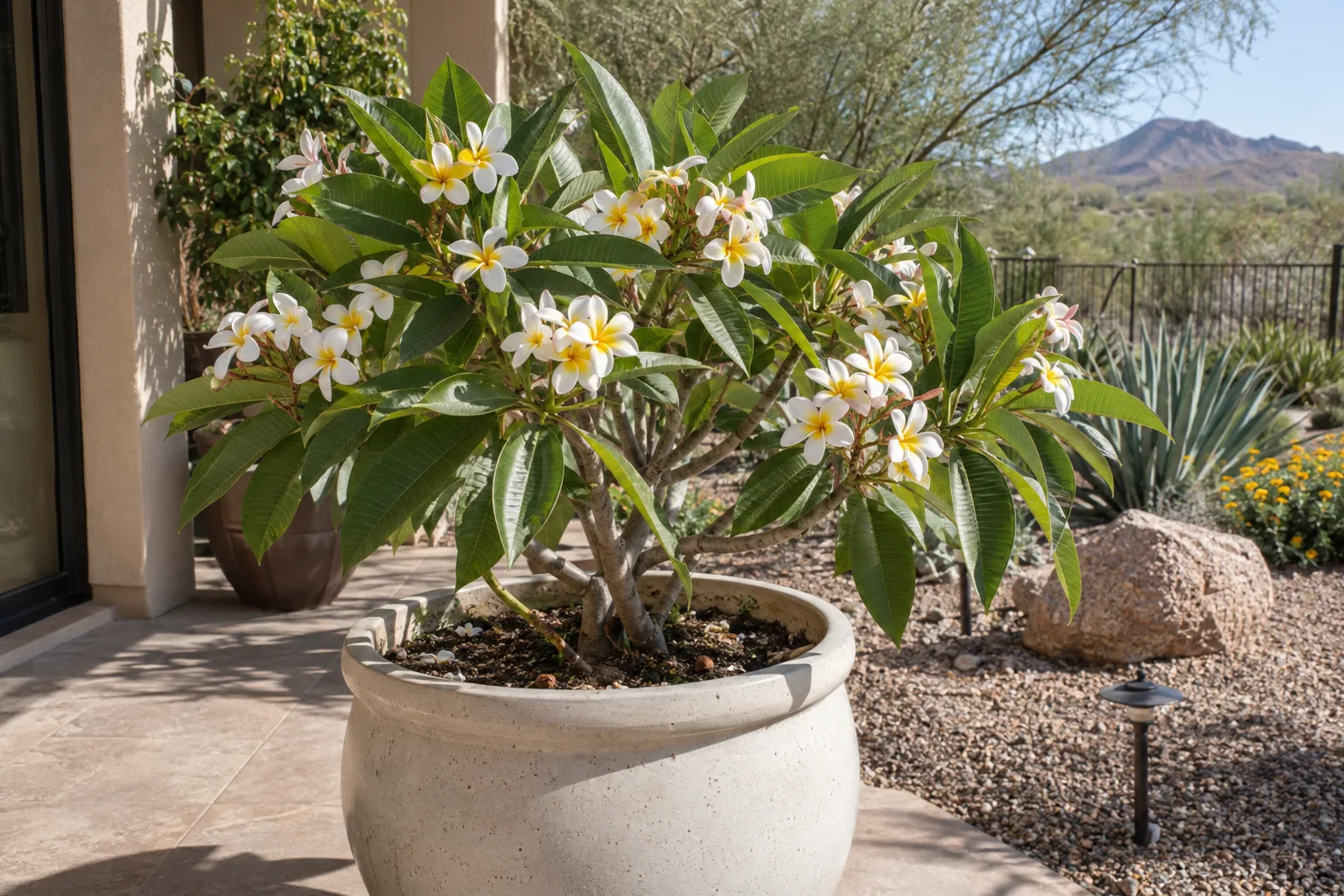
Late spring to early summer, roughly April through June, once nights stay warm. Plumeria (Plumeria rubra is the species behind most garden varieties) is a tropical plant that wants warm soil to root and grow. Potting in winter risks rot because a dormant plant barely drinks.
Pots suit our conditions well. Native soil in Queen Creek and the rest of the East Valley is alkaline and often sits on caliche, which drains slowly and can hold water around roots after a monsoon storm. A container lets you control the mix and move the plant out of a cold snap or reflected heat. Plumeria is one of the flowering trees we commonly carry, though availability changes week to week and season to season.
What do I need to grow plumeria in a pot?
You need a pot with big drain holes, a gritty mix, and a fertilizer with a high middle number. That is the whole shopping list. The pot and mix are where most container plumeria succeed or fail.
Start young plants and cuttings in a 1 to 3 gallon pot and move up as roots fill it. A mature plant usually does well in something around 15 to 25 gallons. Light-colored plastic, resin and glazed ceramic reflect heat and hold moisture a little longer. Terra cotta breathes well but heats up in afternoon sun, which can stress roots along the pot wall. Browse our pottery and planters if you are choosing a size and color. Set the pot on feet or bricks so the holes never sit flat against a patio.
For the mix, aim for roughly half coarse pumice or perlite, about a third quality potting mix, and the rest coarse sand or small lava rock. Some growers go grittier still for the humid weeks of July and August. Skip mixes with moisture-retaining crystals or a lot of peat, because plumeria roots rot in constantly damp soil.
How do I plant plumeria in a pot?
Fill the pot with gritty mix, set the plant or cutting at the right depth, and hold back on water at first. Cuttings need extra patience because a fresh cut end rots easily.
- If you are starting from a cutting, let the cut end dry in a shaded, airy spot for about 1 to 2 weeks, until it forms a dry, papery callous.
- Cover the drain holes with a bit of fine mesh so the mix stays in without blocking water.
- Fill the pot about two-thirds full with your gritty mix.
- Set a calloused cutting about 3 to 4 inches deep. For a rooted plant, keep it at the same depth it was growing before.
- Add mix around the sides and firm it gently. Do not pack it hard.
- Wait about a week or so before the first watering for a fresh cutting. For a rooted plant, water once, then wait until the top 2 inches are dry.
- Place it where it gets at least 6 hours of direct sun.

If a plant came home in standard potting mix, repot it into a gritty blend within a few weeks. Rot can advance well before leaves show a problem.
How often should I water potted plumeria in Arizona?
Water when the top 2 inches of mix are dry, not on a fixed schedule. Push a finger in and check. The calendar below is a starting point, and your pot size, sun and mix will shift it.
| Season | Typical watering | Notes |
|---|---|---|
| Spring (March to May) | Every 5 to 7 days | Increase gradually as new leaves open |
| Early summer (June to early July) | Every 3 to 5 days | Hot and dry, so check the mix often |
| Monsoon (mid-July to September) | Every 7 to 10 days or less | Let rain and humidity do some of the work |
| Fall (October and November) | Every 10 to 14 days | Taper off as leaves yellow |
| Winter (December to February) | About once a month or less | Just enough to keep roots from drying out completely |
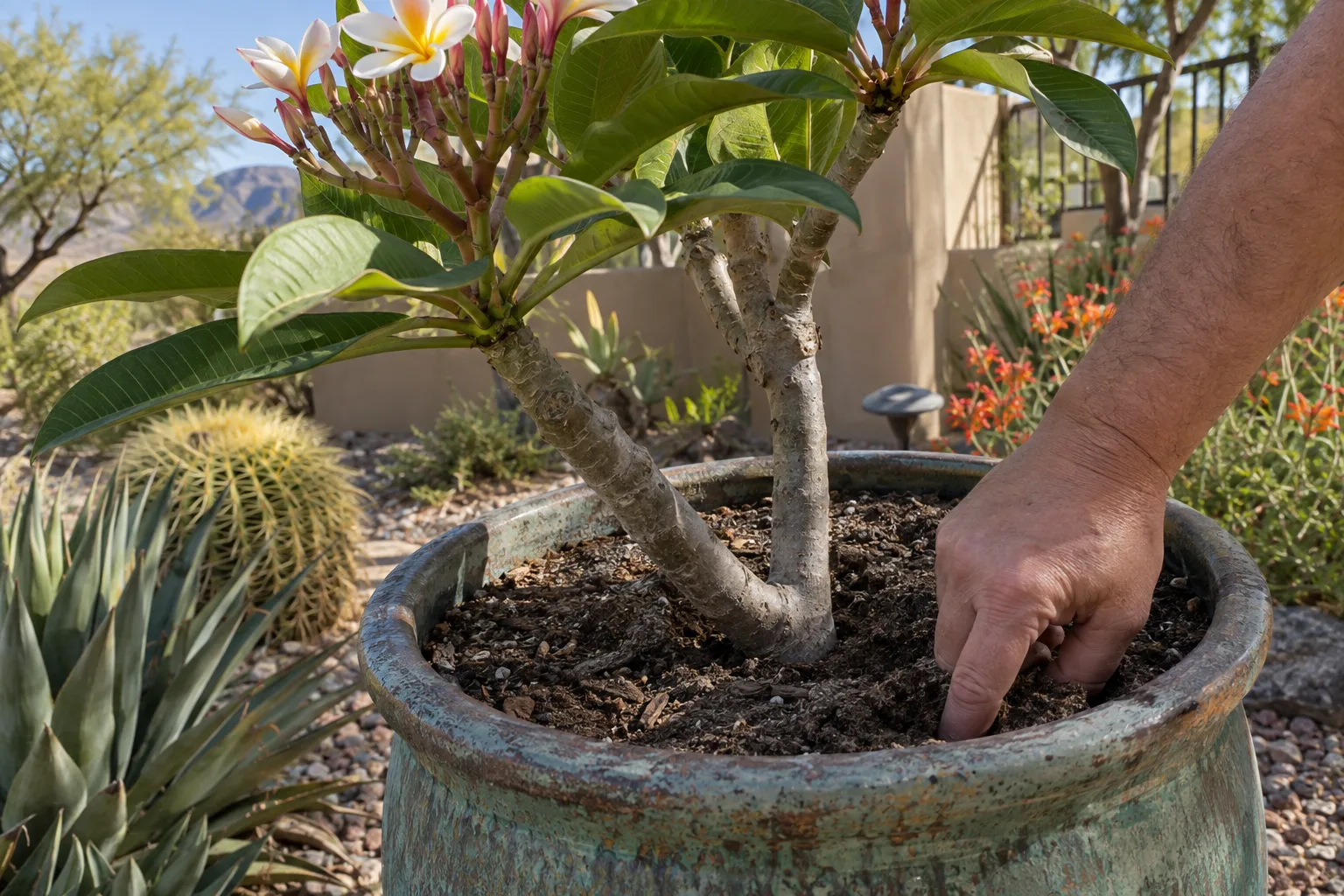
Overwatering is a bigger risk than underwatering. A plumeria can recover from a dry spell, but a soft, mushy stem base usually means rot. Our gardening calendars are a handy way to keep seasonal tasks in view.
How do I feed plumeria for more blooms?
Use a fertilizer with a high middle number (phosphorus), often sold as a bloom booster, every 2 to 3 weeks from March through August. High-nitrogen products push leaves at the expense of flowers, so skip lawn fertilizer.
Hard water adds a second job. Our tap water is typically alkaline, and repeated watering can raise the pH of the mix and tie up iron and other micronutrients. Yellow leaves with green veins point to iron chlorosis. A chelated iron product can help, and you can flush the pot thoroughly every month or two during the growing season to wash out built-up salts. Follow the label on any product you use. Stop feeding in fall and do not fertilize during dormancy.
How do I protect potted plumeria from summer heat and monsoon humidity?
Keep the plant in sun but protect the pot and young growth from the worst of the afternoon. Established plants often handle full desert sun, while young plants and new cuttings do better with some shade from about 1 PM to 4 PM in July and August.
Watch for crispy leaf edges, flower buds that drop before opening, and wilting in the afternoon even when the mix is damp. Move the pot to an east-facing spot or under a high, open patio cover. Keep pots off asphalt and away from hot stucco walls, which radiate heat onto roots.
During monsoon, humidity slows evaporation, so check the mix before every watering. Good air movement around the plant also helps with leaf diseases such as rust, which shows as orange pustules under the leaves. Remove affected leaves and throw them away rather than composting them.
What should I do with plumeria in winter?
Let it go dormant. Plumeria is deciduous here, and leaves typically drop between November and January. A bare plant is not a dead plant, and the rest often helps spring blooming.
Water sparingly, roughly once every few weeks, only enough to stop the roots from drying out completely. Hold off fertilizer from November through February. Frost can damage stems, so when nights are forecast near 40°F, move the pot to a covered patio, garage or shed. A dormant plant needs no light.

In late February or March, swelling buds at the branch tips signal that it is waking up. Move the pot back into full sun, increase watering gradually, and begin feeding. Do not push heavy water or fertilizer before those buds swell, because cool soil and active watering invite rot.
What mistakes should I avoid with container plumeria?
The common ones are all about water and soil. Using regular potting mix, a pot with poor drainage, and watering on a schedule instead of by feel account for most failures.
Other frequent errors include moving up to a much larger pot too quickly (extra damp mix around small roots invites rot), fertilizing a dormant plant, and giving a fresh cutting water too soon. If the stem base turns soft, cut back to firm tissue, let the wound callous in shade for about a week, and replant in fresh gritty mix. If rot has climbed far up the stem, the plant may not be salvageable.
Frequently asked questions
How often should I repot plumeria?
Plan on repotting about every 2 to 3 years, or when roots circle the bottom or push out of the drain holes. Spring, as buds begin to swell, is the best time. Go up only 2 to 4 inches in pot diameter, since oversized pots hold too much wet mix.
Why is my plumeria not blooming?
Not enough sun, too much nitrogen, or a young plant are the usual reasons. Check that it gets 6 or more hours of direct sun and switch to a high-phosphorus fertilizer. Plants grown from cuttings can take a couple of years to bloom, so some patience is normal.
Can I use tap water on potted plumeria?
Yes, but expect salts to build up in the pot. Water until it runs freely from the drain holes every so often to flush them out. If leaves yellow between green veins, test the pH and consider an iron product made for containers, following the label directions.
How do I deal with spider mites on plumeria?
Rinse the undersides of leaves with a strong stream of water first. Fine webbing and bronze, stippled leaves point to mites, which favor hot, dry weather. If rinsing is not enough, insecticidal soap or neem oil can help. Apply in the cooler part of the day and follow the label.
Is it normal for plumeria to lose its leaves in fall?
Yes. Plumeria is deciduous in the low desert, and leaves drop as days shorten and nights cool, usually November through January. Reduce water as leaves yellow, stop fertilizing, and keep the pot sheltered from frost. New growth returns in spring once buds start to swell.
Is a potted plumeria right for your yard?
It is a good fit if you have a sunny spot with 6 or more hours of light, a place to shelter the pot during a cold night, and the discipline to water by feel. It is a poor fit if you tend to water on a schedule regardless of the weather, or if you have no spot that stays dry in winter. If you are weighing options, come by our nursery in Queen Creek and talk it through with our staff, or reach us through our contact page.