

Grow adenium indoors in Arizona with a south or west window that gives 6 or more hours of direct sun, a fast-draining gritty mix, and water only after the soil dries completely. Adenium (desert rose) handles our dry air well, and overwatering is the main cause of loss.
Key takeaways
- Give adenium at least 6 hours of bright, direct light a day, from a south or west window or a full-spectrum grow light.
- Use a mix that is roughly 50 to 70 percent pumice or perlite, with cactus mix making up the rest.
- Water deeply, then wait until the soil is dry through most of the pot, often 7 to 14 days in the growing season.
- Repot every 2 to 3 years in spring, from about March into May, and hold off watering for several days afterward.
- Cut watering to once every 3 to 4 weeks or less in winter, and skip fertilizer from about November to February.
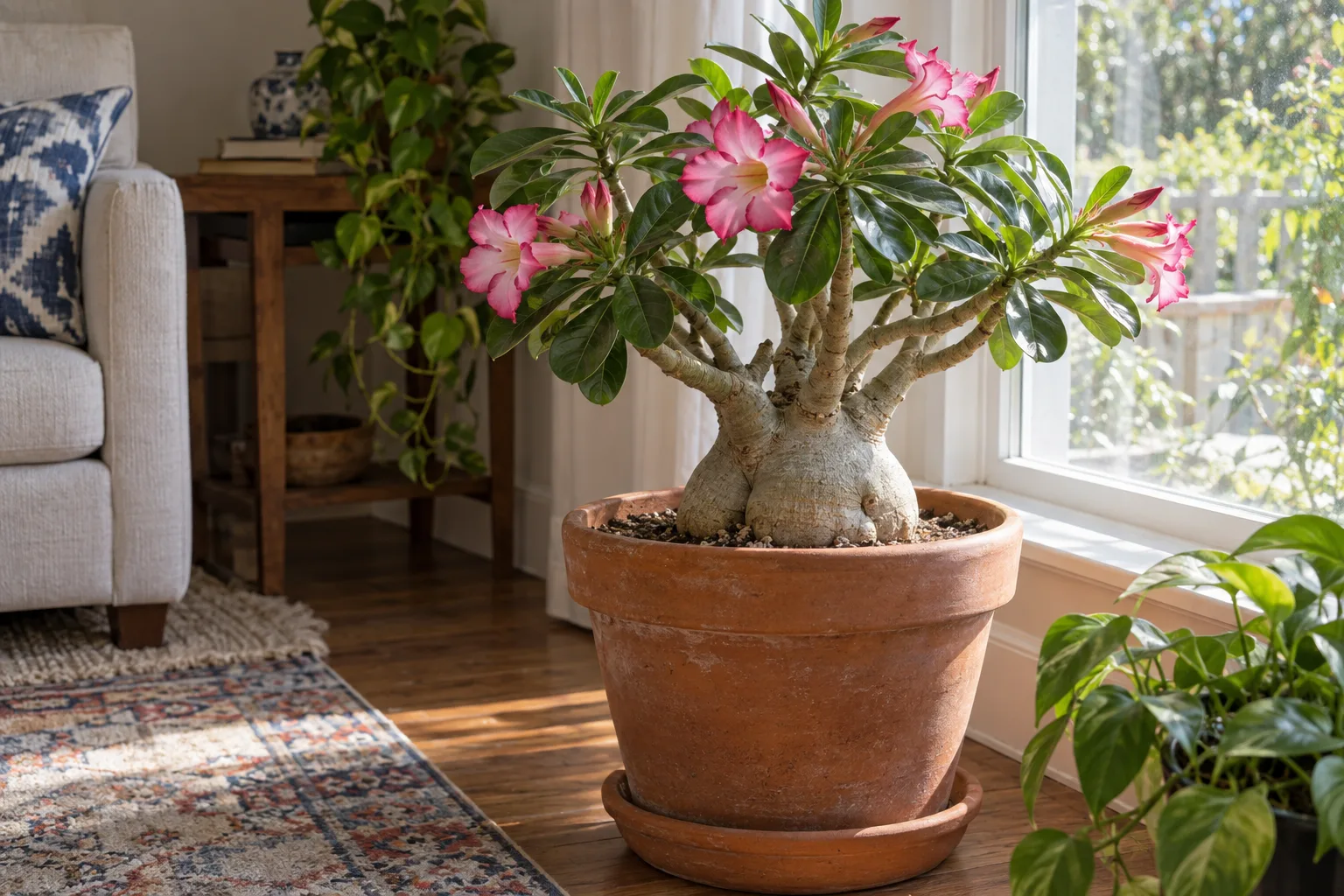
Where in an Arizona home does adenium get enough light?
A south-facing window is the best spot, with a west-facing window a close second. Adenium needs 6 or more hours of bright light to hold a compact shape and set flowers. East windows can keep a plant alive, but blooms are usually sparse.
Dim rooms cause stretched, floppy growth and slow soil drying, which invites rot. North-facing windows will not carry an adenium on their own, so add a full-spectrum LED grow light running 12 to 14 hours a day if that is all you have. Browse our houseplants if you want to compare how other indoor plants handle the same window.
Summer glass gets hot. Near a south or west window, leaf edges can brown or leaves can drop when the air next to the glass climbs well above 90°F, even with the air conditioner running. Pull the plant back a foot or two or add a sheer curtain through the hottest afternoon hours. Turn the pot a quarter turn every couple of weeks so all sides get light.
When is the best time to plant or repot adenium in Arizona?
Spring is the best time, from about March into May, once nights stay above roughly 60°F and the plant is pushing new leaves. A plant that is actively growing recovers from root work quickly. Avoid repotting in winter dormancy or during the hottest weeks of summer.
Most adeniums need a new pot every 2 to 3 years. Roots circling the drainage hole, water running straight through, or a caudex (the swollen base) crowding the rim all say it is time. Adenium blooms best slightly root-bound, so size up only a little.
What do you need to pot an adenium?
You need a pot with a large drainage hole, a gritty mix, and gloves. That is the whole kit. Terra cotta works best because the porous walls let moisture escape through the sides.
Choose a pot only slightly wider than the caudex, since a big pot holds wet soil around too few roots. Our pottery and planters include terra cotta and decorative options, and a pretty glazed pot can hold a plain terra cotta pot inside it as a cachepot.
For the mix, blend about 50 to 70 percent coarse pumice or perlite with cactus and succulent mix, and add a little coarse sand or decomposed granite if you like. Bagged potting soil on its own stays wet far too long. Garden soil is worse, because our alkaline, caliche-heavy native soil packs down hard in a container.
How do you repot adenium step by step?
Repot a dry plant into fresh gritty mix, let any damaged roots callous, and wait several days before the first watering. The sap is considered toxic, so wear gloves and keep pets and children away while you work.

- Stop watering about 10 days before repotting so the soil is fully dry and falls away from the roots easily.
- Tip the pot sideways and ease the plant out. Shake off as much old mix as you can.
- Check the roots. Healthy roots are firm and white to tan, while brown, soft or mushy roots are rotted.
- Trim rotted roots with clean, sharp scissors, then set the plant in a warm, dry, shaded spot for 1 to 2 days so cuts can callous.
- Place the plant in the new pot so the base of the caudex sits slightly above the soil line.
- Fill in around the roots with fresh mix and tap the pot to settle it. Do not press the mix down hard.
- Wait about 5 to 7 days before the first watering, then water deeply.
- Keep the plant in bright light but out of harsh midday sun for the first two weeks.
Do not reuse old mix. It has lost its structure and can carry rot organisms. New leaves usually show within 2 to 4 weeks in spring.
How often should you water adenium indoors in Arizona?
Water deeply until it runs out the drainage hole, then wait until the soil is dry through most of the pot. In spring and summer that is often every 7 to 14 days, depending on light, pot size and how dry your home runs.
Check with a finger or a wooden skewer pushed 2 to 3 inches down rather than following a calendar. Any dampness means wait a few more days. Soft spots on the caudex, yellowing lower leaves or a wilted look in damp soil all point to too much water.
East Valley tap water is hard and alkaline, and mineral salts build up in a pot over time. Every month or two during the growing season, run plain water through the pot several times to flush the salts, and let it drain fully each time. Some growers collect rainwater, which is a fine option if you have it.
How do you feed adenium for more blooms?
Feed with a water-soluble fertilizer at half the label strength every 2 to 4 weeks during active growth, roughly March through October. A balanced formula suits spring leaf growth, and many growers switch to one higher in phosphorus when flower buds appear.
Stop feeding from about November to February. Fertilizer on a resting plant pushes weak, leggy growth. Heavy feeding paired with low light produces leaves and no flowers, so fix the light first.
What does adenium need month to month?
Adenium needs the most water and food in spring and summer, and almost none in winter. Indoors in a home kept around 70°F, many plants slow down and drop some leaves in winter rather than go fully dormant. Our gardening calendars are a handy way to track the seasons.
| Season | Watering | Feeding | Notes |
|---|---|---|---|
| Spring (March to May) | Every 7 to 10 days, once dry | Half strength, every 2 to 4 weeks | Best time to repot; flower buds often appear |
| Summer (June to September) | Every 7 to 14 days, once dry | Half strength, every 2 to 4 weeks | Watch glass heat; stretch intervals during humid monsoon weeks |
| Fall (October to November) | Gradually less often | Taper off | Move to the brightest, warmest spot |
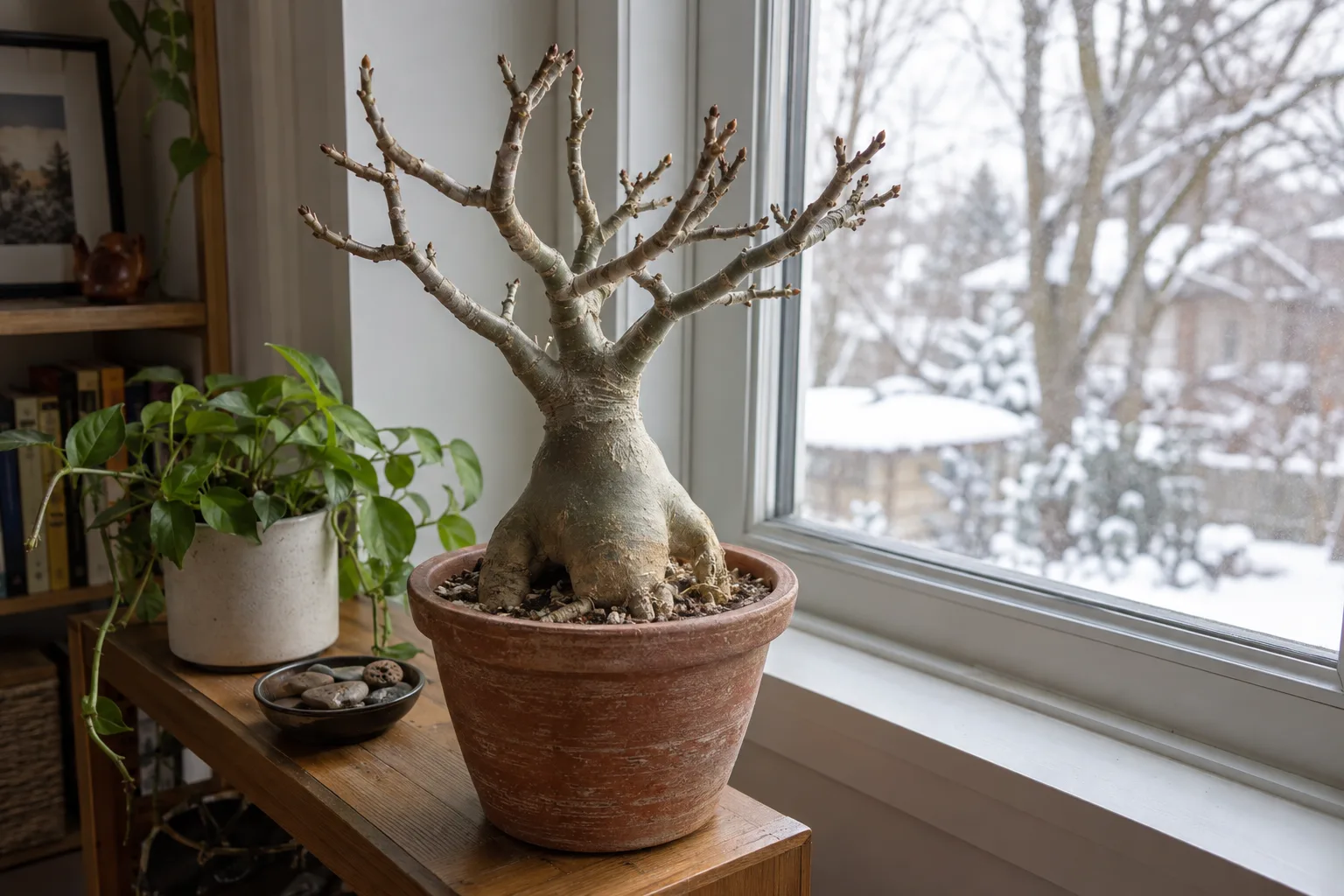
| Winter (December to February) | Every 3 to 4 weeks or less | None | Leaf drop is normal; keep away from cold drafts |
What mistakes and pests cause the most trouble?
Overwatering causes most adenium losses, followed by too little light. Both are easy to correct once you spot them. Pests are less common in dry indoor air, but spider mites and mealybugs do show up.
Overwatering and root rot
A soft, sunken caudex or yellowing leaves in wet soil mean rot. Unpot the plant, cut away all soft tissue, let the plant dry and callous for a couple of days, and repot into fresh gritty mix. Water lightly afterward.
Spider mites
Fine webbing and stippled, dusty-looking leaves point to spider mites, which love hot, dry rooms. Rinse the plant, then treat the undersides of leaves with insecticidal soap, following the label directions and repeating as directed.
Mealybugs
White cottony clusters in leaf joints are mealybugs. Touch each one with a cotton swab dipped in rubbing alcohol, and check weekly for several weeks because new ones hatch.

Other common slips include a pot that is too large, a dim window, and fertilizing in winter. If you want hands-on help, check our classes and events page for upcoming workshops.
Frequently asked questions
Is adenium toxic to pets and people?
Yes, adenium sap is considered toxic if swallowed, so keep the plant away from pets and small children. Wear gloves when pruning or cutting roots and wash your hands afterward. If a pet chews on a plant, call your veterinarian or a pet poison hotline right away for guidance.
Can adenium go outside in an Arizona summer?
Yes, but move it gradually. Acclimate an indoor plant over 1 to 2 weeks, starting with bright shade, because sudden full sun scorches leaves. Morning sun with afternoon shade suits it best once highs pass 105°F. Bring it back inside before nights drop below about 50°F.
Why did my adenium lose its leaves in winter?
Winter leaf drop is normal and usually harmless. Shorter days, lower light and cooler nights signal the plant to rest. Cut back on water, skip fertilizer and keep it in the brightest, warmest spot away from cold drafts. Leaves typically return in spring as growth restarts.
Why won’t my adenium bloom?
Low light is the most common reason. Adenium needs 6 or more hours of bright light to set flower buds. Other causes include heavy feeding with a nitrogen-rich formula, a plant that is too young, or a winter rest that was too wet. Fix the light first, then adjust feeding.
Can I grow adenium from seed in Arizona?
Yes, fresh seed often sprouts in about 3 to 7 days when kept at 80 to 90°F in a barely damp, gritty seed mix. A heat mat helps in cooler months. Expect 2 to 3 years before seedlings flower, and expect flower color and form to vary from the parent plant.
Is adenium a good fit for your home?
Adenium suits you if you have a bright south or west window, or you are willing to add a grow light, and you can let the soil dry between waterings. It is a poor match if your only light is north-facing and you will not add a lamp, if you water on a fixed weekly schedule, or if pets chew on plants. Stop by our Queen Creek nursery and we will talk through pots, mixes and light for your home.