

Desert marigold, damianita, blackfoot daisy and five other low growers hold up through late winter in Arizona, when nights can dip to the upper 20s and days reach the 70s. These eight groundcovers handle frost, dry soil and alkaline ground in Queen Creek and the East Valley.
Key takeaways
- Late winter lows in the East Valley can reach the upper 20s°F, so choose groundcovers hardy to at least 20°F.
- Water established plants about every 2 to 3 weeks from December through February, and new plants weekly for the first 4 to 6 weeks.
- Plant the hardy types from January to early March, and wait until March for frost-tender trailing lantana.
- Leave frost-browned growth in place until late February or March, then cut back to fresh buds.
- Set the crown about 1 inch above the surrounding soil and keep mulch 2 inches away from the stems, because wet crowns rot in cool, alkaline ground.
What makes a groundcover hold up in late winter?
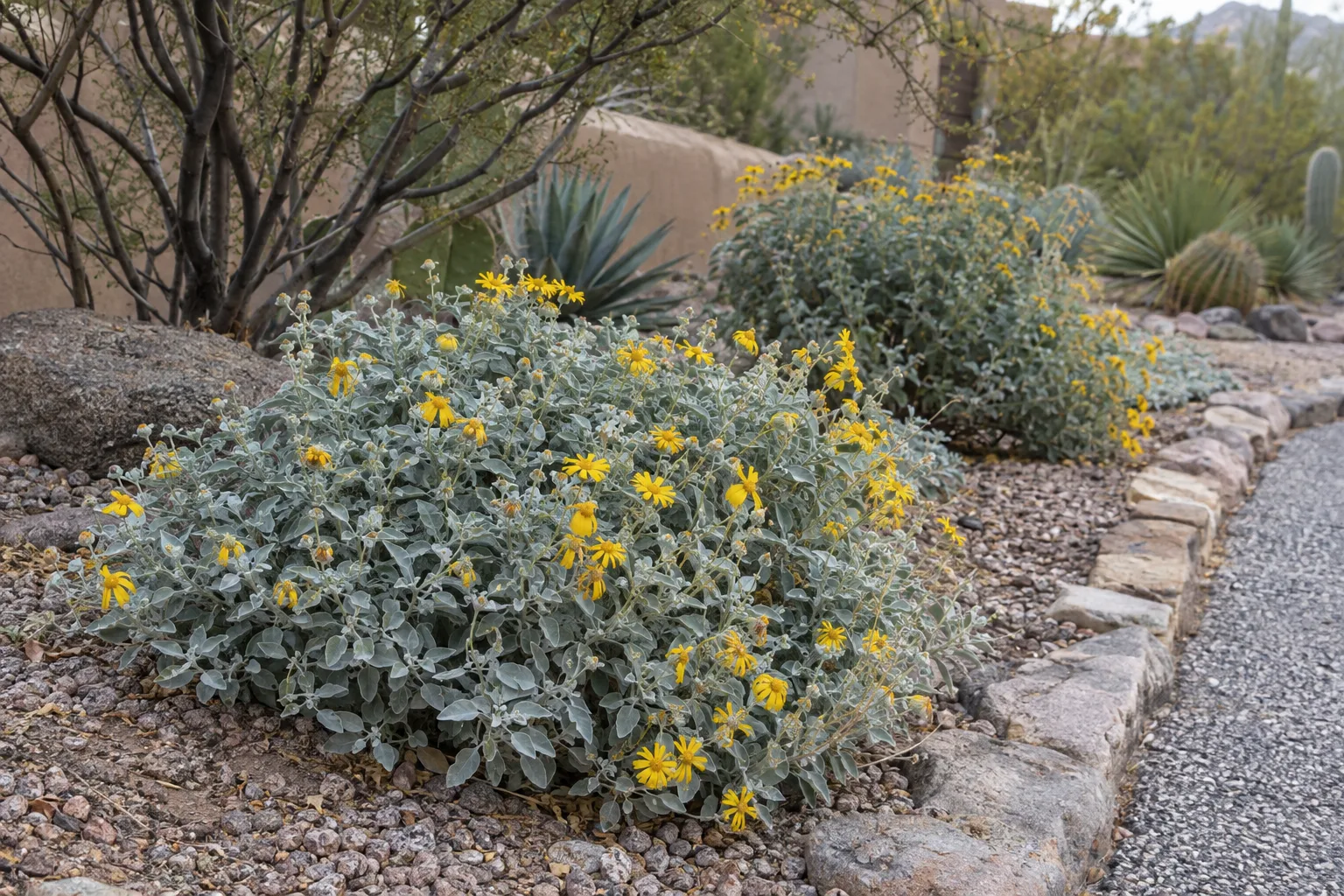
A groundcover holds up in late winter when it tolerates frost, survives on little water and keeps a tidy shape while growth slows. Flowers are a bonus. In Queen Creek, overnight lows in January and February can reach the upper 20s on a clear, still night, while afternoons climb into the 60s and 70s. Cold air settles low, so ground-level plants take the worst of it.
Soil and water matter just as much as temperature. Our soil is alkaline and often sits on a layer of caliche, and winter rain is light, often an inch or less in a month. A plant that is stressed by frost can also be dry at the root, and it can rot if you overcorrect with water. Drainage decides most outcomes.
Which groundcovers handle late winter in the East Valley?
Eight low growers earn a place in an East Valley yard for late winter. These are varieties we commonly carry in our plants department, though availability changes week to week and season to season. Sizes below are mature ranges, and your plants will vary with sun, soil and water.
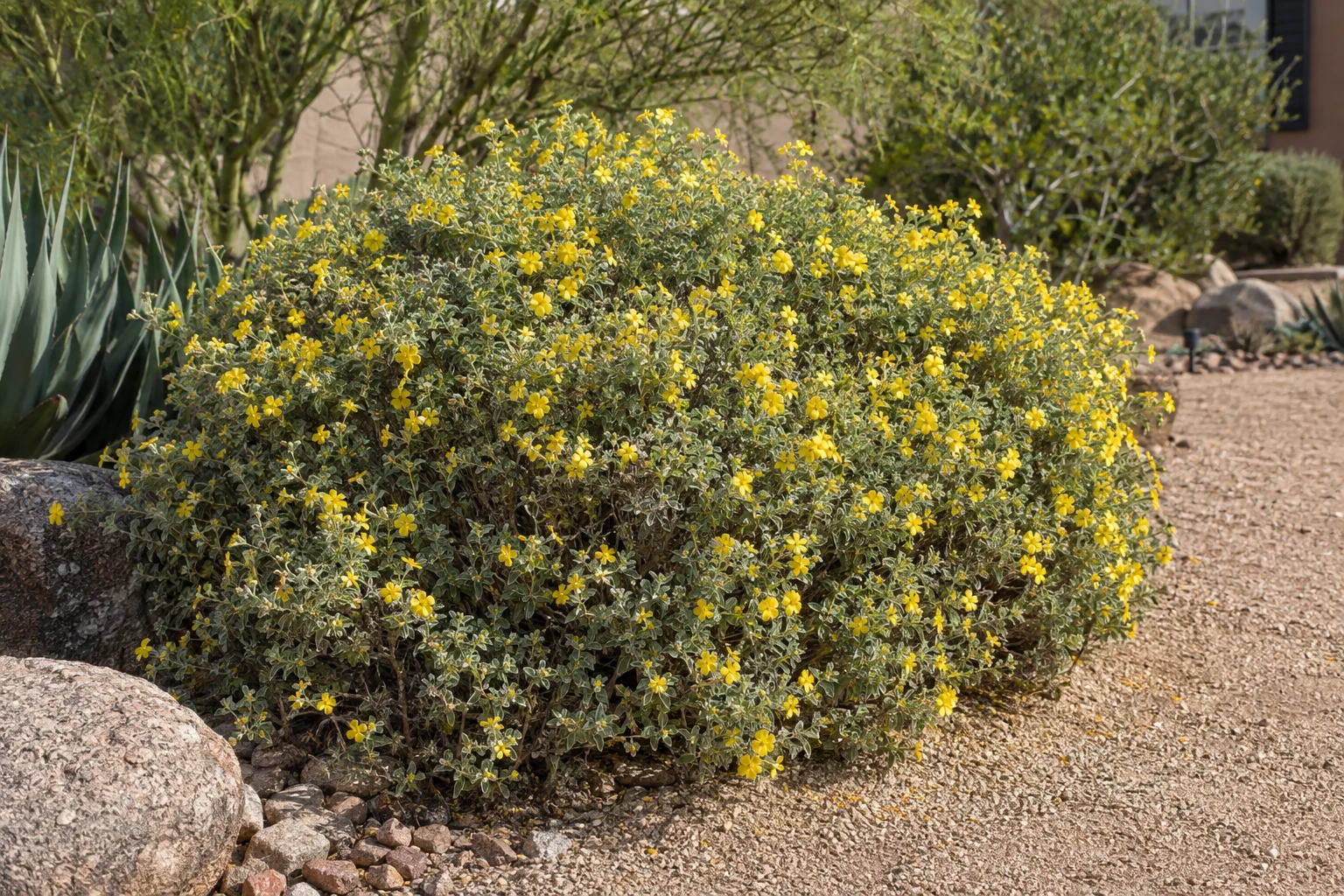
Desert marigold (Baileya multiradiata)
Desert marigold is a native with silvery foliage and yellow daisies that bloom heaviest in spring and can appear in other months. It grows 1 to 2 feet tall and wide in full sun and needs very little water once established. The drawback is its short life. Plants fade after a few seasons, so let some flower heads go to seed to refill gaps.
Trailing lantana (Lantana montevidensis)
Trailing lantana stays 1 to 2 feet tall and spreads 3 to 6 feet, with lavender flowers that continue through mild stretches. It wants full sun and moderate water, about every 2 weeks in winter. The drawback is frost. A hard freeze burns the tops brown, and the plant looks rough until you cut it back in March, though established plants usually resprout from the base.
Damianita (Chrysactinia mexicana)
Damianita forms a fine-textured, aromatic mound 1 to 2 feet tall and wide, with small yellow flowers through much of the warm season. It tolerates cold well below freezing, wants full sun and needs very little water once established. The drawback is slow growth. It takes a couple of seasons to fill in and declines quickly in heavy, wet soil.
Myoporum (Myoporum parvifolium)
Myoporum is a true carpet, staying 3 to 6 inches tall and spreading 6 to 9 feet, with fine green leaves and small white flowers. It takes full sun to light afternoon shade and moderate water, about every 1 to 2 weeks in winter. The drawback is thirst. It needs more water than the other plants on this list, and hard frost can burn it in cold, low spots.
Blackfoot daisy (Melampodium leucanthum)
Blackfoot daisy makes a compact mound 6 to 12 inches tall and 1 to 2 feet wide, covered in small white daisies that bloom heaviest in spring and fall. It is frost hardy, loves rocky, alkaline soil and needs very little water. The drawback is its dislike of extra irrigation. Overwatered plants open up in the center and decline.
Trailing indigo bush (Dalea greggii)
Trailing indigo bush has soft gray foliage on stems that grow 1 to 2 feet tall and spread 4 to 8 feet, which makes it a good choice for slopes. It takes full sun and low water, with purple flowers mostly from spring into fall. The drawback is the first year. It grows slowly at first, and a hard frost can thin its leaves.
Prostrate rosemary (Salvia rosmarinus ‘Prostratus’)
Prostrate rosemary cascades 1 to 2 feet tall and 4 to 8 feet wide, with fragrant leaves and blue flowers that often open in winter and spring. It likes full sun and low water, and it handles frost well. The drawback is root rot. Rosemary can collapse suddenly in soil that stays wet, so keep it off lawn-style irrigation.
Angelita daisy (Tetraneuris acaulis)
Angelita daisy forms a tidy tuft of narrow gray-green leaves 6 to 10 inches tall and about 1 foot wide, topped with yellow daisies that peak in spring. It takes full sun and low water. The drawback is size. It stays small and can be short-lived, so use it for edging and pockets between rocks, not for covering a large area.
| Groundcover | Mature size | Winter water once established | Frost response |
|---|---|---|---|
| Desert marigold | 1 to 2 ft tall and wide | Every 2 to 3 weeks | Tolerant |
| Trailing lantana | 1 to 2 ft tall, 3 to 6 ft wide | About every 2 weeks | Tops burn, base resprouts |
| Damianita | 1 to 2 ft tall and wide | Every 3 weeks or longer | Tolerant |
| Myoporum | 3 to 6 in tall, 6 to 9 ft wide | Every 1 to 2 weeks | Can burn in cold pockets |
| Blackfoot daisy | 6 to 12 in tall, 1 to 2 ft wide | Every 3 weeks or longer | Tolerant |
| Trailing indigo bush | 1 to 2 ft tall, 4 to 8 ft wide | Every 2 to 3 weeks | May thin in hard frost |
| Prostrate rosemary | 1 to 2 ft tall, 4 to 8 ft wide | Every 2 to 3 weeks | Tolerant |
| Angelita daisy | 6 to 10 in tall, about 1 ft wide | Every 2 to 3 weeks | Tolerant |
When should I plant groundcovers in Arizona?
Plant the hardy groundcovers anytime from October through early March, and plant lantana after the last frost threat has passed. Late winter gives roots 3 to 4 months to settle in before temperatures pass 100°F. Planting in summer is the harder path. Transplants lose water faster than roots can supply it.
Frost-tender plants and any groundcover in a low, cold corner of the yard are the ones to hold back until late February or March. Our gardening calendars lay out the planting windows by month, which helps when you are timing a whole bed.
How do I plant a groundcover in alkaline soil and caliche?
Dig a wide, shallow hole, break through any caliche beneath it and set the plant slightly high so water drains away from the crown. Native soil is usually fine for these desert-adapted plants, and heavy amendments tend to hold water around the roots. Our classes and events sometimes cover soil prep if you want to see it done.

- Fill a test hole 12 inches deep with water. If water still stands after several hours, loosen the area or plant on a low mound.
- Dig each hole about twice as wide as the root ball and no deeper than the root ball.
- Break up any caliche at the bottom with a digging bar so water can drain.
- Set the plant so the crown sits about 1 inch above the surrounding soil.
- Backfill with the soil you removed, then water slowly and deeply to settle it.
- Spread 2 inches of decomposed granite or other mulch, pulled back about 2 inches from the stems.
- Space plants at about half to two thirds of their mature width, and expect them to knit together in 1 to 2 seasons.
How much should I water groundcovers in winter?
Established groundcovers need water about every 2 to 3 weeks from December through February, and new plants need it weekly for the first 4 to 6 weeks. Cool air and short days slow evaporation, so the summer schedule drowns roots in winter. Push a finger or screwdriver 2 to 3 inches into the soil before each watering. If it is damp, wait.
Give a slow, deep soak when you do water, because our hard irrigation water leaves salts near the surface that a deep soak pushes down. Skip fertilizer until nights stay above about 45°F in March, then use a light application only if growth looks pale. Feeding in January pushes soft new growth that frost can burn.
How do I protect groundcovers from frost?
Cover new or tender plants with frost cloth on nights forecast below about 30°F, and remove it the next morning. Water the day before a freeze, since moist soil holds more heat overnight than dry soil. Planting beside a south or west facing block wall adds a few degrees of protection on clear nights.
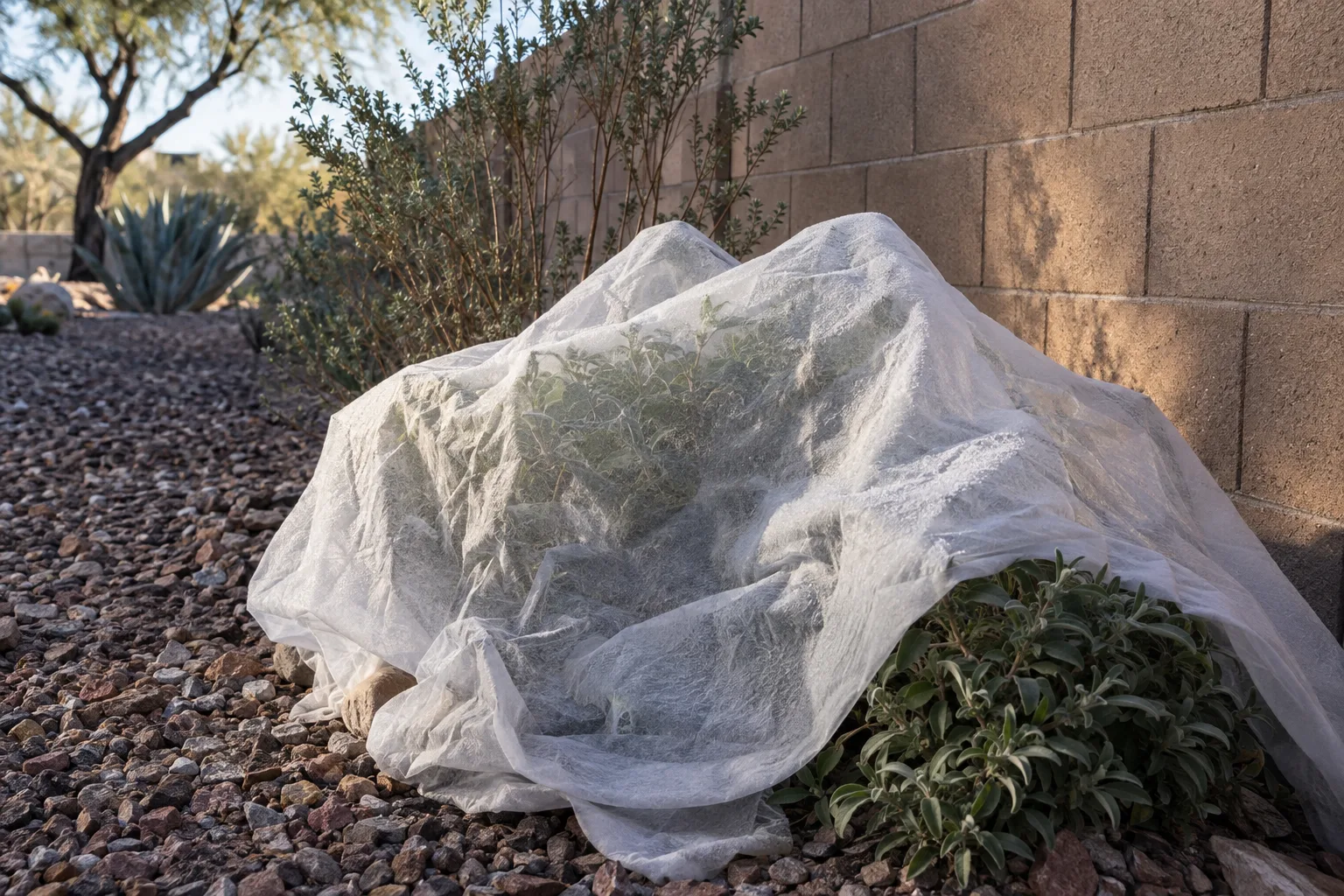
Resist the urge to cut back brown growth right after a freeze. The dead foliage shades the crown from the next cold night. Wait until late February or March, scratch a stem to check for green underneath, and prune back to that point. Questions about a specific plant? Contact us and we will help you sort it out.
What mistakes should I avoid with winter groundcovers?
- Overwatering rosemary, damianita and blackfoot daisy, which rot faster in cool, wet soil than they ever suffer from dry spells.
- Pruning in December or January, which opens fresh cuts to frost.
- Planting too tightly, since most of these plants spread wider within 2 to 3 seasons.
- Burying the crown or piling mulch against the stems.
- Putting a frost-tender plant in the lowest corner of the yard where cold air pools.
Frequently asked questions
Can groundcovers replace a lawn in Queen Creek?
Not for foot traffic. None of these eight groundcovers tolerates regular walking or play, and most are damaged by lawn-style watering. They suit slopes, borders, under trees and open beds where you want cover without mowing. For a play area, a hardy lawn grass or stepping stones set in groundcover is a better fit.
Why did my lantana turn brown after a freeze?
Frost killed the top growth, but the roots are usually alive. Leave the brown stems until March, then scratch one with a fingernail. Green underneath means the plant is alive, and you can cut back to that point. New shoots usually appear from the base as soil warms in spring.
How far apart should I space groundcovers?
Space them at about half to two thirds of their mature width. Plants set at full mature spacing leave bare soil for weeds, while tight spacing leads to crowding and disease in the second or third year. For spreaders like myoporum, plan on the high end of its range and be patient.
Is decomposed granite mulch good around groundcovers?
Yes, a 2 inch layer drains well and suits desert-adapted plants. It reflects some heat in summer, so keep it a couple of inches from stems and leave the crown clear. Avoid piling it deeper, since thick mulch holds moisture against the base of plants like rosemary and damianita.
Do these groundcovers need fertilizer?
Rarely. All eight are adapted to lean desert soil, and feeding in winter pushes tender growth that frost damages. If a plant looks pale in March, apply a light slow-release feed once and water it in. Established plants usually look best on little more than mulch and careful watering.
Which groundcover is right for your yard?
For a frost-tolerant, low-water yard, damianita, blackfoot daisy and prostrate rosemary are the safest picks, and myoporum or trailing indigo bush cover the most ground. Choose trailing lantana only if you accept a ragged few weeks after a hard freeze. If you want a lush green carpet to walk on, none of these will do it. Visit us at the nursery in Queen Creek and we will help you match a groundcover to your sun, soil and slope.