
Gravel is not always the best choice for Arizona yards. Covering every square foot with rock raises surface heat, compacts soil and still grows weeds. Gravel works well on paths, dry creek beds and drainage routes when plants and mulch handle the rest.
Key takeaways
- Rock surfaces in full summer sun can run far hotter than the air, and the heat radiates back well into the evening.
- Landscape fabric under gravel breaks down over several years, and weeds root through it.
- Decomposed granite 2 to 3 inches deep over bare soil is a better ground cover than decorative river rock.
- Organic mulch 3 to 4 inches deep in planting beds keeps roots cooler and holds moisture.
- Keep gravel for paths, dry creek beds and spots where nothing will be planted.
Why does gravel make a yard hotter?
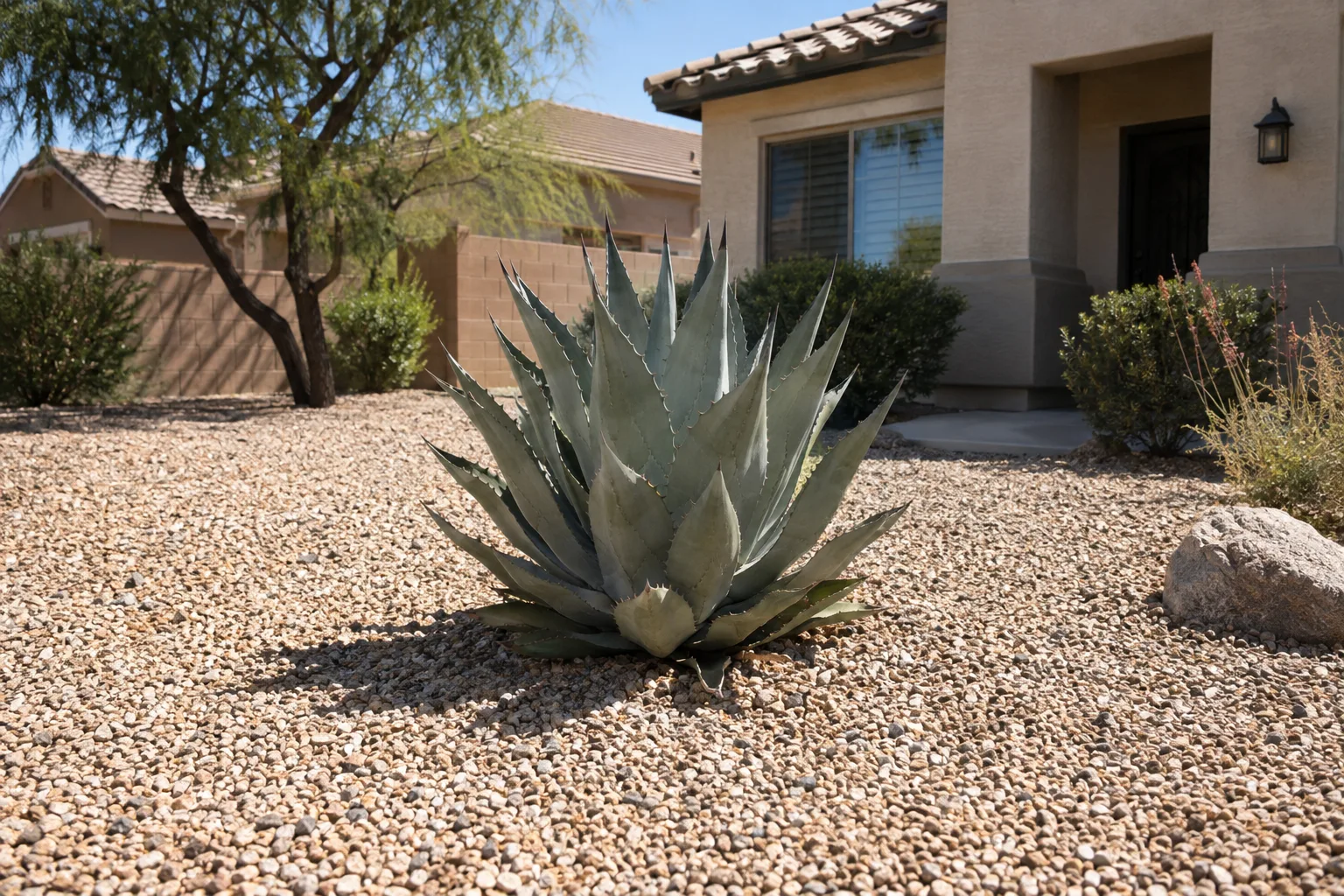
Rock absorbs sunlight all day and releases that heat after sundown. With summer highs above 110°F in Queen Creek, dark or tan gravel in full sun can reach surface temperatures high enough to burn bare feet and dog paws.
Plants cool the air around them as they release water through their leaves. A yard with a few shade trees and shrubs usually feels noticeably cooler at dusk than a yard that is all rock. Heat that builds up beside a south or west wall also warms the house, which can add to cooling costs.
What does gravel do to the soil underneath?
Gravel does not feed soil, and over several years the ground under it tends to stay compacted and low in organic matter. Our native soil is already alkaline and often sits on caliche, a hard mineral layer that can lie just inches down.
Landscape fabric adds to the trouble. It breaks down after roughly five to ten years, and by then rock has often worked into the top few inches of soil. Planting into that mix takes a shovel, patience and sometimes a pick.
Do gravel yards really need no weeding?
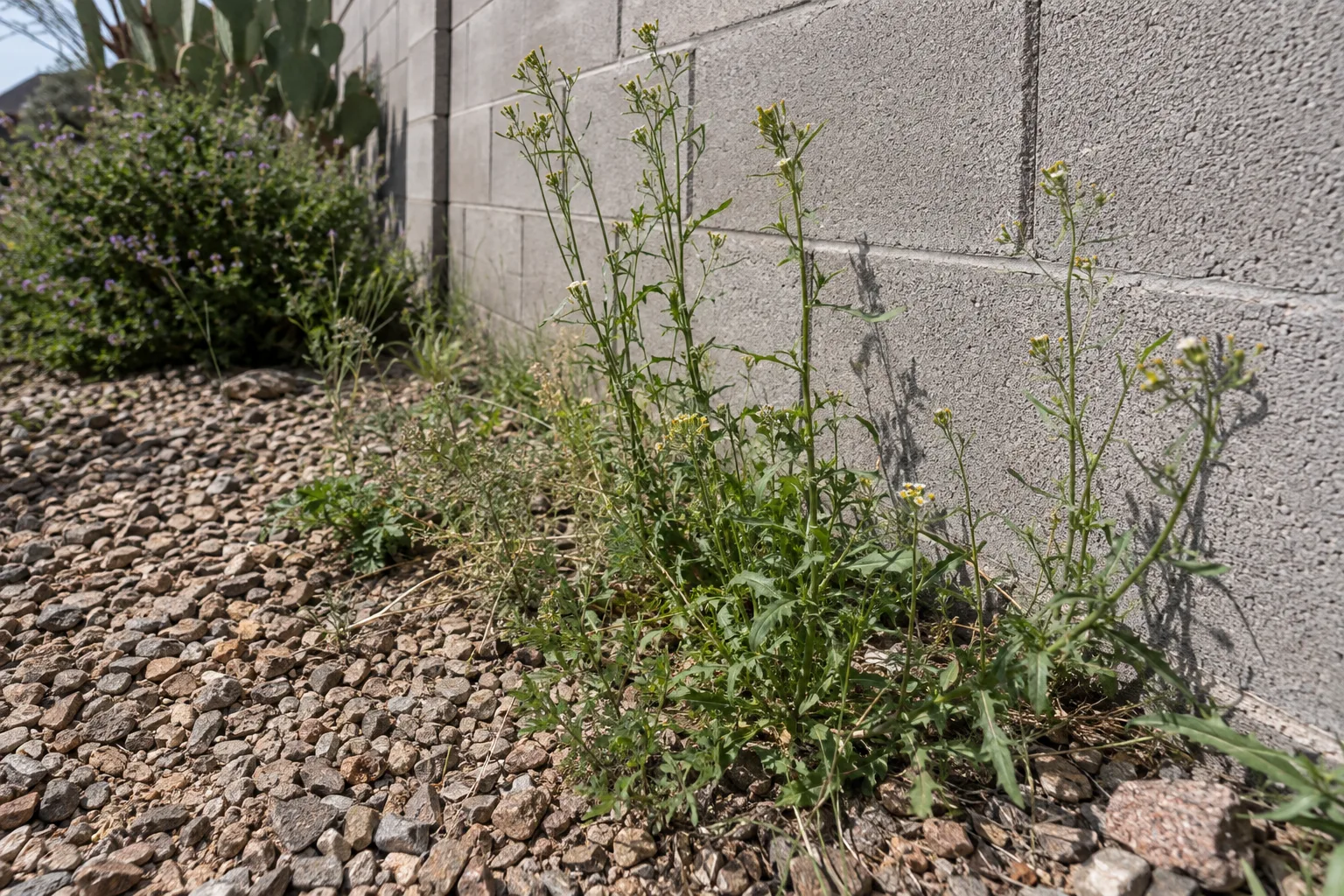
No. Gravel yards still grow weeds, because wind-blown seed lands in the fine dust that collects between the rocks. Bermuda grass runners also creep in from the edges.
After monsoon rains, summer weeds can sprout and grow fast. Pulling them from rock is slower than hoeing a planted bed, since a hoe scatters stones. Pre-emergent products and herbicides carry label instructions you should follow closely, and the University of Arizona Cooperative Extension is a good place to check what suits your weeds.
Some weeds are regulated. The Arizona noxious weed list shows which species fall into classes A, B and C.
How does gravel handle monsoon rain?
Gravel handles monsoon rain well only when the soil beneath it can still absorb water. Solid fabric blocks that, so water runs sideways toward foundations, block walls and the street. Compacted soil without fabric sheds water too.
If you keep gravel, slope it away from the house and skip solid fabric. Leave a gravel-free gap beside the foundation, and ask your builder or a landscape professional how wide that gap should be for your home.
Can plants grow well in a gravel yard?
Plants can grow in gravel yards, but they often struggle. Desert plants grow among rocks in the wild, yet those wash and slope soils hold leaf litter and living soil biology. A rock layer over baked, packed soil is a different setting.
Roots sit in hotter ground, drip water can pool or run unevenly, and stressed plants attract more pests such as spider mites. Planting into a gravel yard works best if you clear the rock and fabric from each bed first.
Plants that suit the low desert
These are varieties we commonly carry, though availability changes week to week and season to season. You can browse our plant selection or desert trees to see what is in right now.
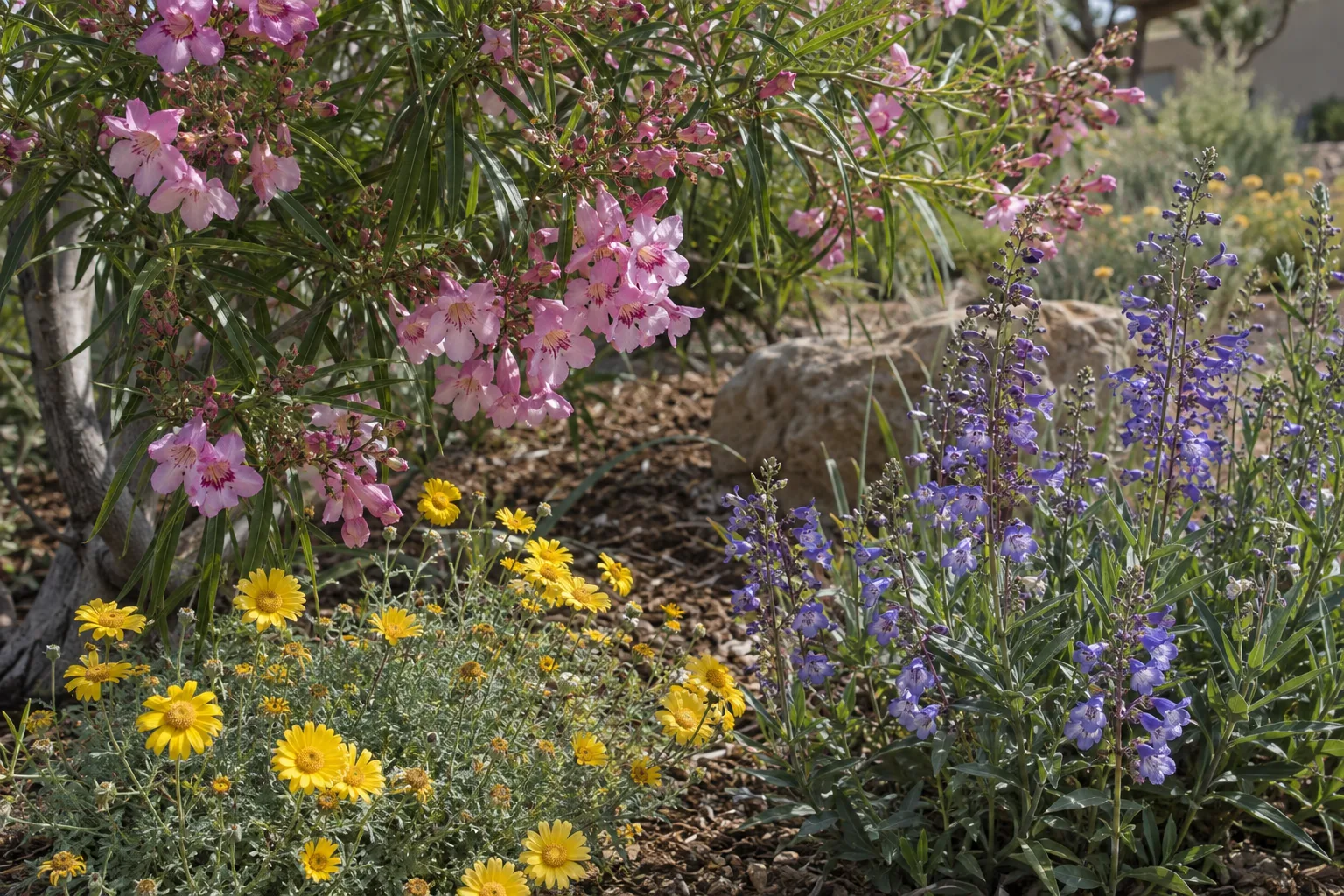
- Desert willow (Chilopsis linearis) is a native tree with trumpet flowers in warm months. It drops leaves in winter, which is its main drawback.
- Melampodium leucanthum (blackfoot daisy) is a low mound with white flowers. It dislikes soggy soil.
- Baileya multiradiata (desert marigold) has yellow flowers on silvery foliage and reseeds readily, sometimes more than you want.
- Penstemon parryi has pink spring flower spikes that hummingbirds visit. It fades in summer heat.
- Agaves such as Agave parryi give strong form. Their spiny tips need careful placement away from paths.
What ground covers work better than all gravel?
Decomposed granite, organic mulch and living ground covers all do more for plants than decorative rock. Which one fits depends on the spot.
| Ground cover | Heat | Weeds | Soil health | Upkeep |
|---|---|---|---|---|
| Decorative gravel or river rock | Holds and radiates heat | Seeds root in dust | Declines over time | Medium, hand weeding |
| Decomposed granite | Cooler than river rock | Moderate | Neutral | Low to medium |
| Organic mulch | Insulates roots | Good | Feeds soil | Refresh every 1 to 2 years |
| Living ground cover | Cools the air | Good once filled in | Supports it | Low once established |
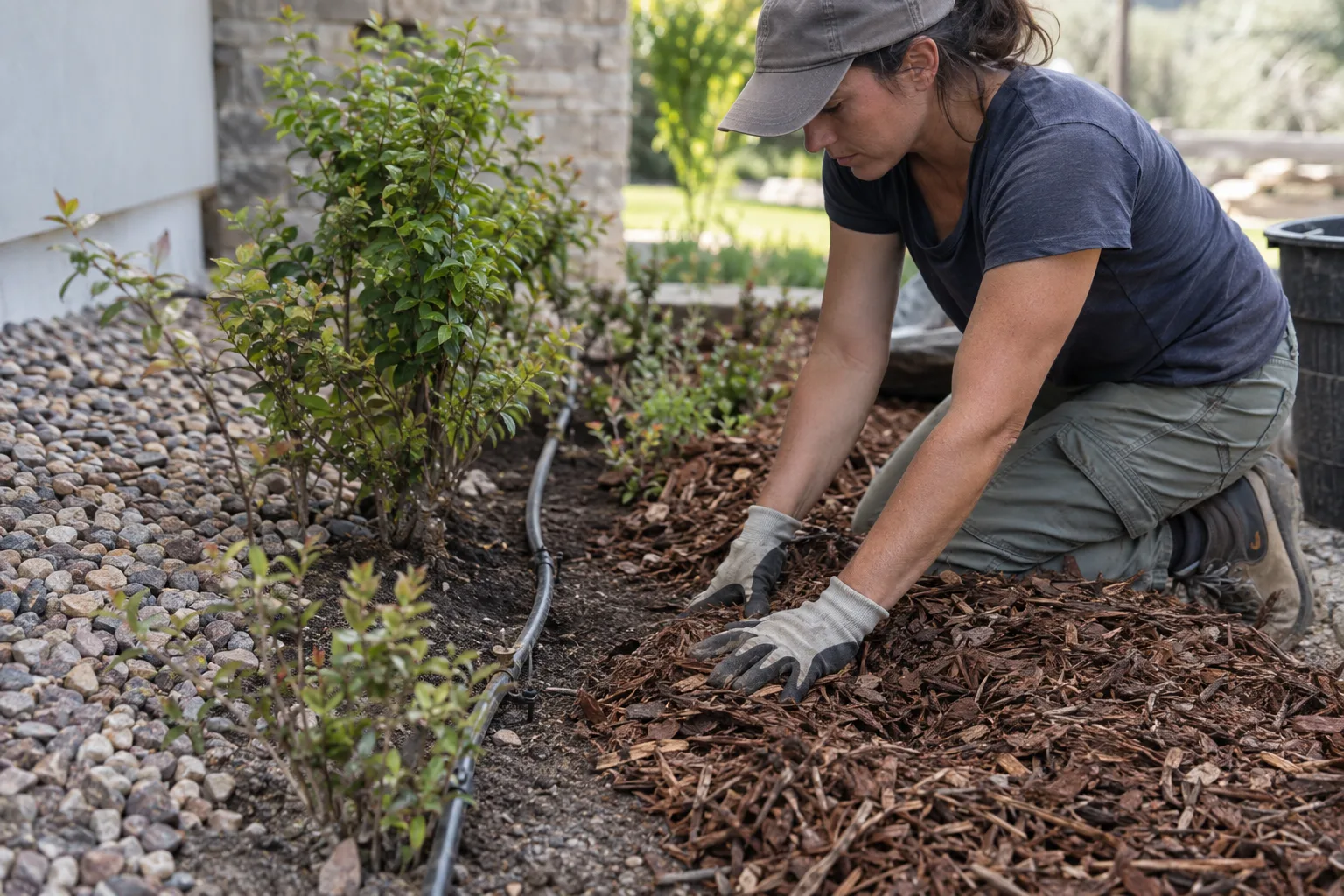
Decomposed granite 2 to 3 inches deep over bare soil is a common choice for paths and open areas. Shredded wood mulch 3 to 4 inches deep suits planting beds. Artificial turf is an option for a small dog run, though it also gets hot in full sun.
How do I turn a gravel yard into a planted one?
Start with one bed rather than the whole yard. Moving gravel in sections through fall and winter is easier than doing it in summer heat. Our gardening calendars help you time the work.
- Probe the soil with a long screwdriver to find caliche. If you hit a hard layer within about 12 inches, plan to break through it or plant on a low berm.
- Rake gravel from the planting area to the paths.
- Cut out and remove landscape fabric from the beds.
- Loosen the soil and mix in compost or a soil conditioner.
- Set plants at their mature spacing, since crowding is a common mistake.
- Run drip irrigation to each plant and adjust the schedule by season.
- Top the bed with 3 to 4 inches of organic mulch, kept a few inches off trunks and stems.
Where does gravel still make sense?
Gravel makes sense on paths, dry creek beds, around pool equipment and anywhere a permeable hard surface beats concrete. A rock-lined dry creek can carry monsoon runoff safely across a yard.
Use it on purpose in defined areas. Where planting is not practical, a thin layer of decomposed granite without fabric is a reasonable choice.
Frequently asked questions
Does gravel save water compared to a lawn?
Yes, gravel uses no irrigation of its own, so it beats turf on water use. A planted yard on drip irrigation with mulched beds can use similar amounts while adding shade and a cooler yard. The better comparison is gravel against water-wise plants, not against grass.
Will desert plants die without gravel around them?
No. Desert plants grow in soil, and they need their root zone shaded and protected from heat extremes. Organic mulch does that job well in beds, and decomposed granite works in drier, open areas. Neither requires a deep layer of decorative rock.
Is gravel safe for dogs and children?
Gravel in full summer sun can get hot enough to burn paws and bare feet. It is also uncomfortable to play on. Shaded patios, planted areas and a small patch of turf are safer surfaces for active pets and kids during the hottest months.
Can I plant through existing gravel without removing it?
You can, with extra work. Pull the gravel back from a generous circle, cut away any fabric, dig a hole wider than the root ball, and backfill with native soil. Mulch with organic material, and keep rock off the trunk.
How do I remove gravel I no longer want?
Shallow gravel under about 2 inches moves with a rigid rake and wheelbarrow. Deeper rock mixed into soil may call for rented equipment or a landscape crew. Work in sections, starting with the areas you plan to plant first.
Should I take out my gravel yard?
Take out gravel where you want plants, shade or a cooler yard, and keep it on paths, drainage routes and dry creek beds. Gravel you rarely walk on, in a small side yard, may not be worth the effort. If your yard is mostly rock and you want trees or a garden, a phased redesign pays off. We would be glad to see you at the nursery in Queen Creek to talk through your yard.