
The best fruit trees to grow in pots in Arizona are citrus, figs, pomegranates and low-chill dwarf peaches. All four handle low desert heat in a 15 to 25 gallon container if the pot is light-colored, the mix drains fast and you water often from June through September.
Key takeaways
- Lemons, mandarins, kumquats, figs, pomegranates and low-chill dwarf peaches are the most dependable fruit trees for containers in the low desert.
- Choose a light-colored pot of 15 to 25 gallons with at least three drain holes, and lift it off the concrete on pot feet.
- Expect to water every 1 to 2 days from June through September, and about once a week in December through February.
- Feed three times a year (late winter, late spring, early fall), and treat pale new leaves with green veins using chelated iron.
- Move citrus under cover or against a warm wall when a night near 30°F is forecast.
Which fruit trees grow best in pots in Arizona?
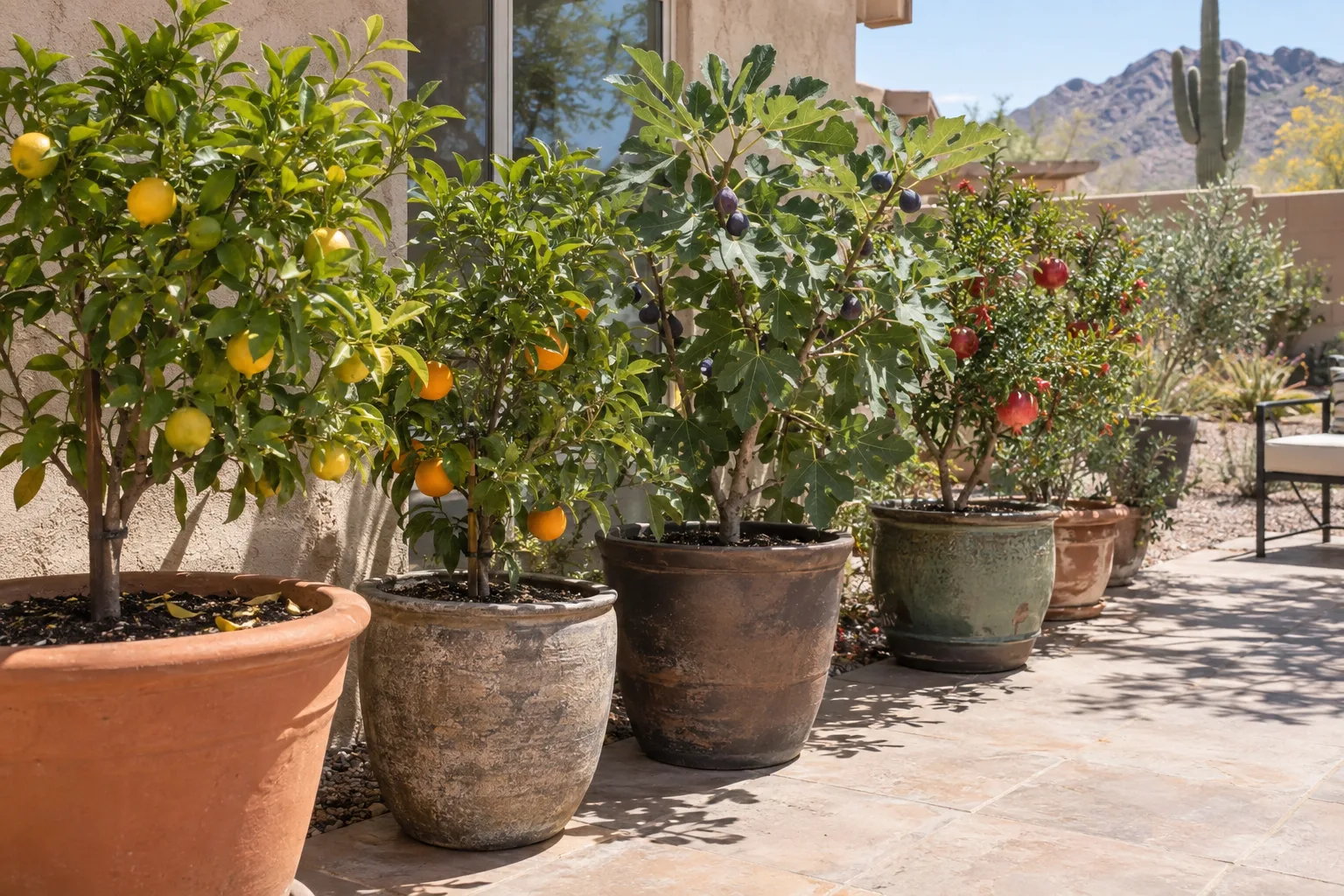
Citrus, figs, pomegranates and low-chill peaches give the most dependable harvests in containers here. These are varieties we commonly carry in our fruit tree department, though availability changes week to week and season to season, so check with us before you plan around a specific one. Sizes below are what a pruned tree reaches in a pot, which is smaller than the same tree planted in the ground.
Lemon (Citrus limon)
Eureka and Lisbon types are the classic choices. In a 20 to 25 gallon pot, a lemon stays around 4 to 6 feet tall with regular pruning. It wants 6 or more hours of sun, with some shade from the hottest afternoon hours in July. Water deeply and often. The drawback is cold: lemons are the most frost-tender of the citrus trees on this list, and fruit and young growth can be damaged when temperatures fall to about 30°F.

Satsuma mandarin (Citrus reticulata)
Satsumas stay compact, usually 5 to 8 feet in a 15 to 20 gallon pot, and ripen from late fall into early winter. They like full morning sun with some afternoon relief and the same deep, frequent watering as lemons. Mandarins tolerate a little more cold than lemons. The drawback is timing, because most of the crop ripens within a few weeks, so you pick a lot at once and little the rest of the year.
Kumquat (Citrus japonica)
Kumquats are the smallest citrus here, often 3 to 5 feet in a 15 gallon pot. They take full sun with afternoon shade in midsummer and the same watering routine as other citrus. They also handle cold better than lemons. The drawback is the fruit. It is small, tart and seedy, and you eat it whole, so it suits people who like a sharp snack more than juice.
Fig (Ficus carica)
A fig reaches 6 to 8 feet in a 20 to 25 gallon pot when you prune it each winter. It takes full sun and heat well, and it needs less water than citrus in the cool months. Figs lose their leaves in winter, so the pot looks bare from roughly December to February. The drawback is birds. Ripe figs draw them quickly, and you will want netting over the tree.
Pomegranate (Punica granatum)
Pomegranates reach 6 to 10 feet, and dwarf types stay shorter, in a 20 to 25 gallon pot. They love full sun, tolerate our hard water better than most fruit trees and need less water than citrus once established. Fruit ripens from about September into November. The drawback is splitting. A dry stretch followed by a heavy soaking cracks the fruit, so keep moisture steady while it develops.
Low-chill dwarf peach (Prunus persica)
A dwarf peach grows 5 to 8 feet in a 20 to 25 gallon pot, wants full sun and regular water, and ripens in late spring. Peaches need winter cold to bloom well, so choose a variety rated for low chill hours, since East Valley winters are mild. The drawback is the work. A full crop needs thinning, and a mild winter can mean sparse bloom.
| Tree | Typical pot size | Usual harvest window |
|---|---|---|
| Lemon | 20 to 25 gallons | Mostly winter into spring |
| Satsuma mandarin | 15 to 20 gallons | Late fall to early winter |
| Kumquat | 15 gallons | Winter |
| Fig | 20 to 25 gallons | Early summer, then late summer to fall |
| Pomegranate | 20 to 25 gallons | September to November |
| Low-chill dwarf peach | 20 to 25 gallons | April to May |
What size pot and material work in Arizona heat?
A light-colored pot of 15 to 25 gallons with at least three drain holes suits most fruit trees in the low desert. Bigger pots hold more water and keep the root zone cooler, which matters when summer highs pass 110°F and a small pot can dry out in a single day.
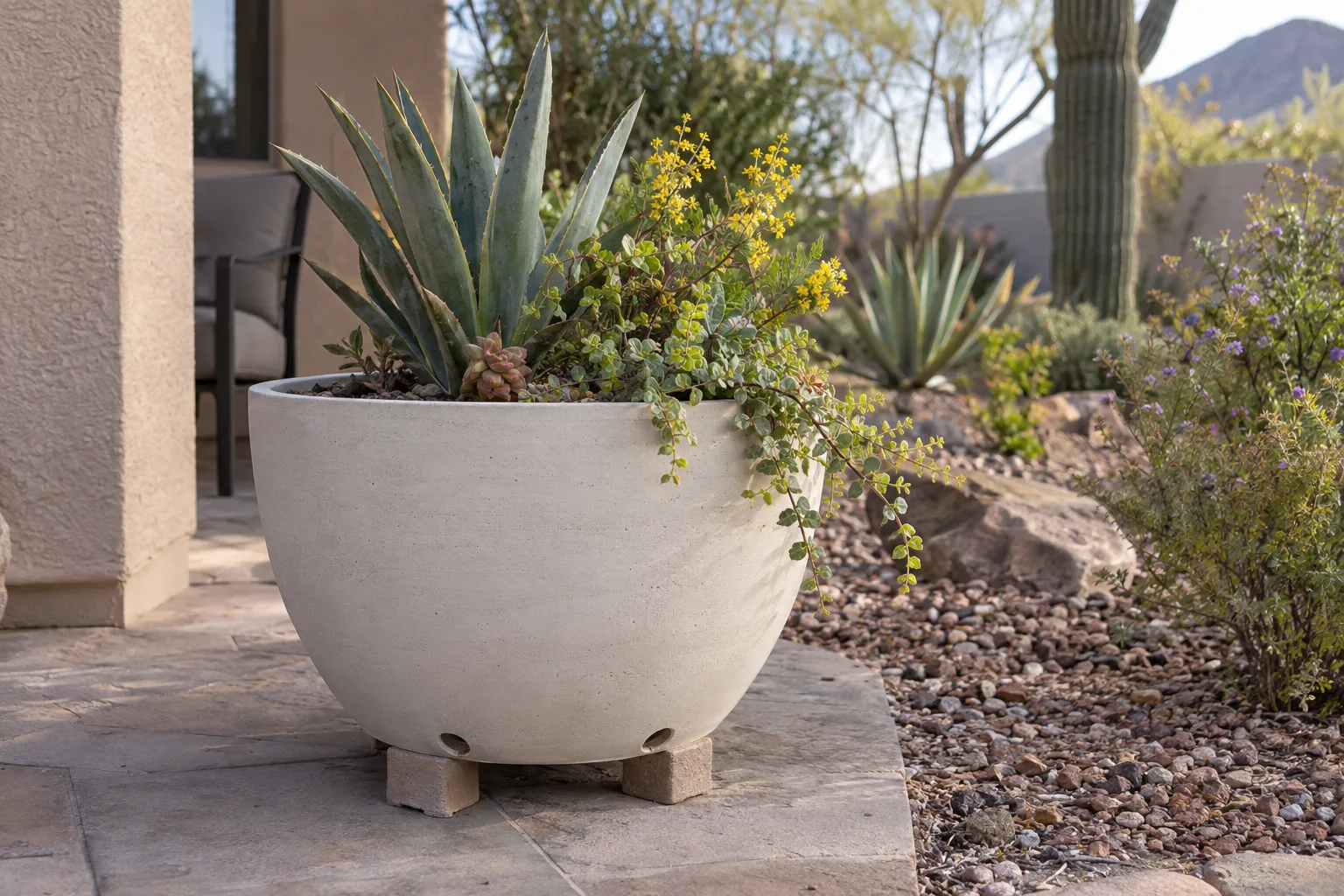
Thin black plastic soaks up afternoon sun and can overheat roots on the sunny side. Thick-walled glazed ceramic, fiberglass and resin insulate better, and you can look through them in our pottery and planters department. Set the pot on feet or bricks so water drains freely and the slab doesn’t pass its heat straight up.
Terracotta looks good but pulls moisture out through its walls. Keep the tree in a plastic nursery pot and slide that inside the terracotta. Drainage comes first. Skip the gravel layer at the bottom of the pot, because it holds water higher in the mix instead of improving drainage.
What soil mix should I use for a fruit tree in a pot?
Use a bagged potting mix based on bark or coco coir, and blend in about one part pumice or perlite to every two or three parts of mix for faster drainage. Native Queen Creek soil is alkaline and often sits over caliche, and it packs down in a pot until water pools and roots rot. Leave it in the yard.
Top the pot with 1 to 2 inches of bark mulch to slow evaporation. Each late winter, scratch a little fresh compost into the surface. Plan to refresh the mix or repot every 3 to 4 years, as the mix breaks down and roots fill the container.
How often should I water a fruit tree in a pot in Arizona?
From June through September, a potted tree in sun usually needs water every day or two, and in winter about once a week. The reliable test is your finger. Push it 2 inches into the mix and water when that depth feels dry.
- March to May: about every 2 to 3 days.
- June to September: every 1 to 2 days, even in monsoon season, because pots drain fast and rain often misses a covered patio.
- October and November: about every 3 to 4 days.
- December to February: about every 5 to 7 days, and less after cool, cloudy weather.
Water slowly until it runs out of the drain holes. Hard water leaves mineral salts in the mix, so once a month let extra water run through for several minutes to flush them. Check drip emitters weekly, since mineral buildup clogs them.

How do I feed potted fruit trees when our water is alkaline?
Feed with a slow-release citrus and fruit tree fertilizer three times a year, in late winter, late spring and early fall, and follow the container rate on the label. Our water and soil run alkaline, and over months that raises the pH in a pot and makes iron harder for roots to absorb.
The sign is new leaves that turn pale yellow while the veins stay green, called iron chlorosis. Treat it with a chelated iron product labeled for alkaline conditions, watered into the mix. More general fertilizer does not correct it. Check drainage as well, because a waterlogged pot causes similar yellowing.
Figs and pomegranates need less feeding than citrus. Heavy nitrogen gives leafy growth and fewer fruit.
How do I protect potted fruit trees from summer heat and frost?
Move pots out of west-facing sun by mid-May, and bring them against a house wall or under a patio roof when a freeze is forecast. Mobility is the main advantage of a pot, so use it. Shade cloth over the afternoon side and grouping pots together also lower stress on roots in July.
Frost in Queen Creek is occasional, mostly December through February. When a night near 30°F is forecast, water the pot the day before, drape frost cloth to the ground (plastic touching leaves can burn them), and take it off the next morning. Our gardening calendars help you time feeding and frost prep month by month.
During the monsoon, from roughly July through September, humidity rises. Keep drain holes clear and give peaches good airflow so leaf spots don’t take hold.
When should I prune and repot a container fruit tree?
Prune figs in winter after the leaves drop, peaches lightly after harvest, and citrus gently in spring once frost risk has passed. Remove dead wood and crossing branches, and aim for a tree 5 to 6 feet tall so you can pick without a ladder.
Repot in February or early March, before spring growth starts. Move up only one pot size, because a much larger pot pushes leafy growth at the expense of fruit. If roots circle the inside of the pot, loosen them with your fingers before replanting.
Frequently asked questions
Do I need two trees for pollination?
Most trees on this list set fruit without a second tree. Citrus, pomegranates, common fig types and most peaches are self-fruitful, so one pot is enough. A few fig types and peach varieties differ, so read the tag or ask us about the specific variety before you buy.
How soon will a potted fruit tree bear fruit?
Many potted trees bear a small first crop within one to three years of planting, depending on the species and the size you start with. Crops stay light at first. Pick off most fruit in the first season so the tree builds roots, then allow more as the trunk thickens.
Why is my potted citrus dropping fruit?
Citrus naturally sheds some small fruit in late spring, which is normal self-thinning. Heavy drop beyond that usually points to uneven watering, a missed feeding or a heat spike while fruit is setting. Water deeply on a steady schedule and shade the pot from afternoon sun in summer.
Can I grow an apple tree in a pot here?
Most apples need more winter cold than the East Valley reliably gives, so they are a poor bet in a pot. If you want one, ask us about low-chill varieties, and expect a modest harvest compared with a cooler climate.
What should I do with potted trees when I travel in summer?
Put the pots on a drip line with a timer, group them in afternoon shade and mulch the surface before you leave. Ask a neighbor to check emitters, because a clogged emitter or a skipped day in July can stress a tree within 48 hours.
Are fruit trees in pots right for your patio?
Yes, if you can water daily in summer and give the tree 6 or more hours of sun. A fig or pomegranate is the easiest first tree, while a lemon or mandarin asks for more attention to water and frost. Skip pots if you travel often in summer with nobody to water, or if your only sun comes from a west wall with no way to shade it. Come visit us in Queen Creek and we can help you match a tree to your spot.