
The best fruit trees to plant in Arizona before summer heat are citrus, fig, pomegranate, low-chill peach, jujube, mango, pineapple guava and low-chill apple. Plant them from February to mid-April so roots can establish before daytime highs pass 105°F.
Key takeaways
- Plant from February to mid-April, or again in late September and October, so roots settle before the next stretch of 110°F days.
- Dig the hole 2 to 3 times as wide as the root ball and no deeper, and set the root flare 1 to 2 inches above the surrounding soil.
- Spread 3 to 4 inches of wood chip mulch over the root zone, keeping it about 6 inches back from the trunk.
- Peaches and apples need low-chill varieties, because East Valley winters give far fewer cold hours than most catalog varieties require.
- Mango and young citrus need frost cloth on nights that drop to 32°F or below.

When should I plant fruit trees in Queen Creek?
February through mid-April is the best spring window in Queen Creek. Soil is warming but the air is still mild, so a new tree spends its first weeks growing roots instead of fighting heat. By June it has a head start.
Fall is the second window, from late September through October. Trees planted then get a mild winter to settle in, though frost-tender types such as mango are better off going in during spring. Planting in late April or May can work, but the tree will need close watching and more frequent water through the summer.
Our gardening calendars lay out what to do each month in the East Valley. If you want to see what is available, browse our fruit trees, and keep in mind that selection changes from week to week and season to season.
How do I prepare alkaline soil and caliche for a fruit tree?
Test drainage first, then amend lightly. Most East Valley yards have alkaline soil with a pH of roughly 7.5 to 8.5, and many have a caliche layer, a cement-like band of calcium carbonate, somewhere below the surface.
Fill a hole about 12 inches deep with water and time it. If water is still standing after a couple of hours, the tree’s roots will sit wet, so break through the caliche with a digging bar or plant on a low mound.
Mix the soil you dug out with no more than about 25% compost. A rich pocket of amended soil surrounded by hard native ground encourages roots to circle inside the hole. A modest blend invites them outward into the native soil, which gives better anchoring and drought tolerance.
Which fruit trees grow best in the low desert?
Eight kinds do well in Queen Creek yards when planted at the right time and given the right site. These are varieties we commonly carry, but availability changes week to week and season to season, so ask before you plan a planting day around one.
1. Citrus (Citrus species)
Navel oranges, Meyer lemons and Cara Cara oranges all fit here, and our citrus trees page shows what is currently on the lot. Expect 8 to 20 feet tall depending on variety and pruning, full sun, and deep watering every 7 to 14 days once established in summer. Young trees need frost protection in winter. The honest drawback is yellow leaves in alkaline soil, which is common and needs iron and regular feeding.
2. Fig (Ficus carica)
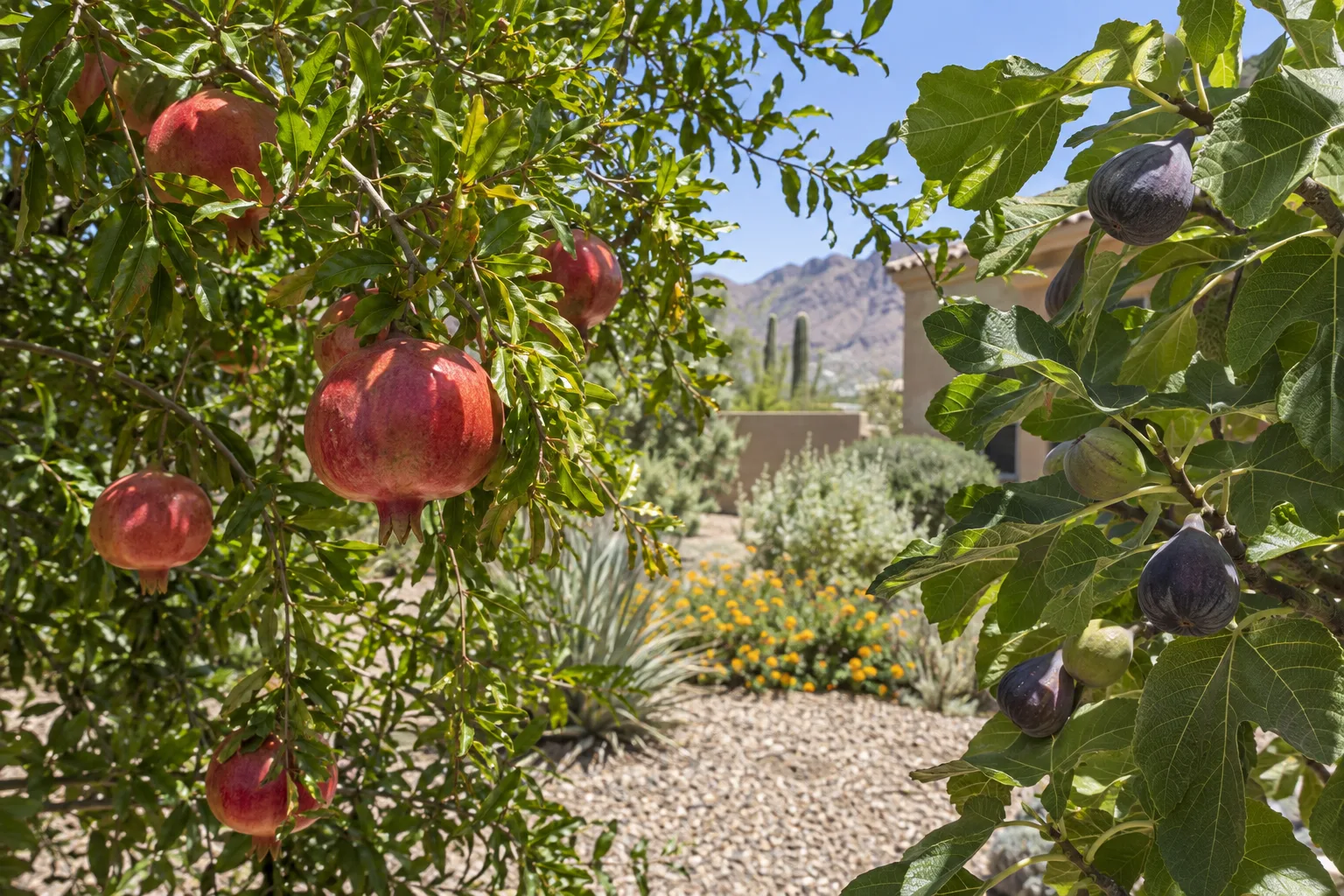
Figs tolerate alkaline soil and reflected heat from block walls better than most fruit trees. A mature tree reaches 15 to 20 feet tall and wide, in full sun, with deep watering every 7 to 10 days in summer. It drops its leaves in winter, which surprises new owners. The drawback is size, since a fig needs room or a firm annual pruning.
3. Pomegranate (Punica granatum)
Pomegranates handle 115°F once established. They stay 8 to 12 feet tall and wide, want full sun, and need deep water about every 7 to 10 days in summer. Orange-red flowers open in spring and fruit ripens in fall. The drawback is that fruit can split after heavy watering or monsoon rain following a dry spell.
4. Low-chill peach (Prunus persica)
Peaches need varieties rated for low chill, meaning few winter hours below 45°F. Pruned, most stay 10 to 15 feet tall and wide. Give them full sun and deep water every 5 to 7 days in summer. Fruit ripens in late spring, earlier than in cold climates. The drawback is a late freeze, which can take the blossoms and the crop with them.
5. Jujube (Ziziphus jujuba)
Jujube is a heat lover that accepts alkaline soil and goes dormant in winter. Plan on 15 to 25 feet tall and 10 to 15 feet wide, full sun, and deep water every 10 to 14 days once established. The fruit is crisp and sweet, a bit like a small apple. The drawback is suckers from the base, which you need to remove regularly.
6. Mango (Mangifera indica)
Mango is the most frost-sensitive tree on this list, so plant it in spring against a warm south or west wall, and see our tropical fruit trees for related options. Mature trees are large, 15 to 30 feet, and need full sun and regular deep water in summer. Wrap with frost cloth below 32°F. The drawback is that a hard freeze can set a young tree back for years.
7. Pineapple guava (Acca sellowiana)
Pineapple guava, also sold as feijoa, tolerates cold well below freezing and handles low-desert heat with afternoon shade in summer. Expect 10 to 15 feet tall and wide, with water every 7 to 10 days when established. The flowers are edible and the fruit tastes tropical. The drawback is slow growth, since fruit can take a few years.
8. Low-chill apple (Malus domestica)
Apples work only with low-chill varieties such as Anna and Dorsett Golden. Expect 12 to 20 feet tall unless pruned smaller, full sun, and deep water every 5 to 7 days in summer. Fruit ripens early. The drawback is fruit quality, since apples here often come out smaller and softer than store apples and sunburn easily without afternoon shade.
How much water does a new fruit tree need?
A new fruit tree needs a deep soak every few days at first, then less often as roots spread. The goal is to wet the soil 18 to 24 inches deep. Shallow daily sprinkling keeps roots near the surface, where they cook in summer.
| Season | Newly planted tree | Established tree |
|---|---|---|
| Spring (March to May) | Every 2 to 3 days | Every 7 to 10 days |
| Summer (June to September) | Every 2 to 3 days, early morning | Every 5 to 10 days, depending on species |
| Fall (October to November) | Every 5 to 7 days | Every 10 to 14 days |
| Winter (December to February) | Every 10 to 14 days | Every 14 to 21 days |
Treat these as starting points. Push a long screwdriver into the soil before you water. If it slides in easily past 12 inches, wait another day. Sandy soil dries faster than clay, so two yards in Queen Creek can need different schedules.
Build a basin of soil 3 to 4 feet across and 4 to 6 inches high around the tree. It holds the water over the roots instead of letting it run into the lawn or gravel.
How do I plant a fruit tree step by step?
Plant at the same depth the tree grew in its pot, with the root flare slightly above grade. Following these steps takes about an hour for a 5-gallon tree.
- Pick a spot with 6 to 8 hours of direct sun and room for the mature spread.
- Check drainage with the water test described above.
- Dig the hole 2 to 3 times as wide as the root ball and exactly as deep.
- Slide the tree out of its container and loosen any circling roots with your fingers.
- Set the tree so the root flare sits 1 to 2 inches above the soil, to allow for settling.
- Backfill with your native soil blended with about 25% compost. Skip fertilizer at planting.
- Flood the basin two or three times to settle the soil and remove air pockets.
- Add 3 to 4 inches of wood chip mulch, staying 6 inches from the trunk.
The most common mistake is planting too deep. A buried root flare can rot the trunk base slowly, and the tree may look fine for a year or two before declining.

How do I get a young fruit tree through its first summer?
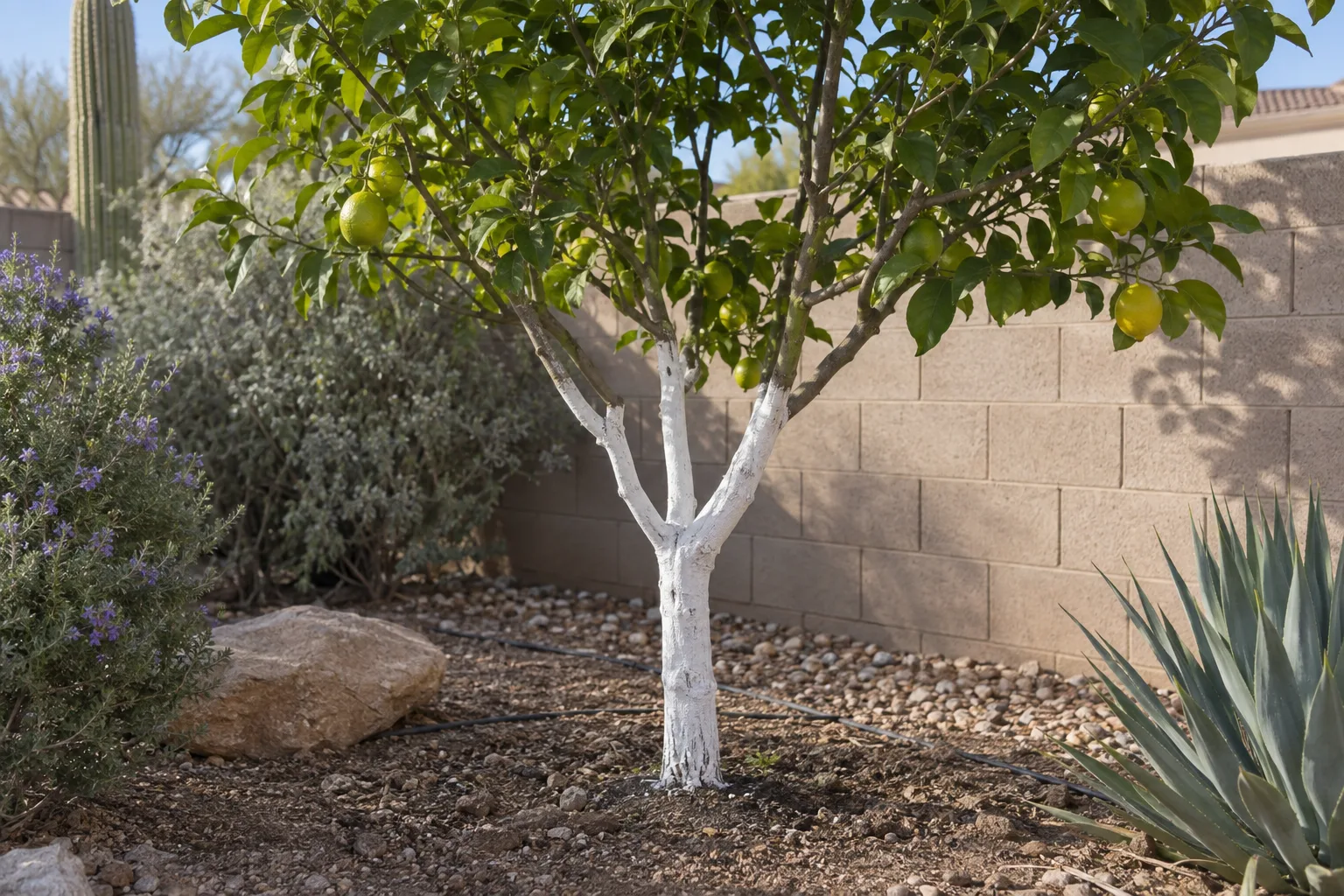
Protect the trunk from sun, keep the root zone mulched and water early in the morning. Young bark that grew in a shaded nursery can sunscald when it meets full afternoon sun above 105°F.
Paint the trunk from the soil line to the first branches with white interior latex paint diluted about half and half with water, or use tree wrap. This blocks the sun and prevents cracked bark.
Summer soil temperatures a few inches down can climb past 90°F in unmulched ground, so mulch matters. Water before sunrise, when the soil can absorb it. During monsoon weeks, usually July through September, check the soil before each watering and skip a cycle after a good rain. Soggy soil rots roots, especially on citrus.
When and how should I feed fruit trees in Queen Creek?
Feed in February, May and September with a fertilizer for citrus and fruit trees that includes micronutrients. Alkaline soil locks up iron, zinc and manganese, and a chelated iron product stays available at a higher pH than plain iron sulfate.
Skip fertilizer in the heat of July and August. New growth pushed in midsummer burns easily. Skip late fall feeding too, since tender growth is the first to suffer in a frost.
Citrus is a hungry feeder. Jujube and pomegranate need less, and established plants can go long stretches without much at all.
Frequently asked questions
Do fruit trees need a second tree for pollination?
Most do not. Citrus, fig, pomegranate, jujube, mango and most peaches set fruit with a single tree. Many apples and pineapple guavas fruit better with a second variety nearby. Check the plant tag or ask us when you pick a tree, and plant two if you have room.
How do I protect fruit trees from frost in the East Valley?
Drape frost cloth over the whole canopy to the ground before sunset when forecasts hit 32°F or below, and remove it by mid-morning. Plastic touching leaves can freeze them. Young citrus, mango and any tree in its first winter benefit most. A south-facing wall adds a few degrees of warmth.
Why are my citrus leaves turning yellow?
Yellow leaves with green veins usually point to iron deficiency from alkaline soil. A pale yellow across the whole leaf suggests low nitrogen. Yellowing with leaf drop often means overwatering. Check soil moisture first, because waterlogged roots cannot take up nutrients and fixing the watering often clears it up.
How much space does a fruit tree need?
Plan on the mature spread, which runs from 8 to 12 feet for pomegranate to 20 feet or more for fig, jujube and mango. Keep citrus about 12 to 15 feet from walls and other trees. Regular pruning keeps most trees smaller, and our classes and events sometimes cover pruning.
Which fruit tree should you plant first?
For most Queen Creek yards, start with citrus, pomegranate or fig, because they tolerate our heat and soil with the least fuss. Add peach or jujube if you have a sunny spot and room. Skip mango and apple if you will not cover a tree in winter or accept smaller fruit. If your yard gets less than 6 hours of sun or you will not water deeply, fruit trees will frustrate you. Stop by our Queen Creek nursery and talk through your yard with us.