

Spray these eight fruit trees before bud break in Arizona, usually from late January to mid-February while buds are still tight. Peach and nectarine need it most, because peach leaf curl cannot be treated once the infected leaves appear.
Key takeaways
- Spray while the trees are leafless and the buds are tight, usually late January to mid-February in Queen Creek and the East Valley.
- Peach leaf curl infects at bud swell, so copper or lime sulfur has to be on the tree before then. Nothing cures it afterward.
- Horticultural oil targets overwintering scale, mite eggs and aphid eggs, and only works where it coats the pest, so bark crevices need full coverage.
- Apricots open their flowers earliest, sometimes in late January or February, so start checking their buds around January 10.
- Read the product label for rates, temperature limits and mixing rules, and skip any tree that has already leafed out.

Why spray fruit trees before bud break in Arizona?
A dormant spray hits pests and fungal spores while they are exposed on bare wood, and before the tree has tender growth to damage. Our winters are mild, so scale insects, mite eggs and aphid eggs are not knocked back by hard freezes the way they are in colder states.
Fungal diseases are the second reason. Peach leaf curl, caused by the fungus Taphrina deformans, infects leaves as the buds swell. The puckered red leaves you see in spring are the result of an infection that already happened weeks earlier. A protectant on the buds beforehand is the only tool that works.
Most of what we describe here follows general University of Arizona Cooperative Extension guidance on deciduous fruit trees, and the product label always wins over any article, including this one.
When is the right time to spray in the East Valley?
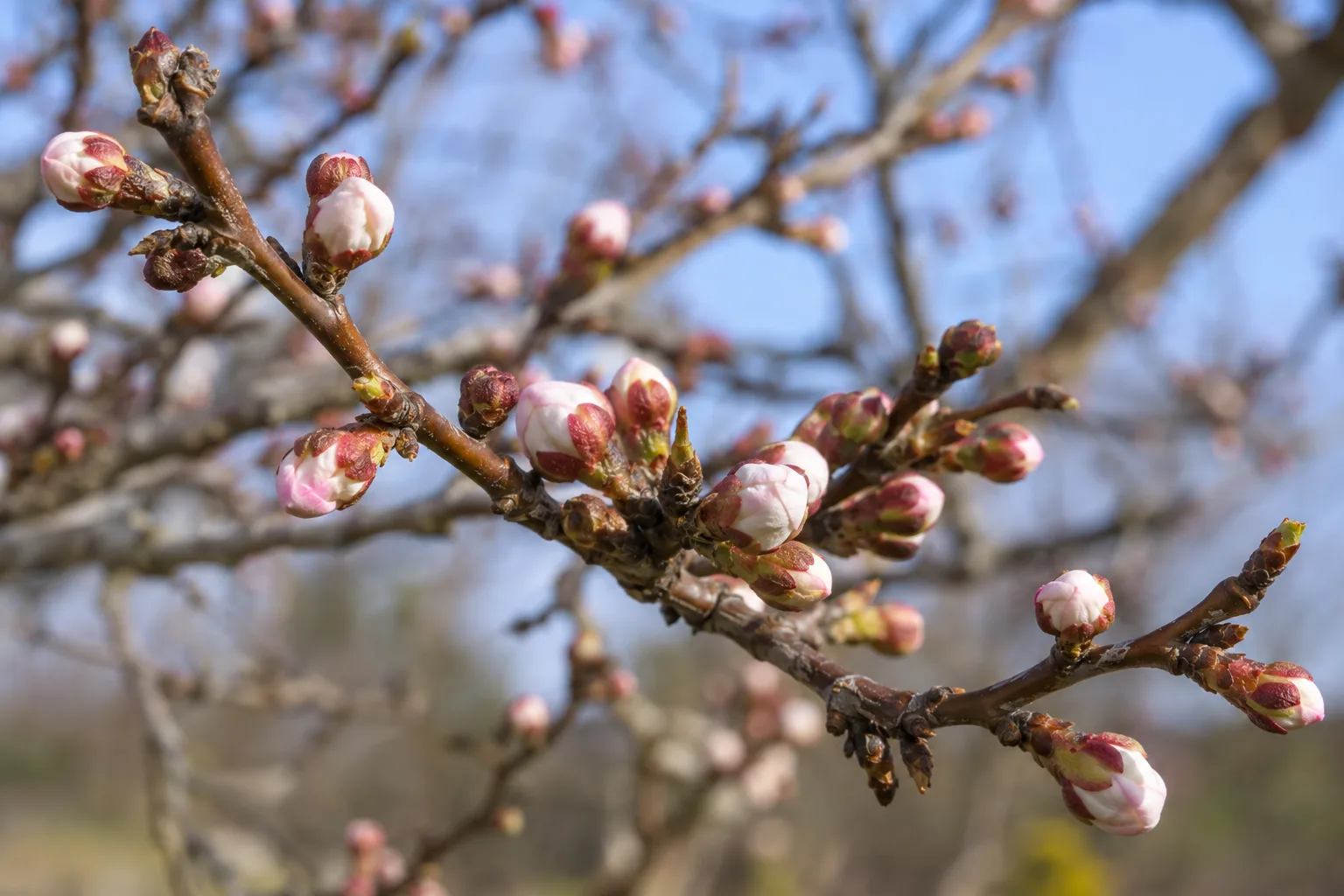
For most deciduous fruit trees in Queen Creek, the window runs from late January to mid-February. The better guide is the buds themselves, because warm winters push bud swell earlier and cool ones push it later.
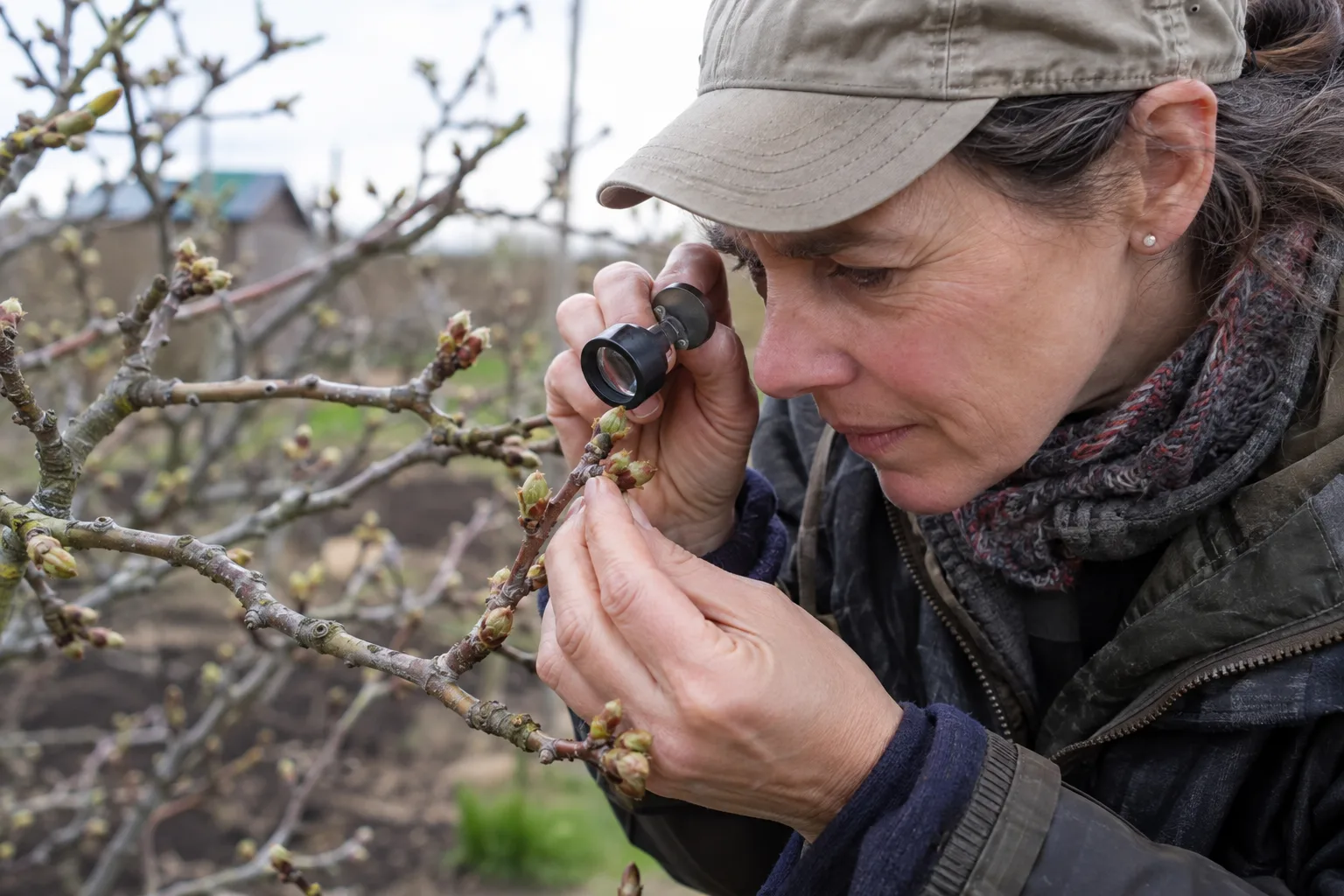
Walk the trees every week starting in mid-January. You are looking for the first plumping of the bud tips. Spray before that happens, or at the very latest as it begins. Trees do not move together. Apricots and peaches wake first, plums follow, and apples and pears usually lag behind both.
Leaf drop matters too. Spray after the leaves have fallen, not while the tree is still shedding, or you will miss wood that is still covered. Mark the date you sprayed each tree so next year’s timing is easier to judge.
Which products go on dormant fruit trees?
Three products cover nearly every dormant need: horticultural oil, copper fungicide and lime sulfur. Each does a different job, and the right pick depends on whether your trouble is insects, fungus or both.
| Product | Mainly used for | Watch out for |
|---|---|---|
| Horticultural oil | Scale, mite eggs, aphid eggs | Must coat the pest. Avoid freezing nights and hot days per the label. |
| Copper fungicide | Peach leaf curl, bacterial canker, brown rot | Protects only. It must be on the tree before infection. |
| Lime sulfur | Peach leaf curl, some scale and mites | Strong smell, can stain surfaces, and should not be combined with oil. |
Oil smothers insects and eggs, so it works through contact. Copper and lime sulfur coat the buds and bark so spores cannot take hold. Many labels allow copper and oil in one pass, but others warn against it, so read yours before mixing anything.
Oil and sulfur products can injure a tree when used close together, and label waiting periods vary. Treat the label as the final word, and ask us about product choices when you visit.
Which eight fruit trees should get a dormant spray?
These eight are the deciduous fruit trees we see backyard growers in the East Valley ask about most. Availability changes week to week and season to season, so ask what we have on hand when you visit. You can browse the range on our fruit trees page.
1. Peach (Prunus persica)
Peaches reach about 12 to 15 feet with pruning, want full sun and deep watering every week or two in winter and more often in summer. They need a copper or lime sulfur spray before buds swell, every year, to guard against leaf curl. Drawback: they are the tree most likely to be ruined by missing the window. Low-chill selections such as ‘TropicBeauty’ are a common choice here.
2. Nectarine (Prunus persica var. nucipersica)
Nectarines are peaches without the fuzz, with the same size, sun and watering needs, and the same leaf curl risk. Treat them like peaches, with the same timing and product. Drawback: smooth skin shows pest and sun damage more plainly than fuzzy skin, and the fruit can split after irregular watering.
3. Apricot (Prunus armeniaca)
Apricots grow 15 to 20 feet tall in full sun and need deep, infrequent watering. They bloom earliest of the group, so the spray window is the tightest. Apply copper before the flower buds show any color. Drawback: a late frost during bloom can wipe out the crop, no matter how well you sprayed.
4. Plum (Prunus salicina)
Japanese plums reach 12 to 20 feet, like full sun and deep watering every one to two weeks in cool months. A copper spray at bud swell lowers bacterial canker and brown rot pressure, and oil helps where scale has been a problem. Drawback: many plums need a second variety nearby to set a good crop.
5. Apple (Malus domestica)
Apples grow 12 to 20 feet and want full sun, with afternoon shade helping in July. Low-chill types such as ‘Anna’ suit the low desert. Oil at green tip smothers scale before it moves, and our dry winters make apple scab less likely than in wetter regions. Drawback: fruit quality drops fast when summer highs stay above 110°F.
6. Pear (Pyrus communis)
Pears reach 15 to 20 feet, accept full sun and steady deep watering. Fire blight is the main disease, and a dormant copper spray can reduce the bacteria sitting on bark, though it does not remove the risk. Prune out cankered wood in winter. Drawback: fire blight can kill branches quickly during warm, humid spring weather.
7. Cherry (Prunus avium)
Cherries are the marginal tree here. They grow 15 to 25 feet, need full sun and deep water, and only the lowest-chill selections have a chance in the East Valley. Copper at bud swell helps with canker and brown rot. Drawback: even good selections may bloom poorly in a warm winter, so treat cherry as an experiment.
8. Fig (Ficus carica)
Figs grow 10 to 20 feet in full sun and tolerate reflected heat from walls better than most fruit trees. A dormant oil spray in late winter, before leaves open, helps keep scale in check. Drawback: the big leaves leave a lot of surface to cover, and the milky sap irritates skin, so wear gloves and sleeves.
How do I spray a fruit tree step by step?
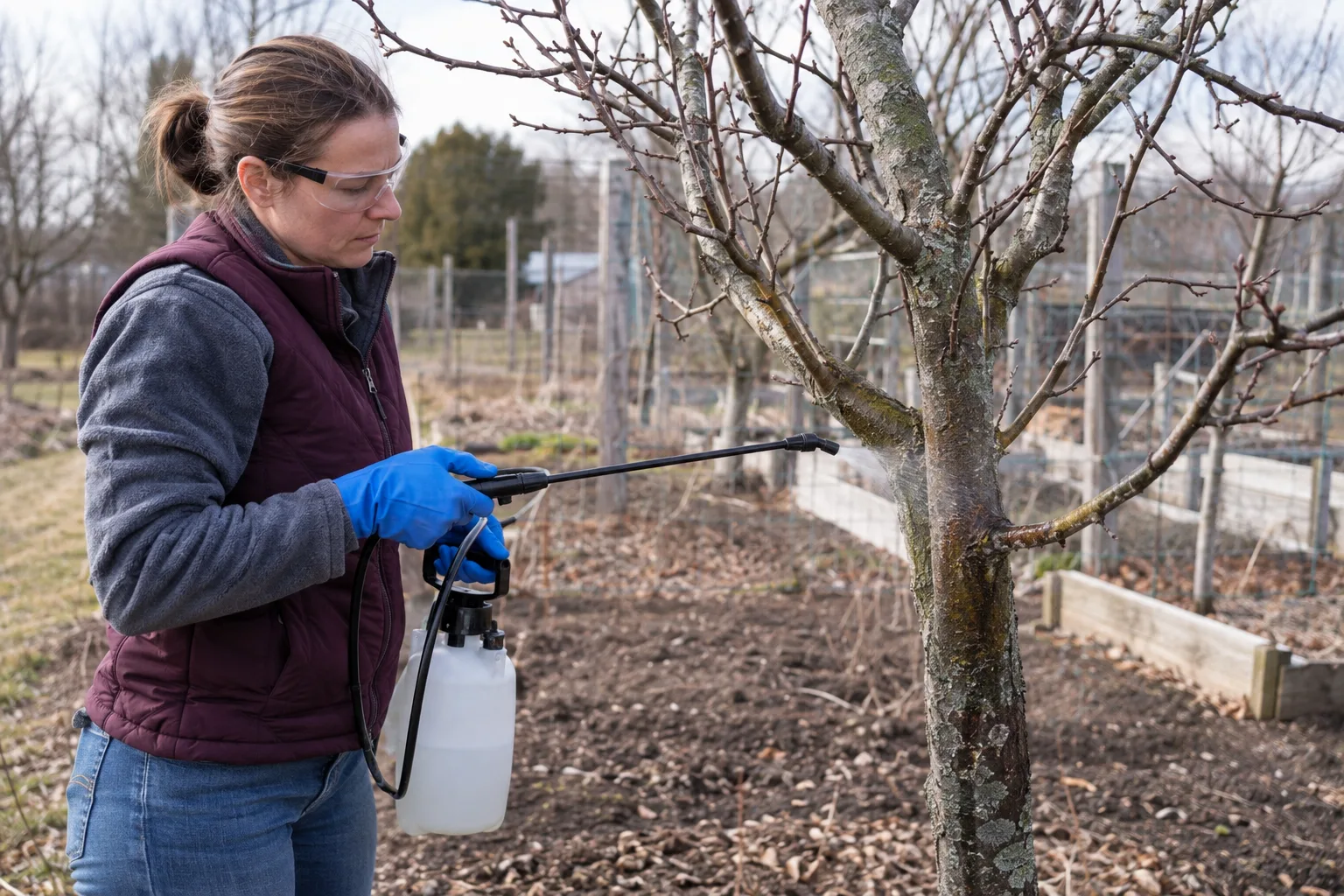
Spray on a calm, dry day with mild temperatures, covering every surface of bare wood. Work through this list in order.
- Check the buds on several branches. If they are tight, spray at the full dormant rate on the label. If they show green, use the delayed-dormant rate or skip.
- Read the forecast. Look for wind under about 10 mph, no rain for at least 24 hours, and temperatures inside the label’s range.
- Prune out dead wood and mummified fruit first so the spray reaches clean bark.
- Mix according to the label, filling the tank partway, adding the product, then topping off. Agitate often, because oil separates.
- Spray from the top down until the bark is wet, including crotches, crevices and the lower trunk.
- Rinse the sprayer three times with clean water before using it for anything else.
- Write down the date, product and bud stage.
Wear eye protection, gloves and long sleeves, and keep pets and children away until the spray has dried.
What mistakes ruin a dormant spray?
Spraying late is the big one. Once leaves have opened, oil and strong copper can burn foliage, and the pests and spores you were aiming at are no longer exposed.
- Combining products without checking. Oil and sulfur products in particular can injure a tree. Follow the label.
- Skipping the trunk. Scale hides in bark crevices and at the base of the tree.
- Guessing the rate. More product does not mean more protection, and it raises the risk of burn.
- Spraying in wind. Drift lands on neighboring plants and leaves gaps on your tree.
- Spraying only once the tree looks sick. Leaf curl damage is done by the time you see it.
What if the buds have already opened?
If leaves are out, put the dormant spray away until next year. A late spray on new growth can burn the leaves, and copper applied this late will not undo leaf curl.
Instead, remove mummified fruit and fallen leaves, prune out diseased branches, and water deeply at the drip line. Once growth is active in late February or March, feed with a fruit tree fertilizer that includes micronutrients. Our alkaline soil often causes iron yellowing, with pale leaves and green veins. Our gardening calendars list what else to do each month.
Frequently asked questions
Do citrus trees need a dormant spray?
No. Citrus is evergreen and does not go dormant the way deciduous trees do, so the late-winter spray does not apply. Citrus has its own pest schedule, including scale and leafminer. If you grow lemons or oranges alongside stone fruit, our citrus tree page is the place to start.
Is fruit safe to eat after a dormant spray?
Copper and oil products are labeled for use on edible crops, and a winter application is months before harvest. Even so, follow the pre-harvest interval and use directions on your product label. Wash fruit before eating as you would any produce, and keep sprays away from vegetables growing underneath the tree.
Do I need to spray every year?
Peach, nectarine and apricot growers usually spray annually because leaf curl returns every spring. For scale and mites, spray based on what you saw the previous season. If a tree had no pest trouble and stayed healthy, check the bark in winter before deciding whether oil is needed.
Can I spray right after rain?
Wait until the bark is dry and the forecast is clear for at least a day. Rain washes copper off the buds before it can protect them, and wet bark dilutes oil. If a storm hits within a day of spraying, check the label to see whether you should repeat the application.
How do I know when buds are swelling?
Look at the tips of several branches each week. Dormant buds are small, tight and dull. Swelling buds look plump and slightly glossy, and the scales begin to loosen. Check the south side of the tree first, since reflected heat from walls moves those buds along first.
Is dormant spraying worth it for your backyard trees?
For peaches, nectarines and apricots, yes, because leaf curl returns every year and a protectant is the only defense. For plums, apples, pears and figs, spray when you have seen scale, canker or brown rot. If your tree is healthy and produces well, you can skip oil. Skip cherry unless you enjoy experimenting. Stop by the nursery in Queen Creek and we will help you decide what your trees need.
