Plants that didn’t recover from freeze by April may still be alive. Scratch the stems, check the crown, and wait until late May if you find green tissue. A plant with brown, dry wood down to the soil line and a mushy crown is gone.
Key takeaways
- A stem that scratches green or white and moist under the bark is alive, while brown, dry and brittle wood all the way to the soil line is dead.
- Bougainvillea, lantana and tecoma often wait until April or May to push growth, so give plants with living tissue until late May.
- Hold fertilizer until new growth is 2 to 3 inches long, then use a slow-release product at half the label rate.
- Cut back to the lowest living tissue only after new growth shows you where it ends and frost risk has passed.
- Pull a plant if the crown is soft, the roots are black or papery, and nothing has sprouted by late May to early June.
Is it too late for frozen plants to recover in April?
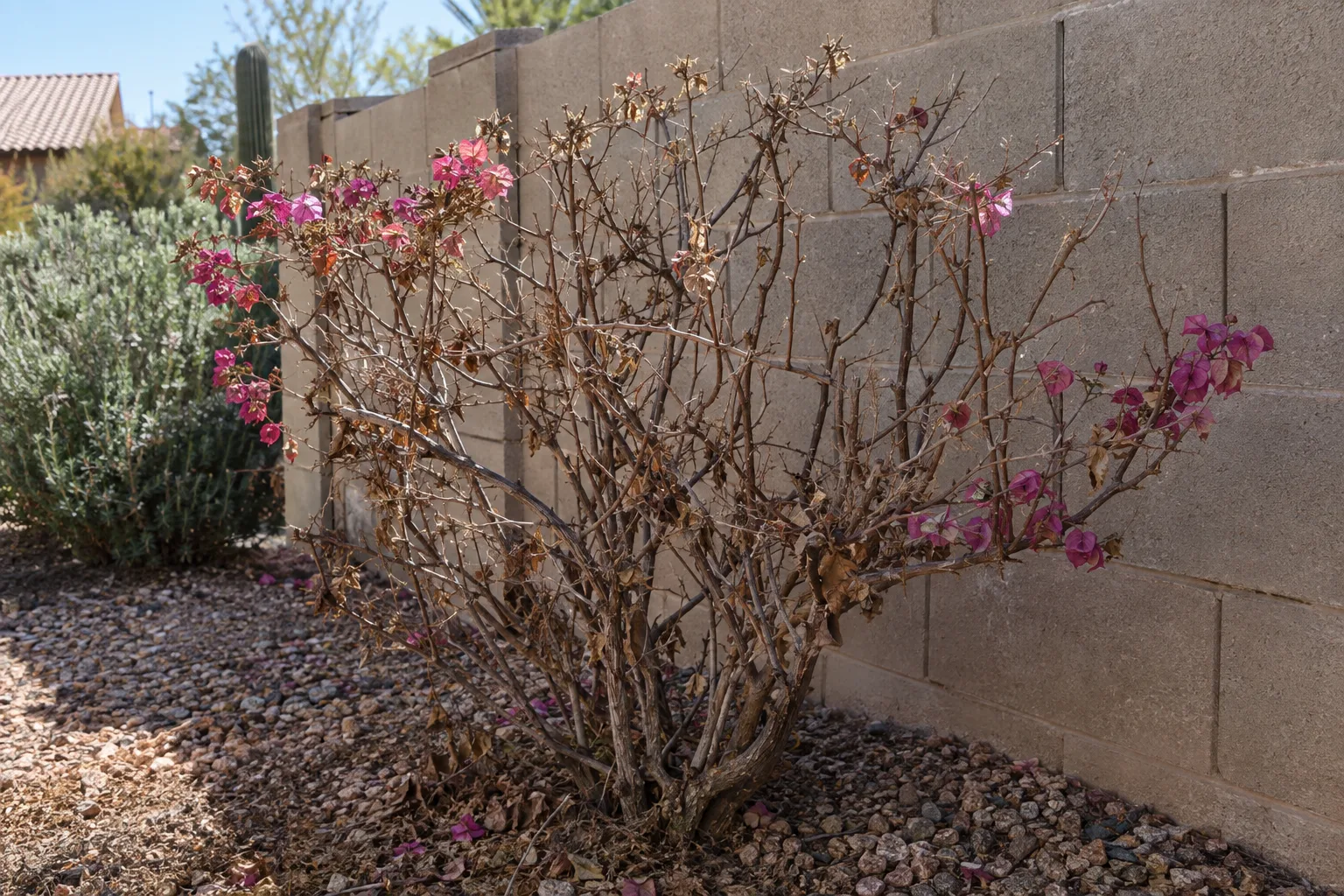
It is not too late for most of them. Bougainvillea, lantana and tecoma often hold off on new growth until the soil is consistently warm, which in the East Valley can be April or even May. A bare stem in early April calls for a closer look, not a shovel.
Warm weather helps once living tissue is present. Daytime highs commonly climb through the 80s and 90s in April, and plants with healthy crowns and roots can push several inches of growth in a few weeks. Waiting costs nothing. If you are not sure what a bare plant is, the pages in our plants section can help you identify it by leaf and flower.
Why did some plants recover while others did not?
Microclimate is the usual reason. Cold air settles in low spots and open lawn areas, while plants against a south or west facing wall, under a tree canopy or near pavement stay several degrees warmer on the same night. Two identical plants in different spots can end up with very different results.
Length of the cold matters too. A brief dip to the low 30s burns soft leaves, but several hours at 25°F or lower can kill woody stems. Plant age also plays a part. Established plants with deep roots hold up better than ones planted the previous fall, which is why young trees and shrubs show the most damage.
How do I check whether a frozen plant is still alive?
Scratch the bark with a fingernail and look at the color underneath. Green or white, moist tissue means the stem is alive. Work from the tips toward the base, because freeze damage kills from the outside in.
- Scratch a small patch at the tip of a stem, then move down in 6 to 12 inch steps until you find green tissue.
- Bend a few stems. Living wood flexes, and dead wood snaps with a dry crack.
- Dig 1 to 2 inches beside the base and look at the roots. Firm, light-colored roots are a good sign, while black, mushy or papery dry roots are a problem.
- Press the crown, the spot where stems meet roots. It should feel firm and not smell sour.
- Tie a piece of tape at the lowest living point so you know where to cut later.
The scratches are tiny and do no lasting harm. Ten minutes per plant is enough, and it can save you from pulling a shrub that was a few weeks from sprouting.

Which plants are slowest to come back after a freeze?
Several popular low desert plants are known for slow, late recovery, so judge them by the scratch test and the crown instead of by how the branches look.
Bougainvillea
Bougainvillea can be stripped bare by a hard freeze and may not push buds until the soil warms in April or May. If the main canes scratch green anywhere, expect it to leaf out. Cut dead canes back only after buds appear.
Lantana
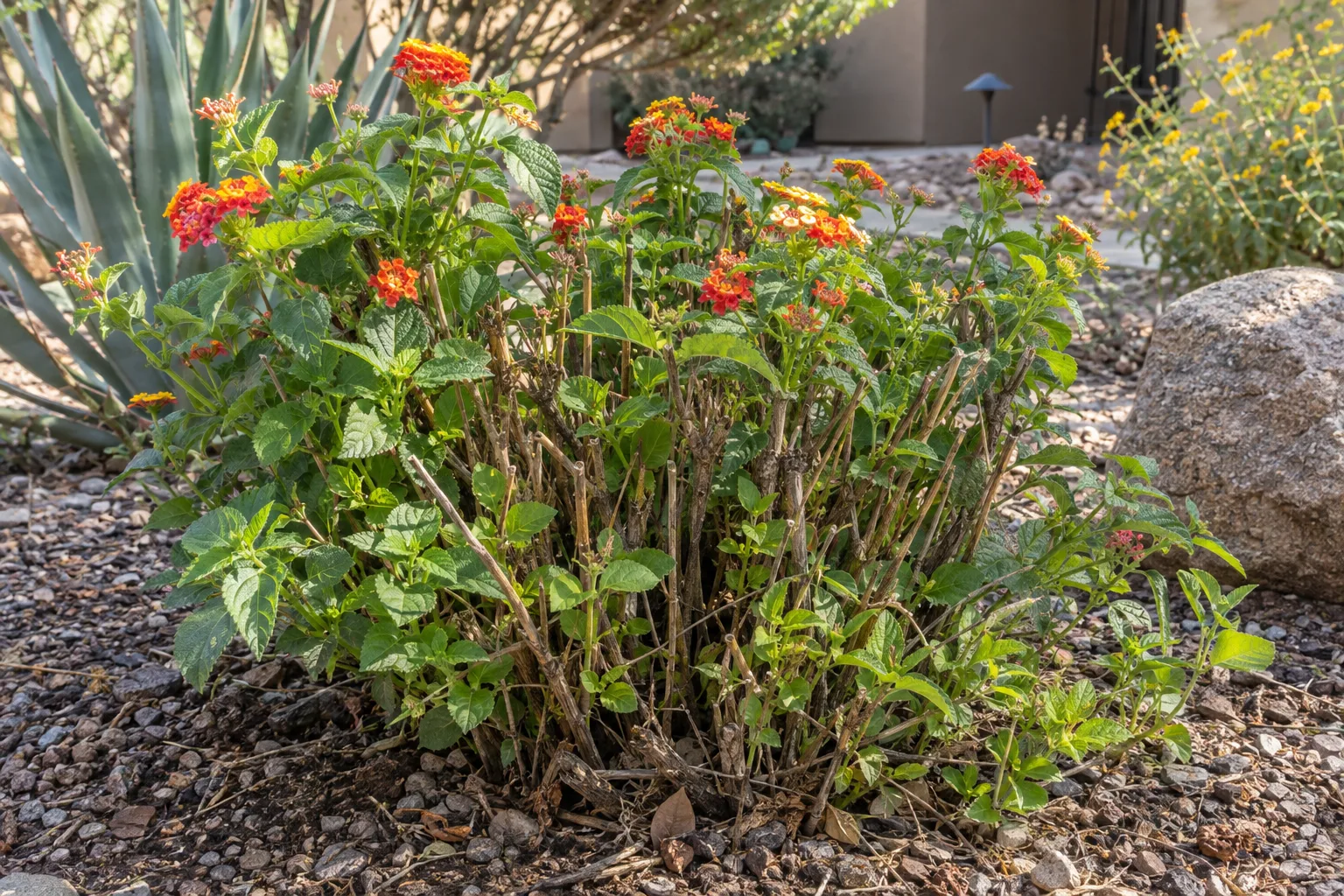
Lantana camara usually freezes to the ground and resprouts from the base. Look for small shoots at soil level instead of on the old stems. Do not give up on it before May.
Tecoma
Tecoma stans (yellow bells) can look brown and dead for weeks, then grow fast once nights warm up. A firm crown is the sign to keep waiting.
Aloe vera
Aloe vera is more cold-tender than agave and can show mushy, collapsed leaves after a freeze. The plant often survives if the center is firm, and new pups can appear from the base by May.
| Plant | Sign of life to look for | How long to wait |
|---|---|---|
| Bougainvillea | Green under the bark on main canes, buds at nodes | Into late May |
| Lantana | Shoots at the base of the plant | April to May |
| Tecoma | Shoots from a firm crown | Into May |
| Citrus | Green under the bark above the graft union, swelling buds | Through late spring |
| Aloe vera | Firm center, new pups | Into May |
When should I prune freeze-damaged plants?
Prune after the last frost risk has passed and new growth shows where the living wood ends. In the East Valley that is usually by early March, so a plant that is still bare in April is ready for a careful assessment.
Many gardeners cut in January because brown growth looks dead. That is a mistake. The dead leaves and stems shield the lower plant from later cold nights and from strong spring sun.
When you do cut, go back to a quarter inch above the lowest live bud or green tissue, using clean, sharp tools. Wipe the blades with rubbing alcohol between plants. Cut conservatively, since you can always remove more in two weeks but cannot put wood back. Our gardening calendars are a good place to check what comes next in the months ahead.
How should I water and feed a recovering plant?
Water deeply and let the top 1 to 2 inches of soil dry before watering again. For shrubs and young trees in April that often works out to every 5 to 7 days, and for succulents every 10 to 14 days, though soil, plant size and weather change the schedule.
Damaged roots take up water slowly, and soggy soil in warm weather invites root rot. Skip fertilizer until you see growth 2 to 3 inches long. Then apply a balanced slow-release fertilizer at half the label rate. High-nitrogen products early on push soft growth that stresses the plant. Our hard water and alkaline soil can leave white salt crusts on the surface, so an occasional deep soak that flushes salts below the roots helps.
When is it time to pull a frozen plant out?
Pull it when nothing has sprouted by late May to early June and the plant shows the signs below. At that point it is using water and space that a healthy plant could use.
- Stems scratch brown, dry and crumbly from the tips to the soil line.
- The crown is soft or smells sour.
- Roots are black and mushy, or dry and papery, throughout.
- The plant is a tender tropical that sat in a cold low spot and will likely freeze again.
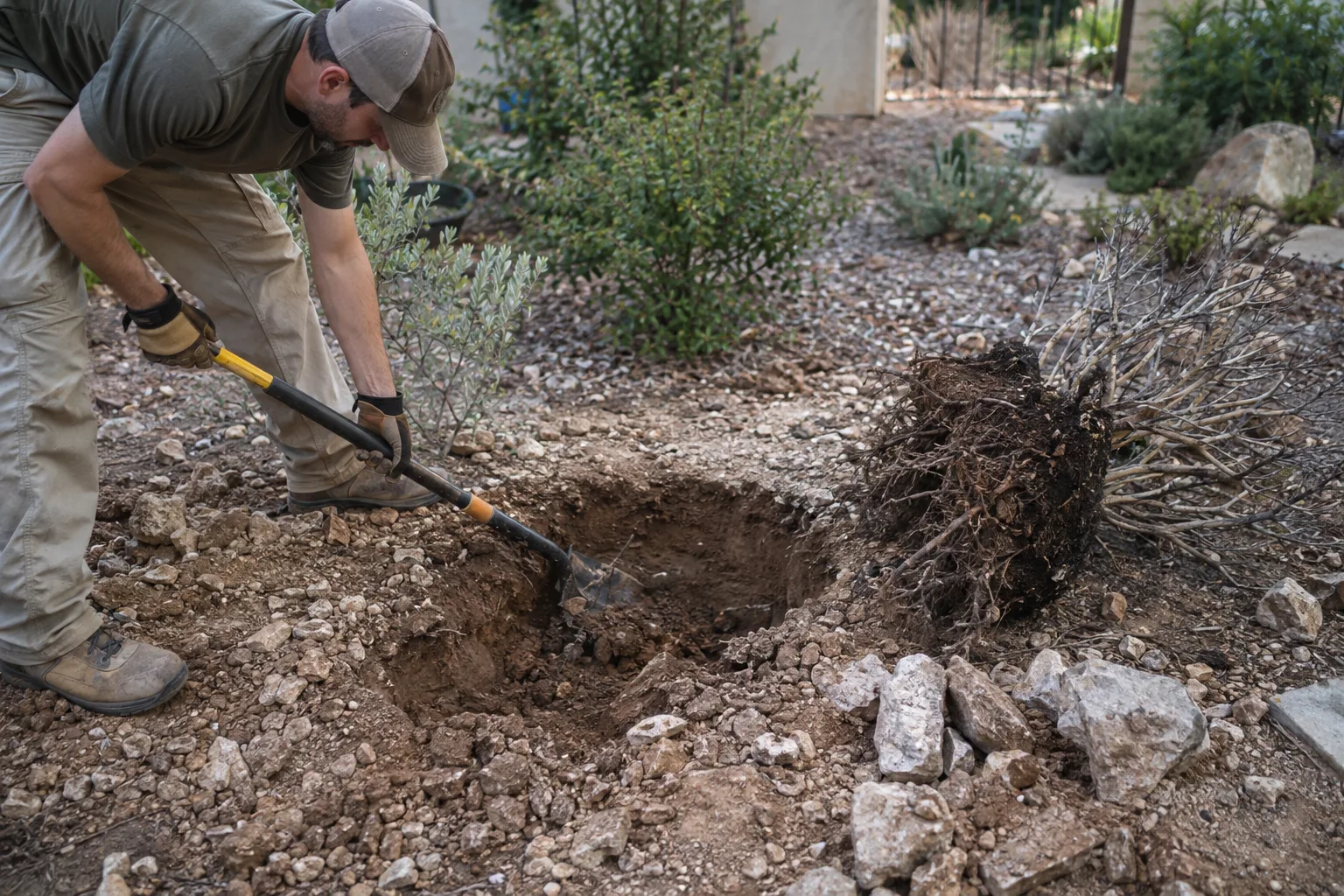
Before replanting, dig the new hole wider than deep and fill it with water to test drainage. If it still holds water after a full day, caliche may be the cause, and a different spot or a raised planting area is the better choice. If the old plant had rotted roots, let the hole dry for a week or two first.
What should I replant after a freeze?
Choose plants that handle our winter lows with no protection. These are varieties we commonly carry, though availability changes week to week and season to season.
Chilopsis linearis (desert willow) drops its leaves in winter and tolerates cold well below our typical lows. Parkinsonia (palo verde) is very cold hardy once established, though young trees can take frost damage in their first winters. You can browse more options in our desert trees department.
Leucophyllum frutescens (Texas sage) is a dependable evergreen shrub that shrugs off frost. Agave americana handles freezes well but grows large, often 6 feet wide or more, so give it room. New plantings in April need regular water before summer highs pass 110°F.
Frequently asked questions
Can a saguaro or columnar cactus recover from freeze damage?
Often yes, but the damage can take weeks to show. Frozen tissue turns soft, discolored or starts to ooze, and rot can spread inward. Avoid extra watering and watch for spreading soft areas. If they grow, ask a cactus specialist or certified arborist before cutting, or contact us with photos.
Will my citrus tree come back if it lost all its leaves?
It can. Leaf drop after a freeze does not mean the tree is dead, and citrus often pushes a full flush of new leaves in spring. Scratch the trunk above the graft union. If it is green, the fruiting variety is alive. If the trunk is dead below the graft, see our citrus trees for replacements.
How can I tell freeze damage from root rot?
Freeze damage dries out, while root rot stays wet and soft. Freeze-damaged tissue turns brown and crisp soon after a cold night. Root rot usually shows as yellowing leaves, wilting despite moist soil and a mushy, dark crown or roots. The timing also helps, since freeze damage follows a cold event.
Does shade cloth help a plant that lost its leaves?
Yes, 30 to 40 percent shade cloth can help during afternoon sun in April. A plant with no foliage has no protection for its bark and new buds, and sunscald slows recovery. Remove the cloth once the plant has a good canopy of new leaves, usually by late spring.
Is a plant with only a little living tissue worth keeping?
Yes, if the crown and roots are firm and the plant has some living wood. Plants with even 30 to 40 percent living tissue often rebuild within one to two growing seasons. It will look sparse for a while, so the deciding factor is how much patience you have.
Should you keep waiting on a plant that has not recovered?
Keep waiting if the scratch test shows green anywhere, the crown is firm and the roots are light colored. Give those plants until late May. Replace plants that are brown and brittle to the soil line, rotted at the crown, or tender species growing in a cold low spot that will freeze again. If you cannot water consistently through summer highs above 110°F, choose tougher replacements. Bring a stem sample or photos to our nursery in Queen Creek and we will help you decide.