
The best flowering vines for Arizona gardens are bougainvillea, queen’s wreath, trumpet vine, star jasmine and passion vine. Each covers a wall or shades a patio through low desert summers, as long as you match it to the right sun, support and frost exposure.
Key takeaways
- Plant from October to early November, which gives roots about six months to settle in before the first summer above 110°F.
- Most flowering vines need 6 or more hours of direct sun, and bougainvillea blooms best on moderate water and low nitrogen.
- Build the support for the full-grown vine, because a mature one can weigh hundreds of pounds when wet.
- Keep clinging vines like trumpet vine on a freestanding trellis 2 to 3 inches off block or stucco, since their rootlets work into mortar.
- Test drainage in every planting hole, because caliche 6 inches to a few feet down can hold water around roots.
Why plant a flowering vine in the low desert?
A vine gives you tall color and shade from a planting hole only a couple of feet wide. On a west-facing block wall, which soaks up afternoon sun and gives the heat back after dark, a leafy vine catches sunlight before it reaches the wall. Shade starts quickly.
Vines also grow faster than most shade trees. One planted in October can cover a good stretch of trellis by the following summer, although the first season goes mostly into roots. Our plants page is a good place to start narrowing down choices, and the best pick depends on your sun, your wall and how much trimming you want to do.
Which flowering vines grow best in Arizona?
Five vines do well across the East Valley: bougainvillea, queen’s wreath, trumpet vine, star jasmine and passion vine. These are types we commonly carry, and availability changes week to week and season to season. Sizes below are typical ranges for a trained vine and vary by variety and site. Each has one drawback.
Bougainvillea (Bougainvillea spp.)
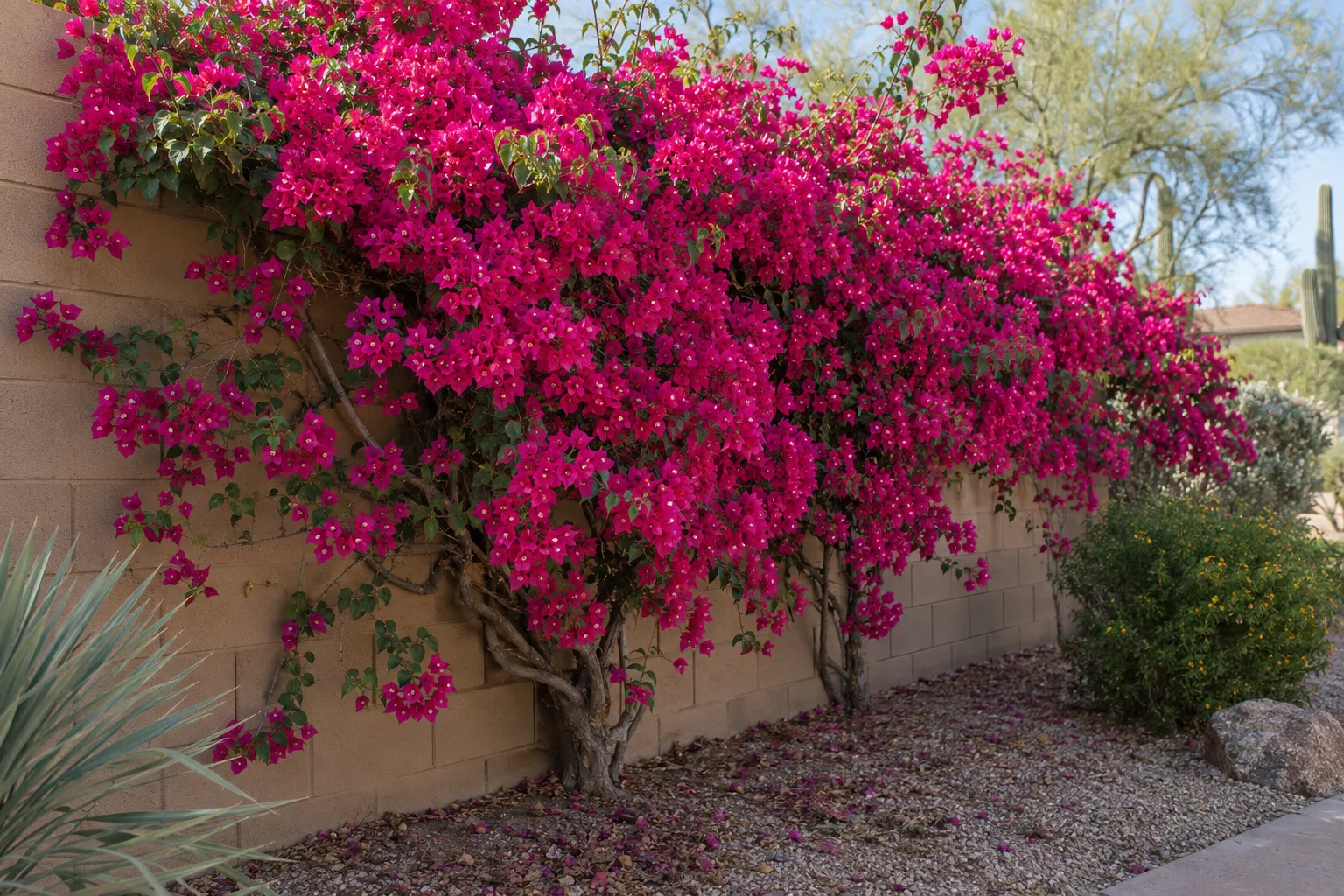
Bougainvillea gets its magenta, orange, red, white or salmon color from papery bracts around small true flowers. It grows 10 to 25 feet depending on variety and pruning, wants full sun, and needs little water once established. Flowering improves when the soil dries between waterings and nitrogen stays low. The drawback is frost. A hard freeze can burn the foliage or cut the plant back to the ground, so young plants in cold pockets of Queen Creek need frost cloth on forecast freeze nights.
Queen’s wreath (Antigonon leptopus)
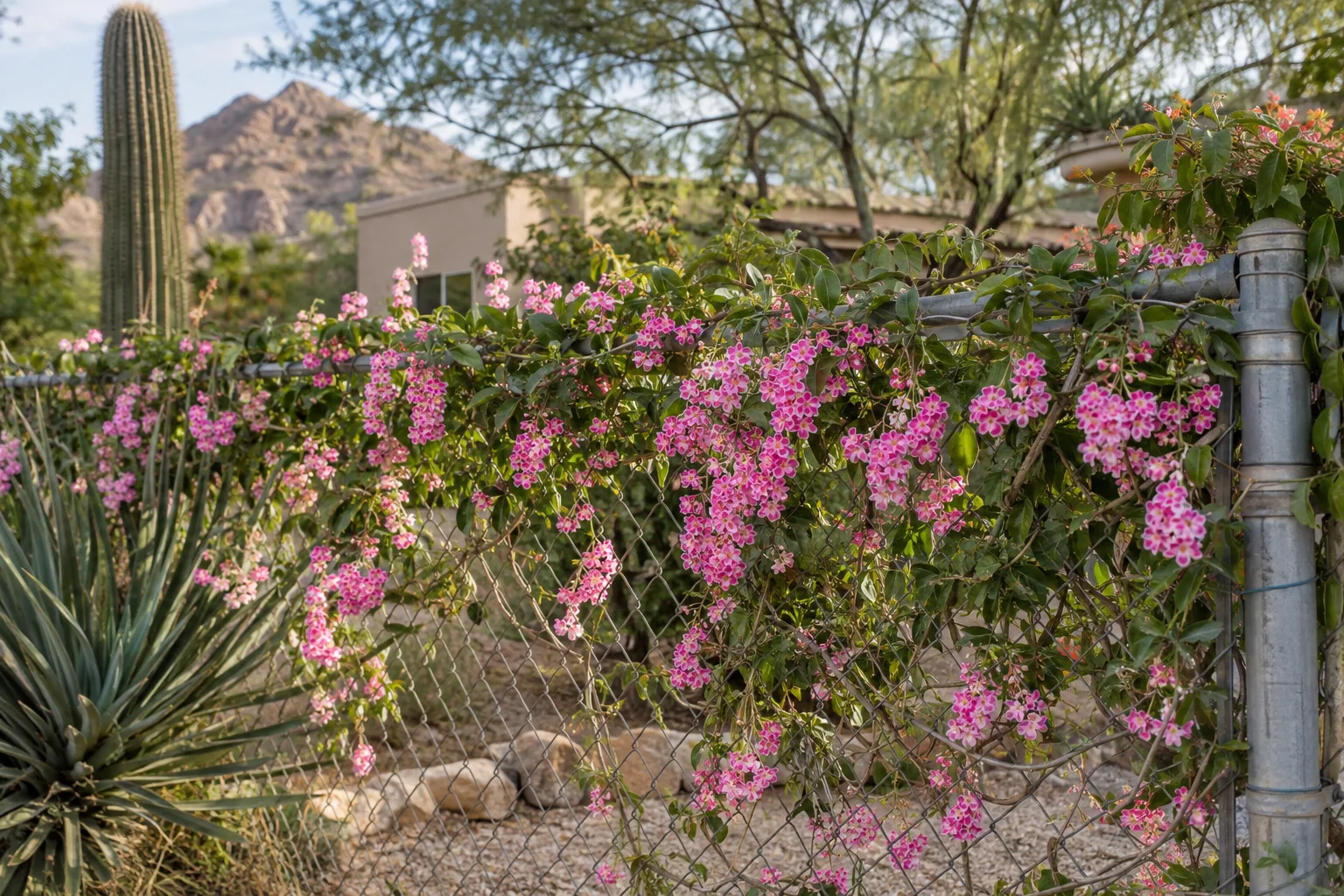
Queen’s wreath, also called coral vine, produces chains of bright pink flowers from late spring into fall. It climbs by tendrils to 15 to 25 feet or more, covers chain-link fences fast, and wants full sun and little water once established. Its drawback is winter. Frost kills the top growth, leaving bare stems until the plant regrows from its roots in spring, and you can cut the dead growth away then.
Trumpet vine (Campsis radicans)
Trumpet vine carries orange to red tubular flowers that hummingbirds visit. Mature size runs 20 to 30 feet or more. It wants full sun and moderate water. The drawback is vigor: it clings with aerial rootlets, can work into mortar and stucco, and sends up suckers, so give it a freestanding trellis away from walls and a spot where you can keep it in bounds.
Star jasmine (Trachelospermum jasminoides)
Star jasmine has glossy evergreen leaves and fragrant white pinwheel flowers in spring. It grows slowly to 10 to 20 feet, which suits a smaller trellis or fence line. Give it morning sun, afternoon shade and moderate water. The drawback is heat: leaves scorch against a hot west wall, so an east-facing wall is the safer spot.
Passion vine (Passiflora spp.)
Passion vine produces intricate, fringed flowers on stems that reach 10 to 20 feet. It grows in full sun to part shade, prefers afternoon shade in summer, and wants regular water while it establishes. The drawback is damage. Frost can freeze it back, and Gulf fritillary caterpillars can strip the leaves. The vine usually regrows, and the caterpillars become butterflies.
How do I plant a flowering vine in caliche and alkaline soil?
Plant from October through early November, dig through caliche or build a mound above it, and amend the soil lightly. Local soil often tests at pH 7.8 to 8.5, which locks up iron and shows as yellow leaves with green veins. Fall planting gives roots about six months before the first summer above 110°F.
Spring planting from February through April works if you water carefully through the first summer. Avoid planting from late May through August. Heat above 110°F on top of transplant stress is hard on any new vine.
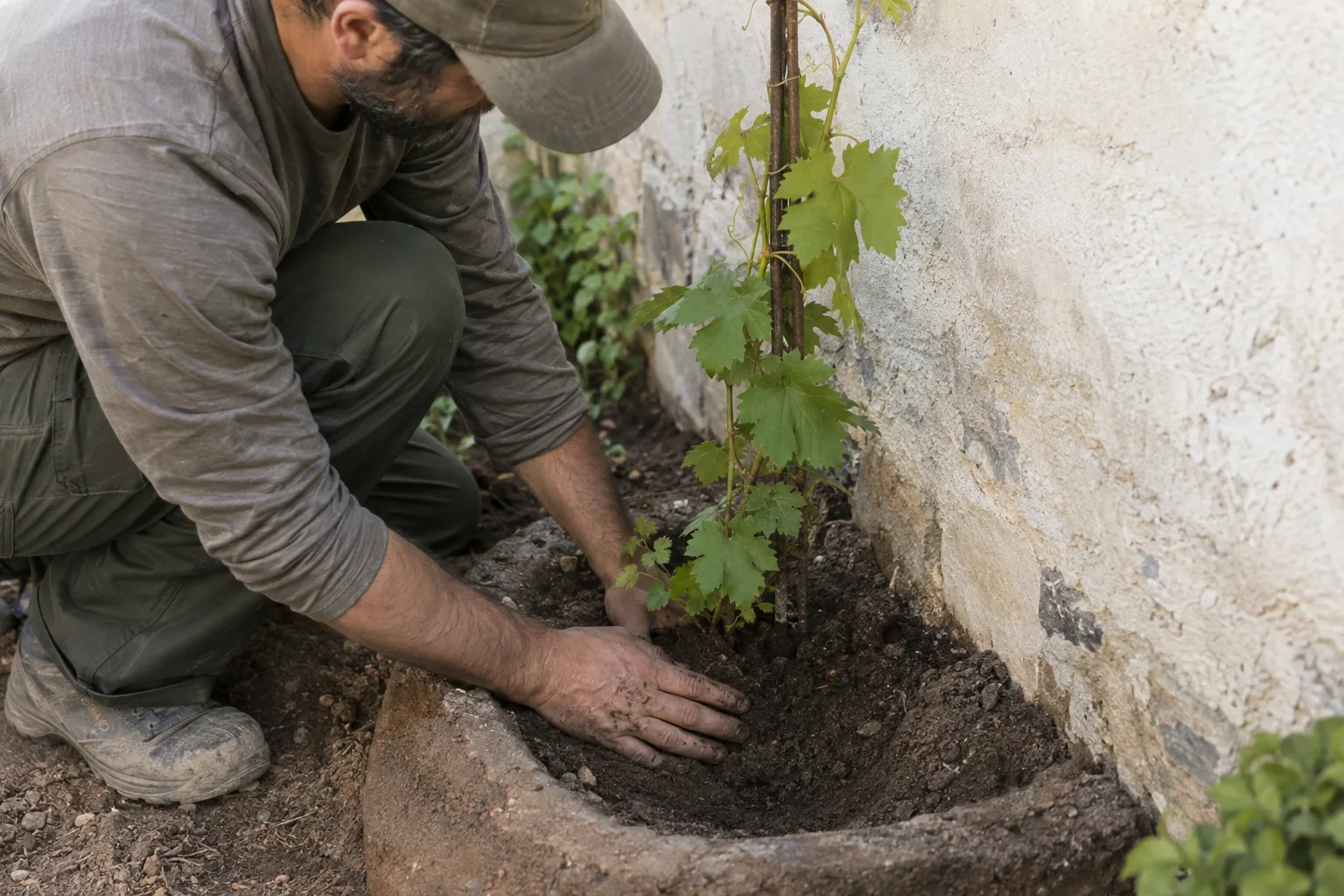
- Dig a hole two to three times as wide as the container and no deeper than the root ball.
- Fill the hole with water. If it still stands after a day, caliche is trapping it, so break through with a digging bar or plant on a mound or in a raised bed 18 to 24 inches deep.
- Backfill with the native soil mixed with no more than about 25 percent compost. A rich pocket discourages roots from spreading into the surrounding soil.
- Set the root ball level with or slightly above the surrounding grade, and loosen circling roots gently. Bougainvillea roots resent disturbance, so handle that root ball as little as possible.
- Build a shallow basin around the plant and water slowly until the root zone is soaked.
- Tie the main stems to the support with soft ties, never wire pressed against the bark.
- Spread 3 inches of mulch, keeping it a few inches from the stems to prevent rot.
Caliche is a cement-like calcium carbonate layer that can sit anywhere from 6 inches to a few feet below the surface. It holds water like a bowl and drowns roots even when the surface looks dry. Test every hole.
What kind of support does a flowering vine need?
Build the support for the vine at full size, because a mature bougainvillea or queen’s wreath can weigh hundreds of pounds when it is leafed out and wet from a storm. Lightweight cages and thin trellis panels fail. Choose from these options:
- Powder-coated steel trellis panels hold up to UV and heat better than wood or plastic. Mount them on standoffs 2 to 3 inches from the wall for airflow.
- Welded wire on steel T-posts is strong and inexpensive for fast growers like queen’s wreath and trumpet vine.
- Heavy timber or steel pergolas suit bougainvillea canes draped overhead, as long as the structure is built for the added weight.
- Galvanized wire or cable strung between eyebolts every 18 inches gives twining vines something to grab on a masonry wall.

Queen’s wreath and passion vine climb by tendrils and need open supports they can wrap. Bougainvillea scrambles on thorny canes and needs tying in as it grows. Trumpet vine is the one most likely to damage surfaces, so keep it on a freestanding trellis rather than letting it grip block or stucco.
How do I water, feed and prune flowering vines through the year?
Water deeply and infrequently, feed lightly in spring, and prune after frost danger has passed. Frequent shallow watering builds surface roots that cannot carry a vine through summer.
New vines in summer often need water every few days for the first months. Established vines usually do well on a deep soak about once a week in summer and every 2 to 3 weeks in winter. Treat those as starting points and check the soil 6 to 8 inches down before each cycle. Skip a cycle if the soil is damp. During the monsoon, from roughly July through September, you can often skip a cycle after a good storm, but a dry week at 108°F between storms still stresses a vine.
Feed in early March with a fertilizer low in nitrogen and higher in phosphorus, following the label, because heavy nitrogen pushes leaves at the expense of blooms. Wait until frost danger passes, usually late February to March, before cutting back frost damage. Tip-prune bougainvillea after a bloom flush and skip hard pruning from June through September. Our gardening calendars list monthly tasks for the low desert.
Why are my flowering vines yellow, bare or not blooming?
Yellow leaves with green veins point to iron deficiency from alkaline soil, and too much shade, water or nitrogen explains most missing blooms. Match the symptom to the cause below.
- Yellow leaves with green veins: iron chlorosis. Apply a chelated iron product made for alkaline soil in spring, following the label, and water deeply so it reaches the roots.
- Lush leaves but few flowers on bougainvillea: too much water or nitrogen, or fewer than 6 hours of direct sun. Cut back watering and keep lawn fertilizer away from the roots.
- Dieback from the base: crown rot from planting too deep or water pooling at the stem. Pull mulch back, correct the grade and improve drainage.
- Brown, limp growth after a cold night: frost damage. Wait for warm weather and new growth before cutting back, since stems that look dead may be alive lower down.
If you cannot tell what is wrong, contact us with a clear photo of the leaves and the base of the plant.
Frequently asked questions
Which flowering vine suits a west-facing wall?
Bougainvillea handles a hot west wall best, since it tolerates reflected heat and blooms on modest water. Queen’s wreath also takes full afternoon sun. Star jasmine can scorch there and does better on an east wall. Keep clinging trumpet vine on a freestanding trellis a few inches off the wall so its rootlets cannot reach the block.
Can I grow a flowering vine in a container?
Yes, in a container of 25 gallons or more, because small pots overheat and dry out fast in summer. Light-colored glazed pottery keeps roots cooler than dark plastic. Expect to water daily or more in peak heat. Star jasmine and passion vine adapt better than vigorous bougainvillea or queen’s wreath. Browse our pottery and planters for large sizes.
Which flowering vine attracts hummingbirds?
Trumpet vine is the usual choice, with orange to red tubular flowers that hummingbirds visit. Queen’s wreath draws bees and other pollinators, and its long bloom season supplies food from late spring to fall. Place either one near a patio seat for the best view, and tie the stems to a sturdy support early.
Which flowering vines stay green in winter?
Star jasmine is evergreen and keeps its foliage through most low desert winters, though hard frost can burn leaf tips. Bougainvillea holds much of its foliage in mild winters but drops leaves in cold snaps. Queen’s wreath dies back to the ground after frost and trumpet vine drops its leaves, so expect bare stems from both.
How fast do flowering vines grow?
Growth rate depends on the vine and the season. Queen’s wreath and trumpet vine can add 10 feet or more in a season once rooted, while star jasmine adds a few feet a year. Most of the first year goes into roots, and growth speeds up in spring as temperatures settle into the 70s.
Which flowering vine is right for your wall or patio?
Choose bougainvillea for a hot, sunny wall where you want heavy color on little water, and queen’s wreath for fast cover if you can live with bare winter stems. Trumpet vine suits a freestanding trellis and hummingbird fans, and star jasmine fits an east-facing spot where fragrance matters. Skip all five if the spot gets under 6 hours of direct sun, or if you will not build a sturdy support and trim each year. Stop by our nursery in Queen Creek to talk through your wall.