

The flowering shrubs to trim in late March are the ones that bloom on new growth: lantana, desert ruellia, bougainvillea, autumn sage and yellow bells. Leave fairy duster, brittlebush and silver cassia alone until their spring flowers finish.
Key takeaways
- Wait until frost risk has passed in your own yard, which in the East Valley is usually late February to mid March, and later in cold low spots.
- Shrubs that flower on new growth, such as lantana and bougainvillea, can lose one-third to one-half of their height in late March.
- Spring bloomers such as fairy duster, brittlebush and silver cassia are flowering in March, so prune them lightly in April or May after the blooms fade.
- Remove no more than about one-third of most shrubs in one session. Lantana and desert ruellia tolerate harder cuts.
- Water deeply within a day or two of pruning, and wait for 2 to 3 inches of new growth before feeding.
When is late March the right time to prune flowering shrubs in Arizona?
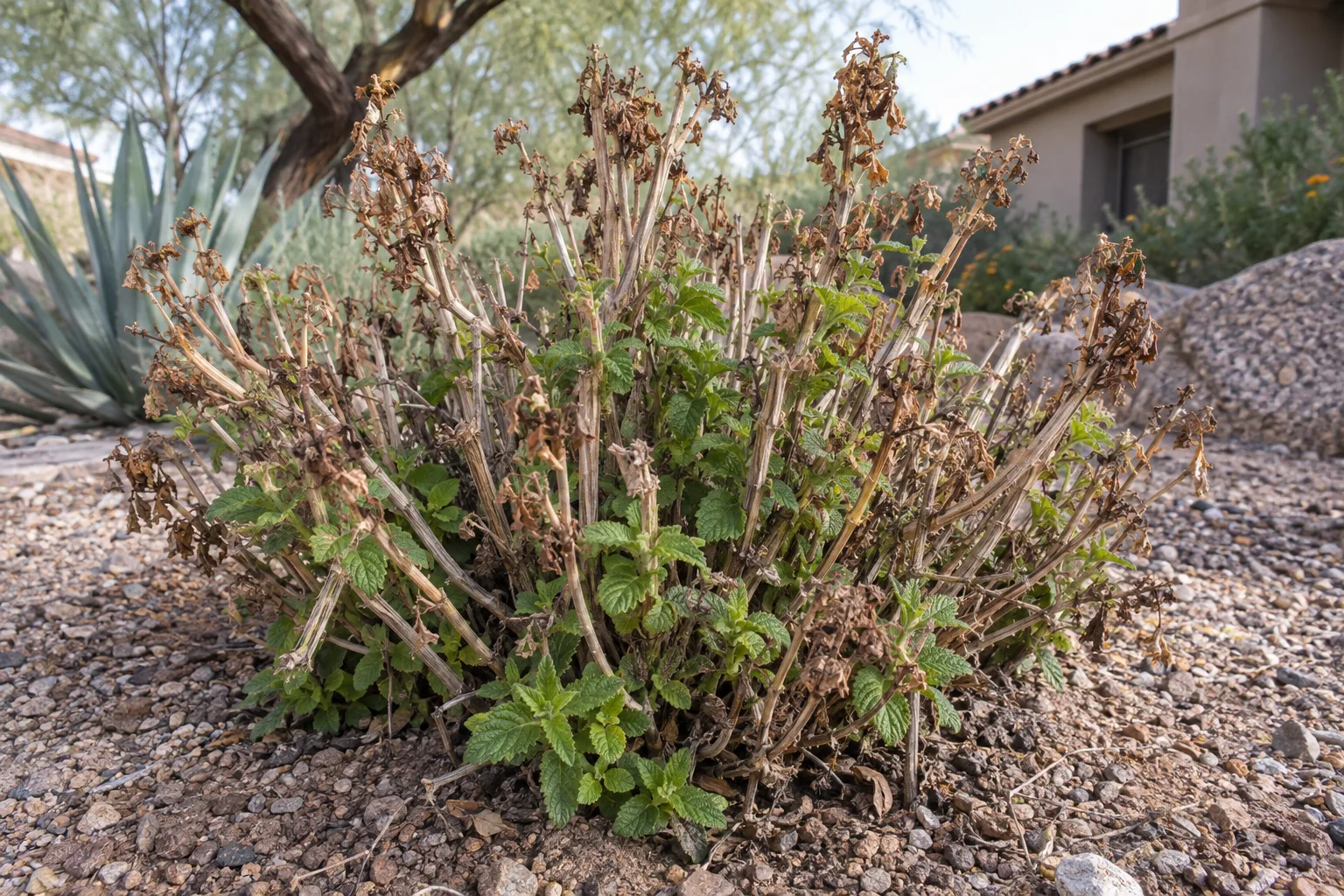
Late March is right once the last frost risk has passed in your yard and shrubs are pushing new growth. In the East Valley that usually falls between late February and mid March, though low spots in Queen Creek and San Tan Valley can stay colder than the rest of the street.
Brown, frost-burned stems shield the healthy wood below them on the next cold night, so leave them in place until the weather settles. Once buds swell and green shoots appear, the dead sections are easy to spot. Cutting then takes less guesswork. Pruning in late March also gives shrubs six to eight weeks of growth before daytime highs pass 100°F, usually in May.
How do I tell if a shrub blooms on old wood or new wood?
Check when it flowers. A shrub that blooms in late winter or early spring is usually carrying buds on last year’s stems, while one that blooms from late spring through fall flowers on the current season’s growth.
Many gardeners assume every shrub benefits from a spring haircut. Spring bloomers lose their buds that way, and you wait a full year for the next show. New-wood bloomers respond the other way and produce more flowering stems after a cut. If you cannot place a plant, send us a photo through our contact page or bring a cutting to the nursery, and browse our plants page to match it to a name.
Which five flowering shrubs should I trim in late March?
Lantana, desert ruellia, bougainvillea, autumn sage and yellow bells all flower on new growth, so a late March cut leads to more blooming stems. These are varieties we commonly carry, and availability changes week to week and season to season.
Lantana (Lantana camara)
Lantana tolerates a hard cutback. Remove all frost-killed wood, then cut the remaining stems back by one-third to one-half, or to about 12 inches if the plant has turned leggy and woody. New stems carry flowers within several weeks. Trailing lantana (Lantana montevidensis) takes the same treatment, and both want full sun and little water once established.
Desert ruellia (Ruellia peninsularis)
This 3 to 4 foot shrub carries purple, trumpet-shaped flowers for much of the warm season. Cut it back by one-third to one-half and remove any frost-damaged stems. Without an annual cutback it grows leggy, with flowers held far from the center of the plant. A cut now keeps the shape denser.
Bougainvillea (Bougainvillea hybrids)
Remove frost-damaged canes once green growth shows where live wood begins. Then shorten long stems by up to one-third and thin the center so light reaches the inside. The colorful bracts form on new growth. Wear heavy gloves and long sleeves, because the thorns catch every gap. After pruning, water moderately and skip high-nitrogen fertilizer, which pushes leaves at the expense of color.

Autumn sage (Salvia greggii)
Autumn sage stays a compact 2 to 3 feet tall. Cut it back by about one-third and remove woody, leafless stems at the base. If flower buds are already showing, trim only the tips. Use hand pruners and make selective cuts, because shearing it into a ball builds a dense outer shell that shades the interior. Hummingbirds visit the flowers.
Yellow bells (Tecoma stans)
Also called esperanza, this shrub grows 6 to 10 feet tall and flowers on new growth from late spring into fall. In late March, cut frost-damaged stems back to live wood and shape the plant. An overgrown shrub can lose about one-third of its height. Deep watering afterward helps it fill back in before summer.
Which three flowering shrubs should I leave alone in late March?
Fairy duster, brittlebush and silver cassia are in bloom or heading into bloom in March. A cut now removes flowers you have waited all winter to see, and none of the three needs much pruning in any season.
Fairy duster (Calliandra eriophylla)
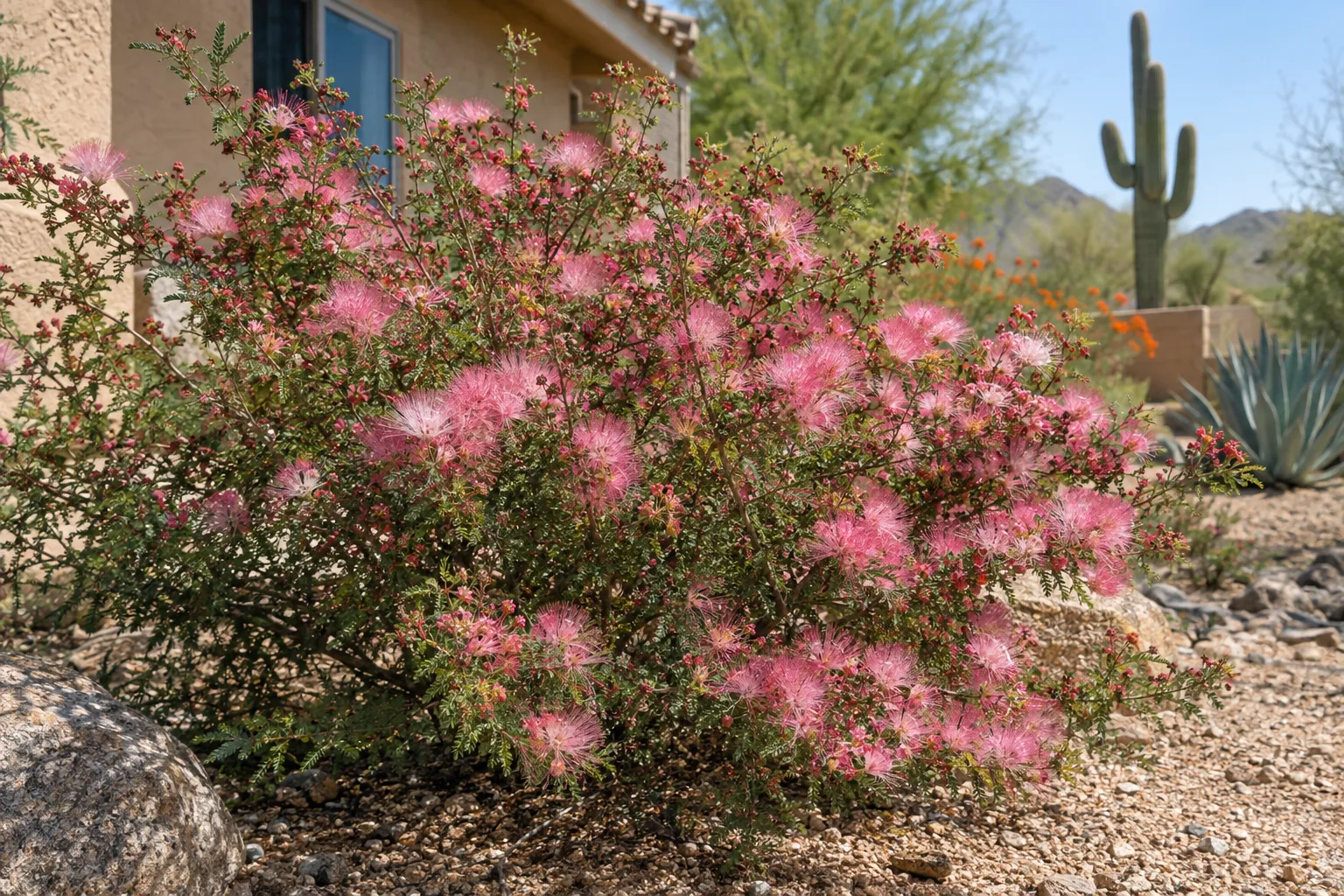
This native shrub grows 3 to 5 feet tall and carries pink, feathery pom-pom flowers from late winter into spring. Wait until the blooms are finished, then remove a few stray stems and stop. It looks best with a loose, natural shape.
Brittlebush (Encelia farinosa)
Brittlebush forms a silvery mound about 3 feet tall with yellow daisy flowers in late winter and spring. Trim lightly after the flowers fade, taking off spent flower stalks and a little height. The plant can look sparse in summer heat, which is normal.
Silver cassia (Senna artemisioides)
Also sold as feathery cassia, this shrub grows 4 to 6 feet tall and covers itself in yellow flowers in late winter and spring. Prune it after the bloom, and keep cuts in leafy growth, because it regrows slowly from bare wood.
Trim or skip: how do the eight shrubs compare?
Five shrubs get trimmed in late March. The table lays out when each shrub flowers and when to cut it, so you can check a plant before you pick up the pruners.
| Shrub | Late March action | Flowers | Notes |
|---|---|---|---|
| Lantana | Trim by one-third to one-half | New growth, spring to fall | Remove all frost damage first |
| Desert ruellia | Trim by one-third to one-half | New growth, warm season | Keeps the shape dense |
| Bougainvillea | Remove frost damage, trim by up to one-third | New growth | Heavy gloves, go easy on nitrogen |
| Autumn sage | Trim by about one-third | New growth, spring and fall | Tips only if buds show |
| Yellow bells | Remove frost damage and shape | New growth, late spring to fall | Water deeply after cutting |
| Fairy duster | Skip | Late winter to spring | Light shaping after bloom |
| Brittlebush | Skip | Late winter to spring | Remove spent stalks after bloom |
| Silver cassia | Skip | Late winter to spring | Avoid cutting into bare wood |
How do I prune a flowering shrub step by step?
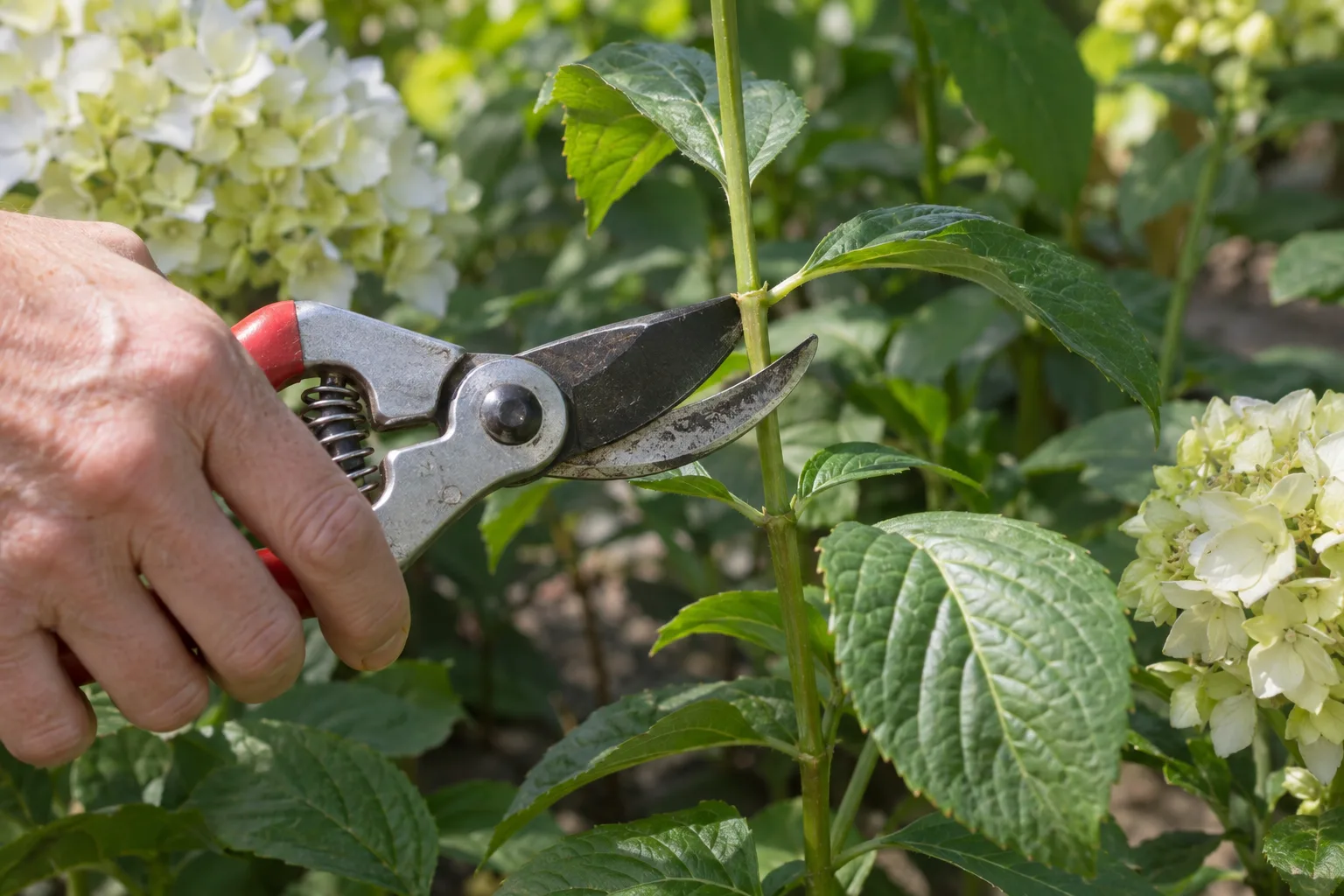
Work in the same order on every shrub: dead wood first, then shape, then thinning. A sharp pair of bypass hand pruners handles stems up to about 3/4 inch thick, and loppers take the thicker ones.
- Check the forecast and wait until nights have stayed above freezing for a couple of weeks.
- Wipe your pruner blades with rubbing alcohol before you start.
- Scratch a stem with a thumbnail. Green tissue is alive, and dry brown tissue is dead. Cut dead stems back to green wood or to the base.
- Step back about 10 feet and decide on the overall shape before you make shaping cuts.
- Cut at a slight angle about 1/4 inch above a leaf node or side branch, and leave no stubs.
- Thin the center by removing crossing stems so light and air reach the inside of the plant.
- Stop at about one-third of the plant’s growth. Lantana and desert ruellia tolerate harder cuts, while overgrown shrubs of other types do better with heavy work spread over two seasons.
- Rake up the clippings and water deeply.
What should I do after pruning?
Water deeply within a day or two, then add mulch and a light feeding once new growth appears. A slow soak that wets the soil 12 to 18 inches down encourages deep roots. Our alkaline soil and hard irrigation water leave salts behind, and deep, infrequent watering carries them below the root zone.
Spread 2 to 3 inches of organic mulch and pull it back about 3 inches from the stems. When new shoots reach 2 to 3 inches, apply a balanced slow-release fertilizer at the label rate. Fresh growth attracts aphids, and a strong spray of water from the hose removes most of them. For month-by-month timing on other jobs, see our gardening calendars, or watch pruning demonstrated at one of our classes and events.
Frequently asked questions
Can I prune Texas sage in late March?
Texas sage (Leucophyllum frutescens) needs only light shaping in late March. Remove frost-burned tips and a few stray branches, but avoid cutting into bare old wood, since it regrows slowly from there. It tends to flower after humidity rises, often during the monsoon from roughly July through September, so a cut will not force blooms earlier.
What if a frost comes after I prune?
Cover tender shrubs such as bougainvillea and lantana with frost cloth or a sheet overnight, and remove the cover in the morning. Fresh growth is the most frost-tender part of the plant, so a late cold night can burn new tips. Leave the damaged tips in place until the weather settles, then trim them back to green tissue.
Should I use hedge shears on flowering shrubs?
Hand pruners give better results on flowering shrubs. Hedge shears cut every stem at the same height, which builds a dense outer layer that shades the center and often leaves fewer flowers and bare inner stems. Keep shears for formal hedges, and make selective cuts with bypass pruners on lantana, sage and bougainvillea.
Is it too late to prune if my shrub already has flower buds?
Trim only the tips or wait until the flowers fade. Cutting a shrub with swelling buds removes the flowers you are about to enjoy. New-wood bloomers such as lantana and autumn sage still branch and rebloom after a light cut, so a small shaping trim is fine, while a hard cutback can wait until the first flush finishes.
Can I wait until April to prune new-wood bloomers?
Yes, April works for lantana, bougainvillea and yellow bells if frost has passed. The later you cut, the later the new flowering stems appear, and cuts in May leave less time for regrowth before highs reach 100°F or more. If you have been putting the job off, prune in early April and water deeply.
Should you trim your flowering shrubs in late March?
Yes, if the shrub is lantana, desert ruellia, bougainvillea, autumn sage or yellow bells and your yard has gone a couple of weeks without frost. Wait if a shrub is already covered in flowers, and leave fairy duster, brittlebush and silver cassia for after they bloom. Anyone who cannot name a shrub should identify it first, because a wrong cut can cost a season of color. Visit us in Queen Creek and bring a photo or cutting if you want help matching a shrub to its pruning schedule.
