Fire-prone plants to remove from an Arizona yard include fountain grass, pampas grass, Italian cypress, juniper, eucalyptus, rosemary hedges, oleander and palms with dead frond skirts. Their dry growth or oils burn fast, so clear them first within 5 to 30 feet of the house.
Key takeaways
- Start with the first 5 feet around your foundation, then work out to about 30 feet.
- Dead material is the biggest fuel source: dry grass thatch, dead palm fronds and woody, leafless centers in old shrubs.
- Oily or resinous foliage, as in juniper, Italian cypress, eucalyptus and rosemary, burns hotter than most low-desert natives.
- Leave at least 3 feet of open space between plants and plant groups so fire cannot step from one to the next.
- No plant is fireproof. Low-fuel plants still need trimming, watering and cleanup of dead growth.
What makes one plant burn faster than another?
Plants burn faster when they hold dead material, carry aromatic oils or resins, or grow in dense, tall masses. Moisture matters too. A well-watered plant holds more water in its leaves than one stressed by summer highs above 110°F and alkaline soil.
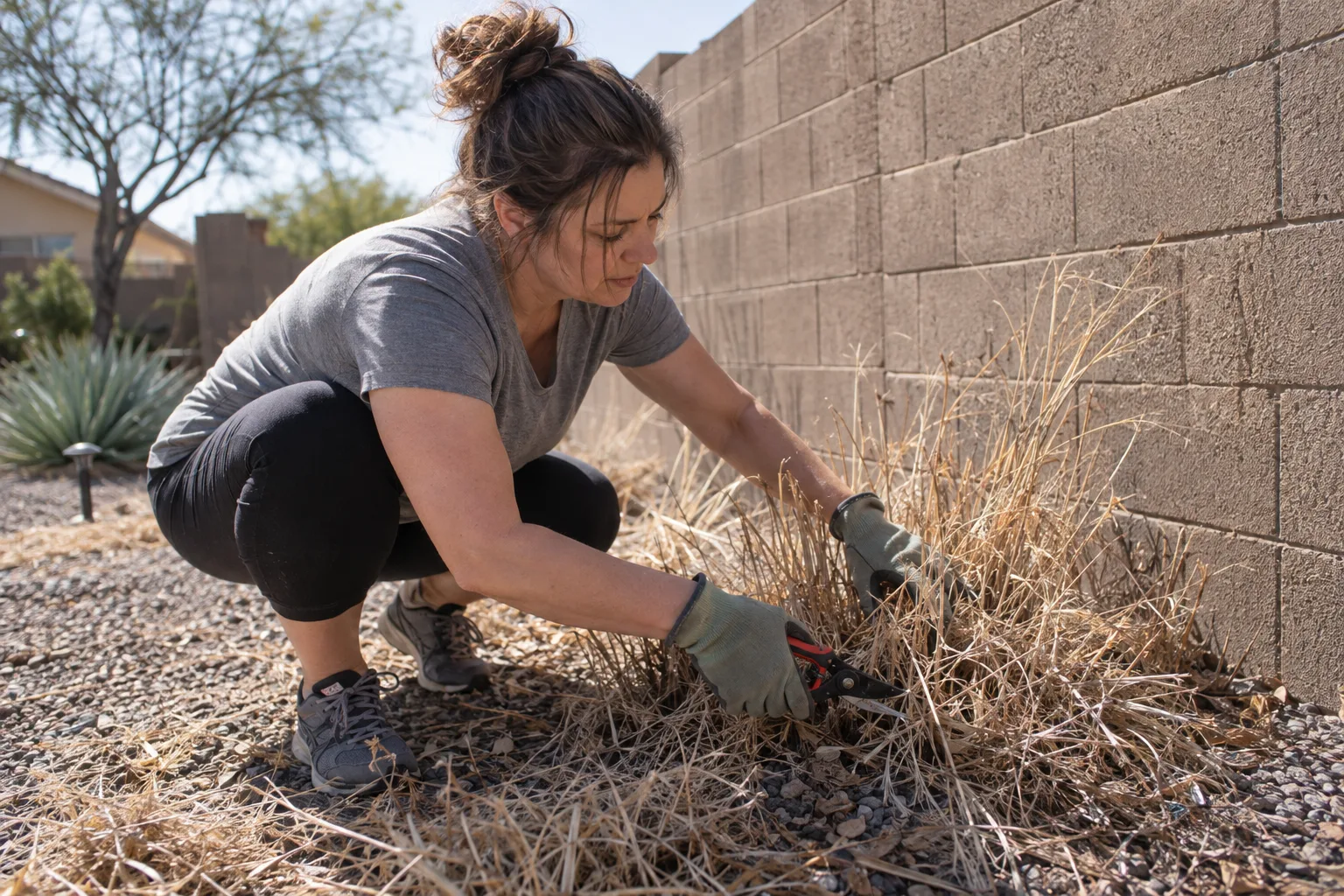
Dead growth is the easiest factor to fix. A pruned, irrigated shrub gives a spark far less to work with than the same shrub left alone for five years.
Shape counts as well. A tall plant growing under a tree and beside a roofline can carry flame from the ground up to the eaves. Fire agencies call this a fuel ladder, and breaking it is as important as removing any single plant.
Which 8 plants should I remove or rework first?
Remove the ones that combine dry or oily fuel with a spot close to the house. This list is based on general fire-safe landscaping guidance, not a ranking from any one county, so treat it as a starting point and check with your local fire department.
Fountain grass (Pennisetum setaceum)
Fountain grass grows 3 to 4 feet tall and wide in full sun with little water. The drawback is dry, papery thatch that builds up inside the clump and spreads by seed into desert washes. It also appears on the Arizona noxious weed list, so check that list before replanting anything similar.
Pampas grass (Cortaderia selloana)
Pampas grass reaches 6 to 10 feet tall and about as wide, in full sun with low to moderate water. Its dense center collects years of dead leaves, and the tall plumes catch blowing embers. Cutting it back helps, but the clump stays a large fuel mass.
Italian cypress (Cupressus sempervirens)
Italian cypress grows 30 to 60 feet tall and only 3 to 6 feet wide, in full sun with moderate water. The resinous foliage burns hot, and rows planted close to a house put that fuel next to the eaves. Spider mite damage often leaves browned, dry sections inside the tree.
Juniper (Juniperus species)
Junipers range from 1-foot groundcovers to 15-foot shrubs, in full sun with low water once established. Their foliage contains oils, and older plants collect dead needles in the center. Low junipers packed against a foundation are the worst placement.
Eucalyptus (Eucalyptus species)
Most eucalyptus grown here reach 30 to 80 feet in full sun with low to moderate water. The leaves hold oils, and the trees shed bark and branches that pile up beneath them. Their size and shallow roots also make them a storm hazard during the monsoon.
Rosemary (Salvia rosmarinus)
Rosemary grows 2 to 4 feet tall and wide in full sun with low water. It is a fine herb, but a dense hedge of it right against the house carries aromatic oils into a spot where you want little fuel. A few pots for the kitchen are a different matter than a 20-foot hedge.
Oleander (Nerium oleander)
Oleander grows 6 to 12 feet tall in full sun with low to moderate water. Mature hedges build a thick, woody interior full of dead leaves and twigs. A continuous oleander hedge along a property line gives fire a straight path toward the house.
Palms with dead frond skirts (Washingtonia robusta and others)
Mexican fan palms can reach 50 to 80 feet in full sun with moderate water. The drawback is the skirt of dead fronds that hangs down the trunk when nobody trims it. A palm that is trimmed every year is a much lower risk, and you can browse our palm trees if you are replacing one.
How far from the house should I clear these plants?
Clear the first 5 feet completely of anything that burns, and thin or replace fire-prone plants out to about 30 feet. Fire agencies commonly describe these as defensible space zones, and a standard East Valley lot fits mostly inside that 30-foot band.
In the first 5 feet, use gravel, pavers, concrete or low succulents. Skip wood mulch, dry grasses and shrubs that touch the wall. Between 5 and 30 feet, keep plants irrigated, trimmed and spaced so canopies do not touch.
Look up as well as out. Palm fronds over the roof, vines on the fascia and tall shrubs under tree branches all link ground fuel to the house. Your local fire department can tell you which zone rules it uses.

What should I plant instead?
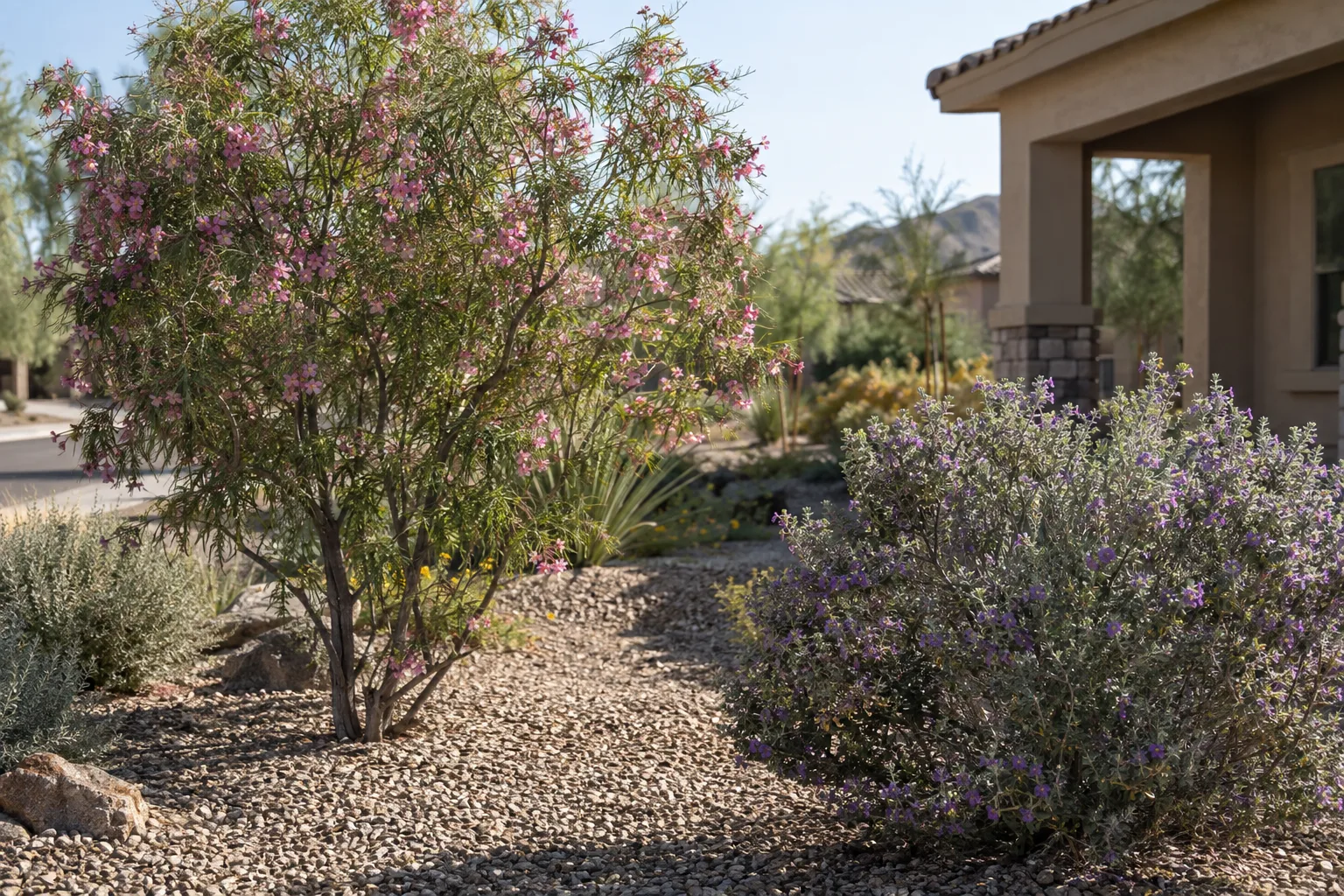
Choose open, upright or low plants that do not trap dead material and that handle the low desert on modest water. Examples include desert willow, palo verde, brittlebush, Texas sage and agave. Space them with gaps, and prune dead growth out each year.
Many of these are varieties we commonly carry, though availability changes week to week and season to season. Our plant selection and desert trees pages show what fits our climate.
Fire behavior depends on the whole yard. A palo verde with a dense pile of dead leaves underneath it still burns. Agave bloom stalks dry out after flowering, so cut them down once the plant finishes.
When is the best time to remove and replant?
Fall through early spring suits most removal and replanting in the low desert, because cooler weather lets new roots establish before summer heat. Remove dry or dead material before the hottest, driest weeks arrive, and plant frost-tender replacements after the last frost risk passes.
Check our gardening calendars for planting windows by month. Water new plants deeply and regularly through their first summer.
Dispose of removed grass and brush promptly instead of stacking it near the house. A pile of cut pampas plumes by the garage is as hazardous as the standing plant.
Do I need to check HOA or city rules before removing plants?
Yes, check first. Some HOAs require approval before you remove or replace plants, and some cities have their own vegetation or fire-safety requirements. Rules differ by community, so call your HOA or city office before you start.
Describe what you plan to remove and what you plan to put in. Your local fire department can also tell you whether it offers home assessments or published guidance for your area.
We cannot tell you what a neighbor may or may not plant. If a tree on someone else’s property worries you, start with a friendly conversation, then contact your city if needed.
Frequently asked questions
Can I keep rosemary in my herb garden?
Yes, a few rosemary plants in pots or a kitchen bed are a modest fuel load. Keep them away from the wall, clip out dead stems each spring, and avoid a long dense hedge beside the house. Place the pots on gravel or pavers rather than wood decking so a spark has less to catch.
Is wood mulch near the foundation a problem?
Wood mulch next to the house can ignite from embers, so use gravel, decomposed granite or pavers in the first 3 to 5 feet. Wood mulch farther out in planting beds is a lower concern. Keep it thin and pull it back from trunks, fences and wood siding.
If a plant is green and irrigated, is it still a risk?
A green, well-watered plant is a lower risk than a dry one, but oily or resinous plants can still burn. Italian cypress and juniper are examples. Irrigation helps most when it goes with trimming, dead wood removal and enough spacing between plants.
Are cactus and agave fireproof?
No plant is fireproof. Cactus and agave hold a lot of water, so they usually burn less readily than dry shrubs and grasses. Dead pads, spent bloom stalks and leaf litter around them can still burn, so clean those out and keep dry debris from piling up against them.
Who can assess my yard for fire risk?
Start with your local fire department or city office, since many publish guidance for homeowners and some offer property assessments. Ask what they recommend for your neighborhood. A certified arborist can also judge large trees, such as eucalyptus and tall palms, that you should not climb or trim yourself.
Should every plant on this list come out of your yard?
No. Fountain grass and overgrown hedges against the house should go first, along with untrimmed palms and any Italian cypress or eucalyptus within reach of the roof. A small rosemary or a well-kept juniper 25 feet from the house is a modest concern. Renters and anyone on a tight budget can start with the 5-foot zone alone. Visit us in Queen Creek and we will help you pick replacements.