Citrus, roses, bougainvillea, queen palms, lantana, Bermuda grass, tomatoes and yellow bells all benefit from fertilizing in April in the Arizona low desert. Feed them before 100°F days arrive, and water the soil before and after you apply.
Key takeaways
- Fertilize most warm-season plants between early and late April, while highs are in the 80s and 90s and before 100°F days settle in.
- Water deeply the day before you apply granular fertilizer, then water again right after.
- Bougainvillea and fruiting tomatoes want less nitrogen, while Bermuda grass wants plenty.
- Skip agave, cactus and anything planted in the last two to three months.
- Spread fertilizer under the outer canopy, never against the trunk, and follow the label rate.
Why is April the right month to fertilize in the Arizona low desert?
April is right because warm soil and mild air let roots take up nutrients before summer stalls growth. Soil in the root zone commonly sits around 65 to 70°F, and nights stay above roughly 55°F.
Once summer highs pass 110°F, most plants slow down and cannot use what you give them. Fertilizer left in the soil then concentrates as water evaporates, which can burn roots. That leaves a window of about four to six weeks. A second, lighter round in late September or early October catches the fall growing season, when temperatures drop back into the 90s.
What does alkaline soil change about fertilizing?
Alkaline soil locks up iron, zinc and manganese, so a plant can yellow even when you feed it well. Soil across Queen Creek and the East Valley commonly reads between pH 7.5 and 8.5.
Yellow leaves with green veins point to iron chlorosis. A chelated iron product (EDDHA forms hold up best in alkaline soil) fixes what a standard fertilizer cannot. Caliche, the hard calcium layer under many yards, slows drainage and lets salts build up. Hard irrigation water adds more salt. Deep, infrequent watering flushes salts below the roots. You can browse our plant departments to see what suits your yard before you buy fertilizer for it.
Which 8 plants benefit from April fertilizing?
The eight below respond well to a spring feeding. These are varieties we commonly carry, though availability changes week to week and season to season, so ask us what is on hand.
1. Citrus (Citrus species)
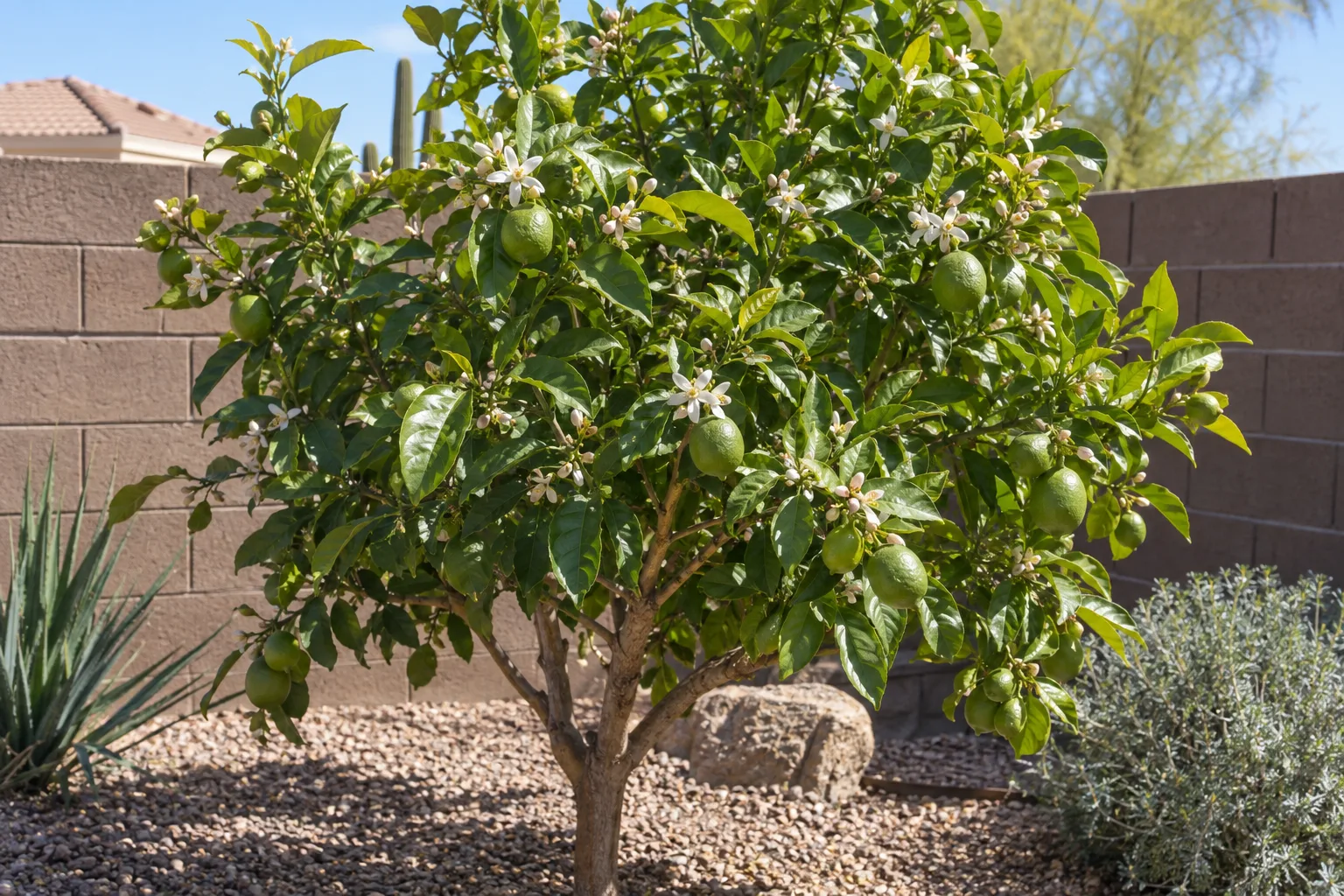
Citrus reaches 8 to 25 feet depending on the variety and rootstock, wants full sun, and needs deep watering every one to two weeks in spring. Feed with a citrus fertilizer that includes nitrogen plus iron, zinc and manganese, spread under the drip line and watered in. Most citrus gets two or three feedings across the year, with one in spring. The drawback is frost: cold pockets in San Tan Valley and Queen Creek can damage young trees in winter. Browse our citrus trees to compare varieties.
2. Roses (Rosa species)
Roses grow 3 to 6 feet tall and do best with morning sun and some afternoon shade in the low desert. They are heavy feeders. A balanced rose fertilizer every four to six weeks through May keeps flushes coming. Water deeply the day before you feed, because dry soil raises the risk of burn. Hybrid teas demand the most, while shrub roses forgive a lighter hand. The drawback is thirst: roses need more water than almost anything else on this list, and iron chlorosis shows up often.
3. Bougainvillea (Bougainvillea spectabilis)
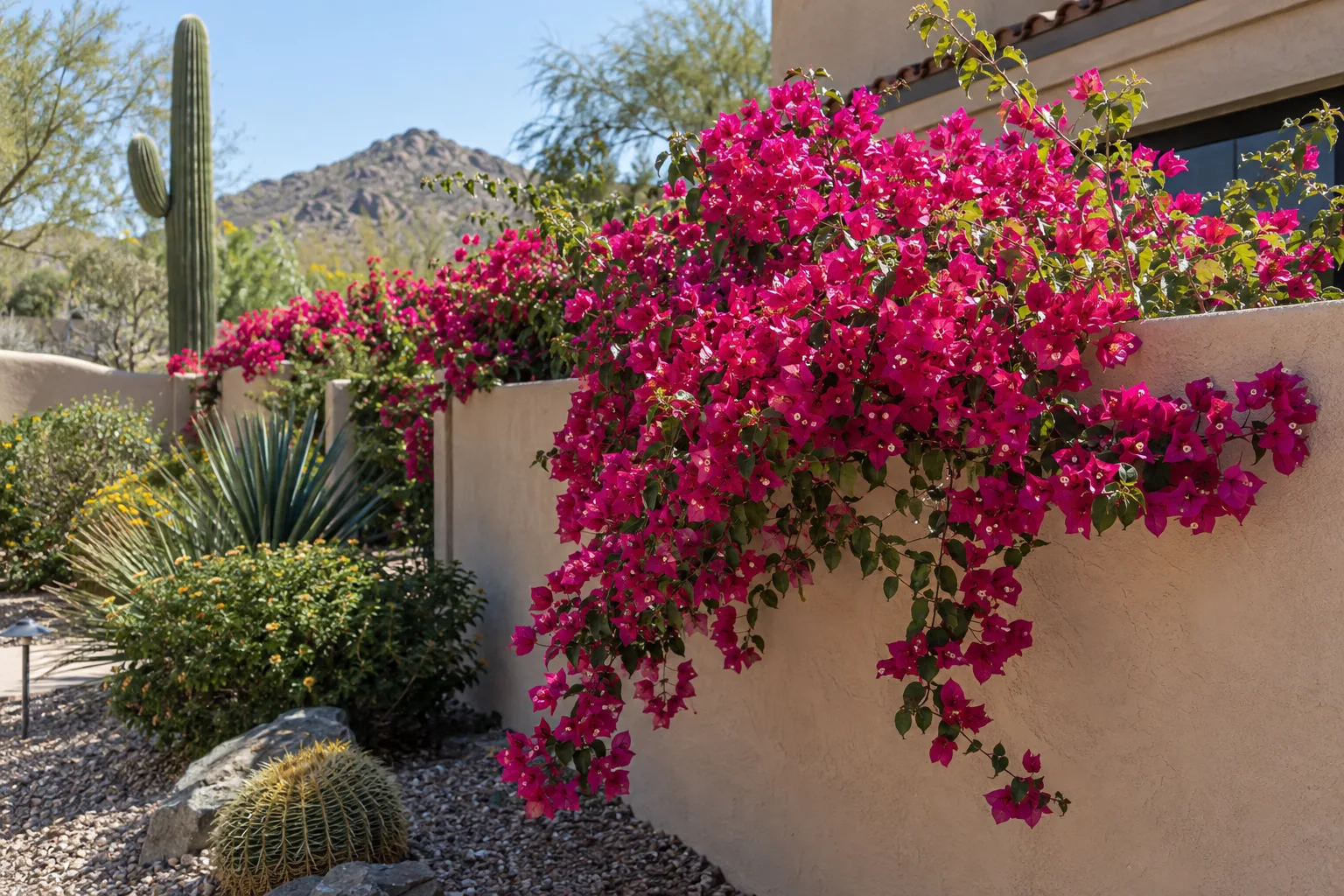
Bougainvillea sprawls 6 to 15 feet or more, wants full sun, and needs little water once established. Too much nitrogen pushes leaves at the expense of color. Choose a low-nitrogen, higher-phosphorus bloom formula and apply it about monthly from April through June. Stop feeding in the worst summer heat. Keep water moderate after feeding, since a slightly dry plant blooms harder. The drawback is cold: frost cuts it back, and the thorns make pruning a chore.
4. Queen palm (Syagrus romanzoffiana)
Queen palms reach 25 to 40 feet, want full sun and regular water. They commonly show potassium and manganese shortages in our soils, with older fronds going yellow, brown or frizzled. A slow-release palm fertilizer containing potassium, magnesium and manganese, spread evenly under the whole canopy and watered in, addresses that. Use slow-release rather than a single large dose. The drawback is that a deficient palm recovers slowly, because damaged fronds stay damaged until new ones replace them. See our palm trees for other options.
5. Lantana (Lantana camara)
Lantana grows 2 to 4 feet tall and 3 to 6 feet wide, loves full sun and needs little water once established. A light spring feeding with a balanced slow-release fertilizer at half the label rate boosts the first flush of bloom. More does not help. The drawback is that it sprawls, and frost can cut it back to the ground, though it usually regrows once nights warm.
6. Bermuda grass (Cynodon dactylon)
Bermuda grass is a full-sun lawn that wakes from winter dormancy as soil warms. Feed once it has greened up, using a nitrogen-rich lawn fertilizer at the label rate, then water immediately. Dethatch first if a mat of dead grass keeps granules off the soil. The drawback is its appetite for water and its habit of creeping into planting beds. It also turns tan in winter unless you overseed.
7. Tomato (Solanum lycopersicum)
Tomatoes grow 3 to 6 feet tall, need at least six hours of sun, and want steady moisture. By April, plants that are setting fruit want a fertilizer with less nitrogen and more phosphorus and potassium, applied every two to three weeks. Blossom end rot usually traces back to uneven watering rather than a lack of calcium. The drawback is heat: fruit set drops sharply once days pass the 90s and nights stay warm. The University of Arizona vegetable planting calendar for Maricopa County shows the timing. Our herbs, vegetables and berries page lists what we grow.
8. Yellow bells (Tecoma stans)
Yellow bells reach 6 to 10 feet, want full sun, and need little water after the first year. A light spring feeding with a balanced slow-release product at half rate supports a heavier summer bloom. Skip aggressive feeding, which makes the plant leggy. The drawback is frost dieback in cold winters, plus seed pods that make a mess under the shrub.
| Plant | What to feed | How often |
|---|---|---|
| Citrus | Citrus fertilizer with micronutrients | Two or three times a year |
| Roses | Balanced rose fertilizer, chelated iron if yellow | Every 4 to 6 weeks through May |
| Bougainvillea | Low-nitrogen bloom formula | Monthly, April to June |
| Queen palm | Slow-release palm fertilizer | Spring, with a second round in summer |
| Lantana | Balanced slow-release, half rate | Once in spring |
| Bermuda grass | Nitrogen-rich lawn fertilizer | Per label during the growing season |
| Tomato | Lower-nitrogen fruiting formula | Every 2 to 3 weeks |
| Yellow bells | Balanced slow-release, half rate | Once in spring |
Which plants should you leave unfed in April?
Leave agave, cactus and other succulents alone, along with anything planted in the last two to three months. Succulents evolved on lean soil, and extra nitrogen makes them soft and prone to rot.
New plantings are still building roots. Feeding pushes top growth faster than roots can support it, and that growth struggles in summer heat. Wait until a new plant shows steady growth, then start at half rate. Native desert trees such as palo verde usually need no fertilizer at all, though iron can help in high-pH soil.
How do you apply fertilizer without burning roots?
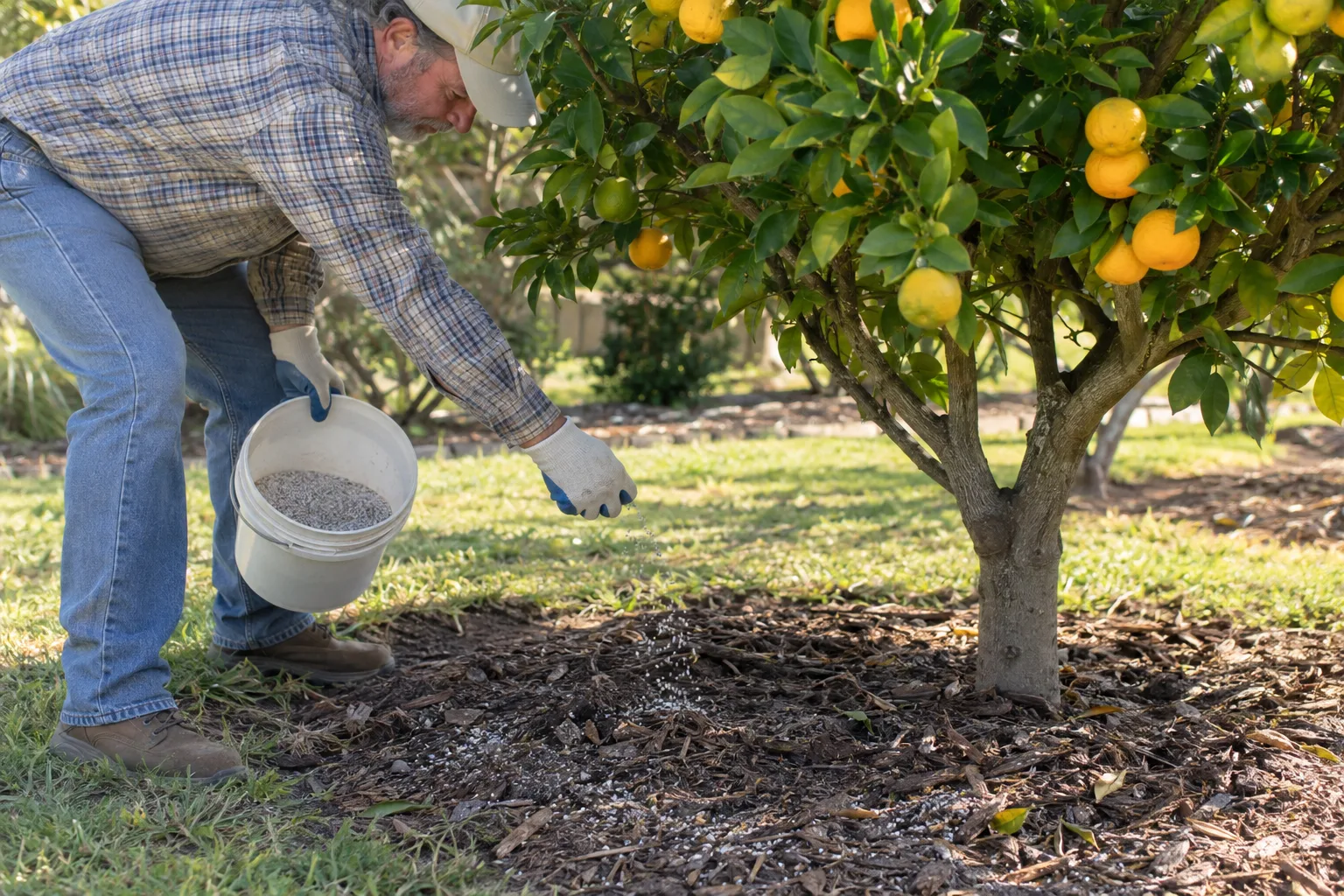
Water first, spread the product under the canopy, and water again. Dry soil plus granules is the usual cause of burn.
- Water deeply the day before you fertilize.
- Measure the product by the label rate for the plant, not by eye.
- Spread it evenly from a few inches off the trunk out to the drip line.
- Water thoroughly right after, so granules dissolve and move to the roots.
- Keep watering on schedule for the next week.
- Check new growth after two weeks. Pale new leaves point to iron, while scorched leaf tips point to too much fertilizer.
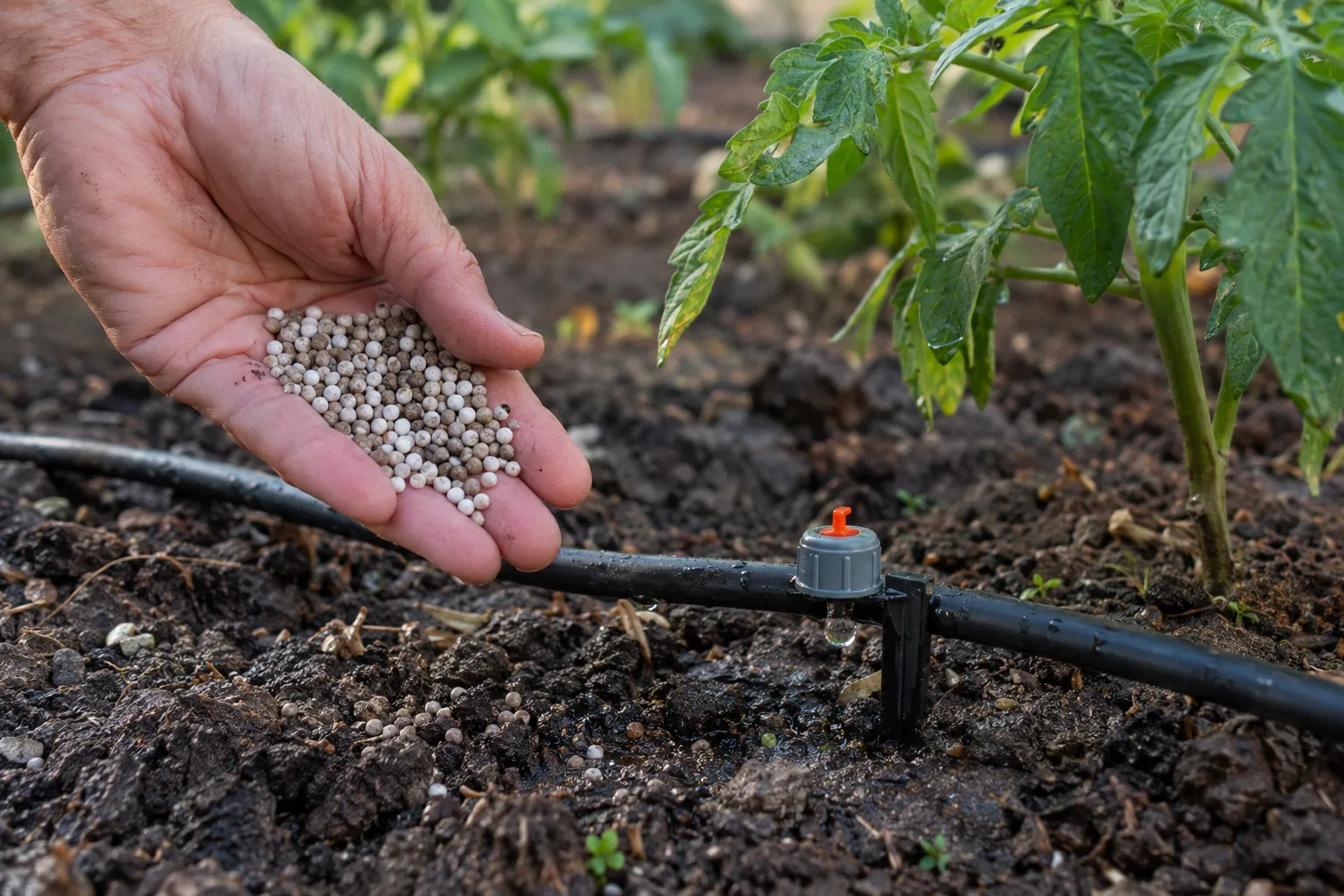
Avoid fertilizing right before a stretch of 100°F days, because salts concentrate as the soil dries. Our gardening calendars help you plan the fall round.
Frequently asked questions
Can I fertilize in May instead of April?
Early May still works for most plants if you use half the label rate. Once daytime highs stay above 100°F, fertilizer salts and heat stress together can hurt roots. If you miss April, feed lightly in early May with careful watering, then resume in September when the weather cools.
Should I fertilize newly planted trees and shrubs?
Wait until the plant shows healthy new growth, then use half the label rate. New roots are still spreading, and heavy feeding pushes leaves faster than roots can supply water. Deep, consistent watering matters more in the first months. Many desert-adapted plants need no fertilizer in their first year.
Is organic or synthetic fertilizer better here?
Neither is better for every plant. Synthetic products act fast and suit a lawn or a fruiting tomato. Organic options such as compost release slowly and carry less burn risk, and they improve our low-organic soil over time. Many gardeners combine slow-release granules with a compost top-dressing.
Why are my citrus leaves still yellow after I fertilize?
Iron chlorosis is the likely cause, because alkaline soil locks iron away even when you feed. Look for yellow leaves with green veins on new growth. A chelated iron soil drench (EDDHA works best in high-pH soil) usually helps. Sulfur lowers soil pH slowly over time.
Is April fertilizing worth it for your yard?
Yes, if you grow citrus, roses, bougainvillea, a Bermuda lawn, palms or tomatoes, because a single well-timed feeding sets up the whole warm season. It matters less for lantana and yellow bells, which do fine on a light dose. If your yard is mostly cactus, agave and native trees, you can skip it. Bring a photo of your plant or a handful of leaves, and stop by our nursery in Queen Creek to talk it through.