April is the best month to fertilize shrubs in Arizona, after the soil warms and before highs reach 100°F. This guide covers eight shrubs worth feeding, how much to use, and which ones need very little.
Key takeaways
- Feed established shrubs in early to mid April, when the soil is warm and daytime highs have not yet reached 100°F.
- Water the day before, spread fertilizer at the drip line (not against the stem), and water deeply afterward to wet the soil 10 to 12 inches down.
- Bougainvillea, lantana, hibiscus and roses are heavier feeders, while Texas sage, red bird of paradise and yellow bells need a light, single application.
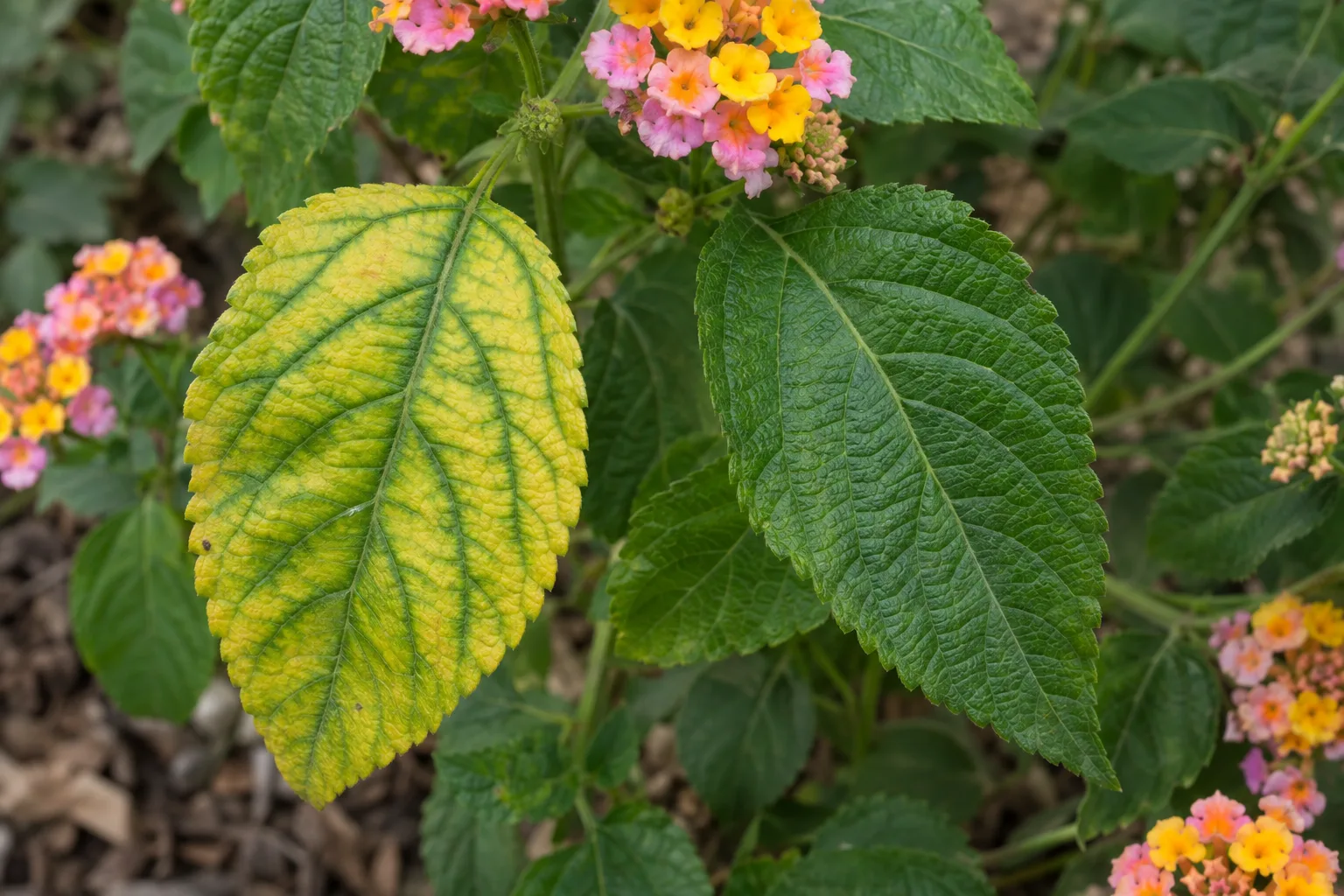
- Yellow leaves with green veins usually point to iron locked up by alkaline soil, and extra nitrogen will not fix it.
- Skip fertilizer from late May through August, then give heavy feeders a light second feeding in late August to September if they need it.
When is the best time to fertilize shrubs in the Arizona low desert?
Early to mid April is the best window for established shrubs in Queen Creek and across the East Valley. Soil has warmed, roots are active, and plants are already pushing spring growth, so they can use what you give them. Fertilize in February and much of it can wash below the roots before the plant wakes up.
Wait until late May and you are feeding into highs close to 100°F, when fresh nitrogen can scorch the leaf tips of shrubs that are already working hard to stay cool. Timing matters here.
From late May through August, hold off. Heavy feeders such as bougainvillea, roses and hibiscus can take a light second feeding in late August to September once nights cool down. Our gardening calendars list the other seasonal tasks by month.
Does alkaline soil change which fertilizer I should use?
Yes. Most yards in Queen Creek have alkaline soil, often with caliche (a hard layer of calcium carbonate) a foot or less below the surface, and that chemistry locks up iron, zinc and manganese even when plenty is present in the ground.
The usual sign is chlorosis, where new leaves turn yellow while the veins stay green. More nitrogen does not correct it. A chelated iron product made for alkaline soil helps, though soil changes slowly and you may need several seasons of steady care.
Hard irrigation water adds salts and carbonates over time, so deep watering that flushes the root zone matters as much as the fertilizer you choose. A basic soil test tells you your pH before you buy anything.
Which eight shrubs benefit from an April feeding?
Bougainvillea, lantana, hibiscus, roses and gardenia respond to a full feeding, while Texas sage, red bird of paradise and yellow bells need only a light one. These are varieties we commonly carry in our plants department, though availability changes week to week and season to season.
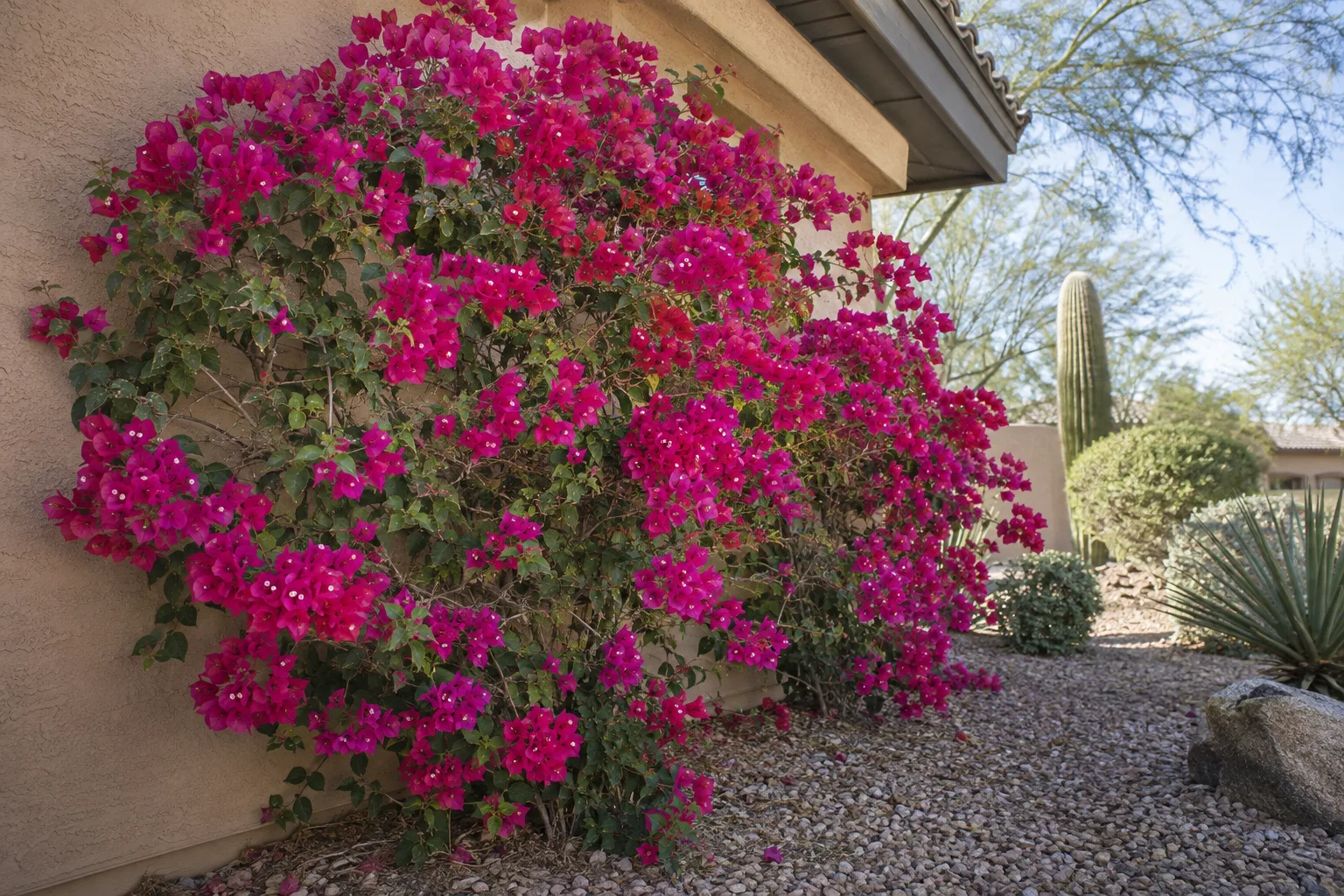
1. Bougainvillea (Bougainvillea hybrids)
Most varieties reach 6 to 12 feet as a shrub, and more if you let them climb. They want full sun and deep, infrequent watering once established. The drawback is frost damage when winter lows dip near freezing, plus sharp thorns. Feed with a balanced slow-release product or a bloom formula, because too much nitrogen gives you leaves and very few colorful bracts.
2. Lantana (Lantana camara and Lantana montevidensis)
Expect 2 to 4 feet tall and 3 to 6 feet wide in full sun with moderate water. The drawback is that it freezes back in cold winters and turns woody and sprawling without a spring cutback. One April feeding with a balanced slow-release fertilizer is usually enough for the whole season.
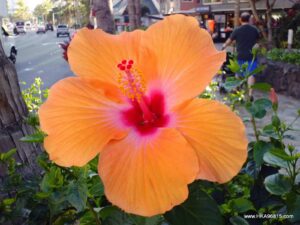
3. Hibiscus (Hibiscus rosa-sinensis)
This tropical shrub grows 4 to 8 feet tall and does best with morning sun and afternoon shade. It needs regular water, more than most desert shrubs. The drawback is frost tenderness and leaf scorch in hot western exposures. Hibiscus is a heavy feeder, so use a slow-release fertilizer made for flowering shrubs and follow the label rate.
4. Rose (Rosa hybrids)
Plan on 3 to 5 feet tall with at least 6 hours of morning sun and regular, deep watering. Roses demand the most attention of any shrub on this list, and bloom slows when highs climb above 100°F. If you started feeding after pruning in late winter, April is your follow-up feeding. Check the label for the spacing between applications.
5. Gardenia (Gardenia jasminoides)
Gardenias reach 3 to 5 feet and prefer morning sun, afternoon shade and even moisture. Their drawback is a real one: they dislike alkaline soil and often show chlorosis in Queen Creek ground. They do better in containers with an acidic potting mix. Use an acid-forming fertilizer labeled for gardenias, azaleas and camellias.
6. Texas sage (Leucophyllum frutescens)
This silvery shrub grows 5 to 8 feet tall and 4 to 6 feet wide in full sun with low water. The drawback is its dislike of wet feet and rich feeding, both of which cause rot or leggy, floppy growth. Many established plants need no fertilizer at all. If yours looks pale, give one light application of a low-nitrogen product in April.
7. Red bird of paradise (Caesalpinia pulcherrima)
Plan on 6 to 10 feet tall in full sun with low to moderate water. The drawback is that it freezes to the ground in cold winters and leafs out late in spring, which can make you think it has died. Wait for new growth, then add one light application of a balanced granular fertilizer. Too much nitrogen gives you foliage instead of flowers.

8. Yellow bells (Tecoma stans)
Yellow bells grows 6 to 10 feet tall, sometimes taller, in full sun with low to moderate water. The drawback is frost dieback and a habit of dropping seed pods that sprout around the yard. It blooms from spring into fall, and one April feeding with a balanced slow-release product is plenty. Heavy nitrogen makes it tall and floppy.
Which fertilizer type suits each shrub?
Match the product to the plant, because the heavy feeders and the light feeders need different things. Always follow the rate on the package label for your plant size.
| Shrub | How much it needs | Fertilizer type | Timing |
|---|---|---|---|
| Bougainvillea | Moderate to heavy | Balanced slow-release or bloom formula | April, light repeat in late August if needed |
| Lantana | Moderate | Balanced slow-release | April |
| Hibiscus | Heavy | Slow-release for flowering shrubs | April, light repeat in late August |
| Rose | Heavy | Rose fertilizer | April, following any late-winter feeding |
| Gardenia | Heavy | Acid-forming | April, light repeat in late August |
| Texas sage | Very light or none | Low-nitrogen | April only, if needed |
| Red bird of paradise | Light | Balanced granular, light rate | April, once new growth appears |
| Yellow bells | Light | Balanced slow-release | April only |
How do I apply fertilizer to shrubs without burning the roots?
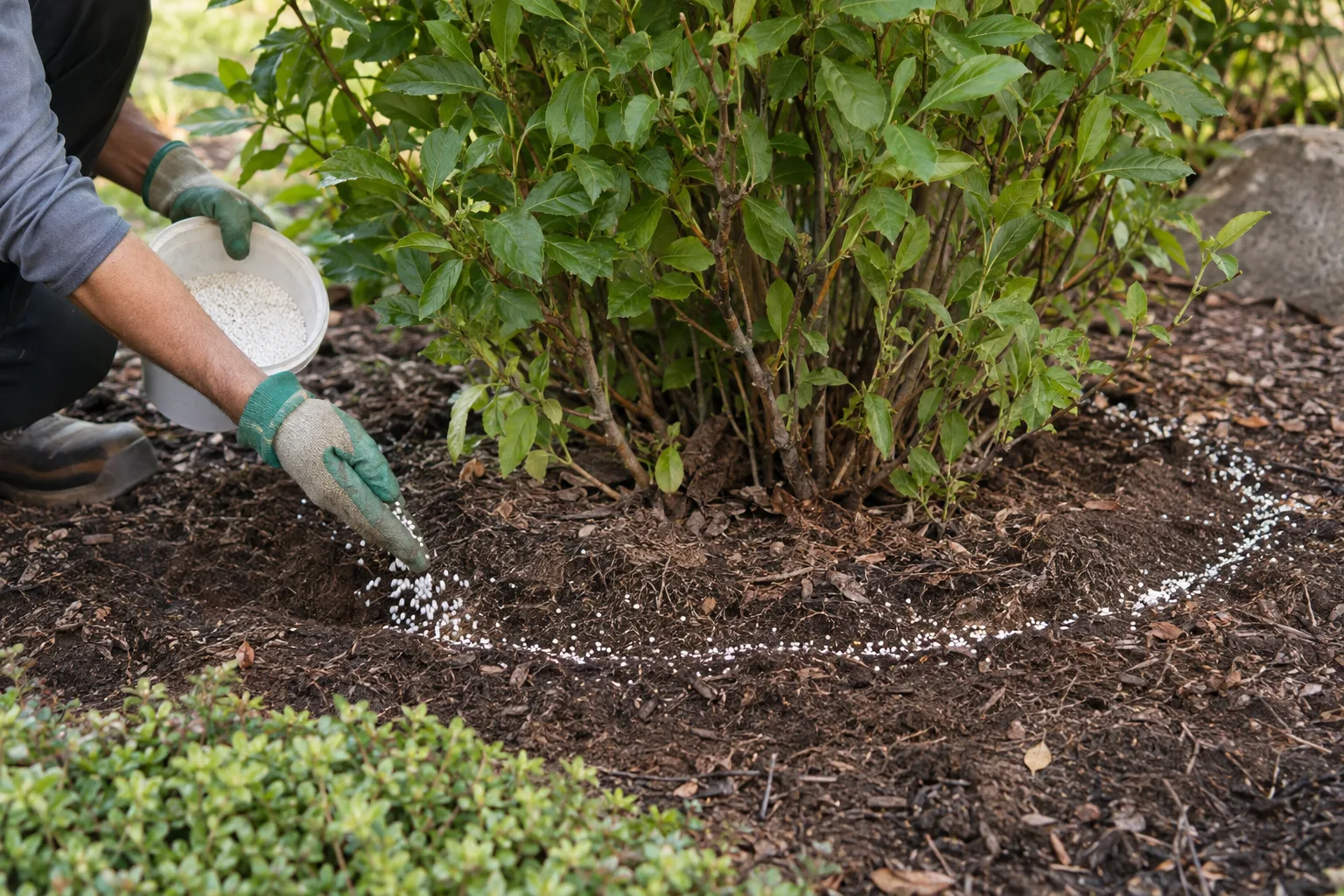
Water the shrub first, spread the label rate at the drip line, and water deeply again afterward. That order protects roots from salts in the fertilizer and moves nutrients where the feeder roots are.
- Pick a mild stretch. Aim for highs in the 80s or low 90s, and wait if a heat spike is in the forecast.
- Water the day before. Dry soil lets granules sit against roots and burn them.
- Measure the rate. Read the label and use the amount listed for your shrub’s size or pot size. More is not better.
- Spread at the drip line. The drip line is the outer edge of the canopy, where most feeder roots grow. Keep granules several inches away from the stem.
- Scratch it in. Work granules into the top 1 to 2 inches of soil so wind and irrigation do not move them around.
- Water deeply. Run drip irrigation long enough to wet the soil 10 to 12 inches down, which also activates slow-release coatings.
- Check in 2 to 3 weeks. Look for new leaves and better color. Brown tips usually mean too much fertilizer, so water deeply to flush the root zone.
If you are unsure about a yellowing shrub, contact us with a description or photo. You can also check our classes and events page for current workshops.
What fertilizer mistakes hurt shrubs in Arizona?
Most damage comes from feeding at the wrong time, using the wrong product, or skipping the water. These are the mistakes to avoid.
- Fertilizing in summer heat, when soil is hot and roots are stressed, can scorch leaves and roots.
- Giving Texas sage, red bird of paradise or yellow bells the same heavy feeding as a rose produces weak, floppy growth and fewer flowers.
- Treating chlorosis with nitrogen leaves the real problem, locked-up iron, unsolved.
- Applying granules to dry soil or piling them against the stem can burn tissue.
- Feeding a wilting or diseased shrub forces it to process nutrients it cannot use, so find the cause of the decline first.
Frequently asked questions
Can I fertilize a shrub I just planted?
Wait 6 to 8 weeks first. Newly planted shrubs are building roots, and a full-strength feeding pushes top growth the small root system cannot support. Once you see steady new leaves, use a light feeding at the label’s rate for small plants. Water new plantings often through April, since the soil dries quickly as highs climb into the 90s.
Is it too late to fertilize in May?
Early May is workable if highs are still below about 95°F. Use a slow-release product, because quick-release forms push a burst of nitrogen into warm soil. After mid-May, wait for late August or September instead. One missed spring feeding will not harm a healthy shrub, though flowering may be lighter through summer.
Is organic or synthetic fertilizer better for desert shrubs?
Both work in April when applied correctly. Compost and other organic products release slowly and add organic matter to low-organic desert soil, and they are harder to overapply. Synthetic slow-release granules give predictable nutrient ratios, which suits heavy feeders such as roses and bougainvillea. Many gardeners combine a compost topdressing with a measured granular feeding.
How soon will I see results after fertilizing?
Expect new growth and deeper leaf color in about 2 to 4 weeks. Slow-release granules start working once watered in, then keep feeding for several weeks to a few months depending on the product label. If leaves yellow or brown at the tips after feeding, you likely applied too much, so water deeply to flush the root zone.
Do shrubs in pots need a different approach?
Yes, container shrubs need lighter, more careful feeding. Pots drain fast and hold few nutrients, and each watering flushes some fertilizer out. Use a slow-release product at the label’s container rate and water until it drains from the bottom. Dark pots in afternoon sun heat the root zone quickly, so skip feeding during heat waves.
Is an April feeding worth it for your shrubs?
Yes for flowering shrubs such as bougainvillea, roses, hibiscus and lantana, because one measured feeding in April supports spring growth and summer bloom. Skip it for established Texas sage that already grows well, and do not bother feeding any shrub that is stressed, wilting or newly planted. Fix watering and drainage first. Gardenia suits few Queen Creek yards unless it lives in a container. Stop by our nursery in Queen Creek and we will help you match a fertilizer to your shrubs.