
February is the best month to start spring gardening in Arizona because warming soil and mild days let seeds and transplants root before the heat arrives. In Queen Creek, sow the last cool-season seeds early in the month and set tomato transplants once frost risk fades.
Key takeaways
- Sow lettuce, spinach, radishes and beets from seed in early February, before days stay warm enough to make them bolt.
- Set tomato and pepper transplants from mid-February to early March, with frost cloth ready for any night forecast below 35°F.
- Water new transplants every 2 to 3 days at first, checking the soil 2 inches down before you irrigate.
- Spread 2 to 3 inches of mulch right after planting to hold moisture and slow weeds.
- Wait on basil until nights stay above 50°F, usually late February to March.
Why is February the best month to start spring gardening in Arizona?
February gives plants mild air and soil temperatures for root growth, with several cool weeks ahead before the low desert heat builds. Daytime highs in the East Valley usually sit in the 60s to low 70s°F, and nights can still fall into the 30s and 40s.
Roots grow best in that range. A tomato set out in February has about two to three months to establish and flower before late spring heat above 95°F starts to cut fruit set. A plant set out in April has far less time.
Days also lengthen through the month, which speeds leaf growth. Our herbs, vegetables and berries department is where most February projects begin, and the gardening calendars show how the month fits into the full year. Timing matters more here than in most places.
What can I plant from seed in February?
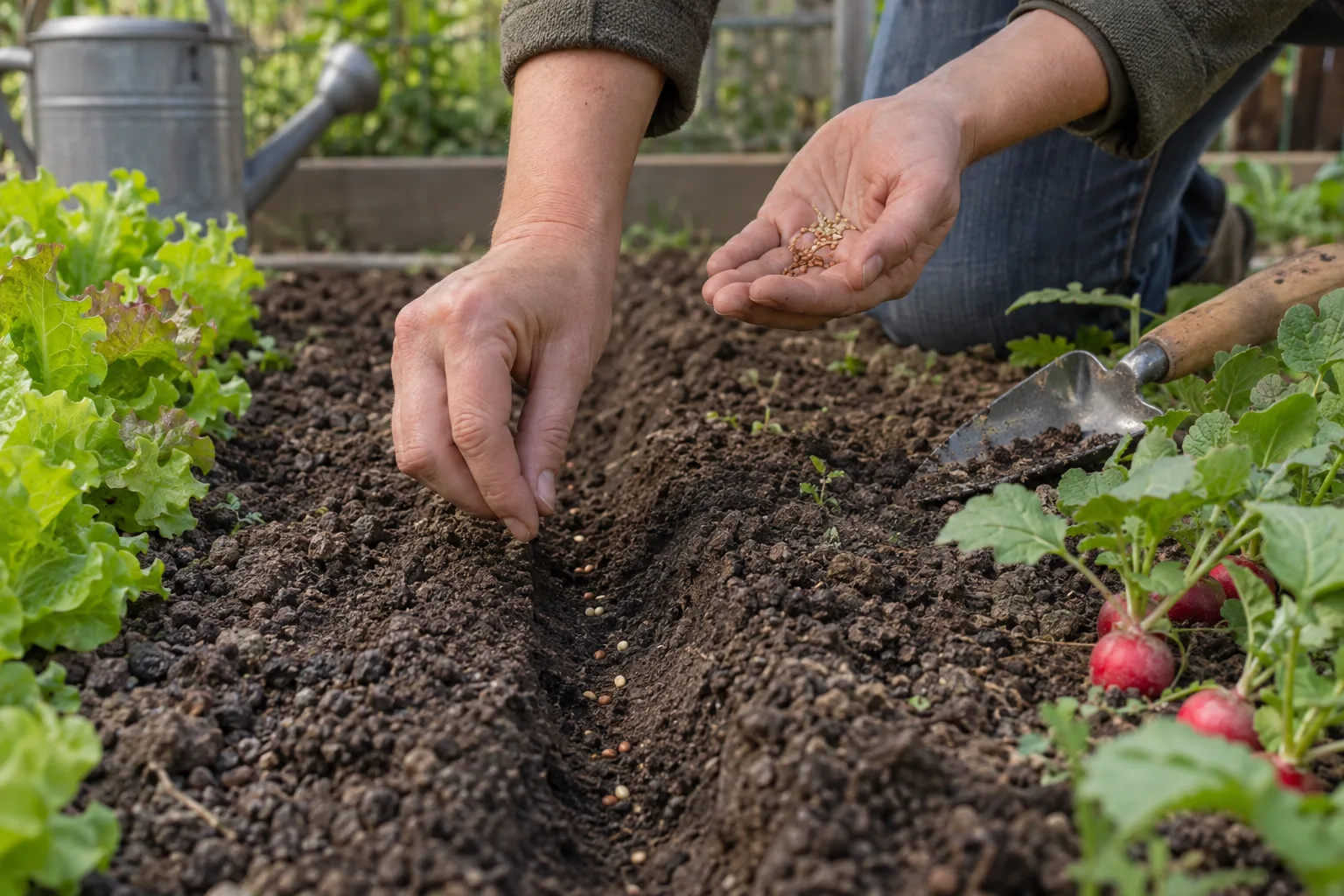
Early February is the last good window for cool-season seeds such as lettuce, spinach, arugula, radishes, beets and cilantro. From mid-February, you can also direct-sow warm-season crops like bush beans, cucumbers and summer squash as soil warms.
Cool-season crops need cool soil to germinate and cool days to stay sweet. Once highs stay in the mid 80s, lettuce and spinach flower and turn bitter. Plant them in a spot with afternoon shade to stretch the harvest into April.
The University of Arizona Cooperative Extension publishes a vegetable planting calendar for Maricopa County with sowing windows for each crop. Use it to double-check dates for your specific vegetables.
Seeds versus transplants
Seeds cost less and suit fast crops like radishes and beans. Transplants save about four to six weeks on slow crops like tomatoes and peppers, which matters when summer shortens the season. Start tomatoes and peppers from transplants, not seed, if you are planting in February.
When should I plant tomato and pepper transplants in Queen Creek?
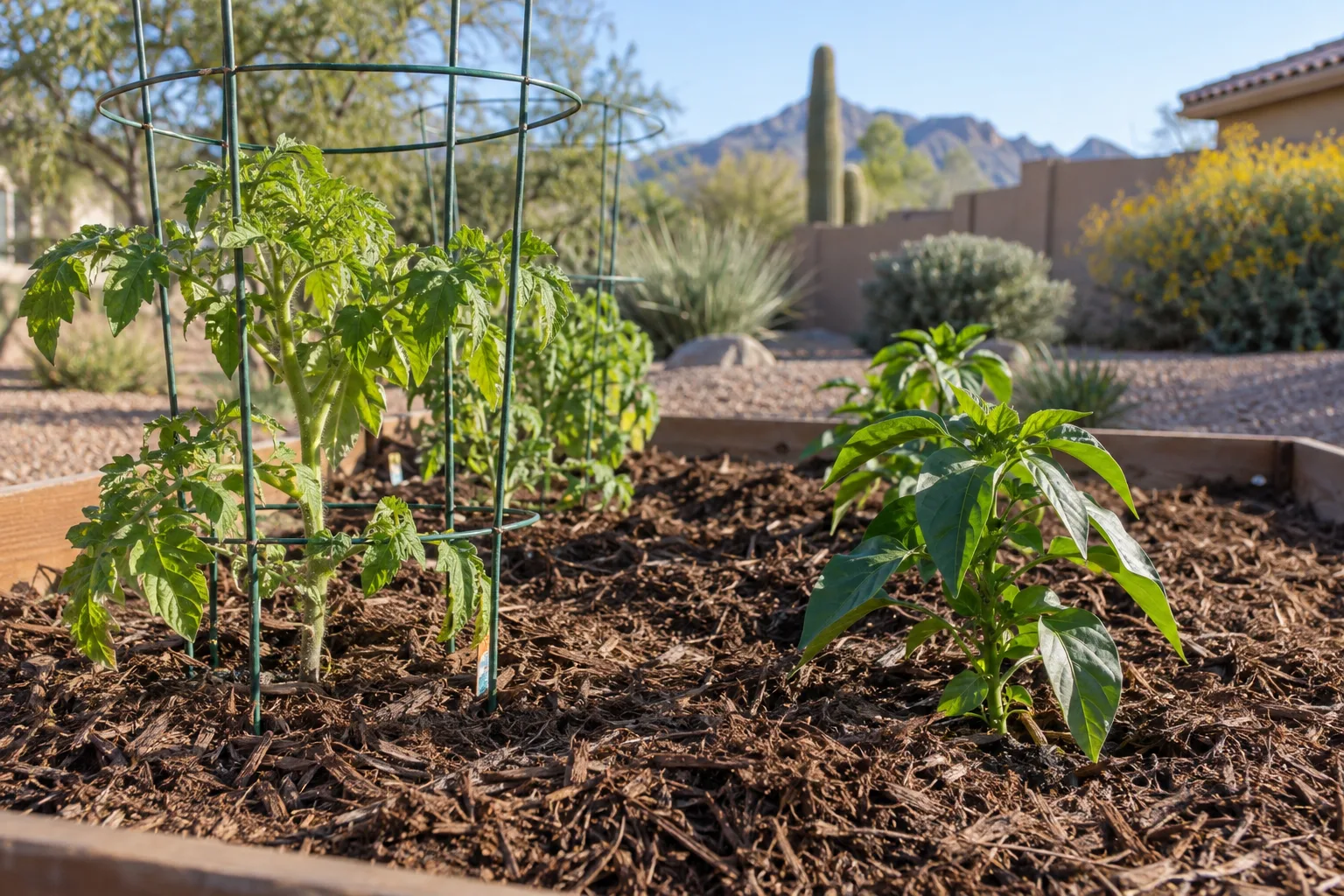
Plant tomato and pepper transplants from mid-February to early March, once you can protect them on any cold night. The East Valley often runs colder at night than central Phoenix, so the later end of that range is safer in open, low-lying yards.
Tomatoes stall below about 50°F and can be damaged by frost. Peppers are even more sensitive to cold. A cover on a 34°F night costs you five minutes, while a lost plant costs you the season.
Choose heat-tolerant tomato varieties and smaller-fruited types, which set fruit more reliably as spring warms. These are varieties we commonly carry, though availability changes week to week and season to season.
Bury tomato stems deeper than the pot line to encourage extra roots. Set peppers, cucumbers and squash at the same depth they grew in the container, since deep planting in cool soil invites rot.
| Crop | How to start | February window | First harvest (roughly) |
|---|---|---|---|
| Lettuce and spinach | Seed | Early February | March to April |
| Radishes | Seed | Early to mid-February | March |
| Tomatoes | Transplant | Mid-February to early March | Late April to early June |
| Peppers | Transplant | Late February to March | May onward |
| Cucumbers and squash | Seed or transplant | Mid to late February | May to June |
| Bush beans | Seed | Mid-February to March | May |
How should I prepare alkaline soil before planting?
Loosen the bed 10 to 12 inches deep and work in 2 to 3 inches of compost. Our native soil is alkaline, often with a pH above 7.5, and compost improves drainage, feeds soil life and helps plants reach iron and other nutrients.
Hard water adds to the effect, because the minerals in it raise soil pH a little more with every irrigation. Raised beds filled with a good planting mix avoid most of this, and they sidestep caliche, the hard white layer that blocks drainage in many East Valley yards.
Yellow leaves with green veins point to iron that plants cannot absorb. Chelated iron and regular compost help, but correcting pH takes several seasons. Test your soil before adding sulfur. Our classes and events page lists upcoming workshops that cover soil prep.

How much water do February plantings need?
New transplants usually need water every 2 to 3 days in February, and seedbeds need the top inch kept evenly damp until sprouts emerge. Cool weather slows evaporation, so overwatering is the bigger risk this month.
Check the soil 2 inches down with a finger before each watering. If it feels damp, wait. Soggy soil in cool weather leads to root rot, especially in heavy or compacted beds.
Drip irrigation on a timer delivers water slowly at the roots and is easy to adjust as days warm. Test and clean your emitters before planting, since it is much easier to fix lines in an empty bed. By late February, established plants may need water more often.
How do I protect new plants from a late frost?
Cover tender transplants with frost cloth before sunset on any night forecast to drop below 35°F, and take the cover off by mid-morning. Frost can still arrive through February and sometimes into early March in Queen Creek.
- Check the 7-day forecast each weekend.
- Use frost cloth or an old sheet, and avoid plastic touching the leaves.
- Water the evening before a cold night, since moist soil holds more heat than dry soil.
- Keep covers in place until temperatures climb in the morning.
Cold air settles in low spots and open areas, so a yard next to a block wall often stays a few degrees warmer. Plant the most tender crops, like peppers, in the warmest corner.
What should I leave alone in February?
Hold off on basil and other tender warm-season herbs until nights stay above 50°F, and wait on heavy feeding until new growth appears. Planting too early or fertilizing too hard sets plants back.
Skip high-nitrogen fertilizer at planting time, because it burns tender new roots. Use a mild starter feed, then increase after 10 to 14 days. Leave frost-tender plants unpruned until danger passes, since damaged tips protect the growth underneath.
Do not start melons or sweet potatoes this early either. They want warmer soil, usually March or later. Patience here saves plants.
Frequently asked questions
Can I plant fruit trees in February?
Yes, February works for many fruit trees in the low desert, especially deciduous types planted while still dormant. Citrus is more sensitive to frost, so protect young trees on cold nights. Browse our fruit trees and citrus trees pages for varieties we commonly carry, since availability changes.
Do I need to harden off transplants?
Yes, if your plants have been indoors or in a greenhouse. Set them outside in shade for 2 to 3 hours a day, then lengthen the time and add sun over 5 to 7 days. February sun is strong enough to scorch soft, unacclimated leaves.
What if I miss the early February window?
Plant warm-season transplants in early to mid-March instead. You will lose some cool-season crops, since lettuce and spinach bolt quickly as days warm, but tomatoes, peppers, squash and beans still have time to produce before summer. Choose smaller-fruited or heat-tolerant varieties and mulch heavily.
Should I use raised beds or plant in the ground?
Raised beds are easier where caliche sits shallow, because roots get 12 to 18 inches of loose soil above it. In-ground planting works when you can dig deep, break through caliche, and amend with compost. Either way, drainage matters more than the container.
How often should I fertilize spring vegetables?
Feed about every 2 to 3 weeks once plants show new growth, using a balanced or vegetable fertilizer at label rates. Our sandy, fast-draining beds lose nutrients quickly. Skip feeding right at planting, and ease off if leaves look dark green with few flowers.
Is February the right month for you to start planting?
For most Queen Creek gardeners, yes. A prepared bed, a drip line and a roll of frost cloth are all you need to begin. If your yard sits in a cold low spot, or the bed is not ready, wait until early March rather than rushing. Gardeners with under six hours of sun should choose cool-season crops and herbs instead of tomatoes. Stop by Desert Horizon Nursery in Queen Creek and talk through your spring plan with us.