
February gardening in Arizona is make-or-break because it is the last mild stretch before summer heat. Plants set out in February get roughly 10 weeks of cool soil to root before East Valley highs pass 90°F in late April.
Key takeaways
- Frost can still reach Queen Creek through late February, so keep frost cloth ready and cover tender plants when forecast lows fall to 34°F.
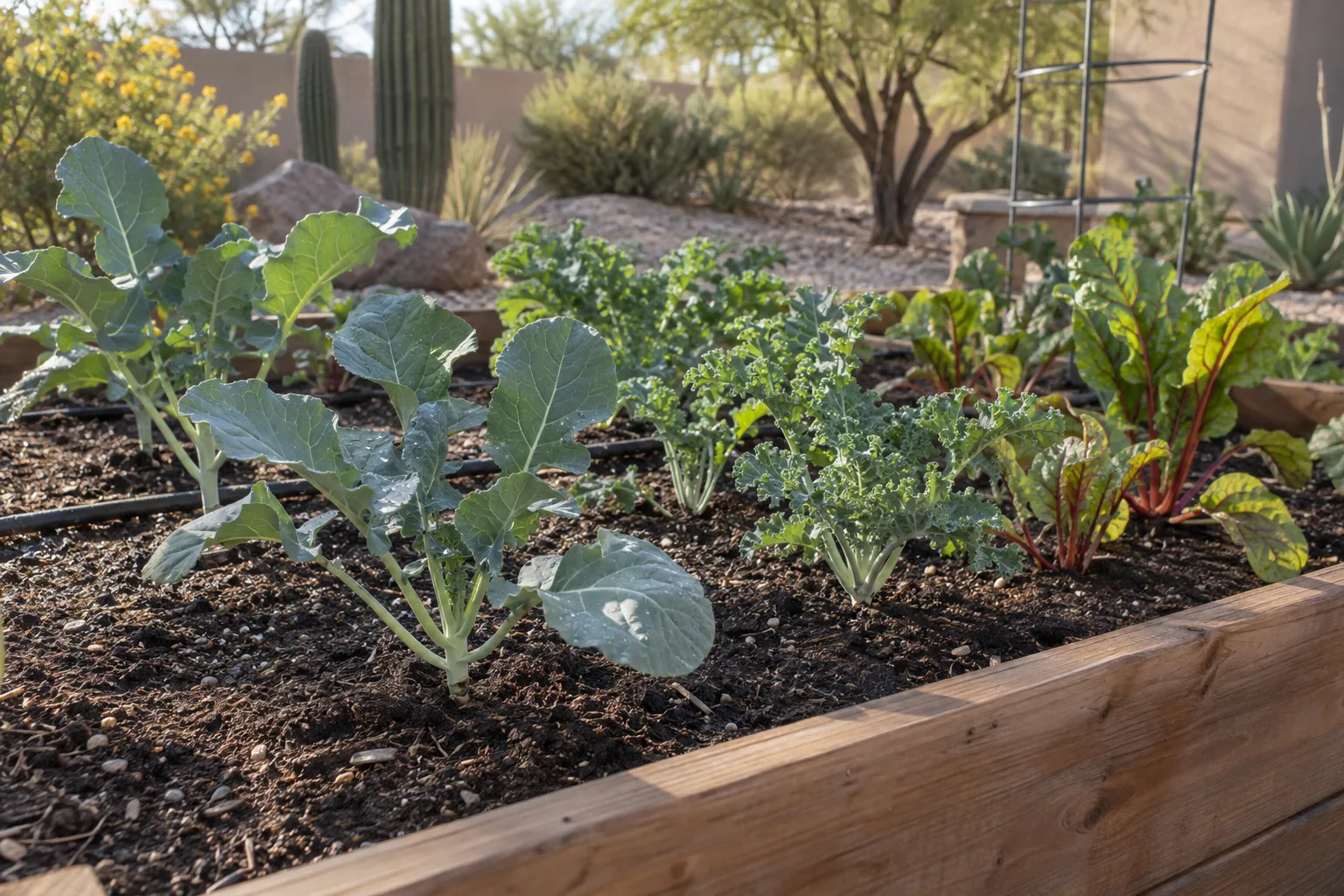
- Broccoli, cauliflower, kale, and chard transplants go in during the first half of February, giving them about 8 to 10 weeks before 90°F days.
- Citrus and other frost-tender trees wait until late February to April, after the last freeze risk has passed.
- Prune dormant deciduous trees now, but leave frost-damaged shrubs alone until new growth shows in March or April.
- Water new plantings deeply every 5 to 7 days in cool weather, and check every drip emitter before warm weather arrives.
When is the last frost in Queen Creek?
Most years the last frost in Queen Creek falls between late January and mid-February, but a freeze in the final week of February does happen. Cold air settles in low spots and open ground, so your yard can run several degrees below the forecast.
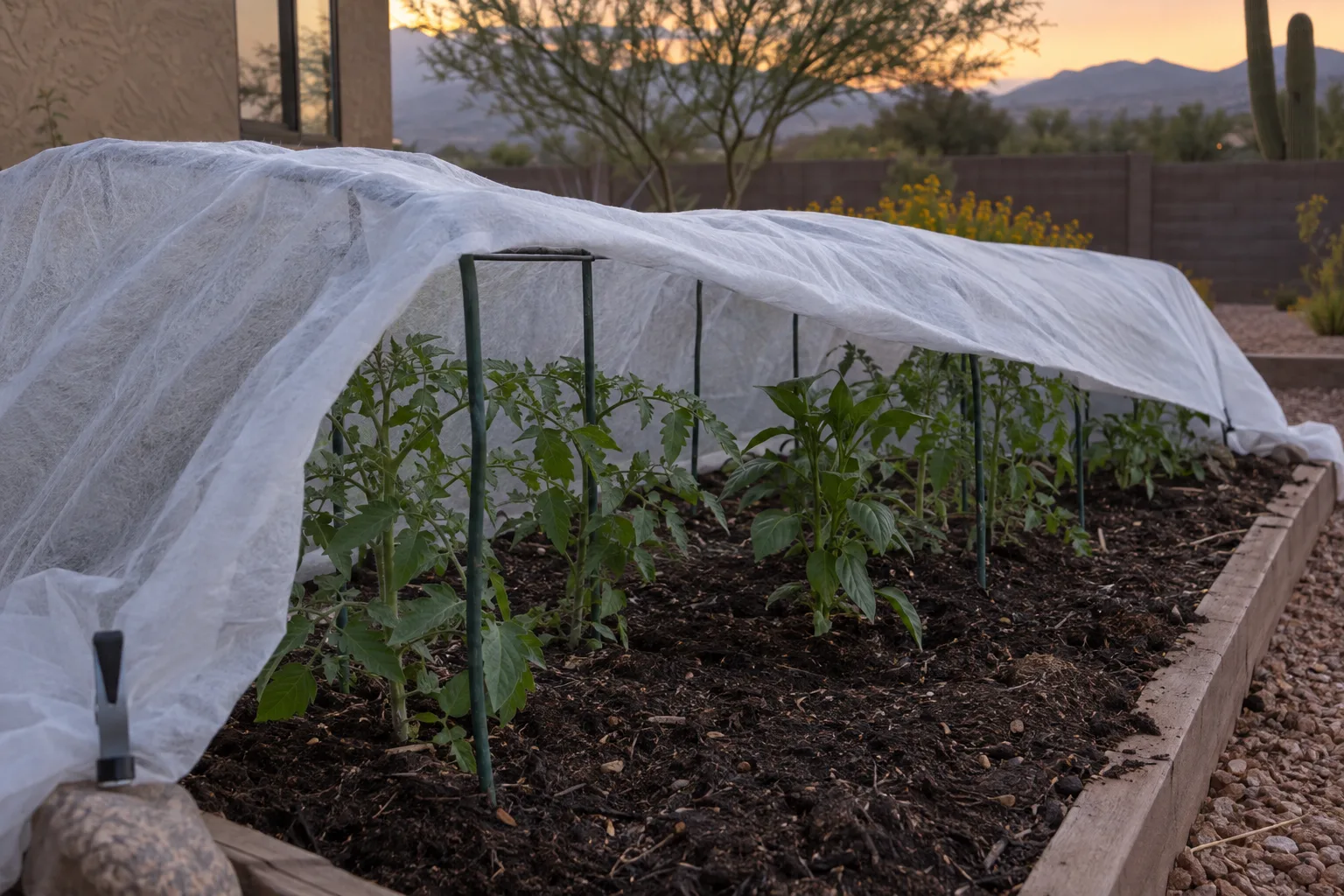
Watch the 10-day forecast through the end of the month. When lows are forecast near 34°F, cover tender plants at dusk with frost cloth or an old sheet that reaches the soil, and pull it off in the morning. Cardboard boxes protect small plants. Plastic can damage any leaf it touches.
Cool-season vegetables such as broccoli, kale, and chard tolerate light frost, so a cold forecast is no reason to hold off on them. Frost-tender plants like citrus, bougainvillea, and tomato wait. Our gardening calendars lay out the same timing month by month for the rest of the year.
What can I plant in the garden in February?
Early February is the last good window for cool-season vegetables, and late February is when warm-season crops begin. The UA Cooperative Extension vegetable planting calendar for Maricopa County lists planting windows crop by crop, and it is worth keeping open while you plan your beds.
Cool-season crops
Set out broccoli, cauliflower, cabbage, kale, and chard transplants in the first half of the month. Sow beets, carrots, radishes, spinach, and arugula from seed. Heading crops like broccoli need roughly 60 to 80 days from transplant, and Queen Creek reaches the 90s by late April, so earlier planting gives better heads. Check herbs, vegetables and berries for the types we commonly carry, keeping in mind that availability changes week to week and season to season.
Warm-season crops
Tomatoes and peppers go outside from late February into March, once the forecast shows lows well above freezing. You can start seedlings indoors or buy transplants. Squash and melon seeds wait until the soil warms toward 65°F, which usually happens in March. Planting too early in cold soil stalls growth, and the plants rarely catch up.
Flowers for color
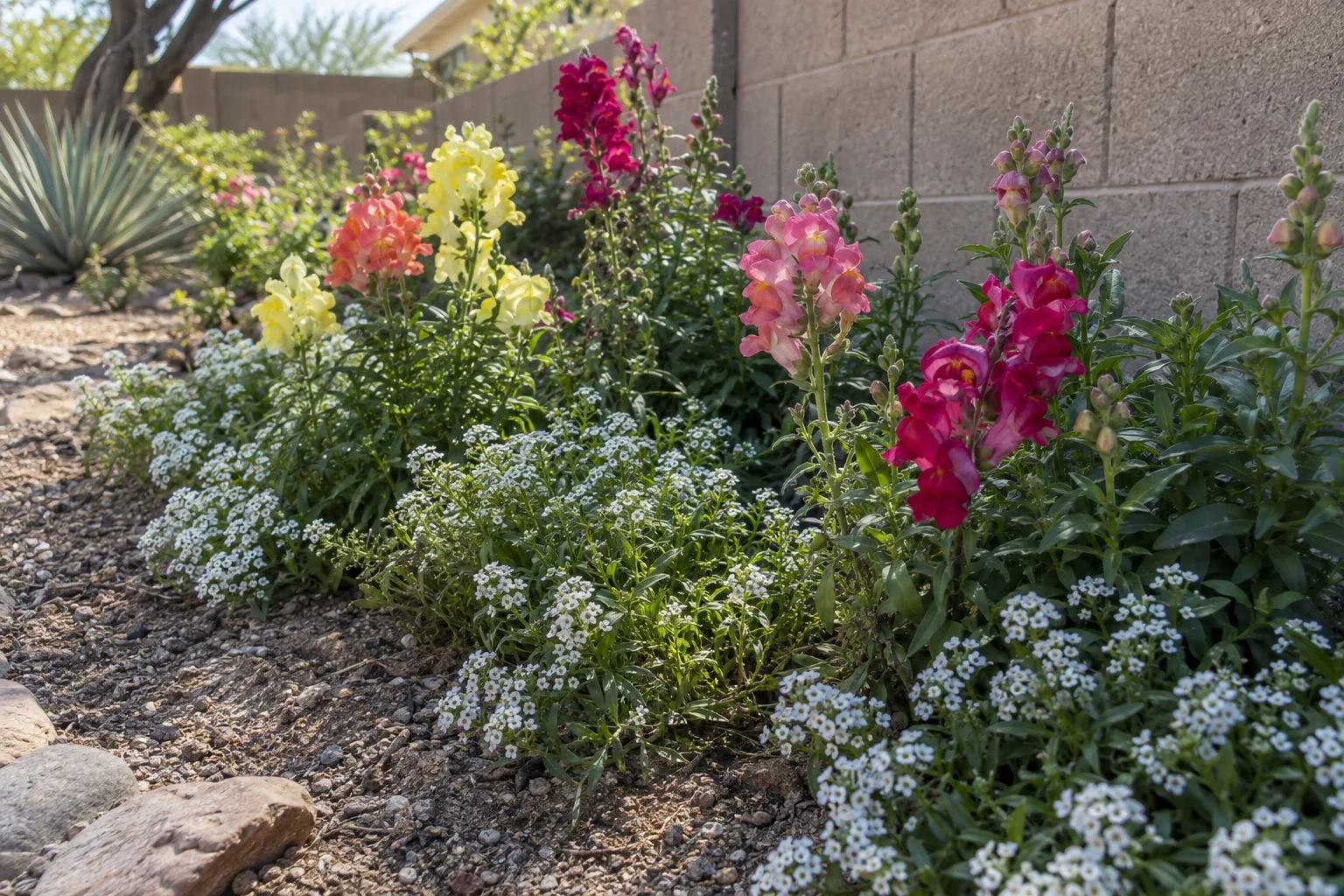
Snapdragons, alyssum, and stock handle cool nights and fill in quickly, and they bloom into April. Look through annual flowers and foliage for what is available. Warm-season annuals like zinnias and marigolds can be sown in March.
Which trees and shrubs can go in the ground in February?
Container-grown desert trees, shrubs, and deciduous fruit trees can go in this month, while frost-tender trees such as citrus wait for warmer nights. Cool soil lets roots grow for weeks before summer heat puts demand on the canopy.
Palo verde, mesquite, and desert willow from our desert trees give shade that handles summers above 110°F. Peach, fig, and pomegranate from fruit trees can go in now. Citrus from citrus trees is best planted after the last frost risk, from late February into April, and young trees need cover on cold nights during their first winters. These are types we commonly carry, and availability changes week to week and season to season.
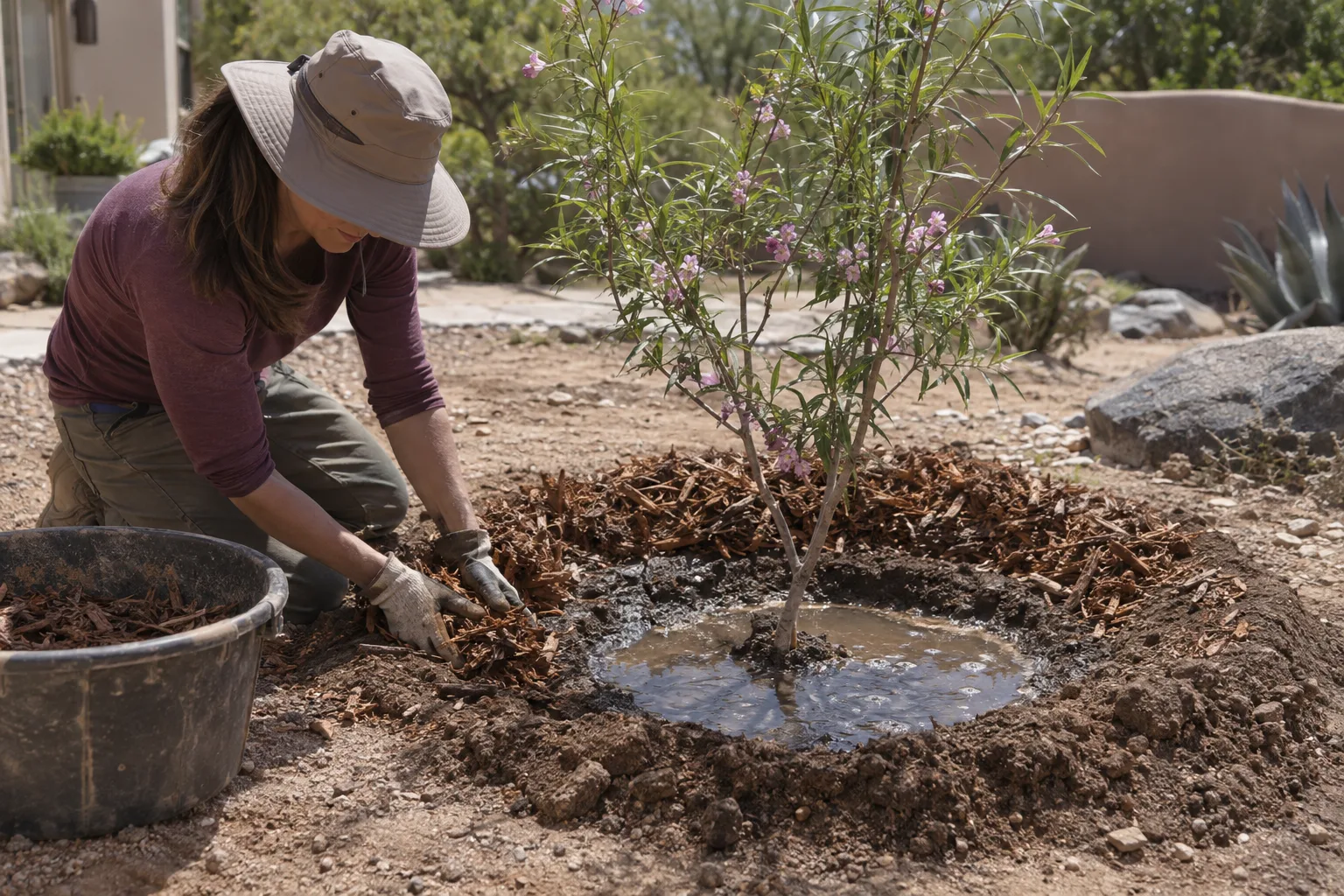
How do I plant a tree so it survives its first summer?
- Dig the hole two to three times as wide as the root ball and no deeper than the root ball is tall.
- Set the root flare at or slightly above the surrounding soil, because a buried flare invites rot.
- Backfill mostly with native soil, firm it gently, and water to settle out air pockets.
- Build a low berm of soil around the planting area to hold water over the roots.
- Spread 3 to 4 inches of mulch and keep it 4 to 6 inches away from the trunk.
How do I handle caliche and alkaline soil before planting?
Probe before you dig. Push a metal rod into the planting spot, and if it stops hard at 12 to 18 inches you have caliche, the cemented calcium carbonate layer common under East Valley yards. Break through it with a digging bar or drill so water can drain, because a hole sitting on solid caliche fills like a bowl and drowns roots.
Native soil here runs alkaline, often pH 7.5 to 8.5. Vegetable beds benefit from 2 to 4 inches of compost worked in before planting. Trees and shrubs do better with mostly native soil in the backfill and only a little compost mixed in, so roots grow outward into the surrounding ground instead of circling the hole.
Should I prune in February?
Prune dormant deciduous trees and fruit trees now, while the bare branches show their structure and cuts heal as growth starts. Leave frost-tender plants alone.
Brown, frost-damaged leaves on bougainvillea, lantana, and hibiscus shield the live stems below from the next cold night. Wait until new growth appears, usually in March or April, then scratch a stem with a fingernail and cut back to where you see green. Do not top palo verde or mesquite. Topping removes the natural shape and leaves weak regrowth that breaks in monsoon winds, so remove a branch back to its parent limb instead.
How should I change watering and feeding in February?
Water new plantings deeply every 5 to 7 days in cool weather, and lengthen or shorten the gap based on soil moisture. Established trees on winter schedules often need water only every 2 to 4 weeks, with shrubs somewhat more often. Raise the frequency gradually as highs climb into the 70s and wind dries the soil.
Run every drip zone and watch each emitter. Mineral deposits from hard water, sediment, and roots can clog emitters over winter, and one blocked emitter on a young tree goes unnoticed until the leaves wilt in May.
For feeding, citrus can take a citrus fertilizer in late winter, applied under the canopy edge and watered in at label rates. Vegetable beds need compost at planting and a light liquid feed every few weeks once crops are growing. Native desert plants generally need none.
What does February look like week by week?
The month splits into three working stretches, and each has its own priority.
| Timing | Plant | Do | Watch for |
|---|---|---|---|
| Early February | Broccoli, cauliflower, kale, and chard transplants; beet, carrot, and radish seed | Prune dormant deciduous trees and clean up beds | Freezes, so keep frost cloth ready |
| Mid-February | Snapdragons and alyssum; start tomato and pepper seedlings | Probe for caliche, add compost, test drip emitters | Cold nights and aphids on new growth (a hose spray knocks them off) |
| Late February | Tomato and pepper transplants if the forecast is mild; container trees | Feed citrus and raise watering frequency slowly | A late freeze and wind drying new plantings |
Frequently asked questions
Can I plant tomato transplants outside in February?
Only late in the month, and only with protection. Tomatoes are frost-tender and stall in cold soil, so most East Valley gardeners set transplants out from late February into March, once forecast lows stay well above freezing. Keep frost cloth on hand for the first few weeks after planting.
Should I cut back frost-damaged plants in February?
No, wait until new growth appears, usually in March or April. Brown leaves shield the live stems beneath from the next cold night. When growth resumes, scratch a stem with a fingernail and cut back to green tissue. Bougainvillea and lantana often resprout from the base, so give them until April.
Do native desert plants need fertilizer in February?
Established natives such as palo verde, brittlebush, and desert marigold generally need none. Nitrogen pushes soft, fast growth that is more vulnerable to heat and pests. Newly planted natives can take a light dose of low-nitrogen starter fertilizer at planting and nothing further after that.
How can I tell if my watering is deep enough?
Push a long screwdriver or soil probe into the ground a few hours after watering. It should slide in easily to about 12 inches for shrubs and 18 to 24 inches for trees. If it stops in dry soil sooner, lengthen the run time instead of watering more often, which also helps flush salts from hard water.
Is it too late to plant broccoli at the end of February?
Late February is a gamble, though workable with transplants. Broccoli and cauliflower need roughly 60 to 80 days to form heads, and East Valley highs reach the 90s by late April. Choose transplants over seed, pick earlier-maturing varieties, and expect smaller heads. Kale, chard, and lettuce handle the late start better.
Is February the right month to start your garden?
For most East Valley gardeners, yes. February rewards anyone who can plant cool-season vegetables early, set trees in the ground while the soil is cool, and keep frost cloth nearby. It suits you less if you travel through March and April, because new plantings need regular deep watering as highs climb. In that case, wait for October, the next cool planting window. If you are ready to start, come visit us at the nursery in Queen Creek.