

February fertilizing helps citrus, roses, stone fruit, cool-season vegetables and overseeded ryegrass lawns, all of which are growing or about to push new growth in the Arizona low desert. Desert natives and frost-tender plants should wait or skip feeding.
Key takeaways
- Citrus gets its first feeding of the year in February or early March, once hard frost is unlikely, with follow-up feedings around May and August.
- Roses and stone fruit trees are ready for a light feeding as soon as new growth appears after pruning, usually February to March.
- Cool-season vegetables and herbs respond to a liquid feeding every 2 to 3 weeks, and ryegrass lawns take a light nitrogen dose.
- Desert natives, dormant Bermuda lawns and newly planted trees should skip fertilizer in February, and palms, bougainvillea and lantana can wait for warmer nights.
- Alkaline soil with a pH around 7.5 to 8.5 ties up iron, so yellow new leaves with green veins call for a chelated iron product.

Which plants need fertilizer in February?
Anything in active growth or about to flush benefits: citrus, roses, stone fruit, cool-season crops and ryegrass. Nutrients applied at that point get used quickly. Citrus is the largest group in most East Valley yards, and you can browse the citrus trees we commonly carry, though availability changes week to week and season to season.
Timing depends on frost. Queen Creek nights can still drop to the 30s in February, and fertilizer pushes tender new growth that a late freeze will burn. Wait until the coldest nights have passed, often mid-February or later, and hold off for a week after any forecast freeze.
The table shows what to do for each plant type.
| Plant | February action | Next feeding | Note |
|---|---|---|---|
| Citrus | Feed with citrus fertilizer after frost danger eases | May, then August | Add chelated iron if new leaves are yellow |
| Roses | Feed when new growth shows after pruning | Per label through early fall | Use a complete rose food with micronutrients |
| Stone fruit | Light balanced feeding near bloom | Per label after harvest | Skip heavy nitrogen |
| Cool-season vegetables and herbs | Liquid feeding | Every 2 to 3 weeks while growing | Carrots and beets want less nitrogen |
| Overseeded ryegrass | Light nitrogen feeding | Usually the last before heat ends the ryegrass | Use the low end of the label rate |
| Dormant Bermuda | Wait | At spring green-up | Dormant grass cannot use fertilizer |
| Palms | Wait for warm nights | Spring, once growth resumes | Use a palm-specific product |
| Desert natives | None | None in most cases | Slow growth is normal |
How does Queen Creek soil change the way I fertilize?
Alkaline soil ties up iron, manganese and zinc, so a plant can sit in soil that contains them and still show deficiency. Most East Valley soil falls around pH 7.5 to 8.5, and the classic sign is yellow new leaves with green veins, called iron chlorosis, common on citrus and roses.
Chelated iron is the usual fix. The EDDHA form is generally the one recommended for high-pH soil, because other chelates lose effectiveness as pH climbs. Apply it on its own schedule, separate from the main fertilizer, and follow the label rate.
Caliche, the whitish, rock-hard calcium carbonate layer found anywhere from roughly 6 to 24 inches down in many yards, slows drainage and can leave fertilizer pooled in a shallow root zone. Hard irrigation water adds salts, so a deep soaking before and after feeding helps move nutrients and salts below the roots. Bag labels are written for average soil nationwide, so start at the lower end of the label range and watch how the plant responds.
How do I fertilize citrus in February?
Feed citrus with a citrus fertilizer once the coldest nights have passed, then again around May and August. Many Arizona citrus guides, including University of Arizona Cooperative Extension publications, split the yearly nitrogen into feedings like these, and the February feeding supports the spring bloom that sets the next fruit crop.
The amount depends on tree size and the nitrogen percentage on the bag, so read the label and scale down for young trees. Spread the granules evenly under the canopy, starting several inches from the trunk and reaching out to the drip line, then water deeply. Lemons and limes are the most frost-tender of the group, so give them extra time if a cold snap is in the forecast.
Yellow new leaves with green veins point to iron, so add chelated iron separately a day or so after the main feeding. Leaf color improves gradually over several weeks.

Should I feed roses and fruit trees in February?
Yes, once they have been pruned and show new growth. Roses do well with a complete rose fertilizer that includes micronutrients such as iron and magnesium, and feeding at the first flush of new canes supports the spring bloom. Watch the newest leaves, because chlorosis shows up quickly on roses in alkaline soil.
Stone fruit such as peaches, plums and apricots bloom early, often in February, and a light feeding with a balanced fruit tree fertilizer supports fruit set. Heavy nitrogen pushes leaves at the expense of fruit, so keep the rate modest. Low-chill varieties suit East Valley winters, and our fruit trees page shows the kinds we commonly carry, with availability that changes through the season.
What about vegetables, herbs and lawns in February?
Cool-season vegetables and herbs can be fed every 2 to 3 weeks, and overseeded ryegrass lawns take a light nitrogen feeding. The University of Arizona Cooperative Extension vegetable planting calendar for Maricopa County shows which crops are in the ground in February, and those growing crops are the ones to feed.
Leafy greens such as lettuce, spinach, kale and chard use plenty of nitrogen, so fish emulsion or a balanced liquid fertilizer works well. Carrots and beets prefer a lower-nitrogen blend, since too much nitrogen gives leafy tops and small roots. Cut back as heat slows growth in March and April. You can browse the herbs and vegetables we commonly carry, with availability that varies by season.

Ryegrass grows actively in cool weather, so a light nitrogen feeding at the lower end of the label rate is reasonable. Bermuda grass that was not overseeded is dormant, so wait until it greens up in spring, often late March to April. Feeding a dormant lawn wastes product.
Which plants should I leave alone in February?
Leave desert natives, dormant Bermuda lawns, newly planted trees and shrubs, and frost-tender flowering plants unfed in February. Each has a reason to wait, listed below.
Desert natives
Palo verde (Parkinsonia species), brittlebush (Encelia farinosa) and creosote (Larrea tridentata) evolved in lean soil and grow slowly by nature. Fertilizer pushes soft, fast growth that is more vulnerable to summer heat above 110°F and to pests, so natives left unfed usually keep a tighter, healthier shape over the years. Texas sage (Leucophyllum frutescens) needs very little at most. Read more about desert trees and their low-input habits.
Bougainvillea and lantana
Both are frost-tender, and a feeding before frost danger passes pushes new growth that a late freeze can burn. Wait until you see new growth in spring. Bougainvillea also blooms best with modest nitrogen, since heavy nitrogen produces leaves at the expense of colorful bracts, and Lantana camara does well with a light, balanced slow-release product.
Palms
Palms do best with a palm-specific fertilizer that supplies potassium along with magnesium and manganese, and the first feeding usually fits better in spring once nights warm and growth resumes. Lawn fertilizer lacks that balance. See the palm trees page for the types grown in the low desert.
New plantings
Trees and shrubs planted within the last several months are still building roots, and fertilizer can burn tender new roots or push top growth the roots cannot yet support. Wait until the plant is established, which for most is a few months to a full season.
How do I apply fertilizer step by step?
Water deeply, spread a measured amount under the canopy, then water again. The steps below cover the details for trees, shrubs and roses.
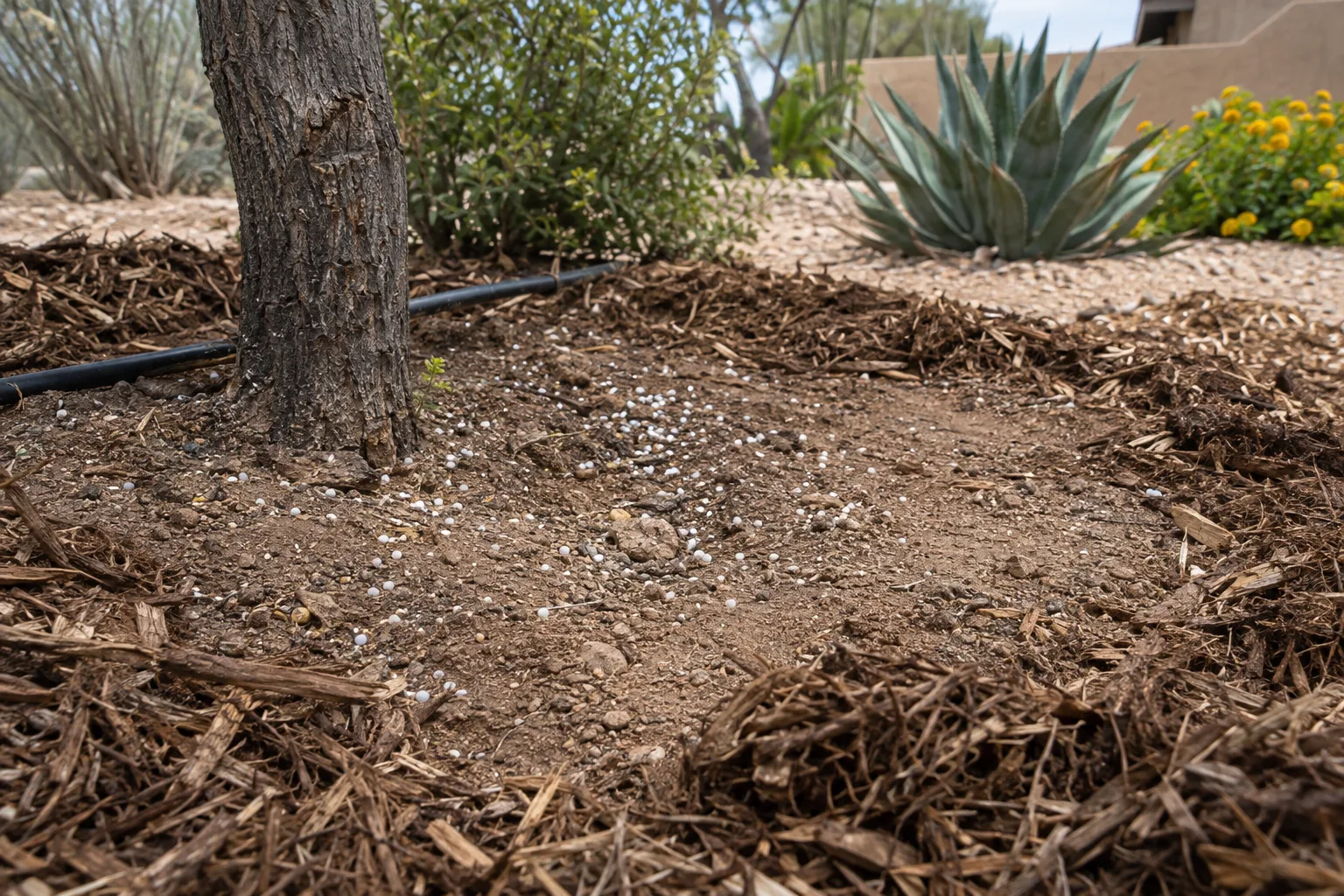
- Water the soil deeply the day before, because dry soil spreads granules unevenly and raises the risk of root burn.
- Measure the product against the label for the plant’s size, using a scale or measuring cup instead of guessing.
- Pull back mulch and gravel so the fertilizer reaches soil, and keep it several inches from the trunk.
- Scatter the granules evenly under the canopy out to the drip line.
- Water thoroughly afterward to move nutrients into the root zone.
- If leaves are yellow with green veins, apply chelated iron separately, following its label.
- Write down the date and product so you do not double-feed.
- Watch new growth for 2 to 3 weeks, and if it is pale or slow, check watering and drainage before adding more fertilizer.
The most common mistake is feeding by the calendar alone. A freeze after feeding can damage the new growth you just stimulated, so check the forecast and hold off a week if temperatures are headed for the low 30s. Fertilizing a drought-stressed plant is another error, because fertilizer on stressed roots can burn them. Our gardening calendars list month-by-month tasks to help you plan the May and August feedings.
Frequently asked questions
Can I use one fertilizer for every plant in my yard?
A balanced all-purpose fertilizer works as a baseline for many shrubs, but it is a compromise. Citrus, roses and palms each need different amounts of nitrogen and micronutrients. To keep things simple, buy a specialty product for citrus and roses and use a balanced slow-release product for everything else.
How can I tell iron deficiency from overwatering?
Iron deficiency yellows the newest leaves while the veins stay green. Overwatering usually yellows leaves across the whole plant, often with constantly wet soil, and a nitrogen shortage pales the older leaves first. Push a trowel 4 to 6 inches into the soil to check moisture before you add any product.
What if I miss the February window?
Feed in March. Citrus and roses usually still respond well to a March feeding, and a late start costs little compared with feeding too heavily. Avoid heavy feeding once daytime highs reach the 90s and 100s, because heat stresses plants and fertilizer-driven new growth burns easily.
Do organic fertilizers work in February?
Yes, but they release slowly in cool soil. Compost, composted manure and similar products rely on soil microbes, which are less active in cool weather, so results appear gradually. Fish emulsion acts faster and suits vegetables. Apply dry organic products a few weeks before you want a response.
Should I fertilize container plants in February?
Container plants can be fed lightly, since pots drain quickly and nutrients wash out with each watering. Use a diluted liquid fertilizer or a slow-release product at the label rate. Check the drainage holes too, because salts from hard water can build up in pots over time.
Is February fertilizing worth it for my yard?
It is worth it if your yard has citrus, roses, stone fruit, a cool-season vegetable bed or an overseeded lawn, since those plants put nutrients to work as new growth starts. If your yard is mostly desert natives, gravel and dormant Bermuda, skip February fertilizing and save the money. Frost-tender plants and palms can wait until nights stay warm. Match each product to the plant and start at the lower end of the label rate. Keep chelated iron handy. Stop by our Queen Creek nursery and ask us which fertilizer fits your plants.