

The best fast-growing vegetables for Arizona beginners are radishes, arugula, spinach, green onions, bush beans, cucumbers and summer squash. Most reach harvest in 25 to 65 days. Plant the cool-season crops from September through February and the warm-season crops from mid-February through March.
Key takeaways
- Radishes are ready in about 22 to 30 days, which makes them the fastest crop for a first bed.
- Sow cool-season crops from mid-September through February, and warm-season beans, cucumbers and squash from mid-February through March.
- Work 3 to 4 inches of compost into the top 12 inches of soil, or use a raised bed at least 12 inches deep over caliche.
- Water every 2 to 3 days in cool weather and about every 2 days in warm weather, after checking the soil 2 inches down.
- Stagger sowings every 2 to 3 weeks so a whole bed does not ripen in the same week.
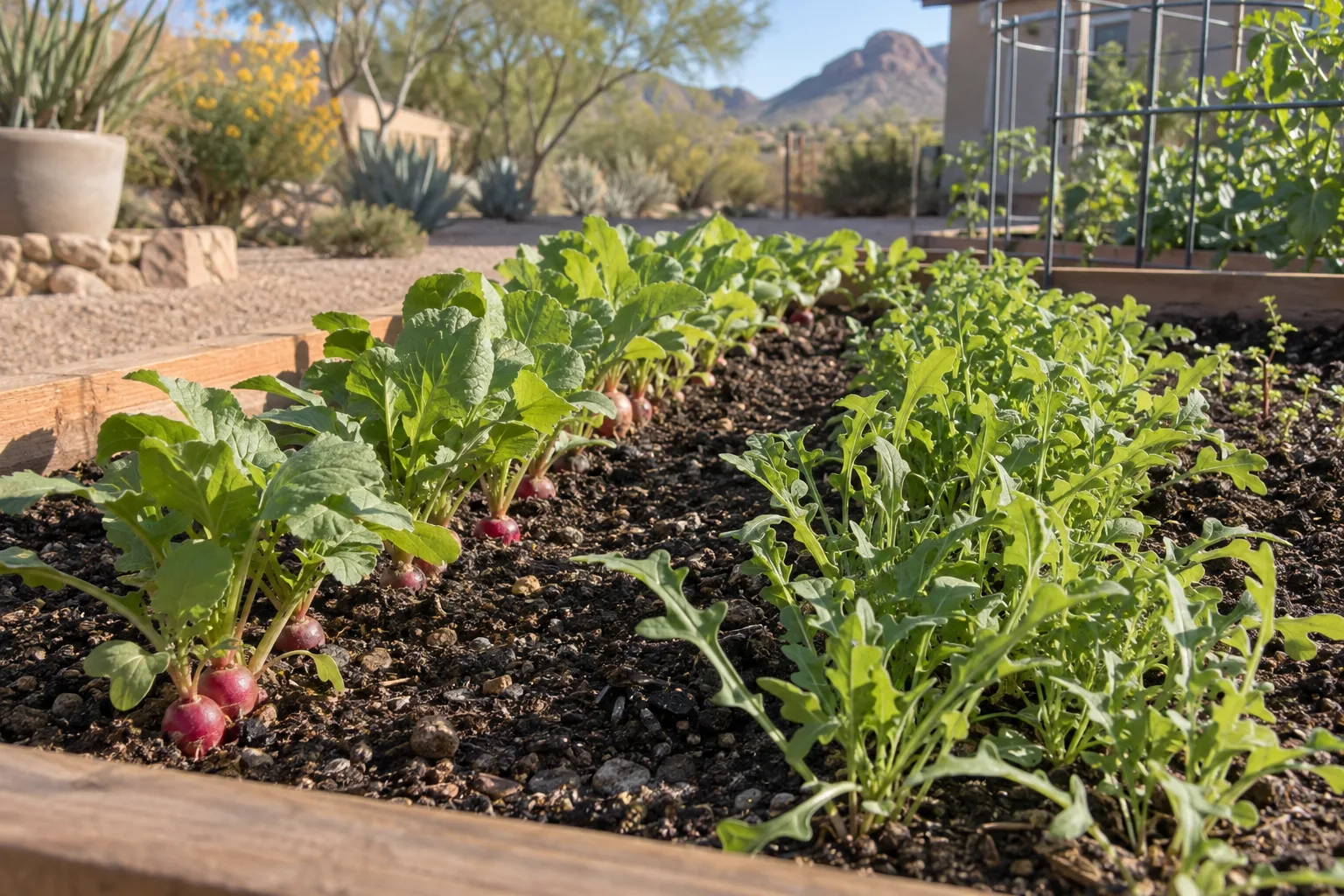
When can I plant fast-growing vegetables in the Arizona low desert?
Plant cool-season crops from mid-September through February and warm-season crops from mid-February through March. The University of Arizona Cooperative Extension vegetable planting calendar for Maricopa County lists dates crop by crop, and it is worth keeping beside your seed packets. Timing matters here.
Days to maturity is the number to read on every seed packet. A crop that needs 90 days can run out of mild weather before it finishes, while a 25 to 65 day crop fits at either edge of a season. Highs pass 95°F by late April and sit above 110°F in summer. Queen Creek can still get a frost in February, so keep frost cloth handy for early plantings of beans, cucumbers and squash.
Quick crops also forgive mistakes, because a failed sowing costs you a few weeks instead of a whole season. Our herbs, vegetables and berries department is the place to see current seed and starts, since the varieties we commonly carry change week to week and season to season.
The table compares all seven crops covered below.
| Vegetable | Days to harvest | Season | Typical planting window |
|---|---|---|---|
| Radishes | 22 to 30 | Cool | September to February |
| Arugula | 30 to 40 | Cool | October to February |
| Spinach (baby leaves) | 35 to 45 | Cool | October to January |
| Green onions | 30 to 60 | Cool | September to February |
| Bush beans | 50 to 60 | Warm | Mid-February to March |
| Cucumbers | 50 to 65 | Warm | Mid-February to March |
| Summer squash | 45 to 60 | Warm | Mid-February to March |
Which fast-growing vegetables are easiest for beginners?
Radishes, arugula and bush beans are the most forgiving first crops, and all seven below reach harvest in roughly 3 to 10 weeks. We commonly carry seed and starts for crops like these, but availability changes week to week and season to season, so ask before you plan a bed.
Radishes (Raphanus sativus)
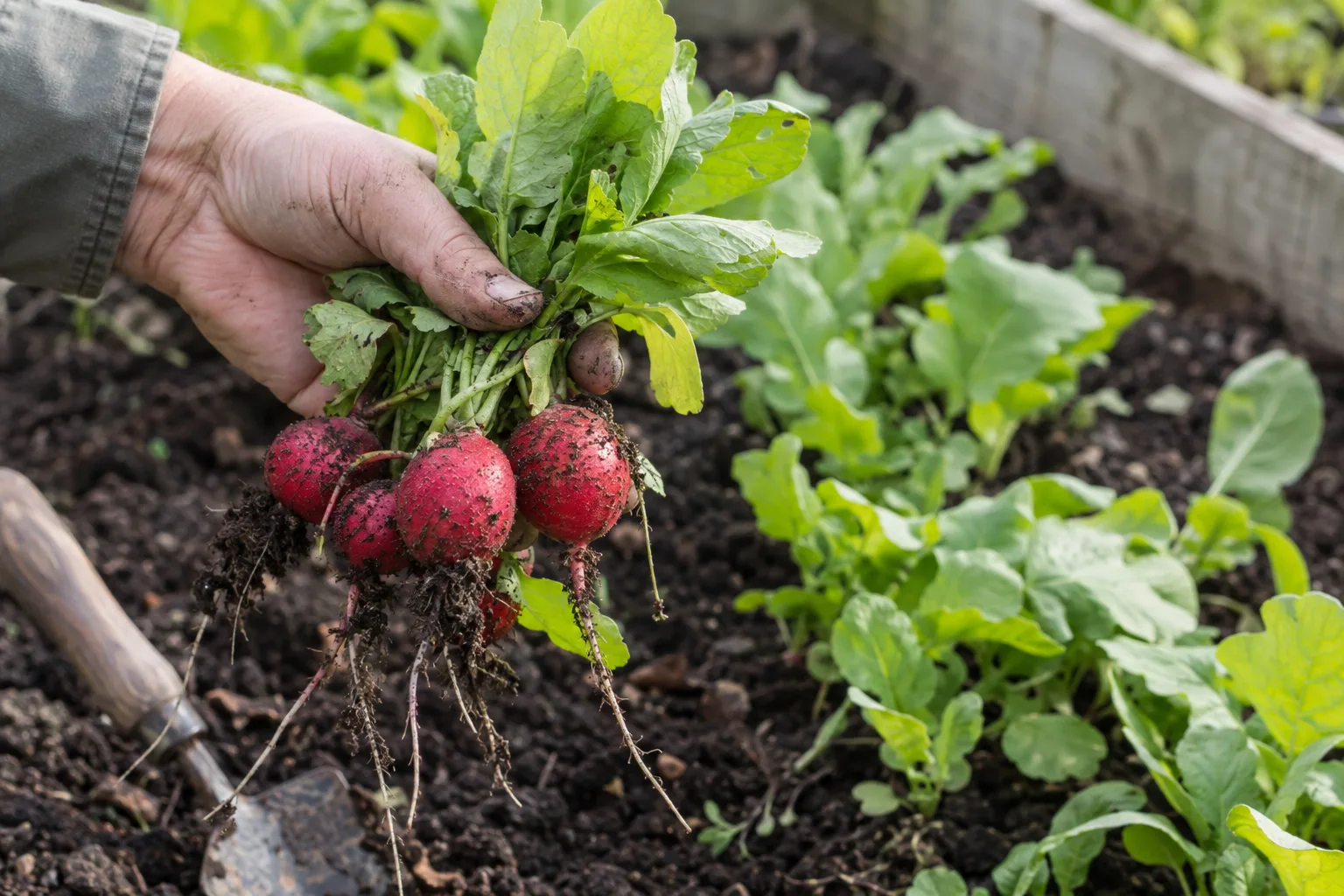
Radishes are the fastest crop on this list, ready in about 22 to 30 days. Roots reach 1 to 3 inches across on plants 6 to 8 inches tall. Give them full sun, sow September through February, and water every 2 to 3 days so the soil stays evenly moist. The drawback is texture, because uneven watering or a late pull leaves roots woody, hot and hollow.
Arugula (Eruca vesicaria)
Arugula is ready to cut as baby leaves in 30 to 40 days. Plants stay 6 to 12 inches tall in full sun, and a little afternoon shade is welcome by late winter. Sow October through February and water every 2 to 3 days. The drawback is bolting: once days warm in March, the leaves turn bitter and a flower stalk shoots up.
Spinach (Spinacia oleracea)
Spinach gives baby leaves in 35 to 45 days and handles a light frost. Rosettes spread 6 to 10 inches wide in full sun. Sow October through January, after the soil has cooled, and water every 2 to 3 days. The drawback is warm soil, since seed germinates poorly in a September heat spell and plants bolt as spring warms up.
Green onions (Allium fistulosum and related types)
Green onions are ready at pencil thickness in about 30 to 60 days, sooner from transplants than from seed. Clumps reach 12 to 18 inches tall but only 1 to 2 inches wide, so they tuck in between other crops. Plant in full sun and water every 2 to 3 days. The drawback is slow, thin seedlings that weeds crowd out easily.
Bush beans (Phaseolus vulgaris)
Bush beans produce in 50 to 60 days and need no staking. Plants grow 1.5 to 2 feet tall. Sow in full sun from mid-February through March, once the soil has warmed to about 60°F, and water deeply every 2 to 3 days. The drawback is a short window, because blossoms drop when highs pass about 95°F and frost kills seedlings.
Cucumbers (Cucumis sativus)
Cucumbers fruit in 50 to 65 days. Trellised vines run 4 to 6 feet, while compact bush types stay near 2 to 3 feet. Plant mid-February through March in full sun, with some afternoon shade helpful in late spring, and water about every 2 days. The drawback is a short season: heat and irregular watering make fruit bitter, and the vines fade as April warms.
Summer squash and zucchini (Cucurbita pepo)
Summer squash starts producing in 45 to 60 days, and one or two plants feed most households. Each plant needs 3 to 4 feet of bed space. Sow mid-February through March where it gets 8 hours of sun, water deeply at the base every 2 days, and pick fruit at 6 to 8 inches to keep the plant producing. The drawback is size and mildew, because crowded, wet leaves invite powdery mildew.
How should I prepare Queen Creek soil for vegetables?
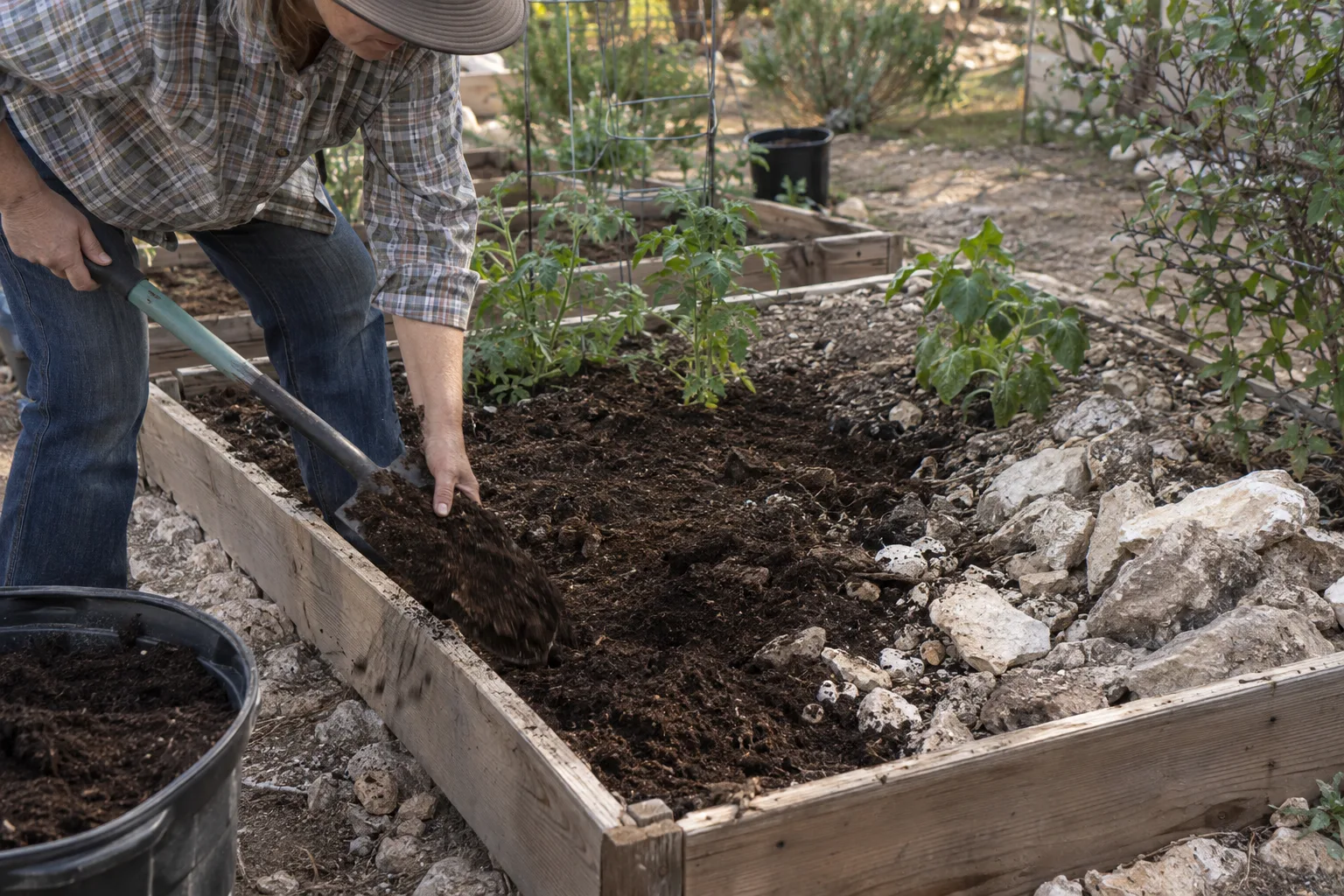
Work 3 to 4 inches of compost into the top 12 inches of soil, or build a raised bed at least 12 inches deep if you hit caliche. Native soil here is alkaline, often with a pH of 7.5 to 8.5, and low in organic matter. Compost buffers the pH around young roots while the bed improves.
Caliche is the cement-like layer found at varying depths across the East Valley. Water pools above it and roots stop at it. If a digging bar will not break through, filling a raised bed with vegetable mix is easier than chiseling a hole. Sulfur lowers pH slowly over several months, so it will not change a bed before your next planting. Hard irrigation water leaves mineral salts behind, and deep watering moves them below the root zone.
How often should I water fast-growing vegetables?
Water every 2 to 3 days in the cool season and about every 2 days in the warm season, soaking the soil 6 to 12 inches deep each time. Push a finger 2 inches into the bed first. If it feels damp, wait another day.
Seeds are the exception. Keep the top inch of soil damp until sprouts show, usually within a week or so. Drip irrigation delivers water to the roots and keeps squash and cucumber leaves dry. Once seedlings are up, spread 2 to 3 inches of straw mulch to slow evaporation and keep roots cooler, and put the drip line on a timer so a hot week does not catch you away from home.
Can I grow fast-growing vegetables in containers?
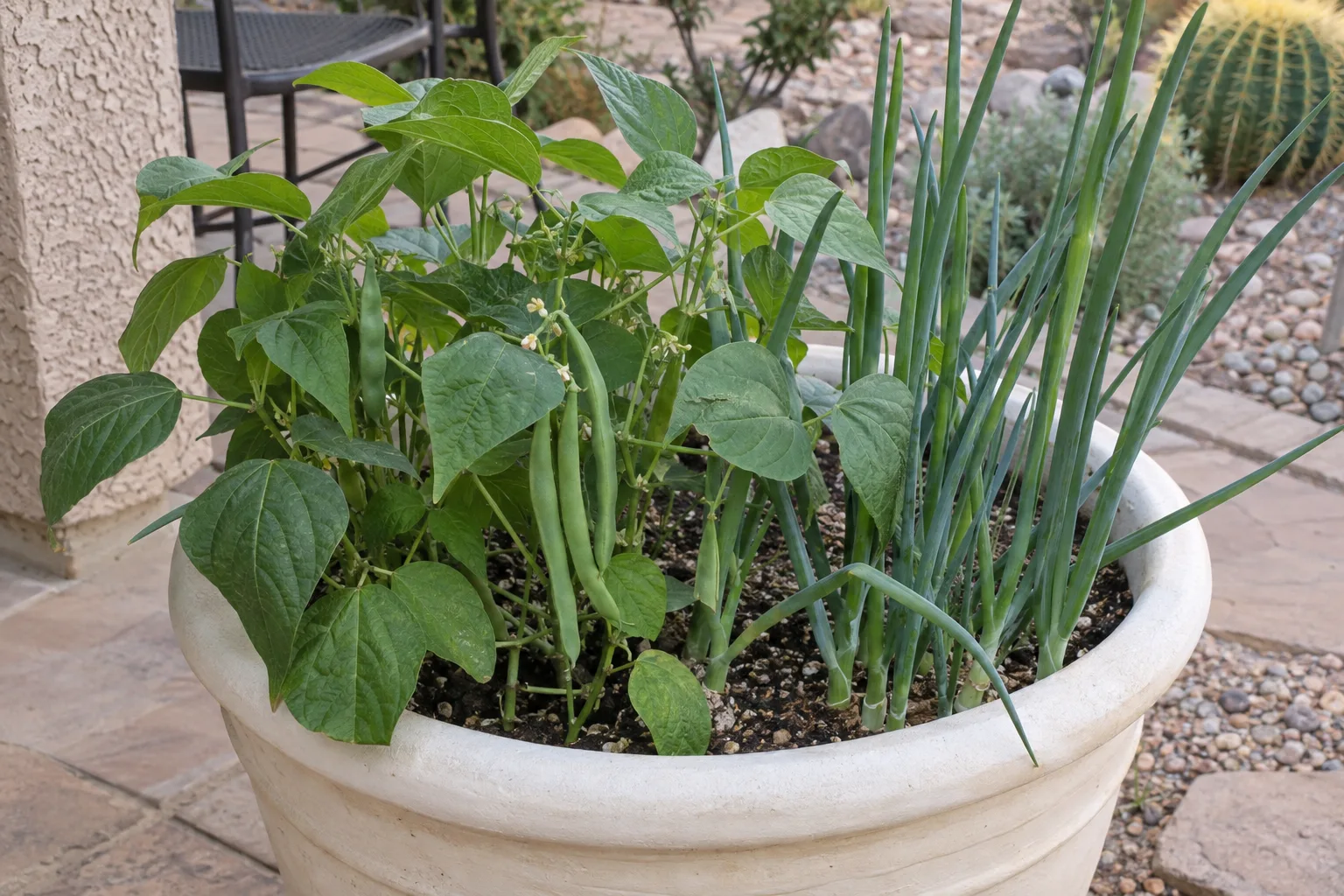
Yes, most of them. Radishes, arugula, spinach, green onions and bush beans do well in pots at least 12 inches deep, while cucumbers and squash need 18 inches or more and a sturdy trellis or room to sprawl. Fill pots with fresh potting mix instead of native soil, and make sure every pot has drainage holes.
Containers dry out faster than beds, so check them daily in warm weather. Light-colored pots stay cooler than dark ones, which matters when the soil in a pot can reach 90°F by afternoon. Our pottery and planters page is a good place to compare sizes and materials.
What mistakes slow down first-year vegetable gardeners?
- Planting on a national calendar. Seed packets often print spring dates written for colder states, so check our gardening calendars before you sow.
- Sowing cool-season crops too late. Spinach, arugula and radishes sown in late March tend to bolt before they size up, so sow them in fall or by January or February.
- Watering a little every day. Shallow watering keeps roots near the surface, where a hot afternoon dries them out in hours.
- Skipping soil prep. Seed pushed into compacted, alkaline soil sprouts unevenly and stalls.
- Planting everything at once. Start with 3 or 4 crops and sow again every 2 to 3 weeks.
If you would rather learn in person, our classes and events page shows what is scheduled.
Frequently asked questions
Can I grow vegetables in Queen Creek during summer?
Most fast-growing vegetables stop producing once highs stay above 100°F, so plan on a break from roughly June through August. Heat-adapted crops such as okra, black-eyed peas and Armenian cucumber can keep going through summer. For a first garden, use the break to improve soil and prepare the bed for a September planting.
Should I start from seed or transplants?
Start radishes, arugula, spinach and bush beans from seed, because they sprout quickly and dislike root disturbance. Cucumbers and squash also grow well from seed sown into warm soil. Transplants save time for green onions, and they help when the planting window is closing. Harden any transplants for a week before setting them in full sun.
Do fast-growing vegetables need fertilizer?
Light feeding helps, especially in pots and in new beds. Leafy greens such as spinach and arugula respond to a nitrogen fertilizer every 3 to 4 weeks, while radishes usually need little beyond compost. Cucumbers and squash benefit from a balanced feed at planting. Water the bed before you fertilize and follow the label rate to avoid burning roots.
How much sun do these vegetables need?
Plan on 6 to 8 hours of direct sun for all seven crops. In winter, low sun and shadows from walls or fences can cut that, so pick the open part of the yard. By late spring, 30 to 40 percent shade cloth over cucumbers and squash lowers leaf temperatures and can extend harvest by a few weeks.
When should I harvest fast-growing vegetables?
Harvest early and often. Pull radishes when roots reach about 1 inch, cut baby spinach and arugula leaves at 3 to 4 inches, and pick green onions at pencil thickness. Take beans while pods are slender and cucumbers and squash while small. Fast crops lose quality quickly, and regular picking keeps beans, cucumbers and squash producing.
Is a fast-growing vegetable bed right for you?
Yes, if you can give a bed 6 or more hours of sun and water it every few days. Quick crops show results in 3 to 10 weeks, so you learn your soil and your irrigation while the stakes are low. Skip it if your only open spot is shaded in winter or you will be away for weeks at a time, because seedlings and young roots dry out fast. A sunny patio with a few containers may suit you better. Stop by our nursery in Queen Creek and we will help you choose a first crop.