
Yes, you can still plant eight fast-growing summer crops in Arizona: Armenian cucumber, yard-long beans, summer squash, Malabar spinach, okra, sweet potato, leaf amaranth and southern peas. Seven mature in 30 to 70 days, so a June or early July planting can still give you a harvest.
Key takeaways
- Seven of the eight crops reach harvest in about 30 to 70 days. Sweet potato is the exception at roughly 90 to 120 days.
- Most of these crops sprout best in warm soil, so sow them in the early morning or evening and keep the top inch moist until seedlings appear.
- Organic mulch 2 to 3 inches deep keeps the root zone cooler. Skip gravel in vegetable beds.
- Shade cloth rated at 30 to 40 percent on the west side of the bed softens afternoon sun without cutting off morning light.
- Count back from your first fall frost, which usually arrives between late November and December in the East Valley, to check that a crop has time to finish.
How late can I plant summer vegetables in Arizona?
Heat-loving crops can go in through about early to mid July in the low desert, and a few can follow later, depending on the crop and your first fall frost. The University of Arizona Cooperative Extension vegetable planting calendar for Maricopa County lists planting windows crop by crop. Check it before you buy seed.
Our herbs, vegetables and berries department is where to look for seed and starts. These are crops we commonly carry, but availability changes week to week and season to season, so a quick check before you drive over saves a trip. Our gardening calendars show what belongs in the ground each month.
The table compares all eight crops at a glance.
| Crop | Days to harvest | Start from |
|---|---|---|
| Armenian cucumber | 50 to 60 | Seed |
| Yard-long beans | 55 to 65 | Seed |
| Summer squash | 45 to 55 | Seed or transplant |
| Malabar spinach | 45 to 60 for first leaves | Seed or transplant |
| Okra | 50 to 65 | Seed |
| Sweet potato | 90 to 120 | Slips |
| Leaf amaranth | 30 to 45 for greens | Seed |
| Southern peas | 60 to 70 | Seed |
Which eight crops can I still plant in Arizona?
These eight come from tropical or semi-arid regions and grow fastest when days stay hot. Each entry lists size, sun, water and one drawback to plan around.
Armenian cucumber (Cucumis melo var. flexuosus)
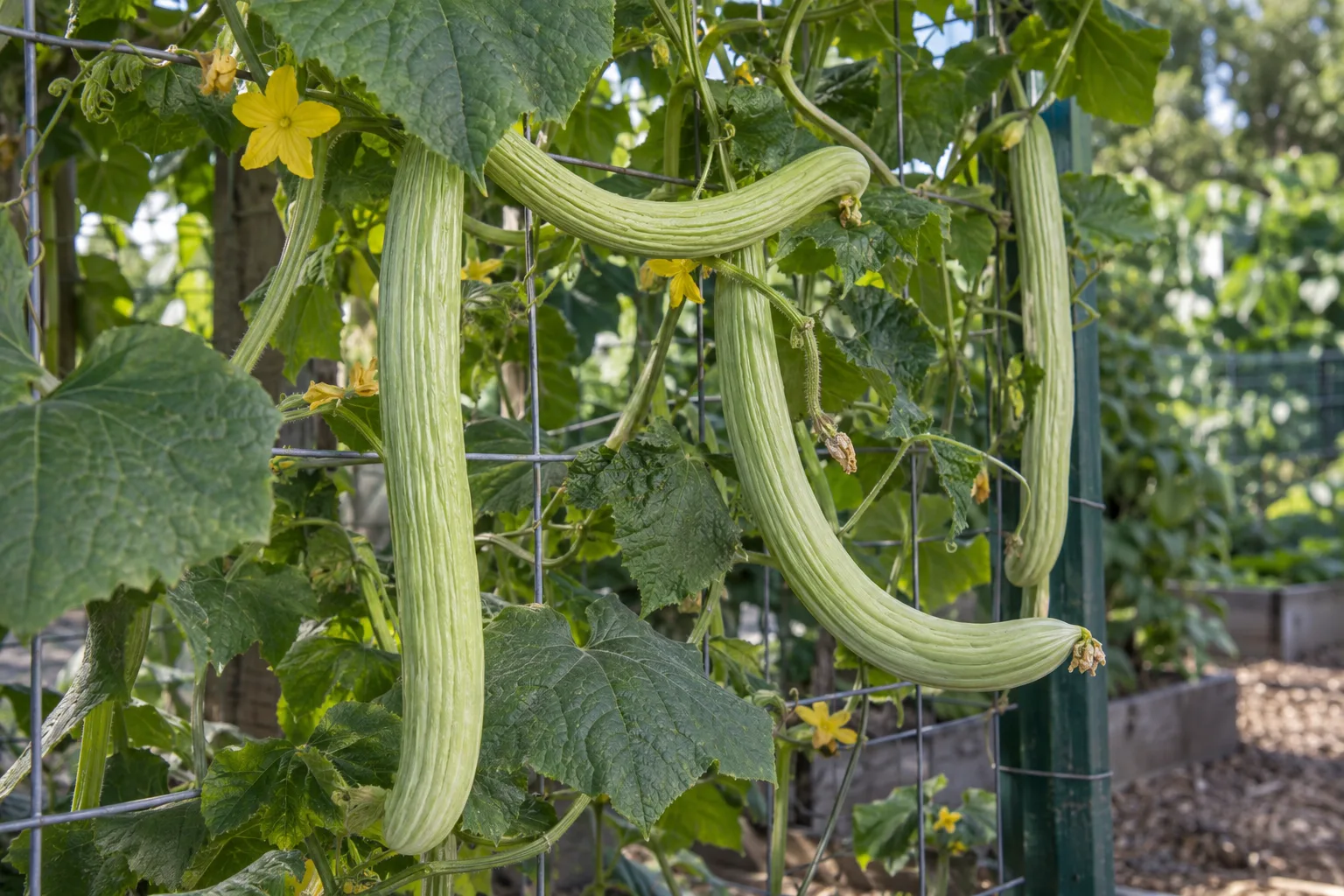
Despite the name, this is a type of melon, which is why it tolerates heat that wilts a standard slicing cucumber. The vines run 6 to 10 feet and want a trellis. Give it full sun, with some afternoon shade in July, and deep watering every day or two. The drawback: fruit left on the vine past roughly 12 to 18 inches turns seedy and can taste bitter.
Yard-long beans (Vigna unguiculata subsp. sesquipedalis)
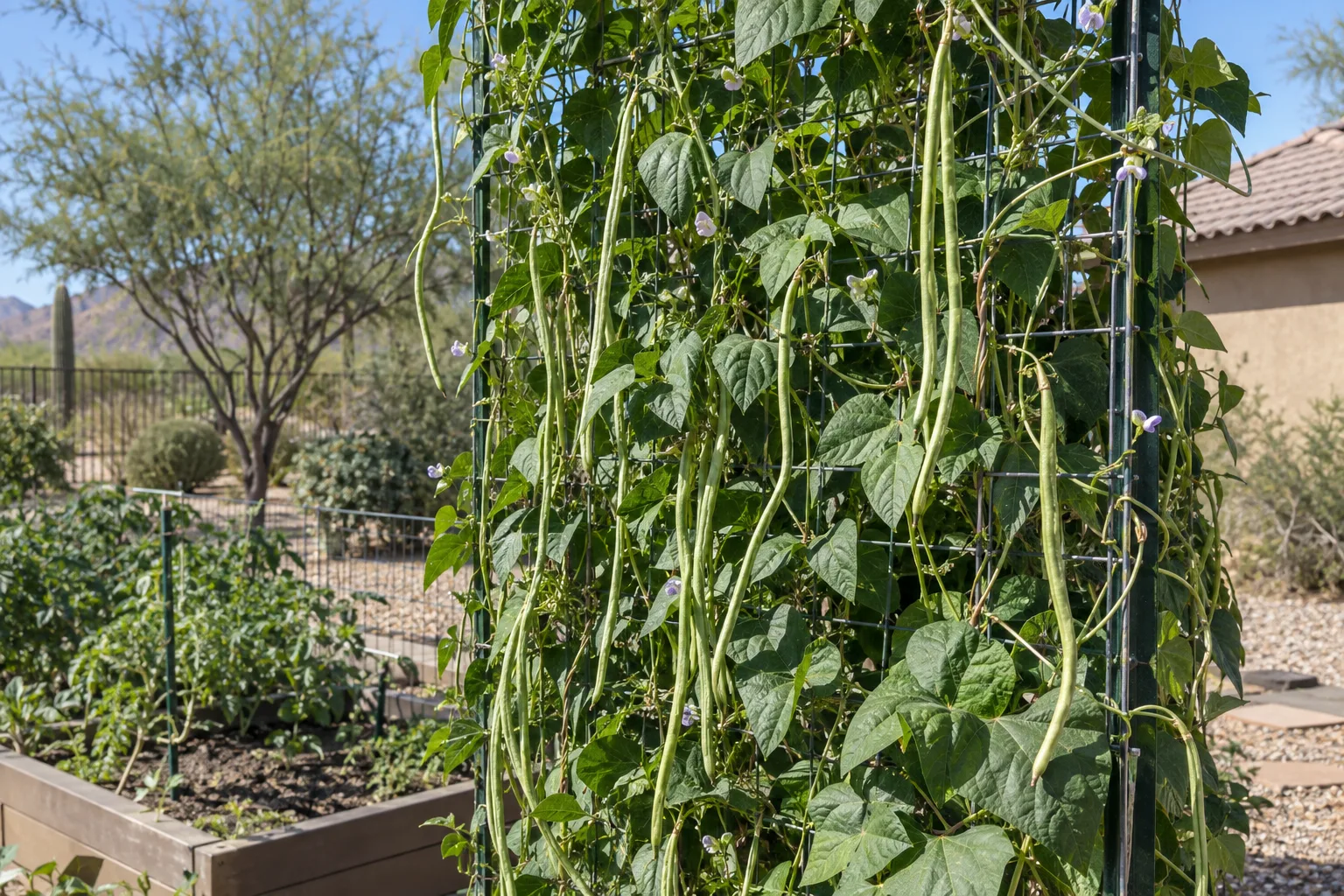
Also sold as asparagus beans, these twine up a fence or trellis 8 to 10 feet tall and produce pods 12 to 24 inches long. They like full sun and steady moisture. Pick often. The drawback is that they need a sturdy, tall support, and pods left too long turn tough and stringy.
Summer squash (Cucurbita pepo)
Zucchini and yellow squash form bushy plants about 2 to 3 feet tall and 3 to 4 feet wide. They need full sun, though a little afternoon shade helps in the hottest weeks, and deep, even watering. The drawback is that fruit set can stall during extreme heat, and powdery mildew and squash vine borers can shorten the plant’s life.
Malabar spinach (Basella alba)
This tropical vine has thick, glossy leaves that stand in for spinach in stir fries and soups, and it is not related to true spinach. It climbs 6 to 10 feet, takes full sun to light afternoon shade, and wants regular water. Expect a slow start before it takes off. The leaves also have a slightly slick texture that some people dislike.
Okra (Abelmoschus esculentus)
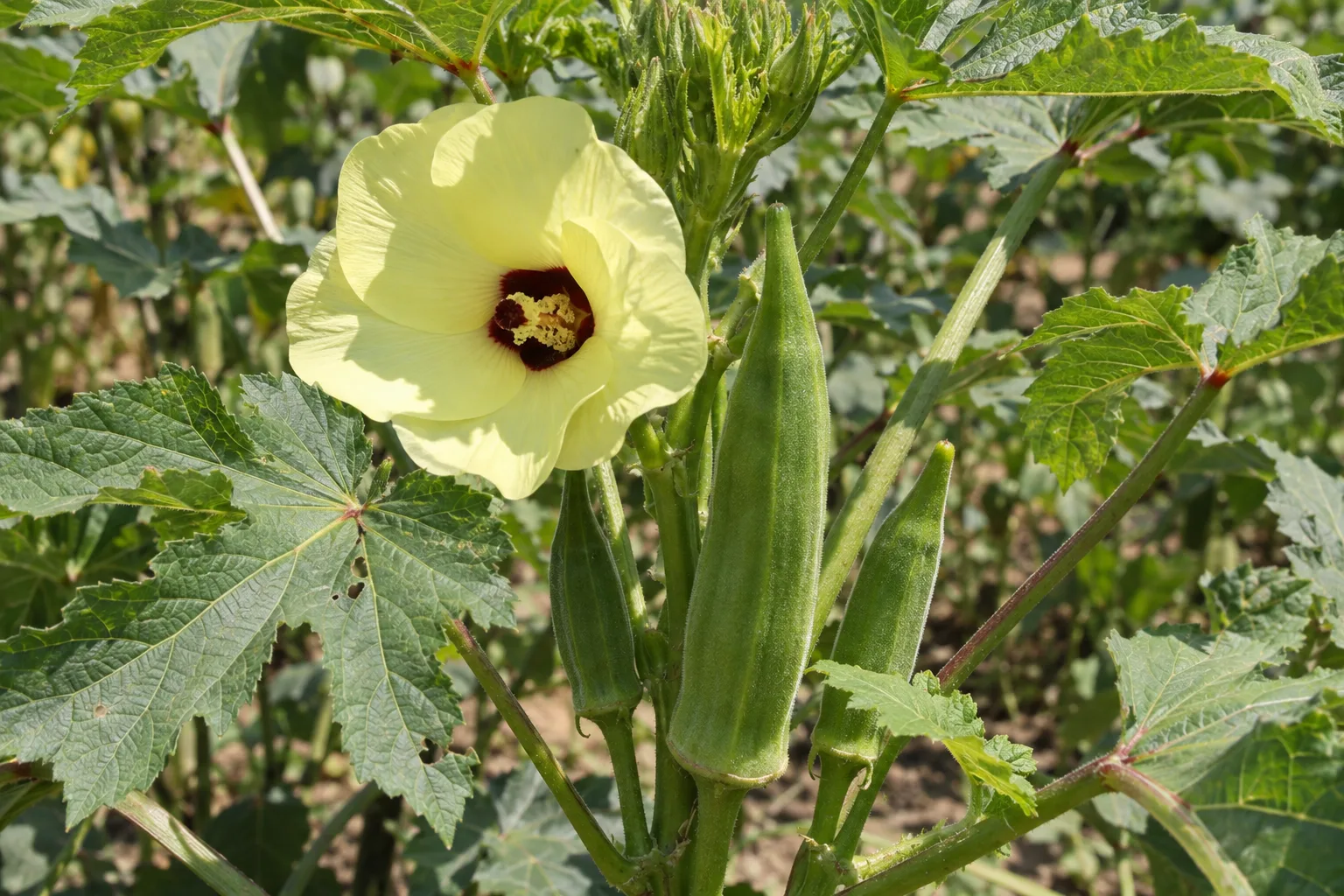
Okra grows 3 to 6 feet tall in full sun and handles the hottest weeks of the year well. Soak seed overnight before sowing to speed sprouting. Water deeply but not constantly. Pods are best at 3 to 4 inches long and turn woody quickly if you skip a day or two of picking. The leaves and stems can also irritate bare skin.
Sweet potato (Ipomoea batatas)
Sweet potato vines spread 4 to 8 feet along the ground, shade the soil and handle heat with regular deep watering. It wants full sun. The drawback is time: it needs about 90 to 120 days, so late plantings are a gamble before frost. It also needs loose soil for tubers to size up, so caliche or heavy clay calls for a raised bed or large container.
Leaf amaranth (Amaranthus tricolor)
Leaf amaranth, sometimes sold as callaloo or Chinese spinach, is a fast, heat-loving green that reaches 2 to 4 feet in full sun. You can harvest young leaves in roughly 30 to 45 days. Water moderately. The drawback is that it self-seeds freely, so cut flower heads before they drop seed if you want to keep it where you planted it.
Southern peas (Vigna unguiculata)
Black-eyed peas, crowder peas and cream peas are all southern peas. Bush types stay 1 to 3 feet tall, vining types climb higher, and all take full sun and moderate water. They also add nitrogen to the soil for your fall planting. The drawback is a modest yield per plant, so sow a block rather than a few plants.
How do I get seeds to sprout in summer heat?
Water the bed deeply the day before, sow in the early morning or evening, and keep the top inch of soil moist until seedlings appear. Native soil here is alkaline and often has caliche a foot or two down. Work 2 to 3 inches of compost into the planting area first, or use a raised bed.
- Soak the bed the day before so the soil is wet 8 to 12 inches down.
- Sow seed at a depth about two to three times its width, roughly 1 inch for beans, okra and cucumber.
- Cover with a thin layer of compost, then water gently so the seed stays put.
- Check moisture once or twice a day. A crusted surface blocks seedlings, so mist it if it dries out.
- Once seedlings are a few inches tall, spread 2 to 3 inches of straw or wood chips around them, keeping mulch off the stems.
Most seed sprouts in about 5 to 10 days in warm soil. If you would rather skip germination, transplants of squash and Malabar spinach save a week or more.
How much water do summer vegetables need?
Established plants in the low desert generally need deep watering every 1 to 3 days in midsummer, and seedlings need light watering daily. Push a finger 3 to 4 inches into the soil to check. If it is dry at that depth, water. Shallow daily sprinkles keep roots near the hot surface.
Drip irrigation delivers water to the root zone with less loss to evaporation than overhead spray, and a timer keeps it consistent while you are at work. Water early in the morning so foliage dries before night. Hard irrigation water leaves salts behind, so a long, deep soak now and then pushes them below the roots.

Organic mulch such as wood chips or straw keeps soil cooler and slows evaporation. Gravel does the opposite in a vegetable bed, because it stores heat and releases it overnight.
Do summer vegetables need shade in the low desert?
Many do, in the afternoon. Squash, cucumber and leafy crops like Malabar spinach and amaranth handle heat better with relief from the 1 to 5 PM sun, while okra, sweet potato and southern peas tolerate full exposure. Wilting at 3 PM that recovers by evening is normal.
A shade cloth rated 30 to 40 percent on the west and southwest side of the bed works well, and white or silver fabric reflects more heat than black. Tall crops such as okra can also shade lower plants. Leave the morning sun alone, since the plants need it to grow and set fruit.
How does the monsoon affect summer vegetables?
The monsoon, which runs roughly July through September, usually helps summer crops by raising humidity and giving plants a break from dry air. It also brings wind that can topple tall trellises and spread fungal diseases such as powdery mildew on squash and cucumbers. Stake your supports before storm season.
After a good rain, skip your next watering and check the soil first. Overwatering in clay-heavy soil invites root rot. Our classes and events page is the place to look for upcoming gardening workshops.
Frequently asked questions
Can I still plant tomatoes in the summer?
Tomatoes are a poor choice for a summer planting here. Blossoms tend to drop when daytime highs stay above the low 90s or nights stay above the mid 70s, so plants rarely set fruit in July. Late summer planting for a fall crop is the better option, and the planting calendar shows the timing.
Can I grow these crops in containers?
Yes, with a few adjustments. Okra, amaranth, bush southern peas and summer squash do well in large containers, and a deep pot suits sweet potato. Dark pots heat up, so choose a light color and a big size. Browse our pottery and planters for options.
Should I fertilize summer vegetables?
A light feeding is enough. Work compost into the bed at planting, then add a balanced fertilizer or compost top-dressing every 3 to 4 weeks. Heavy nitrogen during the hottest weeks pushes soft leafy growth that needs more water and burns easily. Legumes like yard-long beans and southern peas need little added nitrogen.
What should I do with the bed when these crops finish?
Pull spent plants, add a couple inches of compost and plan your cool-season crops. Lettuce, carrots, radishes and broccoli return in fall once nights cool, and the extension calendar gives exact dates for each. Leaving mulch on the bed over the transition keeps soil cooler and holds moisture for fall seed.
Is a summer vegetable garden worth it in the low desert?
Yes, if you can water consistently and plant crops built for heat. Okra, Armenian cucumber and southern peas are the easiest starting points, and they reward a modest effort with steady harvests into fall. Skip it if you travel for weeks in July or cannot irrigate every few days. Tomatoes, lettuce and other cool-season crops will fail in this heat. Come by the nursery in Queen Creek and we will help you sort out what to plant.