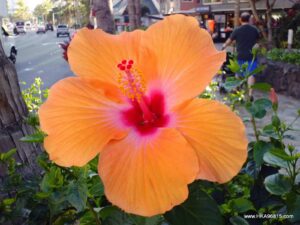

Eight exotic fruits grow well in the Arizona low desert: jujube, pomegranate, fig, loquat, natal plum, dragon fruit, guava and white sapote. Jujube, pomegranate and fig are the easiest starting points. Guava and dragon fruit need the most attention to frost.
Key takeaways
- Jujube, pomegranate and fig handle our heat, alkaline soil and dry air with the least fuss once established.
- Plant in roughly late February to April or late September to October, so roots settle in before summer highs above 110°F.
- Guava, dragon fruit and young loquat blossoms are the most frost-sensitive, so give them a warm spot near a south or west wall.
- Dig wide rather than deep, and check drainage before planting, because caliche and clay hold water around roots.
- Expect 1 to 4 years before a meaningful harvest, depending on the fruit and the size of the plant you start with.

Which exotic fruits grow well in the Arizona low desert?
All eight below can fruit in Queen Creek and the rest of the East Valley with the right spot and a little protection. These are varieties we commonly carry in our fruit tree department, but availability changes week to week and season to season. Sizes are mature ranges and vary by variety and pruning.
Jujube (Ziziphus jujuba)
Jujube is a deciduous tree that reaches about 15 to 25 feet, wants full sun, and needs little water once established. It tolerates alkaline soil and heat very well, and the apple-like fruit ripens in late summer into fall. The drawback is that jujubes leaf out late in spring, so people often worry a healthy tree is dead. Some types also sucker and carry small thorns.
Pomegranate (Punica granatum)
Pomegranate grows as a large shrub or small tree, usually 8 to 15 feet, in full sun with low to moderate water. Fruit ripens in fall. It handles heat and poor soil well. The drawback is split fruit, which tends to follow long dry stretches broken by heavy watering or monsoon rain, so keep moisture steady as the fruit swells.
Fig (Ficus carica)
Figs grow 10 to 25 feet depending on pruning, like full sun, and need regular deep watering through summer. Many types give a light early crop in late spring and a main crop in late summer. The drawback is sunscald on exposed trunks and limbs, along with birds that find ripe fruit quickly. Shading young trunks and netting ripening fruit helps.
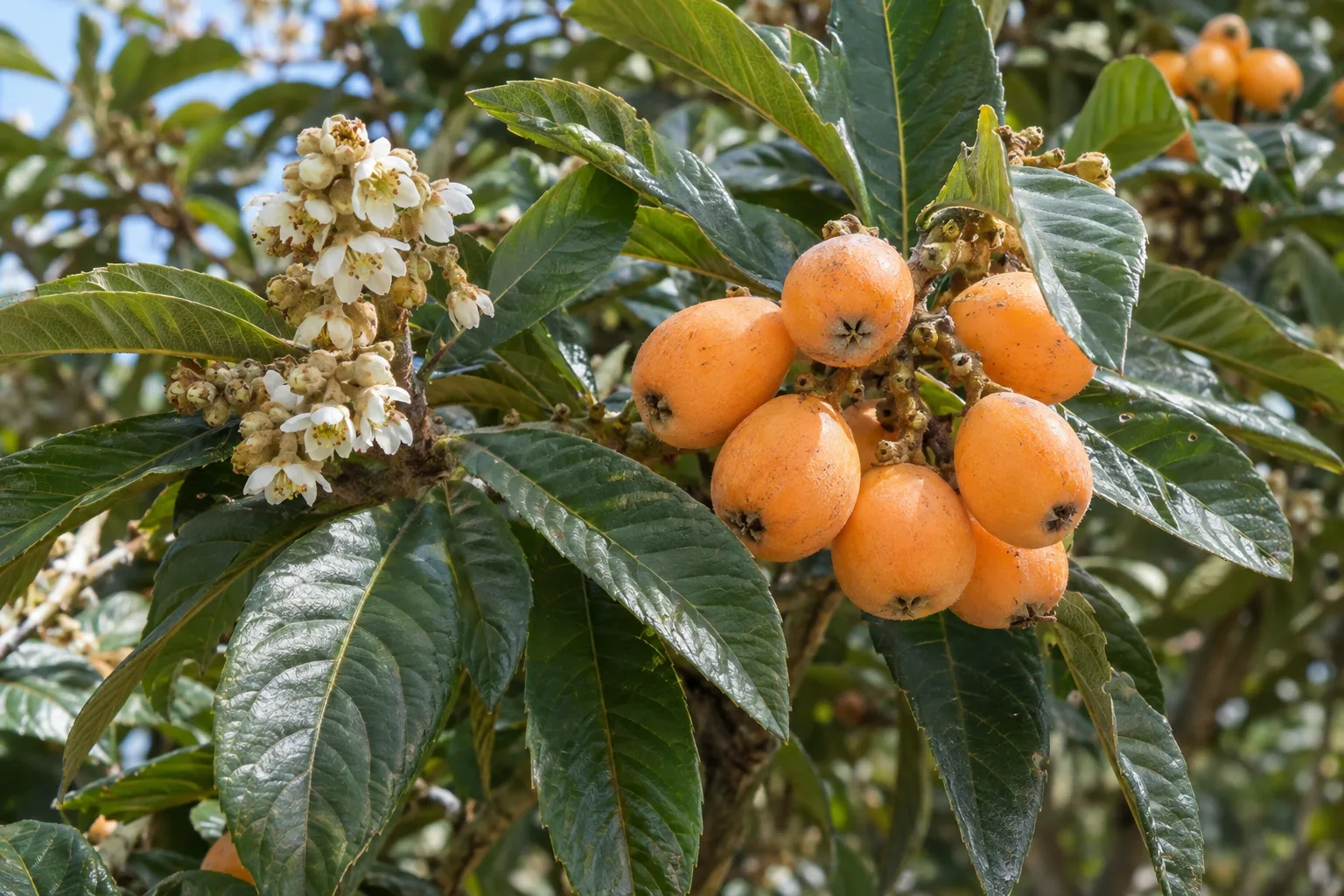
Loquat (Eriobotrya japonica)
Loquat is an evergreen tree, typically 15 to 25 feet, that takes full sun or light afternoon shade and moderate water. It blooms in fall and ripens fruit in late winter to spring, when little else is producing. The drawback is that a hard frost can kill the blossoms and cost you a year’s crop. The glossy leaves also sunburn on the south and west sides of young trees.
Natal plum (Carissa macrocarpa)
Natal plum is a dense shrub, roughly 3 to 6 feet depending on the selection, that handles full sun to part shade and low water. It flowers and fruits over much of the warm season, and the small red fruit is tart and plum-like. The drawback is thorns on many types and a modest fruit size, so it suits a gardener who wants an easy shrub more than a big harvest.
Dragon fruit (Hylocereus undatus and related cacti)
Dragon fruit is a climbing cactus that sprawls over a sturdy post or trellis, often 6 feet tall or more with trailing stems. Give it sun with afternoon shade in summer, moderate water in warm months, and much less in winter. Flowers open at night. The drawback is frost, which damages the stems, and the weight of mature growth needs strong support.
Guava (Psidium guajava)
Guava grows as a shrub or small tree, about 8 to 15 feet, in full sun with regular deep watering. Fruit comes in summer into fall and is fragrant and rich in vitamin C. The drawback is cold sensitivity. Young plants need covering on frost nights, and even established plants can freeze back in a hard winter.
White sapote (Casimiroa edulis)
White sapote is a large evergreen tree, 20 to 30 feet if left alone, that takes full sun and moderate water. The creamy fruit ripens from fall into winter or early spring depending on the variety. The drawback is size and mess, because ripe fruit bruises easily and drops. Plan to prune it to keep it manageable. You can browse our tropical fruit trees to see what is around for the warmer-climate types.
How do the eight exotic fruits compare?
| Fruit | Sun | Water once established | Mature size | Main harvest |
|---|---|---|---|---|
| Jujube | Full sun | Low | 15 to 25 ft | Late summer to fall |
| Pomegranate | Full sun | Low to moderate | 8 to 15 ft | Fall |
| Fig | Full sun | Moderate | 10 to 25 ft | Late spring and late summer |
| Loquat | Sun to light shade | Moderate | 15 to 25 ft | Late winter to spring |
| Natal plum | Sun to part shade | Low | 3 to 6 ft | Much of the warm season |
| Dragon fruit | Sun, afternoon shade in summer | Low to moderate | 6 ft or more, climbing | Summer to fall |
| Guava | Full sun | Moderate to high | 8 to 15 ft | Summer to fall |
| White sapote | Full sun | Moderate | 20 to 30 ft | Fall to early spring |
When should I plant exotic fruit in Queen Creek?
Plant in late February to April or in late September to October. Both windows give roots a few mild months before summer heat or winter cold. Spring suits the frost-sensitive fruits, since they have a full warm season to settle in.
Planting in June through August is possible, but young roots struggle in 110°F heat and you will be watering and shading constantly. Our gardening calendars help you match the month to the task. For deciduous types like jujube, pomegranate and fig, a bare winter tree is normal, so judge them by spring growth.
How do I plant in caliche and alkaline soil?
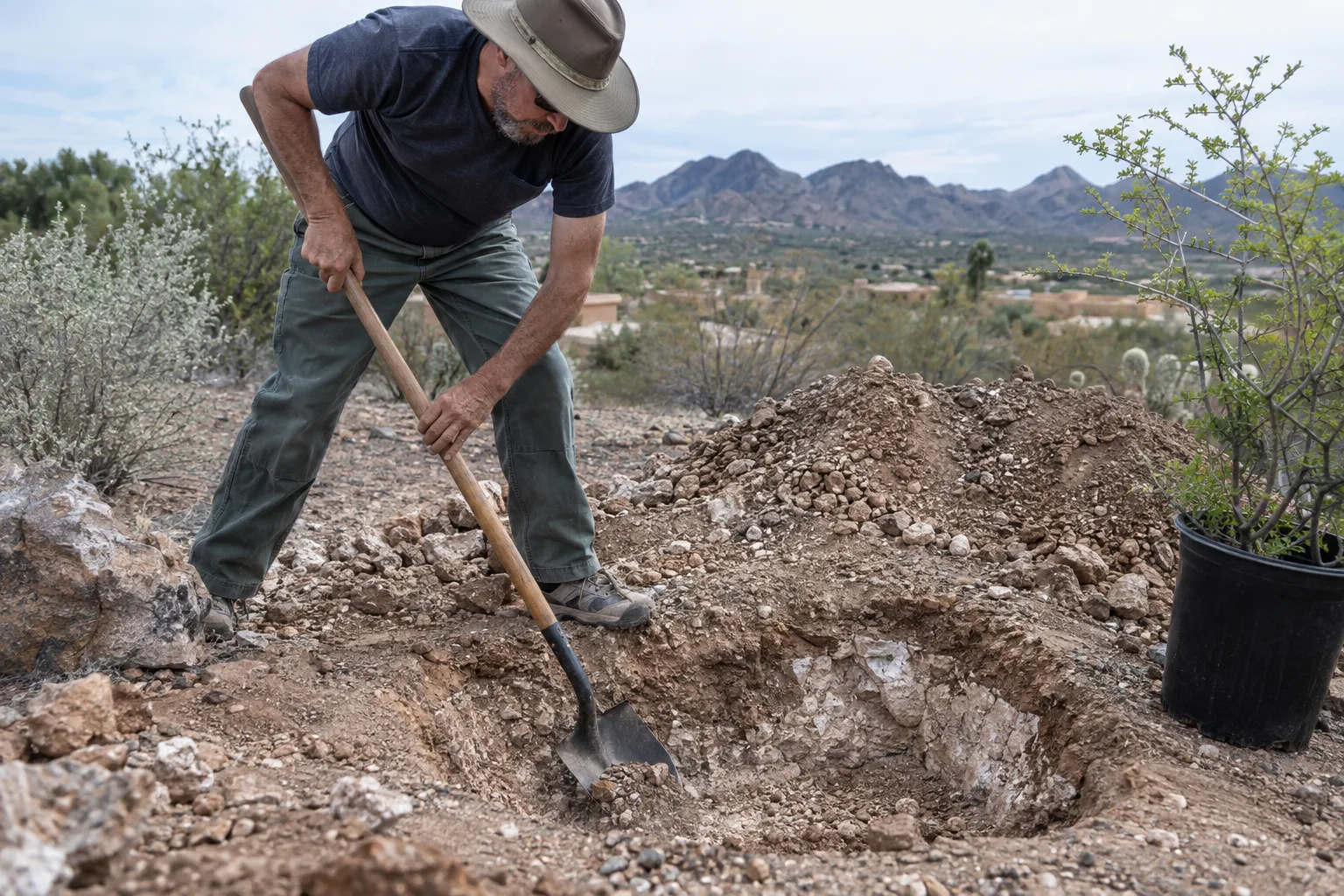
Dig a hole two to three times as wide as the root ball, but no deeper, and make sure water drains out of it. Our soil is alkaline and often sits over caliche, a cement-like layer that holds water and stops roots.
- Fill the empty hole with water and time it. If it is still standing after several hours, break through the caliche or plant in a raised mound.
- Set the root ball slightly above the surrounding soil, never below it.
- Backfill mostly with the native soil you dug out, mixed with a modest amount of compost.
- Build a watering basin around the plant, then add 3 to 4 inches of mulch, keeping it a few inches off the trunk.
- Put the plant on drip irrigation with emitters spread out toward the edge of the canopy as it grows.
Yellow new leaves with green veins usually point to iron chlorosis, which is common here with pomegranate, guava and citrus-type feeders. A chelated iron product made for high-pH soil is the usual fix.
How do I protect young plants from heat and frost?
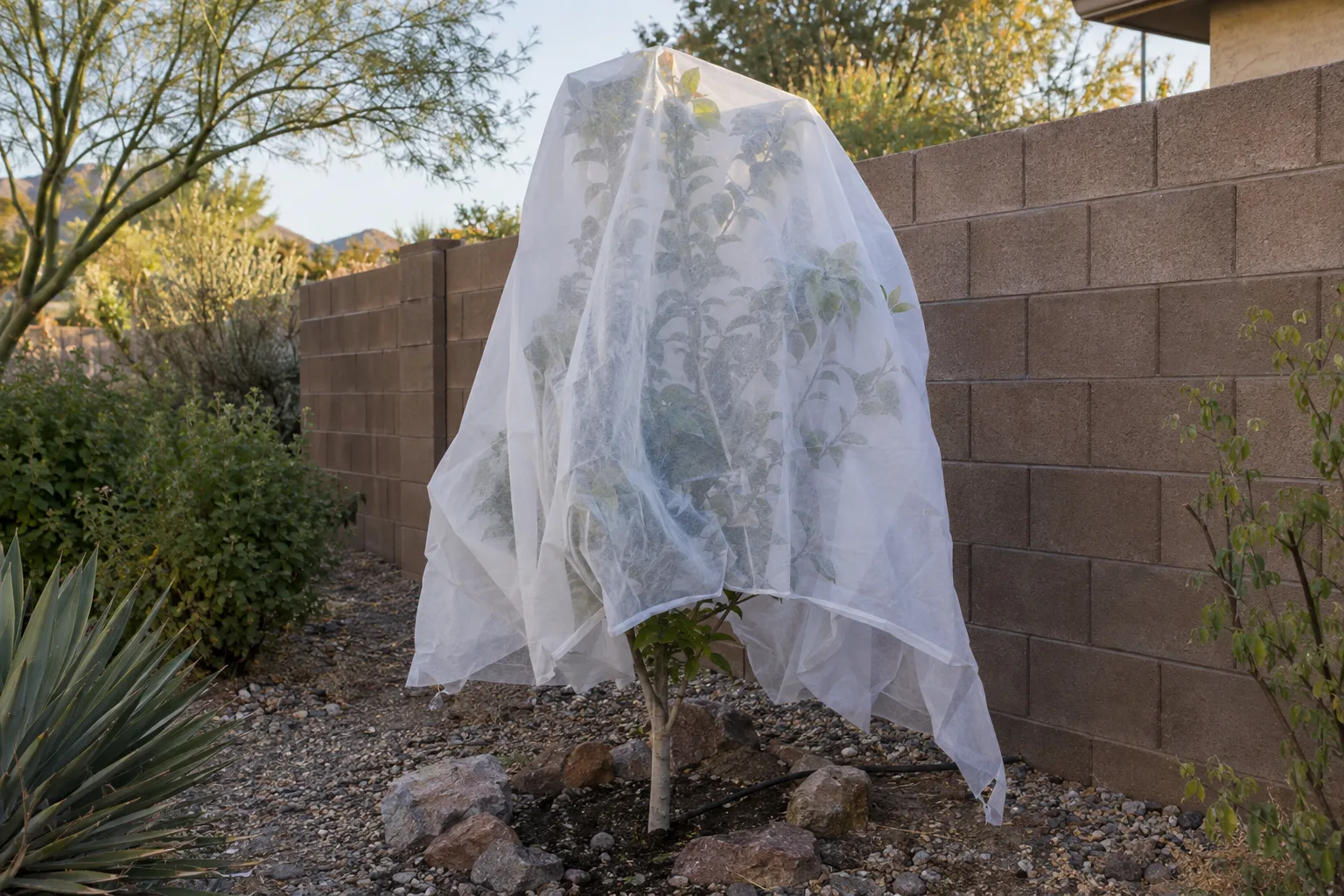
Shade the south and west sides of new plants during their first summer and cover tender ones on frost nights. Shade cloth in roughly the 30 to 40 percent range, or a temporary screen, cuts leaf and bark burn. Mulch keeps roots cooler.
For cold nights, drape frost cloth over the plant down to the ground, and remove it in the morning. Planting guava, dragon fruit and loquat near a wall that holds daytime heat helps. Our evergreen trees and deciduous trees pages are useful when you are deciding how much leaf cover to plan for in winter.
Frequently asked questions
Do I need two trees to get fruit?
Not for most of these. Pomegranate, fig, guava and natal plum set fruit on one plant, and many dragon fruit types do too. Jujube and some white sapote selections fruit better with a second variety nearby, so check the tag or ask before buying.
Can I grow exotic fruit in containers?
Yes, with limits. Natal plum, dragon fruit, pomegranate and a pruned fig do reasonably well in large pots. Use a container with drainage holes, expect to water more often in summer, and move tender plants against a wall in winter. Large trees like white sapote and loquat are better in the ground.
When should I prune these fruits?
Prune deciduous fruits like fig, jujube and pomegranate in winter while dormant, and wait until after the last frost for tender evergreens like guava. Avoid heavy cuts in summer, since newly exposed bark sunburns. Light thinning after harvest is fine for loquat and white sapote.
How long until I get fruit?
Plan on roughly 1 to 4 years, depending on the fruit and the size of the plant. Figs, natal plum and dragon fruit tend to produce sooner. Jujube, loquat, guava and white sapote usually take longer. Heavy early pruning or stress will push the first harvest back.
Will monsoon humidity cause problems?
It can. Humid monsoon weeks from roughly July to September raise the risk of fungal spotting and split fruit, especially on pomegranate and fig. Water at the base, not overhead, thin crowded branches for airflow, and pick ripe fruit promptly. Most plants recover once the dry air returns.
Which exotic fruit should I start with?
Start with a jujube, pomegranate or fig if you want the best odds in a typical East Valley yard. They handle our heat and soil with the least rescue effort. Pick guava or dragon fruit only if you can protect them on cold nights. Skip white sapote if you have a small yard, and skip any of these if you cannot provide drip irrigation. Come see what is available at our nursery in Queen Creek and ask us which one fits your space.