The easiest plants for Arizona backyard landscaping are desert-adapted shrubs, perennials and trees such as autumn sage, Texas ranger, blackfoot daisy and palo verde. Planted in fall and watered deeply but rarely, they handle 110°F summers and alkaline soil.
Key takeaways
- Plant in fall (mid-September to November) or from February to early April, and avoid June through August.
- Every plant here needs regular water for its first one to two summers, then deep watering every 2 to 4 weeks in summer for most of them.
- Drainage matters more than soil amendments. A 12-inch test hole should empty within about 4 hours.
- Red bird of paradise and bougainvillea are the most frost-tender, so keep them out of low, cold spots.
- Palo verde reaches 20 to 30 feet tall, so give it room before you build the rest of the bed around it.
What makes a plant easy in the Arizona low desert?
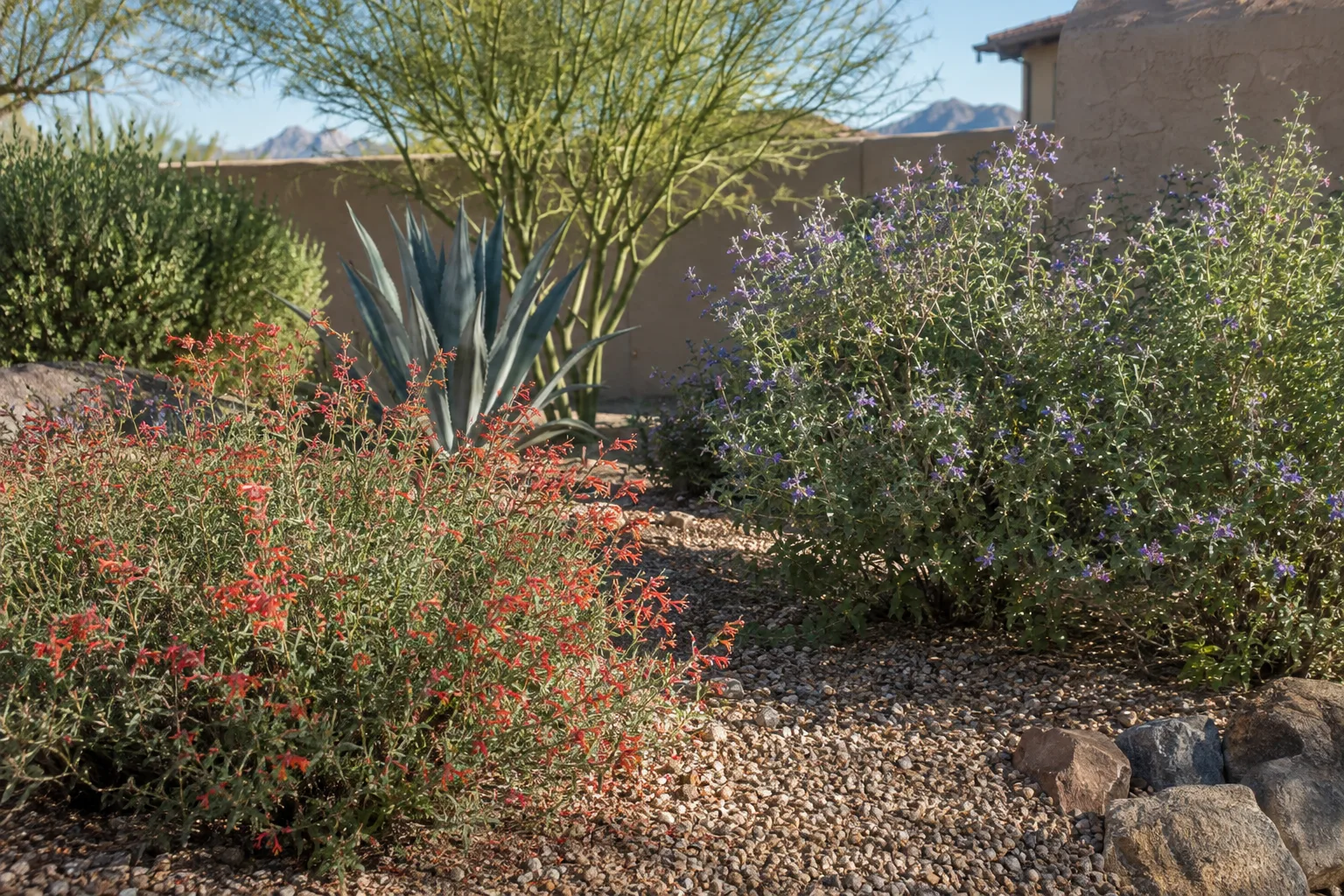
An easy plant tolerates summer highs above 110°F, alkaline soil and long gaps between waterings once its roots are established. Caliche, a cemented layer of calcium carbonate often found a foot or two below the surface, blocks drainage in many Queen Creek yards, and block walls can add 10 to 15°F of reflected heat to a bed. Match the plant to the spot.
You can browse our plant department for the kinds described here. These are varieties we commonly carry, and availability changes week to week and season to season, so check with us before you plan a purchase.
Which plants are easiest for an Arizona backyard?
These eight cover every layer of a yard, from a ground-hugging perennial to a shade tree. Each entry lists mature size, sun, summer water once established and one drawback.
Desert marigold (Baileya multiradiata)
Desert marigold grows 12 to 18 inches tall and wide in full sun. Yellow daisy-like flowers open from early spring into fall, and the silvery foliage looks tidy between flushes. Water every 2 to 3 weeks in summer once it is established. The drawback is that individual plants are short-lived, and the seedlings it drops will pop up where you did not plan them.
Autumn sage (Salvia greggii)
Autumn sage reaches 2 to 3 feet tall and wide and blooms in red, pink, coral or white from spring into fall. It does best in full sun with some relief from the hot afternoon sun on the west side. Water every 7 to 10 days in summer once established, and cut it back by about one-third in late February. The drawback is that it gets leggy and stressed against a hot west wall.
Red bird of paradise (Caesalpinia pulcherrima)
Red bird of paradise grows 6 to 8 feet tall and wide in full sun and carries orange-red flowers from about May to October. Water about every 2 weeks in summer once established. It tolerates poor, rocky, alkaline soil. After a frost it dies back to the ground, so cut the dead canes to roughly 6 inches in late January. The drawback is a bare, twiggy look through winter.
Desert spoon (Dasylirion wheeleri)
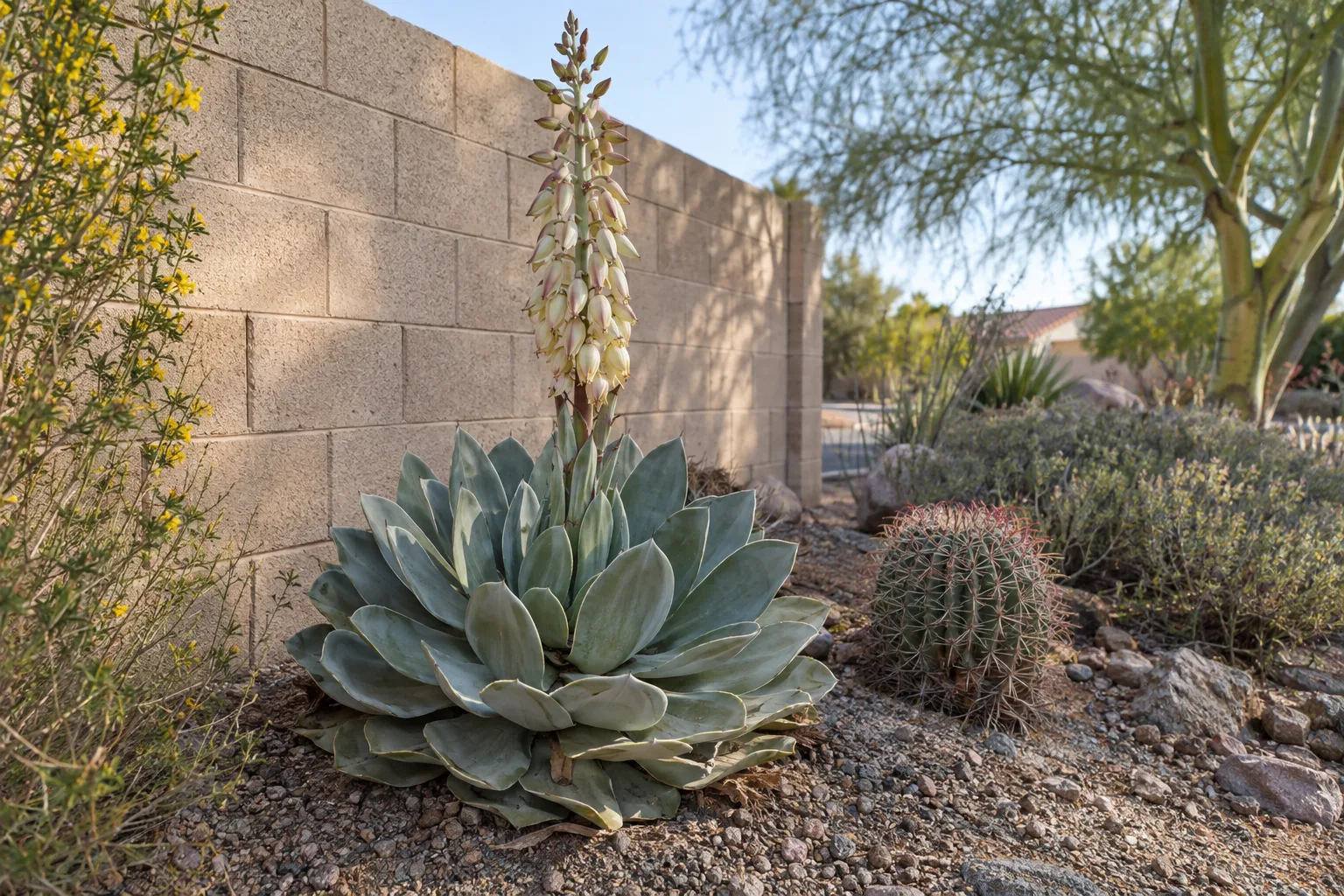
Desert spoon forms a rounded rosette of narrow blue-green leaves, 3 to 5 feet tall and 4 to 6 feet wide, in full sun. A deep watering about once a month in summer is enough after establishment. Mature plants send up a flower spike that can reach 10 to 15 feet. The drawback is the small teeth along the leaf edges, so keep it back from walkways and seating. It also grows slowly.
Blackfoot daisy (Melampodium leucanthum)
Blackfoot daisy stays about 12 inches tall and wide, which suits the front of a bed or a pathway edge. White flowers with yellow centers appear from roughly March to November, with a slowdown in the hottest weeks of July and August. It wants full sun and water every 10 to 14 days in summer. The drawback is rot: it fails in soil that stays wet.
Bougainvillea (Bougainvillea species)
Bougainvillea ranges from compact shrubs to vines that cover 15 feet of wall, depending on the variety. It needs full sun and water every 2 to 3 weeks in summer once established. The colorful parts are bracts, not flowers, and they show best when the plant is slightly dry and not heavily fertilized with nitrogen. The drawbacks are frost damage below 32°F, sharp thorns and steady litter.
Texas ranger (Leucophyllum frutescens)
Texas ranger grows 4 to 6 feet tall and wide with soft silver-gray leaves, and compact selections stay closer to 3 feet. It wants full sun and water every 2 to 3 weeks in summer. Purple, pink or white blooms often follow a jump in humidity, which is why many people call it the barometer bush. The drawback is that frequent watering reduces blooming and invites root problems.
Desert Museum palo verde (Parkinsonia ‘Desert Museum’)
Desert Museum palo verde is a hybrid tree that reaches about 20 to 30 feet tall in full sun. It has large yellow spring flowers and fewer thorns than many native palo verdes. Water young trees every 7 to 10 days for the first two years, then deeply about once a month. The drawback is litter from flowers and fine leaves. Browse more desert trees if you want to compare options.
How often should I water these plants?
Once established, most of these plants need deep watering every 2 to 4 weeks in summer and far less in winter. The table shows typical intervals for plants past their first one to two summers. New plantings need water more often, and sandy or very hot spots may need extra.
| Plant | Summer interval | Winter interval |
|---|---|---|
| Desert marigold | 14 to 21 days | About 30 days |
| Autumn sage | 7 to 10 days | About 21 days |
| Red bird of paradise | About 14 days | Dormant, minimal |
| Desert spoon | About 30 days | 45 to 60 days |
| Blackfoot daisy | 10 to 14 days | About 30 days |
| Bougainvillea | 14 to 21 days | 30 to 45 days |
| Texas ranger | 14 to 21 days | 45 to 60 days |
| Desert Museum palo verde | About monthly | Rainfall, plus occasional deep soak in dry spells |
Run drip emitters longer, not more often. A long soak every 10 days or so sends roots deeper than a short daily cycle does, and deeper roots cope better with heat and with irrigation hiccups. Adjust your controller every month, since winter plants need a fraction of summer water.
When should I plant them in Queen Creek?
Fall is the best time, from mid-September through November. Soil is still warm enough to push root growth while air temperatures drop, so plants have the whole cool season to settle in before their first summer.
February through early April is a workable second window, though roots have less time before the May and June heat. Smaller container plants adjust faster than large ones. Summer planting from June through August leads to more losses and demands daily attention. Frost-tender plants like red bird of paradise and bougainvillea are safest planted after the last frost risk has passed. Our gardening calendars lay out month-by-month timing, and the University of Arizona Cooperative Extension publishes planting guidance for Maricopa County.
How do I plant in alkaline soil and caliche?
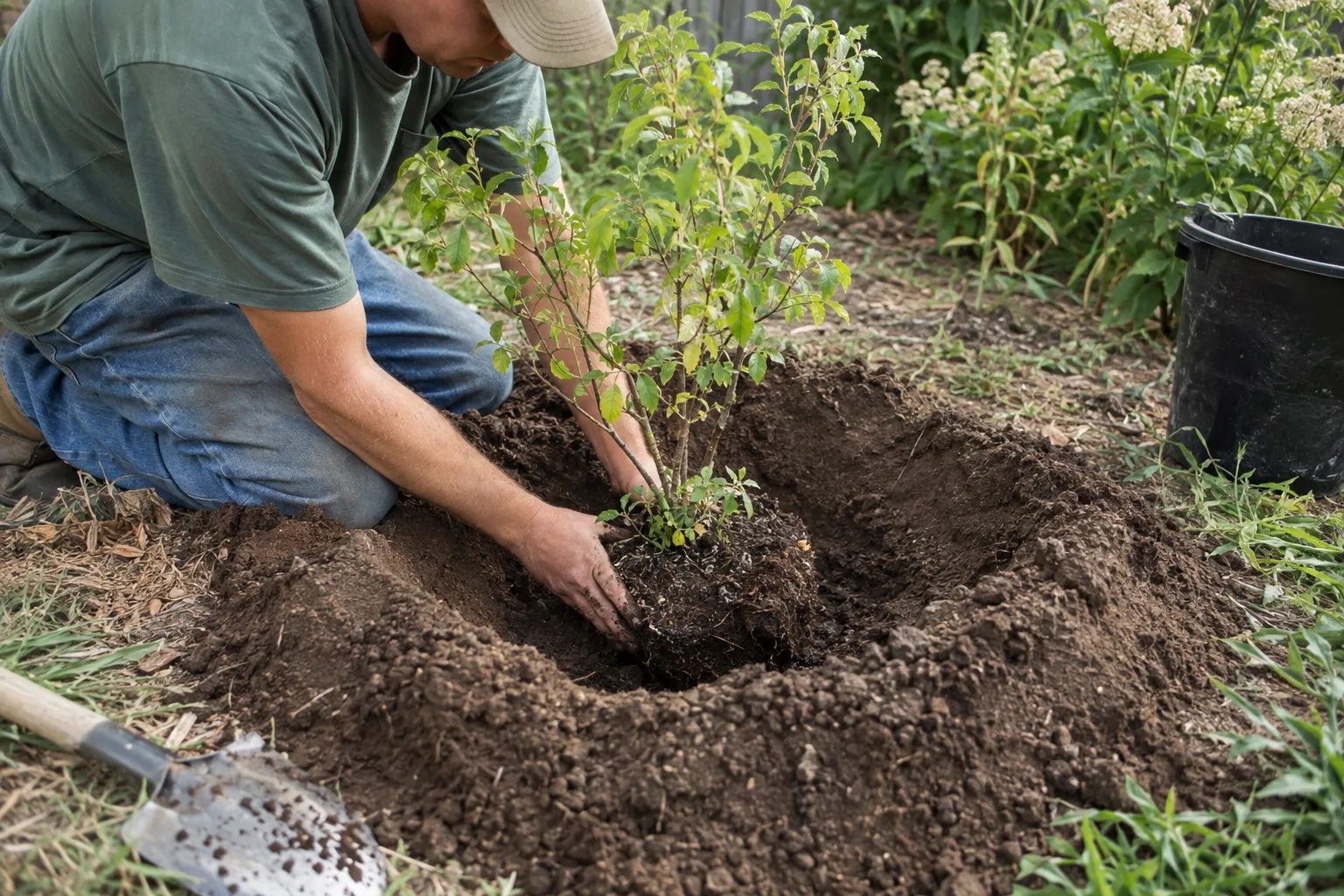
Plant in your native soil, make sure water drains, and skip heavy amendments. Desert-adapted plants grow well in lean soil, and a hole filled with rich potting mix can hold water around the roots. Rich backfill is a common reason new plants fail.
- Fill a 12-inch-deep test hole with water. If it takes more than about 4 hours to drain, break through caliche with a digging bar or plant on a raised berm.
- Dig the hole twice as wide as the root ball and only as deep.
- Loosen or score circling roots so they grow outward.
- Set the crown level with or slightly above the surrounding soil.
- Backfill with the soil you removed and firm it gently.
- Build a small basin at the edge of the root ball and soak the whole root zone with a hose.
- Spread 2 to 3 inches of mulch or decomposed granite, keeping it a few inches from the stem.
- Set drip emitters at the edge of the root ball, then move them outward as the plant grows.
How should I arrange these plants in a yard?
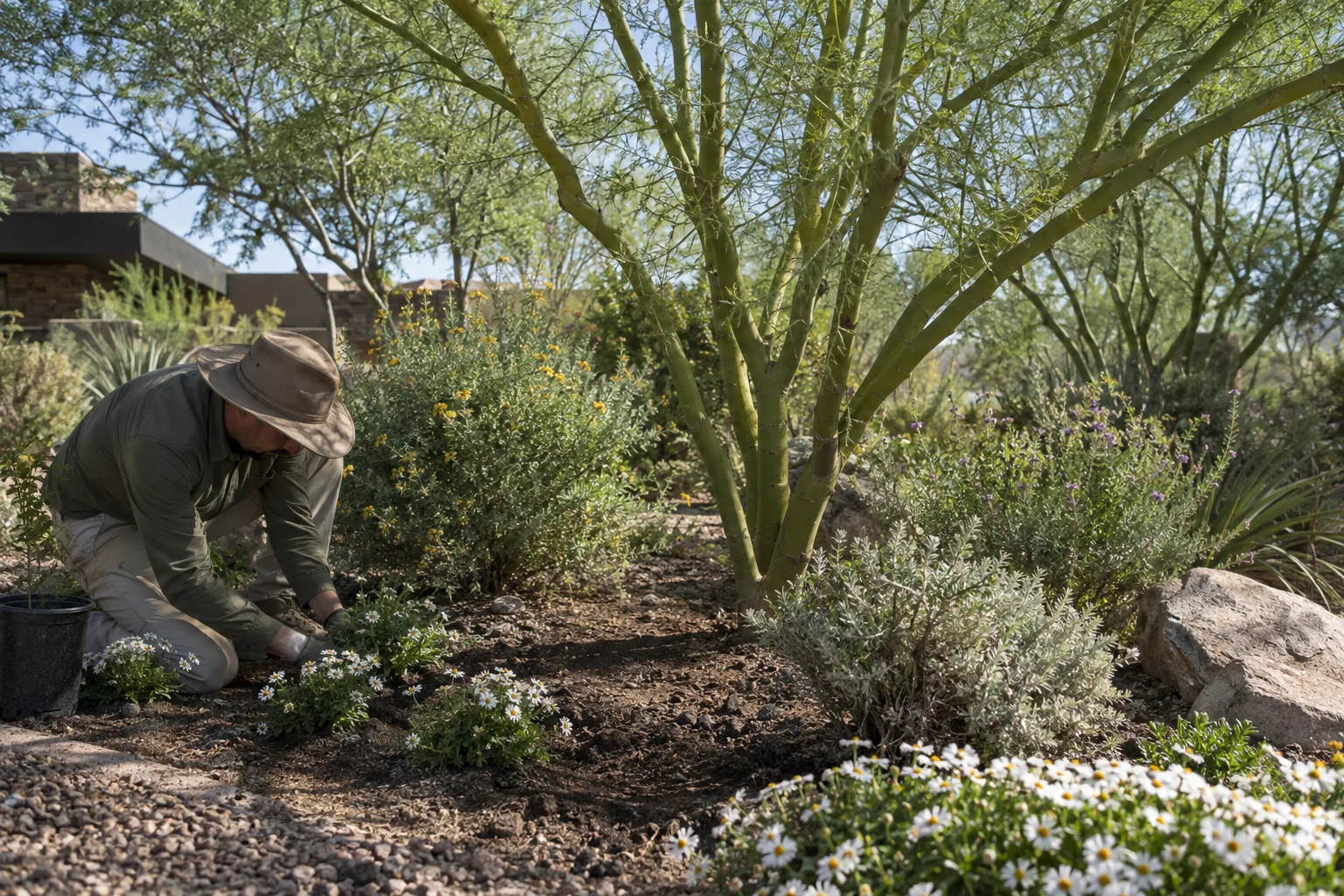
Layer by height, from the tree down to the groundcover. Put the palo verde where its 20 to 30 foot canopy has room, then set Texas ranger and red bird of paradise at mid-height beneath and beside it. Autumn sage and desert spoon fill the next layer, and blackfoot daisy and desert marigold edge the front.
Train bougainvillea on a wall that gets full sun. Leave space between plants equal to their mature width, because a bed that looks sparse in the first year fills in by the third. Light-toned decomposed granite between plants keeps the look cohesive.
What mistakes cost the most plants?
Most losses come from water and placement, and each is easy to fix before planting.
- Planting in the hottest spot without checking the plant. A west or south wall can run 10 to 15°F hotter than open ground. Bougainvillea, red bird of paradise and desert spoon handle it best.
- Leaving the timer on its summer schedule. Winter plants need far less water, and constant moisture invites root rot.
- Relying on overhead sprinklers. Spray loses water to evaporation and wets foliage, while drip puts water at the roots.
- Cutting water too soon. Even drought-tolerant plants need regular watering through their first one to two summers.
Frequently asked questions
How long do these plants take to establish?
Most shrubs and perennials need about one full year, and trees often need two to three years. Plants that get consistent, deep watering through their first two summers root deeper and cope better afterward. Cut back the schedule gradually, watching for wilting or leaf drop as a sign to slow down.
Can I plant bougainvillea near a pool?
You can, if you accept steady cleanup. Bracts and leaves drop year-round and blow into the water easily, and the thorny canes make pruning near coping and equipment awkward. Choose a spot downwind of the pool, plan to prune several times a year, and keep canes clear of pool gear.
Do these plants help pollinators?
Several of them do. Autumn sage and red bird of paradise draw hummingbirds, and flowers on desert marigold, blackfoot daisy and palo verde attract bees and other insects. Mixing plants that bloom at different times gives pollinators food across more of the year.
How much frost can they handle?
Most tolerate the light winter frosts typical of the East Valley. Bougainvillea can lose leaves or die back below 32°F and usually resprouts from the base. Red bird of paradise freezes to the ground and regrows in spring. Low spots where cold air settles are the riskiest places for frost-tender plants.
Can I grow any of these in pots?
Autumn sage, blackfoot daisy, desert marigold and bougainvillea can work in containers with fast-draining mix and a drainage hole. Pots dry faster than ground soil and heat up in summer, so they need more frequent watering. Browse our pottery and planters for options.
Are these easy plants right for your yard?
They suit anyone who wants color, structure and shade with modest water once plants are established. They are a poor fit if you want a lawn-like look, plan to water daily, or have soil that stays wet after irrigation. Red bird of paradise and bougainvillea also need a frost-aware spot. If you want help matching plants to your yard, our classes and events are a good place to start, and you can always visit us in Queen Creek.