

Keep an Easter cactus from drying out in Arizona by watering when the top inch of mix dries, raising humidity around the plant, and placing it in bright indirect light away from vents. Hatiora gaertneri is a Brazilian rainforest epiphyte that grows on tree branches.
Key takeaways
- Water when the top inch of mix feels dry and soak until water drains out; in summer that is often every 5 to 7 days indoors.
- Give it bright indirect light, such as a few feet from an east-facing window, and keep it 3 or 4 feet from air conditioning vents.
- Use a moisture-holding mix with perlite and orchid bark, since standard cactus mix drains too fast.
- Glazed ceramic or plastic pots hold moisture longer than unglazed terracotta.
- Cooler nights of roughly 50 to 60°F and less water from about November through January set the buds for spring bloom.

Way 1: How often should I water an Easter cactus in Arizona?
Water when the top inch of mix feels dry, then soak the pot until water runs out the drainage holes. Indoors in summer that often means every 5 to 7 days, and in winter every 10 days or longer. Pot size, mix and window light all change the pace, so check with a finger instead of following a fixed schedule. Soggy mix is as risky as dry mix.
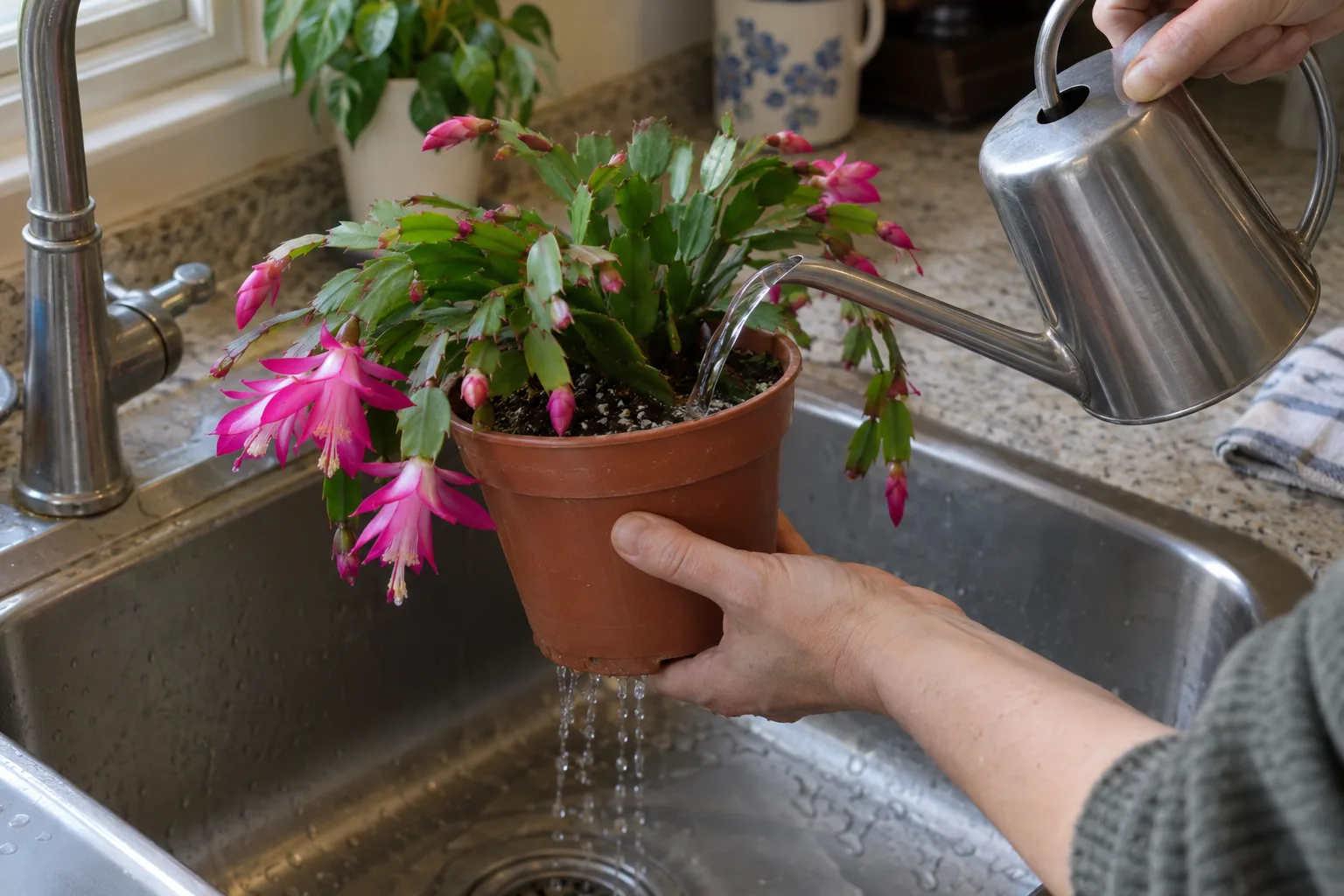
Carry the pot to the sink and water slowly for about 30 seconds so the whole root ball wets, then let it drain fully before it goes back on a saucer. Quick sips only moisten the surface, and the lower roots stay dry while the segments slowly wrinkle. Plump, firm segments tell you the routine is working.
How do I revive a shriveled Easter cactus?
Wrinkled, limp segments usually point to dry roots or to mix that has turned water-repellent. Work through these steps in order.
- Slide the plant out of the pot and look at the roots. Firm, white to tan roots are healthy, while brown, mushy roots have rotted and should be trimmed with clean scissors.
- Set the pot in a bowl of room-temperature water for 20 to 30 minutes so the mix soaks up water from the bottom.
- Lift it out and let it drain for at least 30 minutes.
- Move it to a humid, bright spot out of direct sun, such as a bathroom with a window.
- Wait a week or two for the segments to plump up before you fertilize.
Way 2: How do I raise humidity around an Easter cactus?
Raise humidity with a pebble tray, a group of plants or a small humidifier. Air conditioning can pull indoor humidity in a Queen Creek home well below 30 percent in summer, while this plant comes from forests where the air stays damp. Dry air draws water out of the segments faster than the roots can replace it. Humidity is the missing piece for most struggling plants.
Pebble tray
Fill a shallow saucer with pebbles and add water to just below the tops of the stones. Set the pot on top so the base stays out of the water, and refill the tray every few days. The effect stays close to the plant, so treat it as a helper alongside the other steps.
Grouping plants
Leaves release water vapor, so a cluster of plants raises the humidity around all of them a little. Pair your Easter cactus with other moisture-loving plants from our houseplant department, such as ferns or pothos.
Small humidifier
A small ultrasonic humidifier running a few hours a day in the room can lift humidity noticeably. An inexpensive hygrometer shows whether you are reaching roughly 40 percent or more. Hard water can leave white mineral dust on nearby surfaces, so filtered or distilled water works better in the tank.
Way 3: Where should I put an Easter cactus indoors?
Put it in bright, indirect light a few feet from an east-facing window, and keep it away from air conditioning vents and hot west or south glass. East windows give gentle morning light without the harsh afternoon sun. A north-facing window also works, although flowering can be lighter in a dimmer room.
Afternoon summer sun through west glass heats the segments and the pot, and direct sun can scorch the segments pale or reddish. A vent blowing dry air across the plant dries it quickly, so give it 3 or 4 feet of distance. Once buds form, leave the plant where it is, because turning or moving it can trigger bud drop.

Way 4: What potting mix keeps an Easter cactus from drying out?
A peat- or coir-based potting mix lightened with perlite and fine orchid bark holds moisture and still drains. A rough blend is three parts potting mix to one part perlite and one part bark. Standard cactus mix is gritty and fast-draining, which suits desert species and dries an Easter cactus out between waterings. In its native forests this plant roots into bark and leaf litter.
Arizona’s hard water leaves mineral salts in the mix over time. Flush the pot with plain water every month or two, letting it drain well, and replace the mix when you repot every 2 to 3 years. Fresh mix resets the salts.
Way 5: Which pot material holds moisture best?
Glazed ceramic and plastic pots hold moisture longer than unglazed terracotta. Terracotta walls are porous and pull water out of the mix, and in dry indoor air a small terracotta pot can dry out in a few days. If you like the look, slip a plastic nursery pot inside a decorative terracotta one, or browse our pottery and planters for options with drainage holes. Every pot needs drainage holes. Empty the saucer after each watering.

Way 6: Does a top dressing help an Easter cactus hold moisture?
A thin top dressing of fine coco coir or sphagnum moss slows evaporation from the soil surface. A quarter inch is enough. Keep it a little clear of the stem bases so air reaches the crown, since a thick, wet layer there invites rot. Replace it every few months as it breaks down and works into the soil, much like mulch outdoors scaled down to a pot.
Way 7: How should I change Easter cactus care through the Arizona seasons?
Follow the plant’s own cycle: a cool, drier rest in late fall and winter, then growth and bloom in spring. The rest matters because Easter cactus sets buds after several weeks of cooler nights, roughly 50 to 60°F, with less water. A bright, unheated room or a covered patio can supply that, as long as you bring the plant inside before any frost. Our gardening calendars help you plan other East Valley tasks around the same months.
| Months | Watering | Feeding | Notes |
|---|---|---|---|
| October | Ease back as nights cool | Stop | Prepare for the rest period |
| November to January | Water when the top 1 to 2 inches are dry, often every 10 to 14 days | None | Cool, bright spot with nights near 50 to 60°F |
| February to May | Water when the top inch is dry, more often as buds open | Half-strength balanced fertilizer every 2 to 4 weeks | Keep the plant in one spot while it blooms |
| June to September | Every 5 to 7 days indoors | Half-strength fertilizer about monthly | Add humidity and keep it off hot glass and away from vents |
Frequently asked questions
How is Easter cactus different from Christmas cactus?
Easter cactus has rounded segments with small bristles at the tips and blooms in spring, usually March through May. Christmas cactus blooms in late fall and winter. Both are Brazilian epiphytes, and the care in this post suits either one, though Easter cactus is the fussier about a cool winter rest and about dry air.
Why are the flower buds falling off?
Bud drop usually follows a sudden change, such as moving the pot, a swing in temperature, a blast from an air conditioning vent, or mix that dried out completely or stayed soggy. Once buds form, keep the plant in one spot, water on a steady rhythm and hold humidity up. Buds that fell will not reattach, but new ones can form next season.
Can I keep it outside in Queen Creek?
Yes, for short stretches in mild weather. A shaded, covered patio works in spring and fall when nights stay above about 50°F and daytime highs stay in the 70s to low 80s. Keep it out of direct sun and wind, and bring it indoors well before summer heat arrives or a frost is forecast.
When should I repot an Easter cactus?
Repot every 2 to 3 years in spring after blooming, since an Easter cactus flowers well when slightly snug in its pot. Choose a container only one size larger, with drainage holes, and fill it with fresh moisture-holding mix. Our classes and events page lists upcoming workshops if you want hands-on help.
Should I fertilize an Easter cactus?
Yes, feed lightly while the plant is growing. Use a balanced houseplant fertilizer at half the label strength every 2 to 4 weeks from late winter through summer, and stop in fall and early winter during the rest. Every few months, flush the pot with plain water to wash out the salts that Arizona’s hard water leaves behind.
Is an Easter cactus a good fit for your Arizona home?
Yes, if you have a bright spot out of direct sun and can check the pot once or twice a week. With a moisture-holding mix, a glazed pot and a little added humidity, it can bloom each spring. Skip it if your home stays near 70°F all winter with no cooler corner, or if you want a plant that tolerates weeks of neglect, because a true desert succulent fits that better. Visit us in Queen Creek and we will help you choose a spot, a pot and a mix.