
Do not cut back these eight Arizona plants in early spring: palo verde, bougainvillea, Texas sage, desert willow, chuparosa, lantana, brittlebush and red bird of paradise. Each is either in bloom, recovering from frost or about to leaf out, and a cut interrupts that.
Key takeaways
- Wait until freezing nights are behind you, often early to mid March in Queen Creek, before cutting back frost-tender plants such as bougainvillea, lantana and red bird of paradise.
- Prune palo verde, chuparosa and brittlebush after their flowers fade, which falls between April and June depending on the plant.
- Scratch a twig with your fingernail: green and moist means alive, brown and dry means dead.
- In early spring, remove only wood that is clearly dead, cracked or broken.
- If a freeze hits in March, wait two to three weeks for new buds before you cut anything.
Why does early spring pruning cause problems in the low desert?
Pruning in February and March catches plants at their most vulnerable, because some are blooming, some are dormant and some are still wearing frost damage. Brown, crispy outer growth on a frosted shrub shields the lower stems from the next cold night. Remove it early and you expose tissue that was protected.
Freezing nights can still show up in February and occasionally in early March here in Queen Creek, and afternoons can reach the 80s within days. A cut tells a plant to push new shoots. Soft new shoots are the first thing a late freeze kills.
Bloom timing matters just as much. Many desert shrubs and trees flower between February and May, so a hard cut in this window takes off buds before they open. Heat adds a third reason. Summer highs above 110°F arrive within a few months, and a plant that spends April regrowing has less stored energy for June.
Which eight plants should you leave alone in early spring?
Leave palo verde, bougainvillea, Texas sage, desert willow, chuparosa, lantana, brittlebush and red bird of paradise uncut until the dates below. These are varieties we commonly carry, though availability changes week to week and season to season, so browse our plant selection when you are planning additions. Sizes and bloom windows are typical ranges and vary by variety.
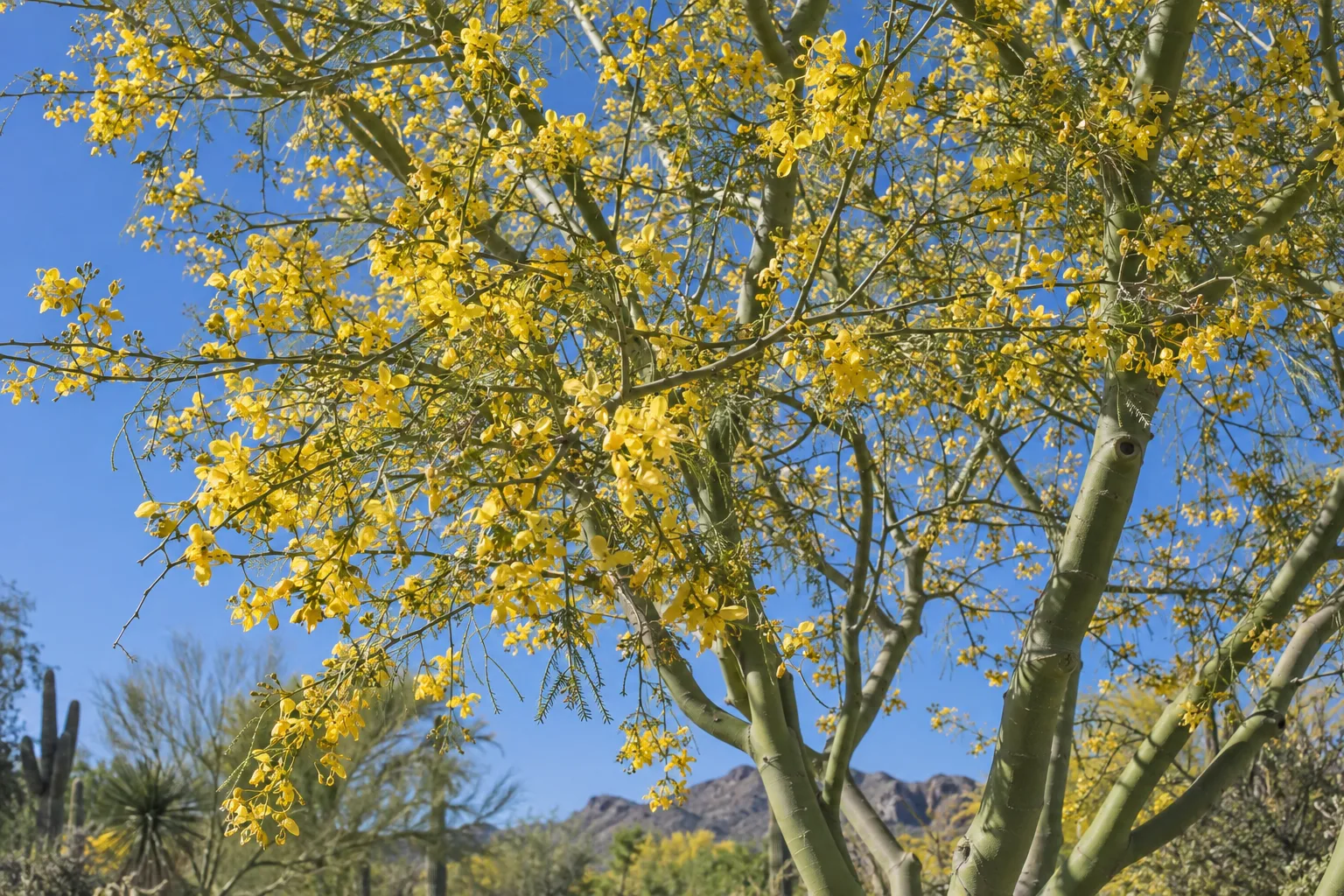
Palo verde (Parkinsonia florida)
Blue palo verde and its hybrids reach 15 to 30 feet tall and about as wide, want full sun, and need only deep, occasional watering once established. The drawback is litter, since the tree drops yellow petals, small leaflets and twigs for weeks around bloom, and brittle limbs can snap in monsoon wind.
Flowering runs roughly April into May, and the flower buds are already on the branches in February and March. Cutting then removes the show. Wait until the bloom finishes, in May or June, and keep cuts small. For heavy limbs, hire a certified arborist who works on desert trees.
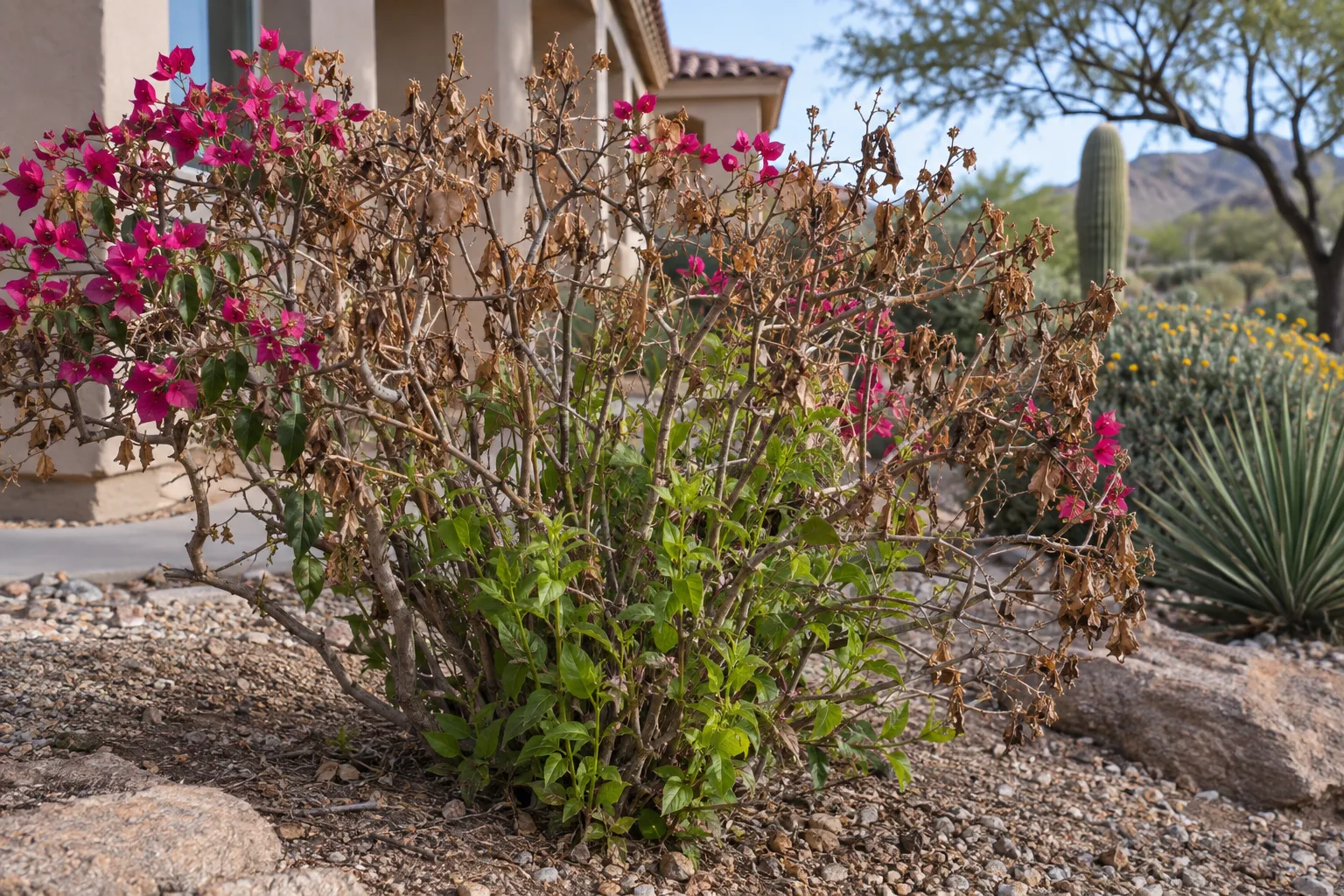
Bougainvillea (Bougainvillea hybrids)
Bougainvillea grows 8 to 20 feet as a sprawling shrub or climbing vine, depending on the variety, and needs full sun and deep watering with the soil allowed to dry between drinks. Its drawbacks are thorns and a tendency to freeze back in cold snaps.
Leaf drop and brown tips in February are frost damage, and the dead-looking outer growth insulates the stems below it. Wait until mid-March at the earliest, and ideally until new shoots appear near the base of the plant. Then cut out what is dead and shape the rest.
Texas sage (Leucophyllum frutescens and related species)
Texas sage grows 4 to 8 feet tall and wide depending on the variety, wants full sun, and does best with little water. Its flowers often follow summer humidity and rain. The drawback is that shearing it into a tight ball cuts bloom and leaves a bare, woody interior.
Skip heavy shearing in early spring. Shape it lightly right after a bloom cycle, typically late summer or fall, and take out dead twigs whenever you see them.
Desert willow (Chilopsis linearis)
Desert willow reaches 15 to 25 feet tall and 10 to 20 feet wide, grows in full sun, and needs little water once established. Orchid-like flowers in pink, burgundy or white open from late spring into summer. The drawback is a bare, dead-looking winter form and long seed pods that hang on the branches.
It leafs out late, usually late March into April. Wait for leaves so you can tell live wood from dead, then shape after the main flush of flowers. If you are shopping for a flowering tree with a late show, this is one to consider.
Chuparosa (Justicia californica)
Chuparosa grows 3 to 5 feet tall and wide in full sun to light shade and needs little water once established. Its red tubular flowers open from late winter into spring and feed hummingbirds. The drawback is a loose, open shape with sparse leaves for much of the year, and frost can burn the tips.
Cutting it in February or March removes the flowers at their peak. Trim it after the blooms fade in late spring.
Lantana (Lantana camara)
Lantana grows 2 to 4 feet tall and 3 to 6 feet wide in full sun and needs moderate to low water once established. It blooms for months. The drawback is that frost kills back the top growth, so it can look rough through winter, and older plants turn woody.
That brown top growth protects the crown. Wait until mid-March, watch for green shoots at the base, and then cut dead stems back to just above the first live growth.
Brittlebush (Encelia farinosa)
Brittlebush grows 2 to 4 feet tall and wide in full sun and needs very little water. Yellow daisy-like flowers cover it from roughly February into April or May. The drawback is a short life, since plants turn woody and open in the center after a few years.
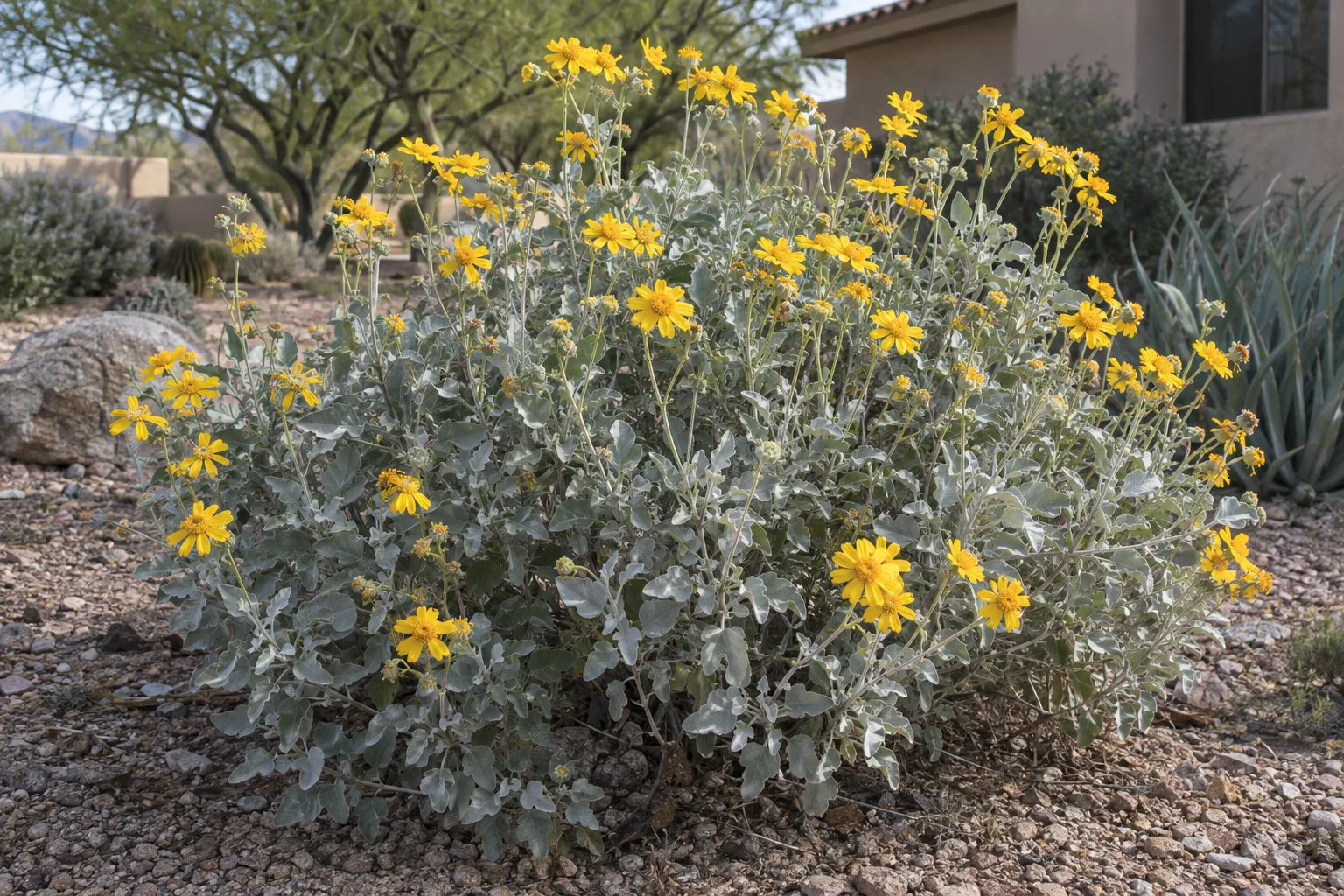
A February cut takes off every flower before it opens. Trim lightly after bloom ends. A tired, woody plant is better replaced than cut hard.
Red bird of paradise (Caesalpinia pulcherrima)
Red bird of paradise grows 5 to 10 feet tall and wide in full sun and needs low to moderate water. Orange-red flowers appear from roughly May through October. The drawback is that a hard freeze can take it to the ground, and it leafs out late in spring.
Do not rush to clear the dead stems. Wait for new growth, often late March into April, then cut dead stems back to live wood.
How can you tell if a frost-damaged plant is dead or alive?
Scratch a small strip of bark on a twig with your fingernail: green, moist tissue underneath means the wood is alive. Brown and dry means that section is dead. Appearances from the outside mislead, so test before you cut anything.
- Choose a twig on the damaged part of the plant and scratch a short strip of bark.
- Look at the color under the bark. Green or pale and moist is alive, and brown, dry and brittle is dead.
- Test several spots, working from the tip down toward the base.
- Tie a ribbon at the lowest spot that still shows live tissue.
- Wait two to three weeks and look for new buds before you make the cut.
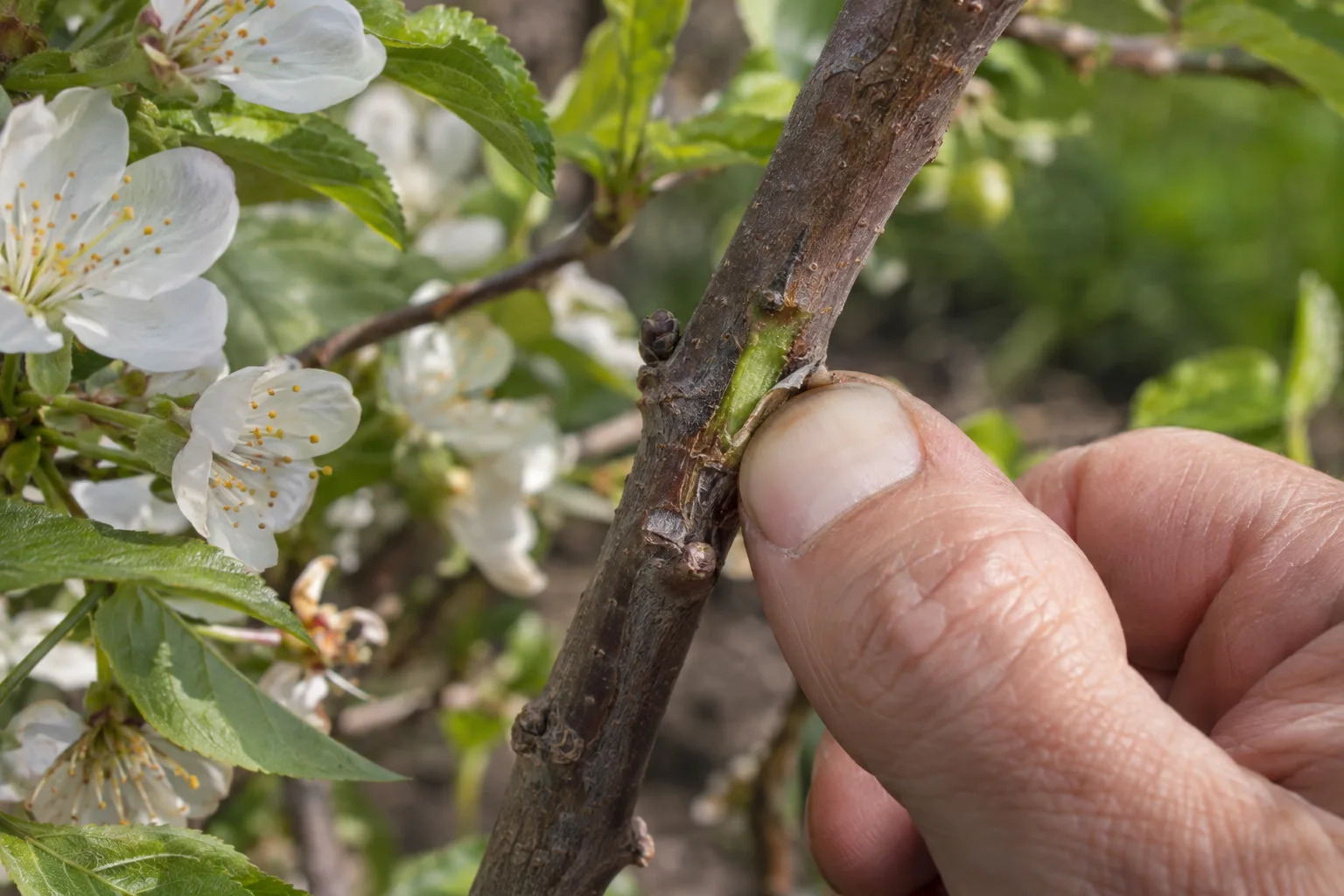
If every stem tests dead, check the base of the plant for fresh sprouts before you pull it out. Lantana and red bird of paradise often regrow from the crown after a hard freeze.
When should you prune each of these plants instead?
Most of these plants should wait until the flowers fade or new growth appears, which falls between mid-March and June. The table lays out the timing, and our gardening calendars list other monthly tasks.
| Plant | Wait for | Then |
|---|---|---|
| Palo verde | Bloom to finish, May or June | Light shaping, small cuts |
| Bougainvillea | New growth at the base, mid-March or later | Remove dead wood, then shape |
| Texas sage | A bloom cycle to end | Light shaping, late summer or fall |
| Desert willow | Leaves, late March to April | Shape after the main flower flush |
| Chuparosa | Flowers to fade, late spring | Light trim |
| Lantana | New growth, mid-March or later | Cut dead stems to live growth |
| Brittlebush | Flowers to fade, April or May | Light trim, or replace |
| Red bird of paradise | New growth, late March to April | Cut dead stems to live wood |
What can you safely do in early spring?
You can remove wood that is clearly dead, cracked or broken, and you can pull spent flowers. Those cuts take little foliage and leave buds intact. Check each cut against the scratch test first.
Early spring also suits other work that does not involve cutting. Rake litter from under shrubs, check irrigation lines for leaks, and note which plants show new growth so you can schedule pruning by what the plants tell you. Bag and trash any material that looks diseased rather than adding it to compost.
Frequently asked questions
Can I deadhead or lightly tidy in early spring?
Yes, removing spent flowers and a few dead twigs is safe on most of these plants. Light cuts take off little foliage and leave flower buds intact. Make each cut just above a live bud, and stop if you see green tissue where you expected dead wood. Save shaping and size reduction for the dates in the table above.
Should I wait longer if my yard sits in a low spot?
Yes, give it an extra week or two. Cold air settles in low spots and open areas away from walls, so frost can show up later and last longer there than beside a warm block wall. Check the forecast for lows near 32°F before cutting any frost-tender plant, and look for new growth first.
What if a branch is cracked or hanging over the house?
Remove it now. A hazardous limb is worth cutting in any month, because it can fall and injure people or damage property. Make a clean cut just outside the branch collar. For large limbs, tall trees or anything near power lines, hire a certified arborist rather than climbing with a saw.
Do I need to seal pruning cuts?
No. Wound sealant is not recommended by current arborist guidance, because trees close wounds on their own by compartmentalizing damaged tissue. Leave cuts open, make them with sharp, clean bypass pruners or a pruning saw, and wipe blades with isopropyl alcohol between plants when you are working around diseased wood.
How far back should I cut once the plant leafs out?
Cut dead stems back to the first live green tissue, then stop. When you also trim live growth, take a quarter or less in one session. Cuts made just above an outward-facing bud direct new growth away from the center of the plant. Save heavier reshaping for the post-bloom window.
Should you hold off on pruning everything in your yard?
No. Cut cracked, broken or dead wood in any month. Hold off on the eight plants above and on any shrub that is in bloom or still showing frost damage. If your yard has none of these plants, the timing here matters much less to you. If you like to prune on a fixed weekend every February, plan on losing some flowers, because that date suits very few desert plants. Come visit us at the nursery in Queen Creek, and bring a photo of any plant you are unsure about.