

In early February in Arizona, plant cool-season vegetables, herbs and annual color, and hold tender tomatoes and peppers until frost risk fades. Queen Creek can still see lows near freezing through mid-February, so keep frost cloth handy.
Key takeaways
- Direct-seed carrots, beets, radishes, lettuce and spinach in early February; radishes are ready in about 25 to 30 days, well before April heat.
- Set out tomato transplants only when forecast lows stay above 40°F, and cover them on any night forecast near 35°F.
- Plant cilantro, parsley, chives, rosemary, thyme and oregano now, but wait until late March or April for basil, which stalls when nights drop below 50°F.
- Plant citrus after the last frost risk, usually late February through April in the East Valley.
- Work 2 to 4 inches of compost into beds and add 2 to 3 inches of mulch after planting.

What vegetables can I plant in early February in Arizona?
Plant cool-season crops from seed: carrots, beets, radishes, lettuce, spinach, chard and turnips all still fit in early February. Radishes are ready in about 25 to 30 days, while carrots take closer to 70 to 80, so sow carrots first. Seed potatoes can also go in during February.
The University of Arizona Cooperative Extension vegetable planting calendar for Maricopa County lists the planting window for each crop, and it is worth a look before you shop. Lettuce and spinach bolt (send up a flower stalk and turn bitter) once April warms up, so give them afternoon shade to stretch the harvest. Our herbs, vegetables and berries department shows the kinds of vegetables we commonly carry, though availability changes week to week and season to season. Keep seeds evenly moist until they sprout.
Can I plant tomatoes and peppers in early February?
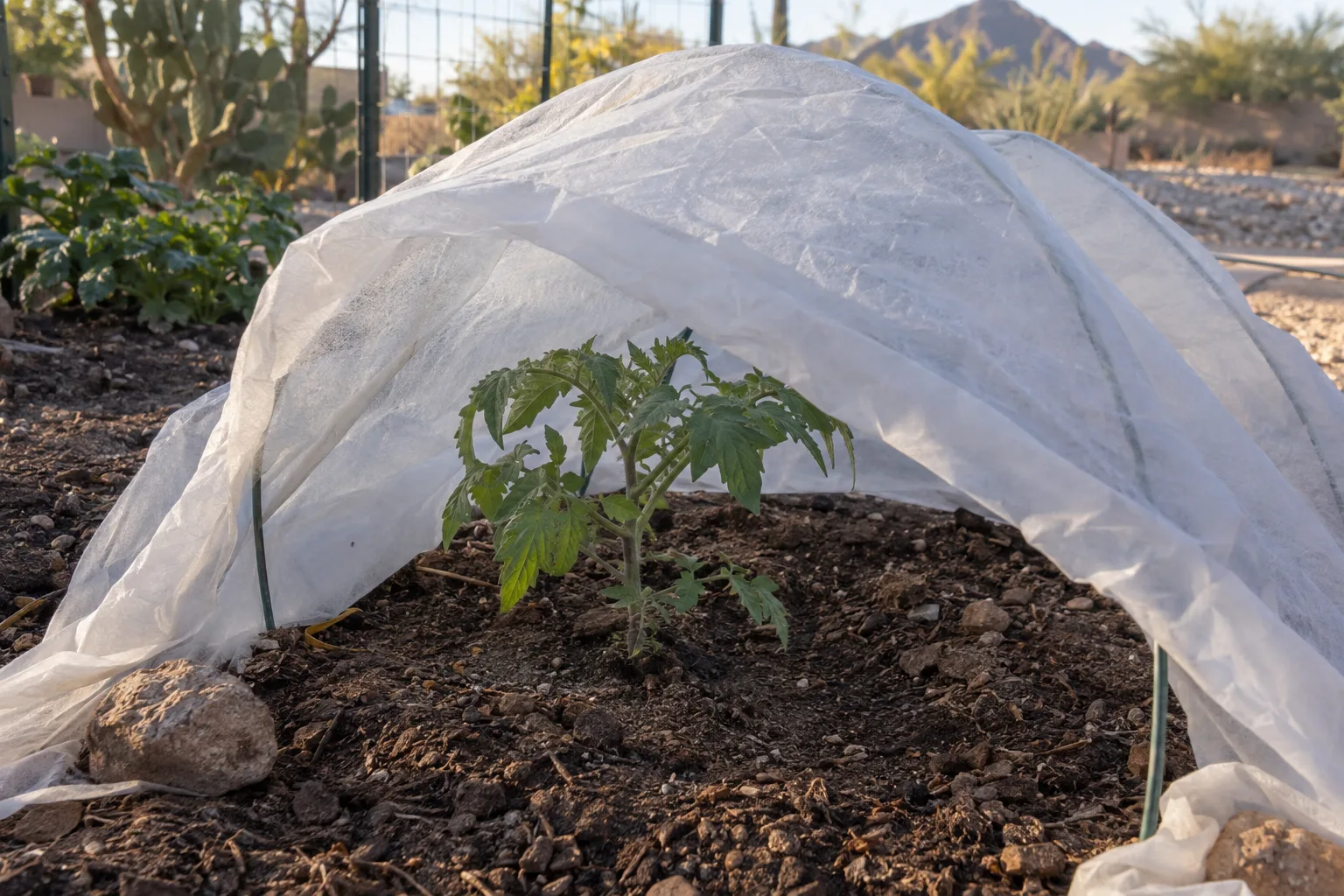
You can, but only with frost cloth ready, and late February is the safer window in Queen Creek and the rest of the East Valley. Tomatoes handle cool nights better than peppers, and peppers usually do better when you wait until March.
Choose stocky transplants in 4 to 6 inch pots, and look for early-maturing, heat-tolerant tomato varieties. These set fruit before nights stay above about 75°F, the point at which most tomatoes drop their blossoms. Plant when forecast lows hold above 40°F, and cover the plants on any night forecast near 35°F. Use frost cloth or an old bed sheet, and take it off by mid-morning. Plastic touching the leaves conducts cold and can burn them.
Which herbs should I plant in February?
Cilantro, parsley, dill, chives and fennel go in now, along with the Mediterranean herbs rosemary, thyme, oregano and sage. Cilantro bolts quickly once days warm, so sow it thickly and cut young leaves often. Parsley and chives usually last into May with some afternoon shade.
Basil is the exception. It stalls when nights fall below 50°F, so wait until late March or April. Rosemary, thyme, oregano and sage tolerate our alkaline soil and need little water once rooted, which makes them easy first plants for a new herb bed.
What flowers and color can I plant in February?
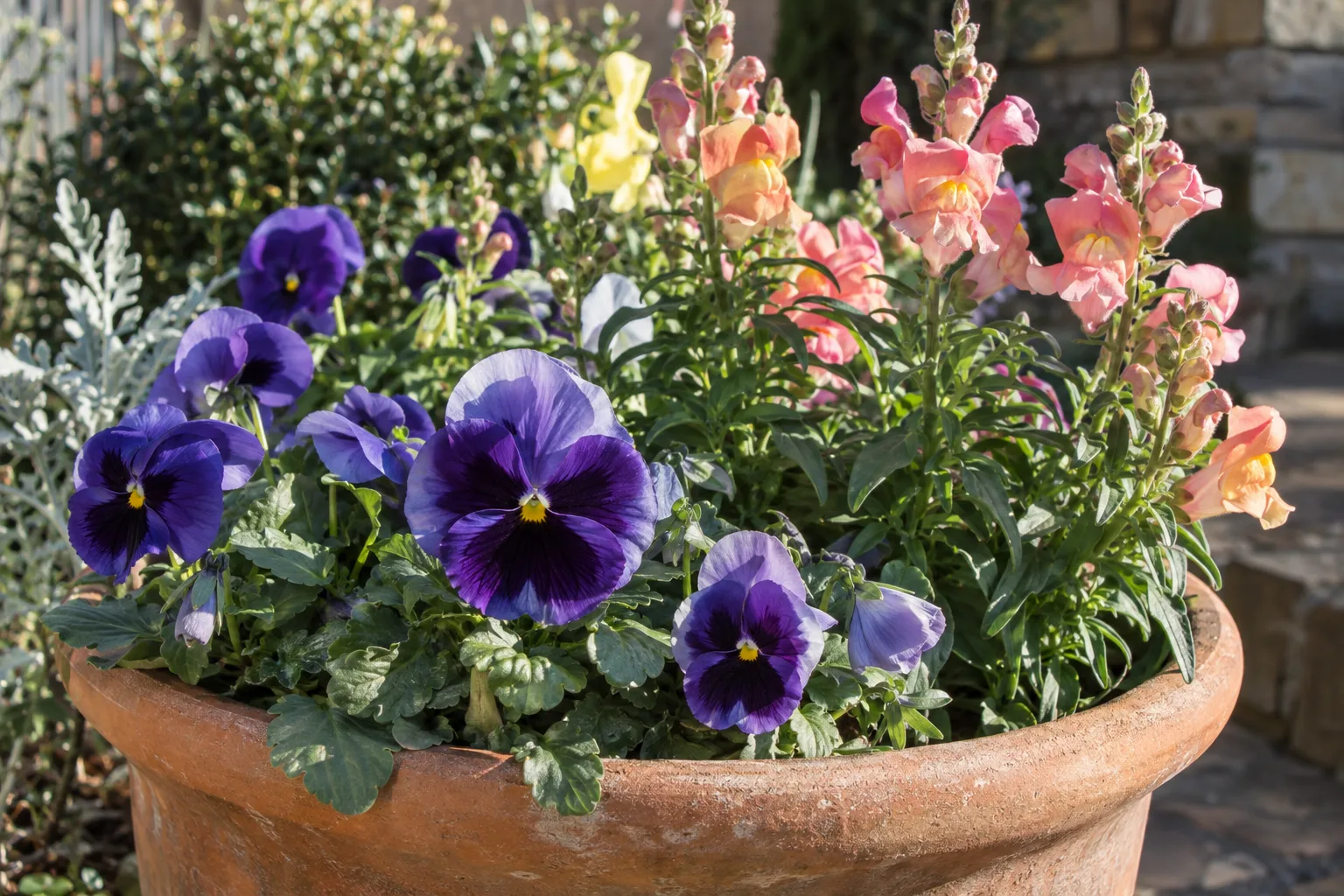
Cool-season annuals such as pansies, violas, snapdragons, petunias, alyssum and dianthus still go in well, and they bloom until temperatures climb above 90°F or so. Our annual flowers and foliage department covers the varieties we commonly carry, and availability changes week to week and season to season.
Give them morning sun and a little afternoon shade, and pinch off spent blooms every week or two. Heat-lovers such as vinca, angelonia and zinnias belong in the ground later, in late March or April, once nights stay above about 55°F. Color planted now fades by May.
Should I plant citrus and fruit trees in February?
Yes for most fruit trees, with one caution: citrus is frost-tender, so plant it after the last frost risk, usually late February through April in the East Valley. Young citrus trunks are the most vulnerable part, and a trunk wrap or frost cloth over the canopy protects them on cold nights.
Look through our citrus trees to see the types we commonly carry, keeping in mind that availability changes week to week and season to season. Dig the hole 2 to 3 times as wide as the container and no deeper than the root ball. Bare-root deciduous fruit trees are at the end of their window by early February, so move quickly on those. Container-grown trees have a longer window.
How should I prepare Queen Creek soil for February planting?
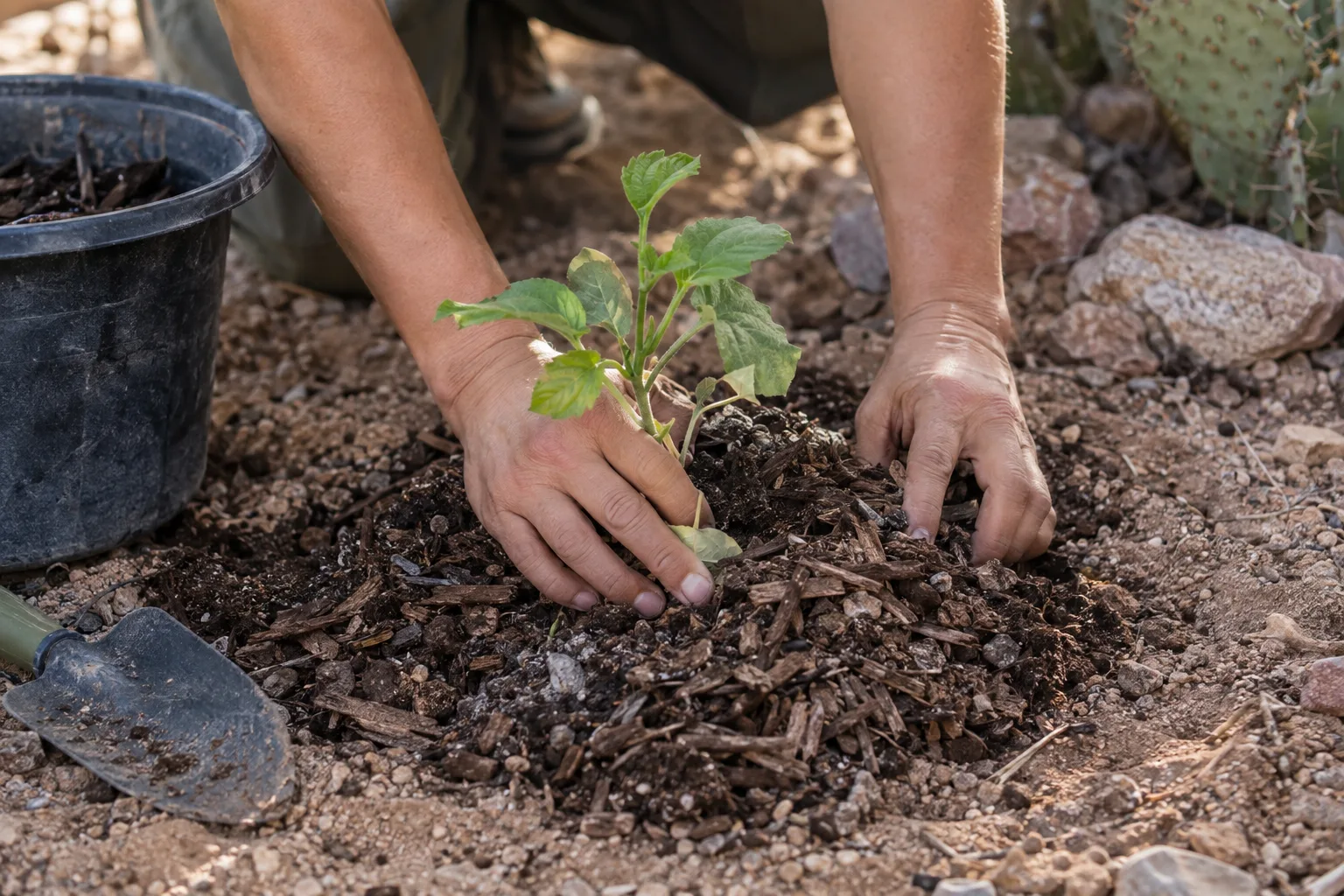
Work 2 to 4 inches of compost into the top 8 to 12 inches of soil, then finish with 2 to 3 inches of mulch. Our native soil is alkaline (often pH 7.5 to 8.5) and low in organic matter, and many yards have caliche, a cement-like calcium layer that can start 6 to 12 inches down.
Roots stop at caliche, so break it up with a digging bar wherever a bed or hole will go. Raised beds skip both problems. Hard irrigation water also leaves salts behind, so water deeply and less often to push them below the root zone.
How much should I water new plantings in February?
Water new transplants every 2 to 3 days for the first two weeks, then stretch to every 4 to 7 days as roots spread. Check the soil 2 to 3 inches down before you water, because the surface dries fast in our low humidity while the root zone stays damp much longer.
Seedlings need the top inch kept evenly moist until they sprout. Overwatering in cool soil invites root rot. Set up drip irrigation now so it is ready when water needs climb in March.
What should I leave alone until March or later?
Wait on anything that needs warm soil or has no frost tolerance. A few extra weeks costs you little, and a single frost can kill a plant you set out too early.
| Plant | What to do in early February |
|---|---|
| Tomato transplants | Plant in late February with frost cover ready |
| Pepper transplants | Wait until March in most East Valley yards |
| Squash, cucumbers, beans | Start indoors, or direct-seed once soil reaches about 60°F |
| Basil | Wait until nights stay above 50°F |
| Palms and bougainvillea | Wait for warm soil and no frost risk |
| Vinca and angelonia | Plant in late March or April |
Desert trees such as palo verde and mesquite establish fastest in warm soil, so browse our desert trees now and plant later in spring. Our gardening calendars lay out what to plant each month after this one.
Frequently asked questions
Can I start warm-season seeds indoors in February?
Yes, start tomato, pepper, squash and cucumber seeds indoors in early February if you want seedlings ready for late March. Use a bright window or grow light and keep seed-starting mix at 70°F to 80°F for fast germination. Squash and cucumbers grow quickly, so sow them only 2 to 3 weeks before planting out.
Is it too late to plant cool-season vegetables?
No, but the window is closing. Radishes, lettuce and spinach sown by mid-February still finish before April heat, and carrots and beets sown in early February have the best odds. Choose fast-maturing varieties and plant in a spot with afternoon shade. After about the first week of March, switch to warm-season crops.
Should I fertilize new transplants right away?
Wait 1 to 2 weeks after planting. Roots are busy establishing, and compost-amended soil already supplies some nutrients. After that, apply a balanced slow-release fertilizer at the label rate, keeping it a few inches from the stems. Leafy crops such as lettuce and spinach respond well to nitrogen, while tomatoes and peppers need less of it once they bloom.
Can I plant bare-root fruit trees in February?
Early February is the tail end of the bare-root season, so plant them as soon as you can. Soak the roots for several hours before planting, set the tree at the same depth it grew before, and water deeply. Bare-root trees leaf out quickly as days warm, and later planting stresses them.
Do I need to harden off transplants?
Yes, spend 5 to 7 days getting transplants used to outdoor conditions. Set them outside in bright shade for a few hours, then lengthen their time and move them into more sun each day. Skipping this step can scorch leaves, even in February, because the sun is strong and nights stay cool.
Is early February the right time to plant in your yard?
For cool-season vegetables, herbs and annual color, yes: February gives them 6 to 8 weeks of mild weather before April warms up. For tomatoes and peppers, it works only if you will cover them on cold nights, so gardeners who travel or cannot check the forecast should wait until late February or March. If your yard is solid caliche, fix the soil or build a raised bed first. Visit us at the nursery in Queen Creek and we will help you match plants to your yard.
