
The best drought-tolerant shrubs for Arizona heat are Texas sage, red bird of paradise, brittlebush, desert ruellia, autumn sage and bougainvillea. Each handles summer highs above 110°F and alkaline soil, and each needs deep, infrequent watering once established.
Key takeaways
- Plan on one to two growing seasons of regular watering before any shrub can live on a desert schedule.
- Plant from mid-September through November or from late February through April, and avoid June through August.
- Set the top of the root ball about 1 inch above the surrounding soil so water does not pool at the crown.
- Established shrubs in this guide usually need a deep soak every 7 to 21 days in summer and every 3 to 4 weeks in winter, depending on the plant.
- During the monsoon (roughly July through September), skip your next irrigation after a rain of half an inch or more.
What does drought tolerant mean in the low desert?
It means a shrub survives, and still looks good, on deep and infrequent watering after its roots are established, which usually takes one to two growing seasons. A plant sold as drought tolerant in a mild coastal climate can fail here, because summer highs above 110°F, very low humidity and heat bounced off block walls and stucco are a much harder test.
Every new shrub, including native ones, needs regular water while its roots spread into the surrounding soil. Plant tags describe mature performance. They say nothing about the first summer.
Queen Creek and the rest of the East Valley fall in USDA zone 9b, with mild winters and an occasional frost. That frost matters for tender shrubs like bougainvillea and red bird of paradise, so we flag it below where it applies.
What should I check about caliche and alkaline soil before planting?
Check drainage and soil pH first, because caliche blocks water and alkaline soil ties up iron. Caliche is a cemented layer of calcium carbonate that can sit anywhere from a few inches to several feet below the surface, and roots and water both struggle to get through it.
Soil pH in the East Valley often runs from about 7.5 to 8.5. At that range, leaves can turn yellow while the veins stay green, a sign of iron chlorosis. Hard irrigation water adds salts over time, and a deep soak moves them below the root zone.
To test a spot, fill the planting hole with water, let it drain, then fill it again. Standing water after 12 to 24 hours means poor drainage. If you hit caliche, break through it with a digging bar or auger so water can move down and away from the roots.
Which drought-tolerant shrubs work best in Queen Creek?
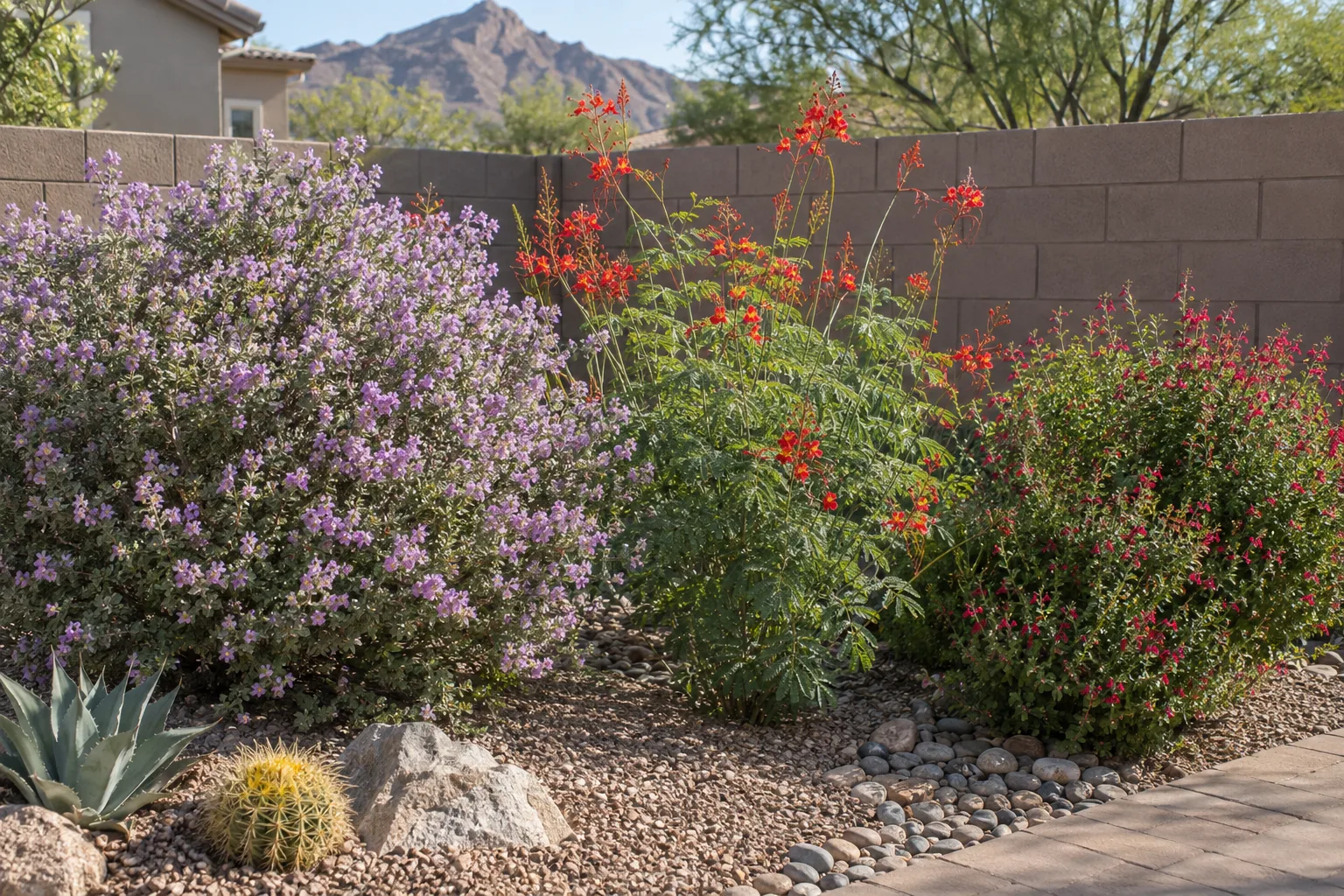
Six shrubs cover most yards here, from compact bloomers to large wall-hugging color. These are varieties we commonly carry, though availability changes week to week and season to season. Browse our plant department to see what is on the grounds now.
Texas sage (Leucophyllum frutescens and related species)
Texas sage grows 4 to 8 feet tall and wide depending on the variety, with compact forms closer to 3 to 5 feet. It wants full sun and a deep soak every 14 to 21 days in summer once established. Silver-gray foliage looks tidy all year, and purple blooms often follow humid monsoon weather. The drawback is that frequent watering and shearing both ruin its shape and cut flowering.
Red bird of paradise (Caesalpinia pulcherrima)
Red bird of paradise reaches 5 to 10 feet in full sun and blooms in orange-red from late spring into fall. It needs a deep soak about every 10 to 14 days in summer. Growth is fast. Its drawback is frost: a hard freeze can kill it to the ground, and it may look bare until it regrows from the roots in spring.
Brittlebush (Encelia farinosa)
Brittlebush is a native shrub that grows 2 to 4 feet tall and wide, with silvery leaves and yellow daisy-like flowers from late winter through spring. It likes full sun and a deep watering every 3 to 4 weeks in summer. The drawback is that it sheds leaves and looks sparse in the heat of summer, and too much water shortens its life.
Desert ruellia (Ruellia peninsularis)
Desert ruellia grows 3 to 4 feet tall and wide in full sun or light afternoon shade. Purple trumpet flowers appear from spring into fall and draw hummingbirds and butterflies. Plan on a deep soak every 7 to 10 days in summer. Its drawback is a thirstier habit than the others on this list, plus some damage in hard cold snaps.
Autumn sage (Salvia greggii)
Autumn sage stays 2 to 3 feet tall and wide and blooms in red, pink, coral or white. Give it full sun, or afternoon shade in the hottest spots, and a deep soak every 7 to 10 days in summer. It brings a softer, cottage-garden look to desert beds. The drawback is that blooming slows during the hottest weeks, and leaves scorch against a west-facing wall.
Bougainvillea (Bougainvillea hybrids)
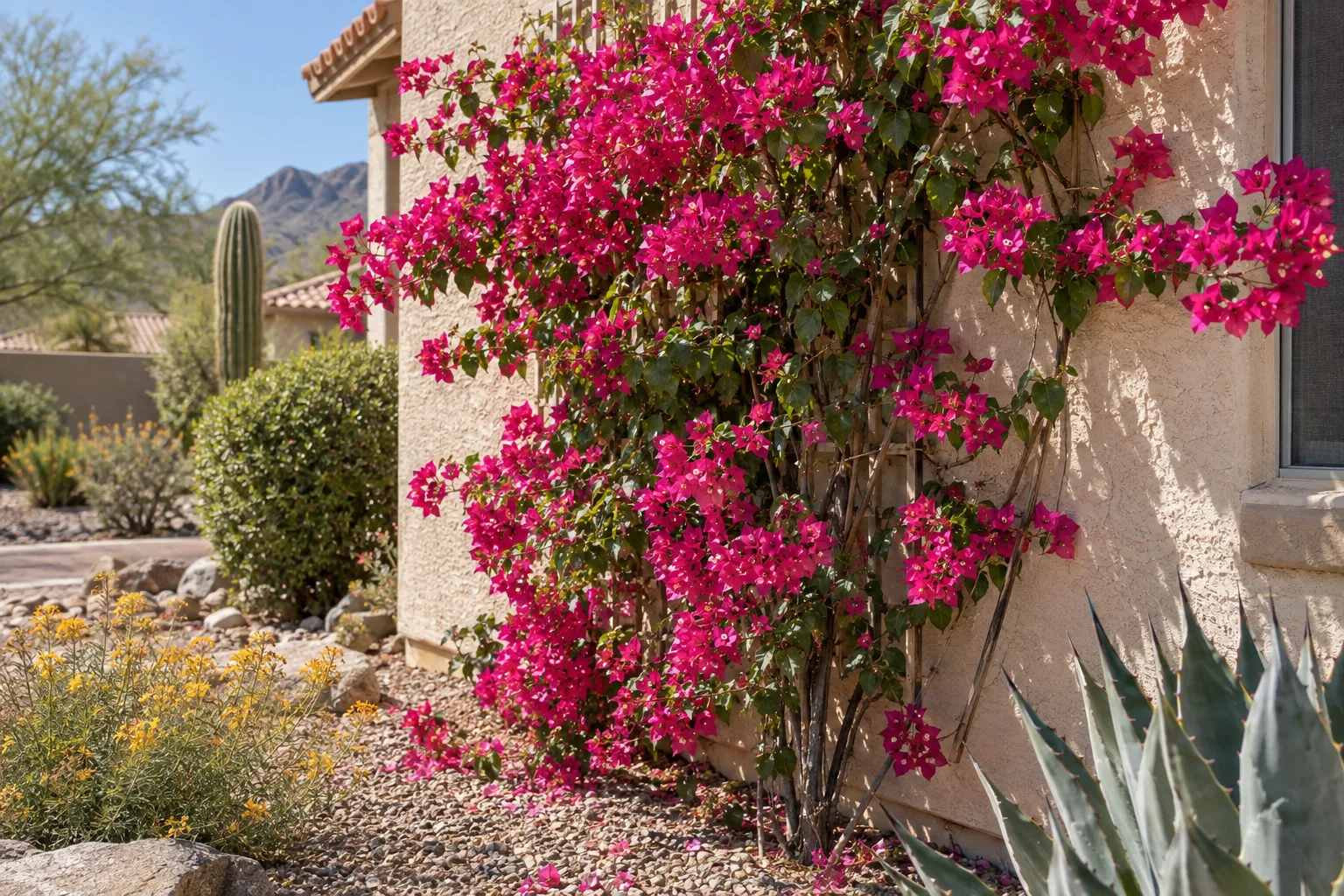
Bougainvillea reaches 6 to 15 feet or more depending on the variety, and it covers walls and fences with magenta, orange, red, purple or white bracts. It wants full sun and a deep soak every 10 to 14 days in summer. Slightly drier conditions can bring heavier color. The drawback is frost tenderness, along with thorns that make pruning a careful job.
When and how should I plant desert shrubs?
Plant in fall, from mid-September through November, or from late February through April, so roots establish before extreme heat or frost arrives. Our gardening calendars lay out timing month by month. Summer planting from June through August puts the most stress on young roots.
- Dig a hole 2 to 3 times as wide as the root ball and no deeper than the root ball.
- Run the drainage test from the soil section and fix any standing water before the shrub goes in.
- Backfill with the soil you removed. Rich amendments make a pocket that holds water and keeps roots from spreading outward.
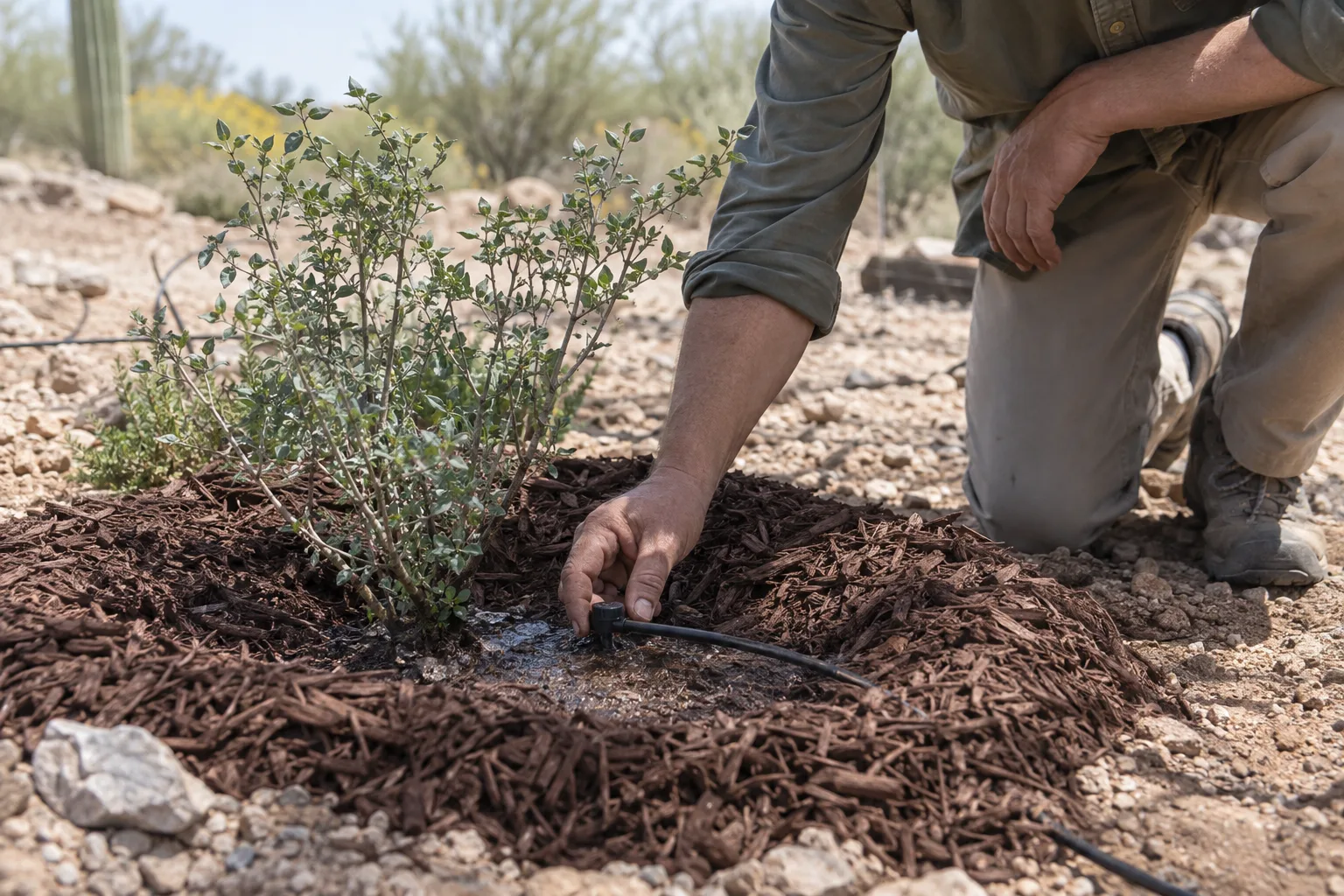
- Set the top of the root ball about 1 inch above the surrounding grade, and firm the soil lightly to remove air pockets.
- Build a low soil basin in a ring 18 to 24 inches from the stem to hold water over the root zone.
- Soak the plant slowly and deeply right away.
- Add 2 to 3 inches of decomposed granite or organic mulch inside the basin, and keep it off the stem.
- Water every 3 to 5 days through the first summer, then stretch the interval over the next one to two years.
Planting too deep causes crown rot, and it is one of the more common ways shrubs are lost here. Overwatering after the shrub is established causes the next most. If you want hands-on help, check our classes and events page for gardening sessions.
How often should I water established drought-tolerant shrubs?
Most of these shrubs need a deep soak every 7 to 21 days in summer and less often in cooler months. Deep means water reaches about 18 to 24 inches into the soil. A five-minute drip wets only the surface and trains roots to stay shallow.
| Shrub | Summer (June to September) | Spring and fall | Winter (December to February) |
|---|---|---|---|
| Texas sage | Every 14 to 21 days | Every 21 to 30 days | Once a month or less |
| Red bird of paradise | Every 10 to 14 days | Every 14 to 21 days | About once a month |
| Brittlebush | Every 21 to 28 days | About every 30 days | Rarely, if at all |
| Desert ruellia | Every 7 to 10 days | About every 14 days | Every 21 to 30 days |
| Autumn sage | Every 7 to 10 days | About every 14 days | About every 21 days |
| Bougainvillea | Every 10 to 14 days | Every 14 to 21 days | Every 21 to 30 days |
Treat these intervals as starting points. Sandy soil dries faster than clay, and a shrub against a south-facing wall dries faster than one in an open bed. To check, push a screwdriver 6 inches into the soil. If it slides in easily and comes out damp, wait.
How does the monsoon affect desert shrubs?
The monsoon, roughly July through September, lets you cut back irrigation, but heavy storms can drown roots in soil that drains poorly. After half an inch of rain or more, skip your next scheduled cycle and use the screwdriver check before turning the system back on.
Humid weather and rain often trigger blooms on Texas sage. Crowded shrubs hold moisture in their centers, so give each plant room for air to move. Dead interior branches can be trimmed out.
Bougainvillea and other non-natives are the most likely to develop root problems if the planting spot stays wet after storms. Native shrubs on this list usually handle the season well.
When should I prune desert shrubs?
Prune most of these shrubs in late February through early March, after the main frost risk has passed and before spring growth takes off. Cut with clean bypass pruners just above a branch or node, and leave no stubs.
Avoid shearing shrubs into balls. It removes the natural shape and produces dense, weak regrowth. On Texas sage, thin out some of the oldest stems at the base each year and leave the rest alone. Red bird of paradise hit by frost should wait until new growth shows in spring, so you can see how far back the damage goes.
Bougainvillea tolerates heavier pruning and recovers quickly. Brittlebush needs only a light trim after its spring bloom.
Where in my yard should each shrub go?
Put the heat lovers, bougainvillea, Texas sage and red bird of paradise, against south and west walls, and set autumn sage and desert ruellia a few feet back. Block walls, stucco and pavement can add 10 to 20°F of reflected heat near their surfaces, and that load pushes sensitive plants harder than open beds do.
Low spots collect cold air and can run 5 to 7°F colder on frosty nights. Keep frost-tender shrubs out of those pockets. A desert tree on the west side of a bed can add filtered afternoon shade for autumn sage and ruellia.
Spend a few days watching where sun and shade fall before you dig. Heat patterns differ from one yard to the next.
Frequently asked questions
Do drought-tolerant shrubs need fertilizer?
Most of these shrubs need little or no routine fertilizer. Heavy feeding pushes soft, fast growth that suffers more in summer heat. If leaves turn yellow with green veins, a chelated iron product applied in spring or fall can help in our alkaline soil. Bougainvillea may benefit from a light spring feeding, so follow the label.
Can I grow these shrubs in containers?
Yes, most of them grow in large containers with a fast-draining mix, and bougainvillea and autumn sage handle pots best. Pots dry out faster than ground soil, so expect to water more often. Frost-tender plants in pots can be moved against a wall or under cover on cold nights. See our pottery and planters for container options.
Why is my Texas sage not blooming?
Too much water and too little sun are the usual causes. Texas sage tends to flower after dry spells followed by humid monsoon weather, and a daily or every-other-day irrigation cycle keeps it leafy with few blooms. Move to a deep soak every 2 to 3 weeks in summer and confirm it gets full sun.
Do I need to protect these shrubs from frost?
Bougainvillea, red bird of paradise and desert ruellia are the ones to watch. Cover them with frost cloth when the forecast drops to freezing. If a shrub freezes back, wait until new growth appears in spring before cutting, because red bird of paradise often regrows from the roots.
How far from a wall should I plant?
Leave about 3 feet for most of these shrubs, and more for large Texas sage or red bird of paradise, so branches have room and air can move. Autumn sage and desert ruellia do better a few feet off a west-facing block wall. Heat-loving bougainvillea can sit closer if you give it a trellis.
Are drought-tolerant shrubs right for your yard?
Yes, if you can water new plants steadily for the first one to two years and then back off. They suit sunny beds, block-wall borders and low-maintenance yards. They are a poor match if you want lawn-like lushness, if the planting spot holds standing water you cannot fix, or if your timer runs daily no matter the season. Matched to the right spot, each one carries through a summer above 110°F on far less water than most ornamentals. Visit us at the nursery in Queen Creek and we will help you pick shrubs for your yard.