
The best drought-tolerant plants for an Arizona garden are lantana, desert marigold, red bird of paradise, autumn sage, blackfoot daisy, Parry’s agave, deer grass and blue palo verde. All handle 110°F summers and alkaline soil once established, typically after one to two years.
Key takeaways
- Plan on regular watering for the first 1 to 2 years, because roots need that long to reach deeper, cooler soil.
- Plant in October and early November, or in February and March as a second choice, so roots grow before the first 110°F summer.
- Dig each hole as deep as the root ball and about twice as wide, and backfill with native soil mixed with no more than about 20 percent compost.
- Established shrubs usually do well on a deep soak every 7 to 14 days in summer, not a daily sprinkle.
- Mixing plants with different bloom windows gives color from about February through November.
What makes a plant drought-tolerant in the Arizona low desert?
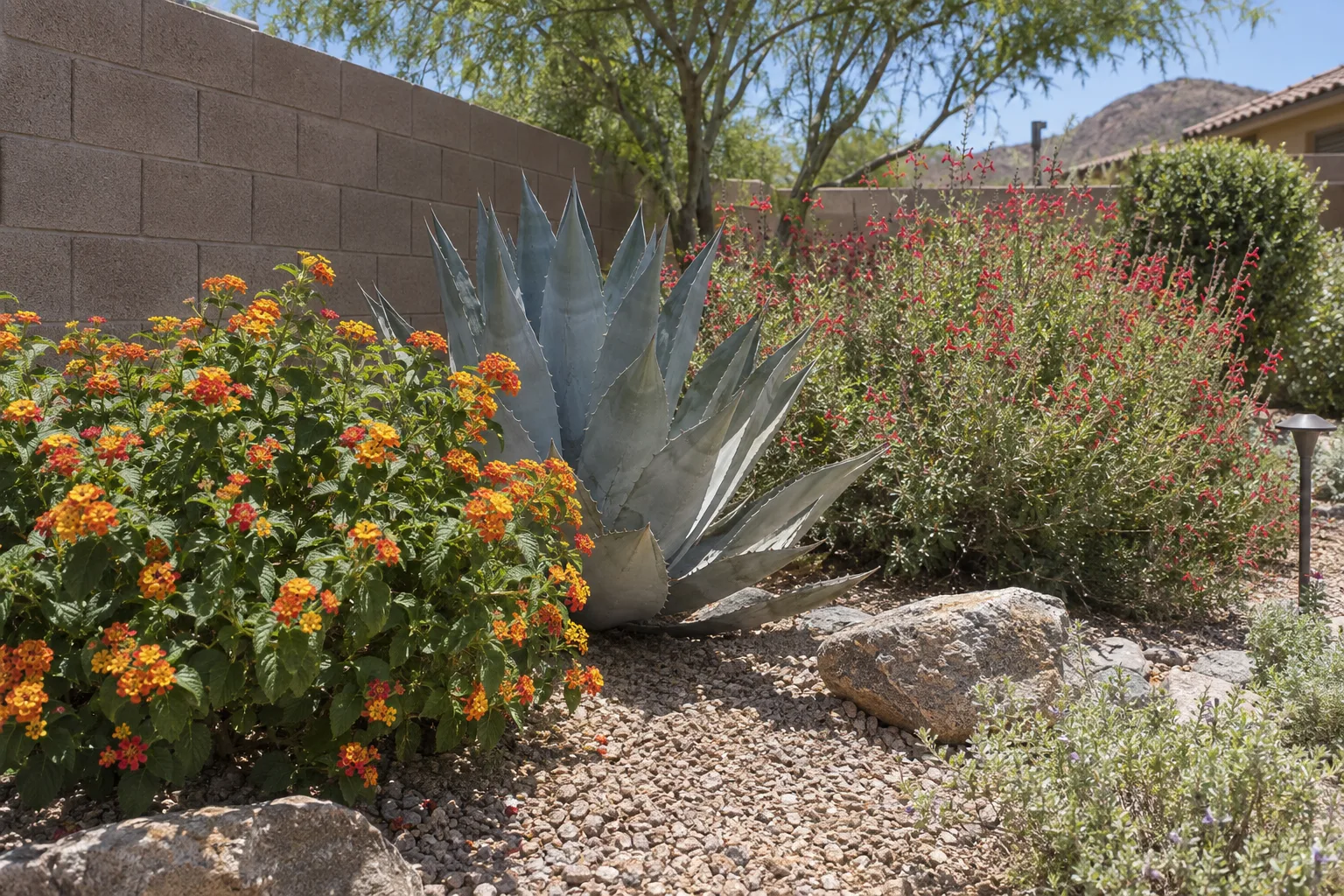
A drought-tolerant plant stores water, reaches it with deep roots, or slows its growth when the heat peaks. Many also have silver or gray leaves that reflect sunlight, small leaves that lose less moisture, or waxy surfaces that hold water in.
Some gardeners assume these plants never need irrigation. Every plant below needs regular watering for its first one to two years while the roots spread, and most flower better with an occasional deep soak in summer. Water still matters. Our conditions are demanding: alkaline soil (often pH 7.5 to 8.5), caliche layers, summer highs above 110°F, and a humid monsoon from roughly July through September. Plants native to the Sonoran Desert and similar dry regions handle that combination well, and you can browse our full plant selection to see what is available.
Which drought-tolerant plants do best in Queen Creek?
These eight cover groundcover, perennials, shrubs, a grass, an agave and a shade tree, and together they flower across most of the year. Many are varieties we commonly carry, though availability changes week to week and season to season. Sizes below are typical ranges.
Lantana (Lantana camara and L. montevidensis)
Mature size is 2 to 4 feet tall and 3 to 6 feet wide, with trailing types staying lower. It wants full sun and low water once established. Flowers in yellow, orange, red, pink, purple or white appear from spring until frost, and butterflies visit them often. The drawback is frost: a hard freeze burns back the top growth, and the plant looks ragged until you cut it back in late February or March.
Desert marigold (Baileya multiradiata)
Mature size is 1 to 2 feet tall and wide. Give it full sun and very little water once established. Yellow daisy-like flowers rise on tall stems above silvery foliage, heaviest in spring and on and off through much of the year. The drawback is a short life and a dislike of wet feet, so overwatering or a damp monsoon stretch can rot it, though it reseeds easily in gravel and bare soil.
Blackfoot daisy (Melampodium leucanthum)
Mature size is 6 to 12 inches tall and 1 to 2 feet wide. It takes full sun and reflected heat from a wall or driveway with little water. White daisies with yellow centers bloom from spring into fall, with the heaviest flush in spring. The drawback is poor tolerance of soggy soil, so plant it where water drains quickly and keep drip emitters off the crown.
Autumn sage (Salvia greggii)
Mature size is 2 to 4 feet tall and wide. It does best in full sun to light afternoon shade, with low to moderate water once established. Red, pink, coral, purple or white flowers bloom mainly in spring and fall, and hummingbirds visit them. The drawback is woody, sparse growth if you skip pruning, so cut it back by about one third in late winter. A west-facing wall with strong reflected heat can scorch it in summer.
Red bird of paradise (Caesalpinia pulcherrima)
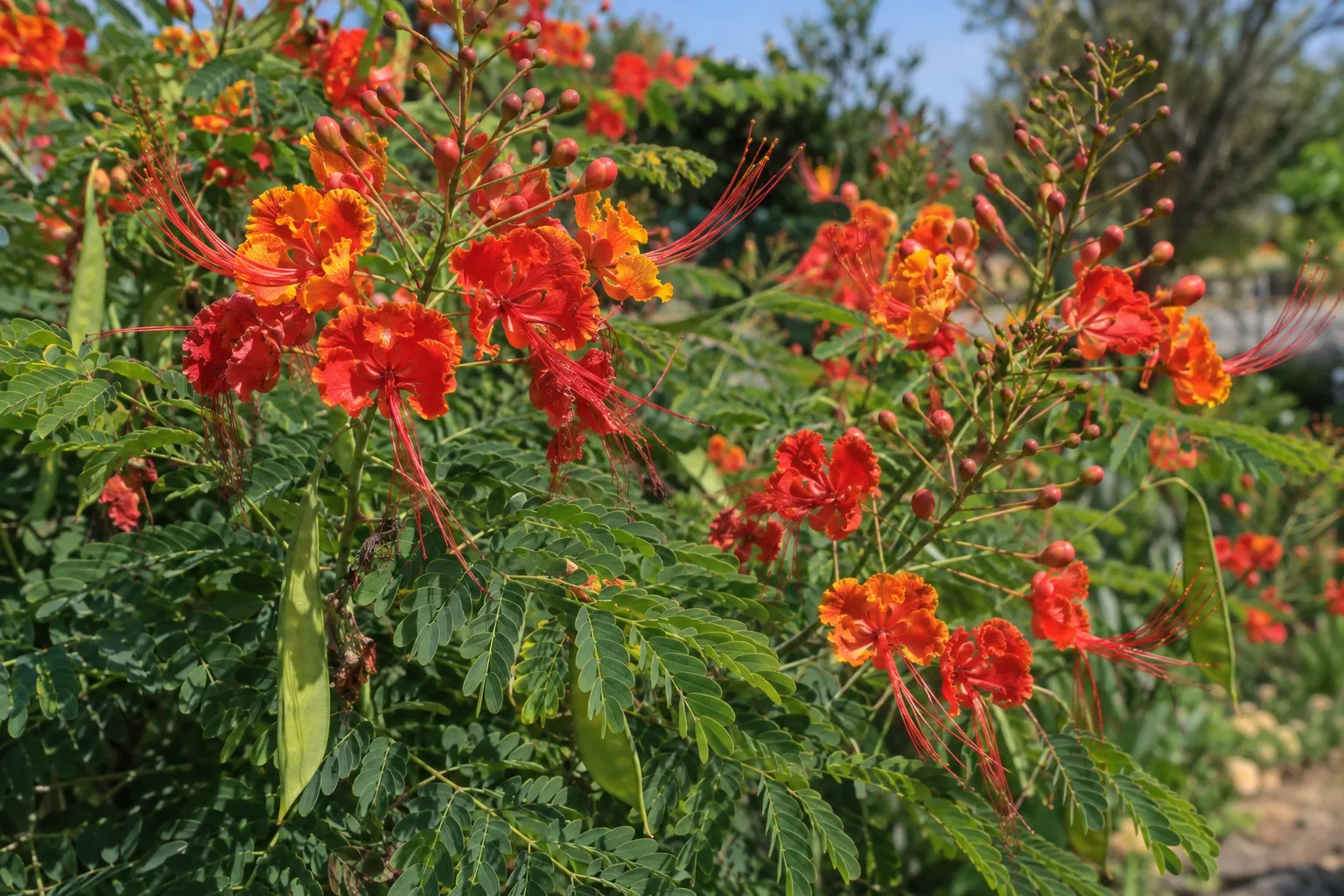
Mature size is 6 to 10 feet tall and wide. It wants full sun and low water once established. Orange-red and yellow flowers appear from late spring through fall, a stretch when many shrubs slow down in the heat. The drawback is frost tenderness: a freeze can kill stems to the ground, and it regrows late in spring, so expect a bare patch for a few weeks and prune dead wood only after new growth shows.
Parry’s agave (Agave parryi)
Mature size is 1.5 to 2.5 feet tall and wide, forming a tight blue-gray rosette. Full sun suits it, with a little afternoon shade in the hottest, most reflective spots, and it needs low water once established. It provides structure all winter and grows well in pots. The drawback is the sharp terminal spine, so keep it away from walkways and play areas; each rosette also dies after flowering, though it usually leaves offsets behind.
Deer grass (Muhlenbergia rigens)
Mature size is 3 to 4 feet tall and wide. It takes full sun and moderate water while it settles in, then low to moderate water. Fine gray-green blades make a fountain shape, and slender plumes rise in summer and fall. The drawback is a dense clump that looks tired by late winter, so cut it back hard, to about 6 to 8 inches, before new growth starts.
Blue palo verde (Parkinsonia florida)
Mature size is 15 to 30 feet tall and wide. It wants full sun and low water once established, and it casts light, filtered shade. Green bark stays attractive all year, and bright yellow flowers cover the canopy in spring. The drawback is litter: flowers, tiny leaves and pods drop, and brittle branches can break in monsoon winds, so keep it clear of pools and roofs. See our desert trees for other shade options.
When should I plant drought-tolerant plants in Arizona?
October through early November is the best window, with February and March as the second choice. Cooler air and soil give roots months of growth before the first 110°F summer. Fall wins. Frost-tender plants such as red bird of paradise and lantana often do better planted in spring, after frost risk has passed.
Planting from late May through August is possible, but new plants then need shade protection and very frequent watering, and some will not make it. Our gardening calendars lay out what to plant and do each month.
How do I plant in alkaline soil and caliche?
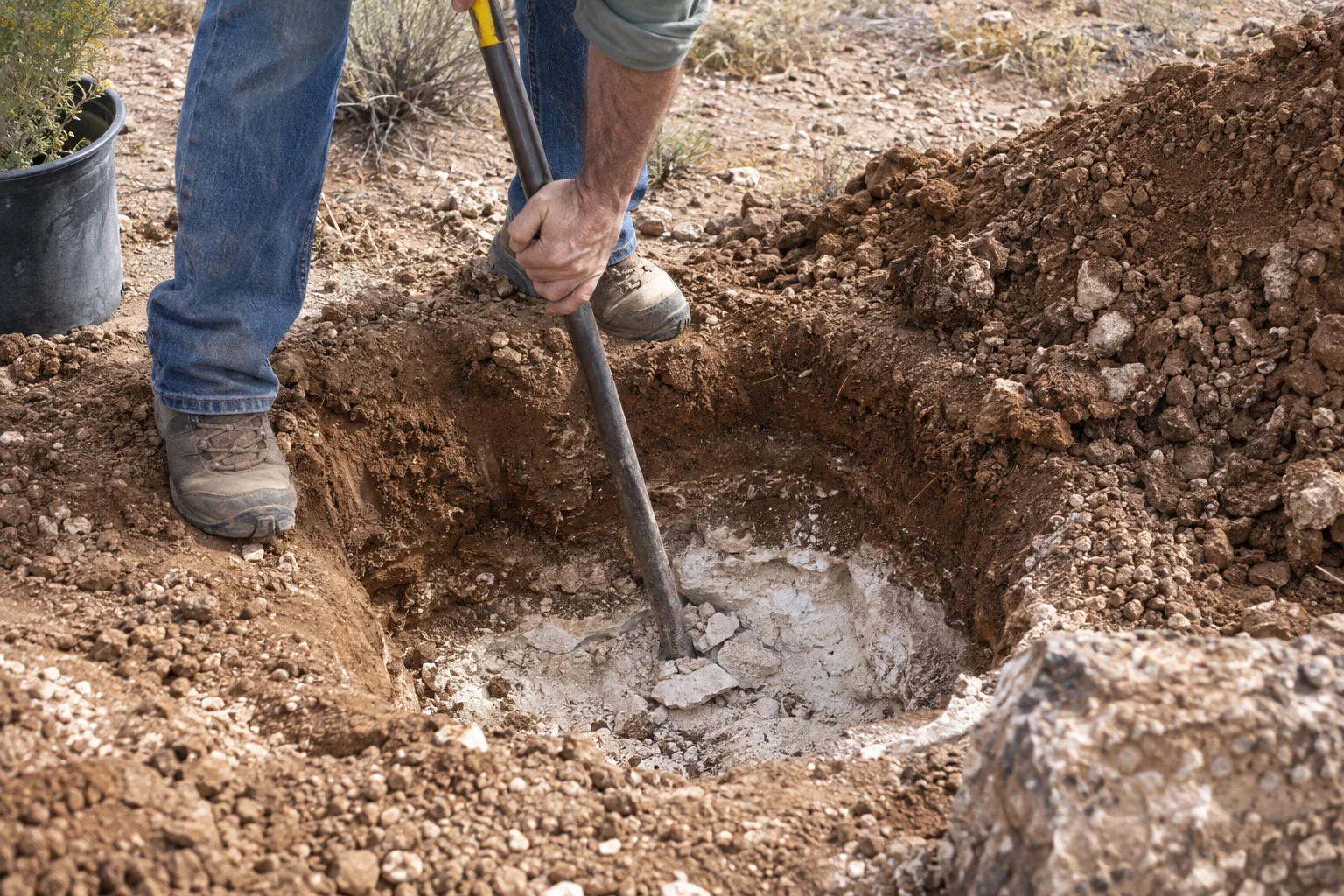
Dig a hole as deep as the root ball and about twice as wide, then break through any caliche so water can drain. Probe the spot first with a steel rod or a test hole. A hard, whitish layer that resists a shovel is caliche, and it can sit anywhere from about 6 inches to 3 feet down.
A planting hole with a solid floor holds water like a bowl, which means roots can rot after a monsoon storm even on a drought-tolerant plant. Use a digging bar to open at least one drainage channel through the layer. Backfill with the native soil, with no more than about 20 percent compost mixed in. Build a low berm around the plant and add 2 to 3 inches of mulch, kept a few inches off the stem.
How often should I water drought-tolerant plants?
New plants need water every few days at first, then less often as roots spread over several months. Established shrubs usually do well on a deep soak every 7 to 14 days in summer, and established trees on a deep soak every 2 to 3 weeks. Check the soil 4 to 6 inches down before each watering, and wait if it still feels damp.
Slow drip delivers water to the root zone, where overhead spray loses much of it to evaporation in low humidity. Adjust the timer with the seasons, because the summer setting is too much for January. Many established plants need water only about once a month in winter, or none after a good rain. If you want help with drip setups, check our classes and events page for upcoming sessions.
How do I get color in every season?
Layer plants with different bloom windows, so something is flowering or holding interest in each season. The table shows when each plant on this list looks its best.

| Plant | Best color or interest |
|---|---|
| Lantana | Spring until frost |
| Desert marigold | Spring, then on and off |
| Blackfoot daisy | Spring into fall |
| Autumn sage | Spring and fall |
| Red bird of paradise | Late spring through fall |
| Parry’s agave | Year-round structure |
| Deer grass | Plumes in summer and fall |
| Blue palo verde | Spring flowers, green bark all year |
Winter is the quietest season, so agave, palo verde bark and the evergreen foliage of lantana and sage carry the garden until spring flowers return.
What mistakes shorten the life of drought-tolerant plants?
Most losses come from water and timing, and a few habits cause the majority of them.
- Watering established plants on a new-plant schedule, which keeps soil wet and invites root rot.
- Planting too deep, when the crown should sit at or slightly above the surrounding soil.
- Planting in July or August, when 110°F heat adds stress on top of transplant shock.
- Leaving soil bare, since mulch lowers soil temperature and slows evaporation.
- Ignoring reflected heat from a white or light west-facing wall, where soil and leaves can run far hotter than the air.
Frequently asked questions
Do drought-tolerant plants need fertilizer in Arizona?
Most do not need regular fertilizer. Heavy feeding pushes soft, fast growth that needs more water and handles heat poorly. Lantana and autumn sage can take a light dose of balanced slow-release fertilizer in early spring if growth looks weak. Agave, palo verde and desert marigold can go without. Yellowing new leaves in alkaline soil may point to iron, so check before adding more fertilizer.
Can I grow drought-tolerant plants in pots?
Yes, agave, lantana and autumn sage all grow in containers that have drainage holes and fast-draining potting mix. Pots dry out faster than ground soil and heat up in direct sun, so they need water more often than the same plant in the ground. Browse our pottery and planters for options with good drainage.
Will frost damage these plants?
A hard frost damages lantana and red bird of paradise most, and both usually regrow from the base in spring. Wait until new growth appears, often in March, before cutting back damaged stems. Frost cloth on nights forecast near freezing protects young plants. Agave, desert marigold, blackfoot daisy and palo verde generally handle typical East Valley winters.
Should I water during the monsoon?
Check the soil before watering in monsoon season. Rain from July through September can replace a cycle, but storms are patchy and a short shower rarely soaks deep roots. Dig 4 to 6 inches down, and skip the watering if soil is damp. Desert marigold and blackfoot daisy rot most easily when kept wet.
How far apart should I space drought-tolerant plants?
Space them by mature width, not by how small the plant looks when you buy it. Red bird of paradise needs about 6 to 10 feet, autumn sage 2 to 4 feet, and blackfoot daisy 1 to 2 feet. Crowded plants compete for water, trap humidity during the monsoon and need more irrigation to look good.
Is a drought-tolerant garden right for your yard?
It is a good fit for a sunny yard with alkaline soil and an owner willing to water carefully for the first one to two years. These plants cut maintenance and water use, and they bloom well in heat. They are a poor match for anyone who wants a lush, deep-green lawn look, or for wet low spots and damp shade, which need different plants. Come visit us at the nursery in Queen Creek and talk through your yard with our team.