Desert garden design ideas that work in Arizona start with your site, not your plant list. Study sun and drainage, break up caliche, group plants by water need, layer heights, and leave open space. Then plant in fall and water deeply but rarely.
Key takeaways
- Observe your yard for about a week before buying anything, noting afternoon sun, low spots where monsoon water pools, and compacted or rocky ground.
- Plant trees, shrubs and succulents from roughly October through February so roots establish before summer highs above 110°F.
- Group plants in threes or fives and layer them in three heights: trees or tall accents, mid-size shrubs and agaves, then low color.
- Keep desert plants out of low spots, because root rot after monsoon storms kills more of them than heat does.
- Put plants on drip irrigation, with emitters at the edge of the canopy rather than against the trunk.
What should I check in my yard before designing a desert garden?
Check sun exposure, drainage and soil depth first. These three things decide which plants work where, and they differ from one yard to the next, even on the same street in Queen Creek.
A west-facing yard takes hard afternoon sun for hours, while an east-facing one gets morning light and afternoon relief. That shifts what will thrive in each spot. Walk the yard in morning, midday and evening and note where shade falls. After a monsoon storm, watch where water collects and where it runs off.
Also probe the soil. Much of the East Valley has caliche, a pale, cement-like layer that can sit fairly shallow and blocks roots and drainage. A long screwdriver or probe will tell you if you hit something hard. If your neighborhood has an HOA, read its landscape guidelines before you commit to a layout.
How do I prepare desert soil and deal with caliche?
Break through caliche at each planting spot, especially for trees, and leave the surrounding native soil mostly unamended. Our soil is alkaline and low in organic matter, but desert-adapted plants are built for it.
For trees, dig a wide hole and use a digging bar to open the hardpan so water drains instead of sitting around the roots. Test it by filling the hole with water and watching how quickly it drops. If it stays full for a day, fix the drainage or move the plant.
Skip heavy compost for native and low-water plants. A rich pocket of soil can keep roots circling inside the planting hole. Save richer amendments for vegetable beds and fruit trees, which do want more feeding. For those, see our herbs, vegetables and berries department.
What design principles make a desert garden look intentional?
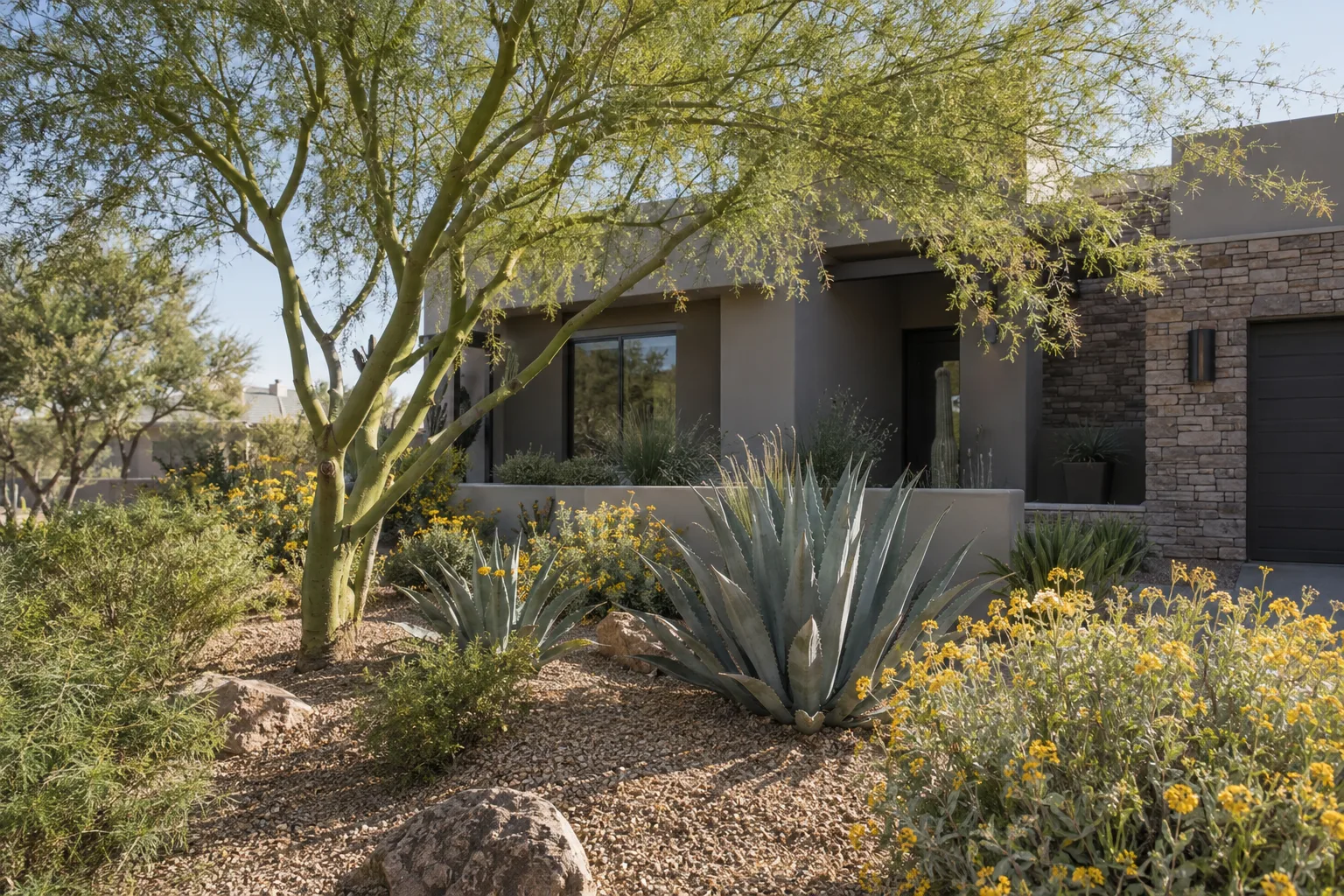
Layering, repetition, contrast and open space do most of the work. A yard of scattered one-offs looks random, while a few repeated plants look planned.
Layer by height
Put taller plants at the back or center, mid-size shrubs and agaves in the middle, and low plants or decomposed granite at the front. Even a flat front yard gains depth this way.
Repeat a few plants
Choose two or three plants you like and use them in groups of three or five. Repetition ties the space together.
Contrast texture and leave room
Pair soft, airy foliage with bold, architectural shapes, such as a feathery shrub beside an agave. Treat gravel and open ground as part of the design. Space around a large agave lets it read as a specimen rather than clutter.
Plan for evenings
Most of us use patios and yards after dark from October through April. A few low-voltage lights aimed up into a tree canopy or a sculptural plant make the garden useful at night.

Which plants work well in an Arizona desert garden?
Look for plants adapted to low desert heat, alkaline soil and winter lows that occasionally dip to frost. These are varieties we commonly carry, though availability changes week to week and season to season.
Parkinsonia hybrids (palo verde)
Palo verdes are green-barked desert trees with a bright yellow spring bloom. Thornless hybrids such as ‘Desert Museum’ suit yards with foot traffic. Their light, filtered shade lets you underplant with succulents. Drawback: they drop flowers and small leaves that need sweeping from patios and pools. Browse our desert trees to compare options.
Agave species
Agaves are structural anchors that need little water once established. Sizes range from compact types like Agave parryi to large ones like Agave americana, which can spread several feet wide. Drawback: sharp tips and a size that surprises people who plant too close to paths.
Encelia farinosa (brittlebush)
A native shrub with silvery foliage and yellow daisy-like flowers in late winter and spring. It works in masses or as filler between slower shrubs. Drawback: it looks ragged and semi-dormant in the heat of summer.
Leucophyllum frutescens (Texas sage)
A silver-leaved shrub that often flowers purple after humid weather or monsoon rain. It handles heat and needs little water once established. Drawback: it dislikes wet feet, so poor drainage or overwatering will shorten its life.
Baileya multiradiata (desert marigold)
A short-lived wildflower with yellow blooms that reseeds on its own and draws pollinators. Drawback: it comes and goes, so expect some thin patches between flushes.
Bougainvillea
A tropical vine or shrub that does well in our heat with full sun and good drainage. It blooms best when not overwatered. Drawback: it is frost tender, so protect it or place it in a warm spot during cold snaps.
For more flowering choices, see our plants department.
What hardscape works best in a desert garden?
Light-toned decomposed granite and flagstone are practical for most areas, while dark rock holds more heat. Hardscape often takes up a large share of the visual space in a desert yard, so choose it as carefully as plants.
| Material | Heat behavior | Best use |
|---|---|---|
| Decomposed granite | Moderate, lighter colors stay cooler | Paths, planting areas, open ground |
| Flagstone | Lighter stone stays more comfortable | Patios, stepping paths |
| River rock | Darker tones hold heat | Dry creek beds, drainage swales |
| Boulders | Absorb and radiate heat | Focal points, slope control |
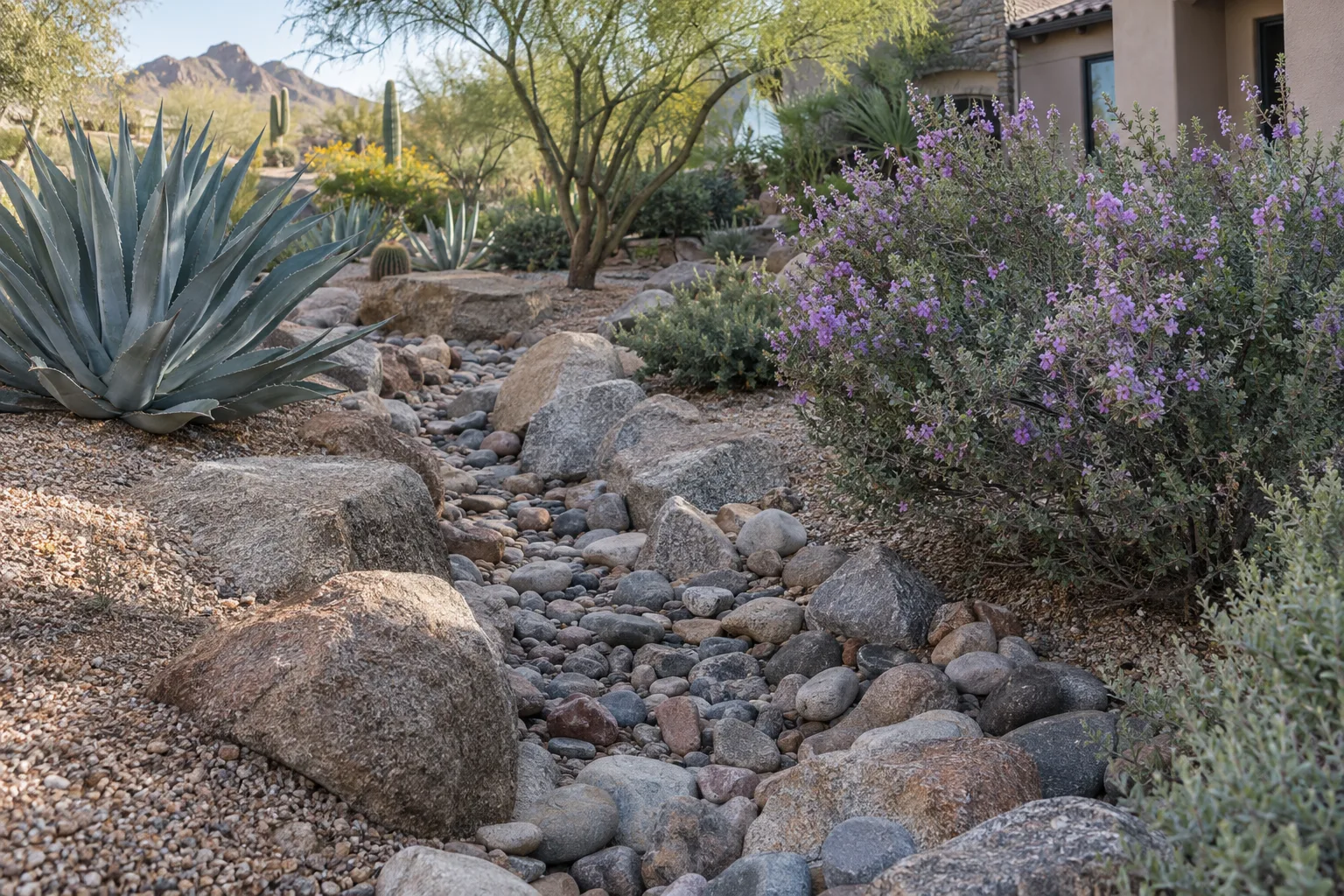
A dry creek bed is a useful feature here. A gentle swale lined with river rock carries monsoon runoff away from the house and looks like part of the design. Install paths, patios and boulders before planting, since moving them around established plants is much harder.
How should I water a desert garden?
Water deeply and infrequently, and put everything on drip. Even drought-adapted plants need regular water during their first one to two years while roots spread.
Frequent shallow watering keeps roots near the surface, where summer heat gets them. Place emitters toward the edge of the canopy rather than at the trunk so roots reach outward. Exact schedules depend on plant, soil and season, and they shift a lot between January and July, so recheck your controller each month.
Hard irrigation water can leave mineral deposits on leaves and emitters, so check emitters periodically for clogging. Many East Valley cities and utilities have turf removal or irrigation rebate programs, so ask yours before you start.

What are the steps to build a desert garden?
Build it in order: plan, fix soil and drainage, install hardscape, install irrigation, then plant. Doing it out of order means redoing work.
- Observe sun, shade and drainage for about a week.
- Sketch the yard to rough scale and place trees first, since their mature canopy shapes everything else.
- Open caliche at planting spots and grade so water moves away from the foundation.
- Set paths, patios and boulders.
- Run drip lines and test the system before plants arrive.
- Plant trees and larger shrubs in the cool season, then mid-size shrubs and agaves.
- Add low plants and seasonal color last.
- Top with a couple of inches of decomposed granite or gravel, keeping it pulled back from plant crowns.
- Adjust irrigation as the seasons change.
Our gardening calendars can help with timing.
What mistakes do desert gardeners make most often?
Overwatering, crowding and planting in low spots are the most common. All three come from treating a desert plant like a thirsty one.
- Overwatering established plants. Yellowing, soft stems and mushy bases usually point to too much water, not too little.
- Planting too close. Space for the mature size, not the pot size.
- Planting in low spots. Agaves and cacti rot where monsoon water collects.
- Cutting water too soon. Drought-adapted still means a year or two of regular deep watering.
- Skipping HOA rules. Check height, rock and plant requirements before installing.
Frequently asked questions
When is the best time to plant a desert garden in the East Valley?
Fall is the best time, from about October through February for most trees, shrubs and succulents. Roots grow through the cool months and the plant faces its first summer better prepared. Spring planting can work, but summer planting needs extra water and shade protection.
Can a desert garden still look lush?
Yes, if you layer plants and plan for bloom across the seasons. Flowering shrubs, low color and trees with full canopies give a fuller look than rock and a few cacti. Lush here means layered and colorful, not a lawn.
Do I need drip irrigation or can I hand-water?
Drip is the better choice for anything beyond a few established pots. Hand-watering rarely soaks deeply enough to push roots down, and it is easy to skip in summer. Drip delivers slow, targeted water at the root zone with less evaporation.
Does a small front yard work for desert design?
Yes, and restraint helps. Choose one focal plant, such as a multi-trunk tree or a sculptural succulent, add a few low companions and keep the ground material simple. Open space makes a small yard feel deliberate.
Does light or dark gravel matter?
It can. Dark rock tends to hold and radiate more heat, which matters next to patios and plant beds. Lighter tan or buff decomposed granite is usually more comfortable for large areas.
Is a desert garden right for your yard?
For most East Valley yards, yes. A desert garden suits you if you want lower water use and a landscape that fits our climate, and you are willing to water carefully for the first two years. It is a poor fit if you want a lawn or a traditional flower border. Plan on upfront work with caliche, drainage and irrigation, since skipping it causes most failures. Stop by the nursery in Queen Creek and we will help you match plants to your yard.