Eight desert bloomers set buds in Arizona in February: palo verde, brittlebush, desert marigold, ocotillo, fairy duster, globe mallow, Parry’s penstemon and chuparosa. Here in Queen Creek, the main work is deep watering, patience and holding back the pruners.
Key takeaways
- Brittlebush and fairy duster often open their first flowers from late February into March, while palo verde and ocotillo usually follow in March and April.
- Established desert natives generally need one deep soak every 3 to 4 weeks in February if rain has been scarce, and nothing after a soaking rain.
- Wait for new growth, usually in March, before cutting back anything that looks dead, because frost-burned stems can leaf out from lower down.
- All eight want 6 or more hours of direct sun and fast-draining soil, so avoid planting spots where water pools.
- February and March give new shrubs roughly three months of root growth before daytime highs pass 100°F.
What does it mean when a desert plant sets buds?
A plant that has set buds has started forming flower buds, even if nothing has opened yet. In the low desert you can spot them as swollen tips on bare stems, tight clusters at the ends of branches, or flower stalks rising out of a rosette of leaves.
Longer days and warmer afternoons start the process, and winter rain gives it a boost. Cold nights still matter. Frost can reach Queen Creek into early March in some years, and a hard freeze can burn buds that formed early. Look closely at your plants, because each species wakes up on its own schedule and a bare ocotillo cane in February can be perfectly healthy.
Which desert bloomers set buds in February?
Eight plants worth watching are listed below, from the biggest to the smallest in feel, with a mix of trees, shrubs and perennials. These are varieties we commonly carry, though availability changes week to week and season to season. If you are building a bed from scratch, our desert-adapted plants page is a good place to compare options.
1. Palo verde (Parkinsonia species and hybrids)
Palo verde reaches 20 to 30 feet tall and wide in full sun. Buds form at the branch tips in February, and the yellow bloom usually peaks from March into April. Once established, it needs a deep soak every few weeks in a dry winter and less than you might expect in summer. The drawback is litter, since it drops a carpet of petals and tiny leaflets after bloom. You can compare tree types on our desert trees page.
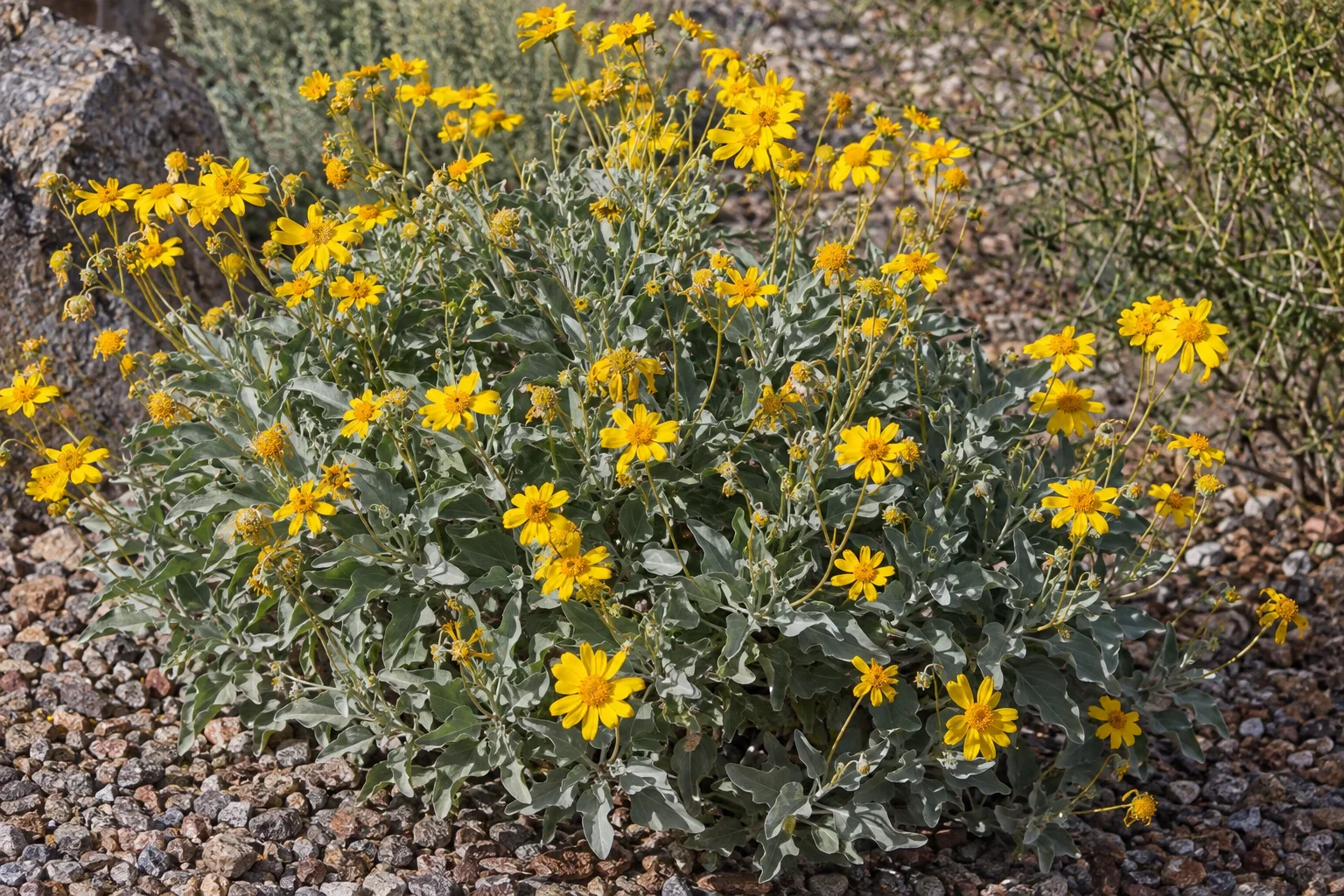
2. Brittlebush (Encelia farinosa)
Brittlebush forms a silver-gray mound 3 to 5 feet tall and wide in full sun. Yellow daisy flowers rise above the foliage from late winter into spring, and the first ones can open in late February. It needs very little water once established. The drawback is a modest lifespan, and it often drops leaves and looks ragged in summer heat.
3. Desert marigold (Baileya multiradiata)
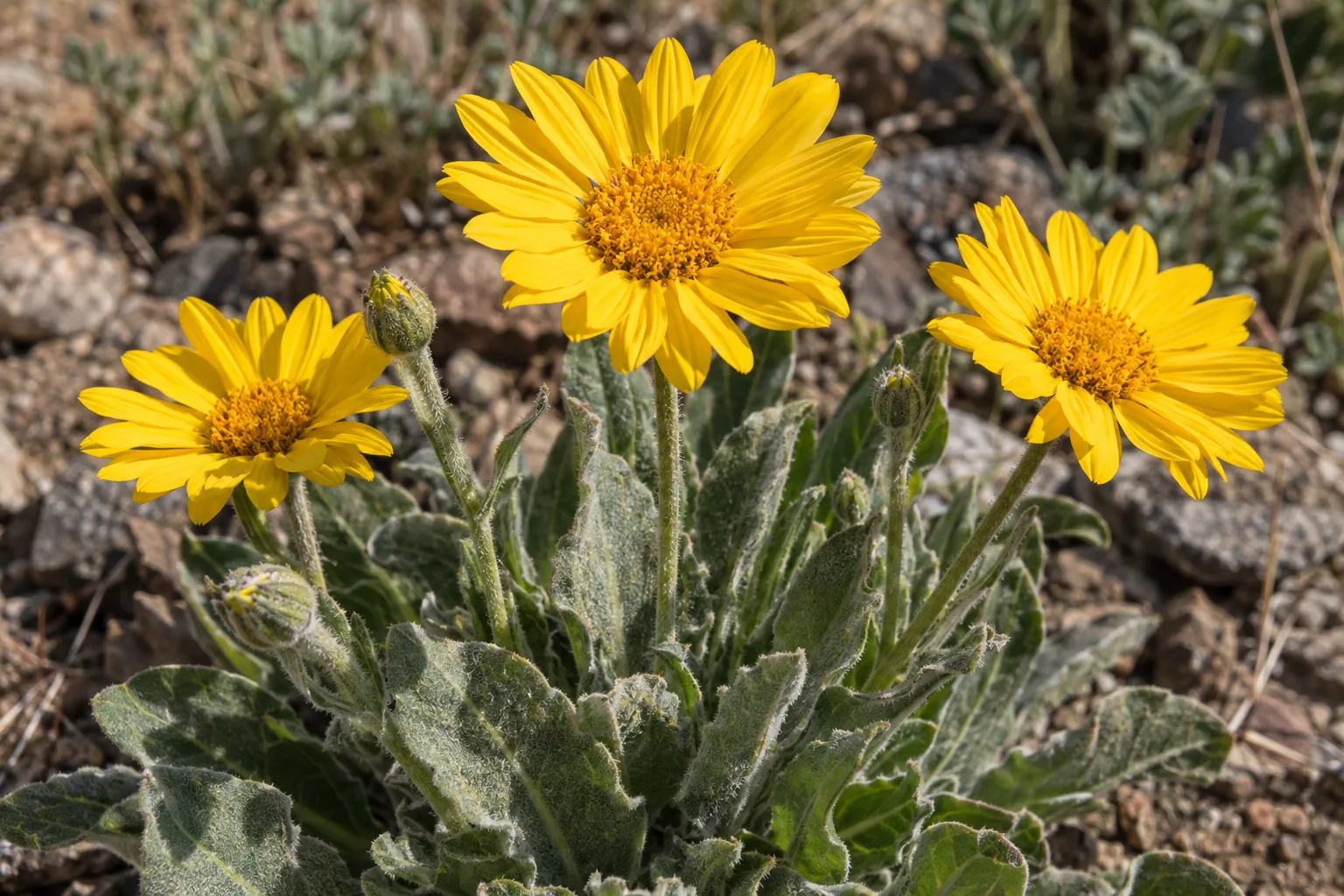
Desert marigold stays 1 to 2 feet tall and wide, with woolly gray leaves and bright yellow flowers on slim stems. In February the first flower stems start rising from the rosettes. It wants full sun and gets by on occasional deep watering. The drawback is that individual plants live only a few years and reseed freely, so you will pull seedlings where you do not want them.
4. Ocotillo (Fouquieria splendens)
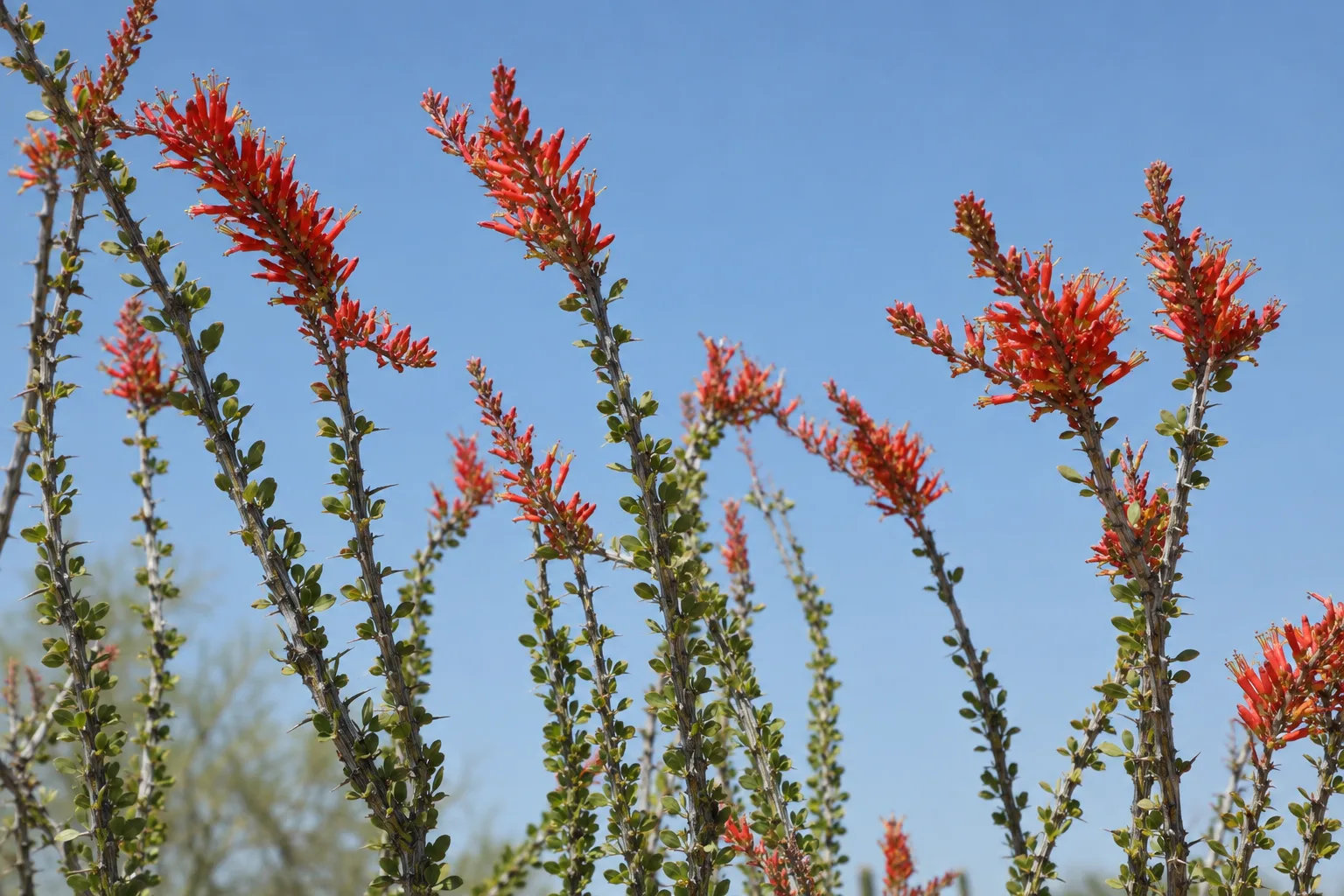
Ocotillo grows 10 to 20 feet tall as a fan of thorny canes and wants full sun and sharp drainage. Canes can be bare or leafing out in February depending on rain, and the red flower clusters at the cane tips usually open from March through spring. A new plant needs regular water for its first year or so, then very little. The drawback is slow growth and a tendency to rot if the soil stays wet.
5. Fairy duster (Calliandra eriophylla)
Fairy duster makes an airy shrub 2 to 3 feet tall and 3 to 5 feet wide, covered in pink powder-puff flowers from late winter into spring. It prefers full sun and low water. Bloom shows best in a group of three or more. The drawback is its loose, sprawling habit, and it can look sparse after a cold winter or a long dry spell.
6. Globe mallow (Sphaeralcea ambigua)
Globe mallow grows 2 to 3 feet tall and wide, with gray-green leaves and orange cup-shaped flowers that start in late February to March. It wants full sun and little water. A shearing after the main flush encourages a tidier plant. The drawback is a scruffy look between flushes, and it self-seeds enough to turn up in nearby beds.
7. Parry’s penstemon (Penstemon parryi)
Parry’s penstemon sends pink flower spikes 2 to 4 feet tall from a low rosette of leaves, with bloom usually running March to April. Full sun and low water suit it. February is when the spikes begin to rise. The drawback is a short life as a perennial, and it rots quickly in soil that stays soggy, especially during monsoon weeks.
8. Chuparosa (Justicia californica)
Chuparosa is a rounded shrub 3 to 5 feet tall and wide with red tubular flowers from late winter into spring. It likes full sun to light afternoon shade and modest water. Hummingbirds visit the blooms. The drawback is frost tenderness, since a hard freeze can burn the stem tips, and it can look leafless during drought.
How much should I water desert bloomers in February?
Established desert natives usually need one deep soak every 3 to 4 weeks in February if rain has been scarce, and nothing after a good soaking rain. Cool soil holds moisture far longer than summer soil. Caliche under a planting makes it hold longer still.
Push a long screwdriver or probe into the soil near the drip line. If it slides in easily to 8 to 12 inches, the root zone is still moist and you can wait. Plants in their first year are different, and they usually need water every 5 to 10 days in winter depending on soil and weather.
February is also a good month to check drip emitters. Hard water leaves mineral deposits that clog emitters over time, and a clogged emitter delivers far less than you think. Run the system, watch each emitter, and clear or replace any that drip slowly. Our gardening calendars list other monthly tasks worth lining up with this one.
Should I prune or fertilize desert bloomers in February?
Hold off on both. Hard pruning removes the buds you are waiting for, and fertilizer pushes soft growth that a late frost can burn.
Frost-damaged stems often look dead for weeks and still leaf out from lower down. To check a stem, scratch a thin strip of bark with a thumbnail. Green tissue underneath means the stem is alive. Wait until you see new growth, usually in March, before removing dead wood.
You can safely cut away last year’s dry flower stalks on desert marigold and penstemon, and shear brittlebush or globe mallow lightly after the main bloom ends. Native desert shrubs rarely need feeding, and a good layer of compost in the planting bed does more for them than any bag of nitrogen.
Is February a good time to plant desert shrubs?
Yes, February and March are good planting months for most desert shrubs and perennials. The soil is cool, days are mild, and roots get about three months to spread before temperatures climb past 100°F.
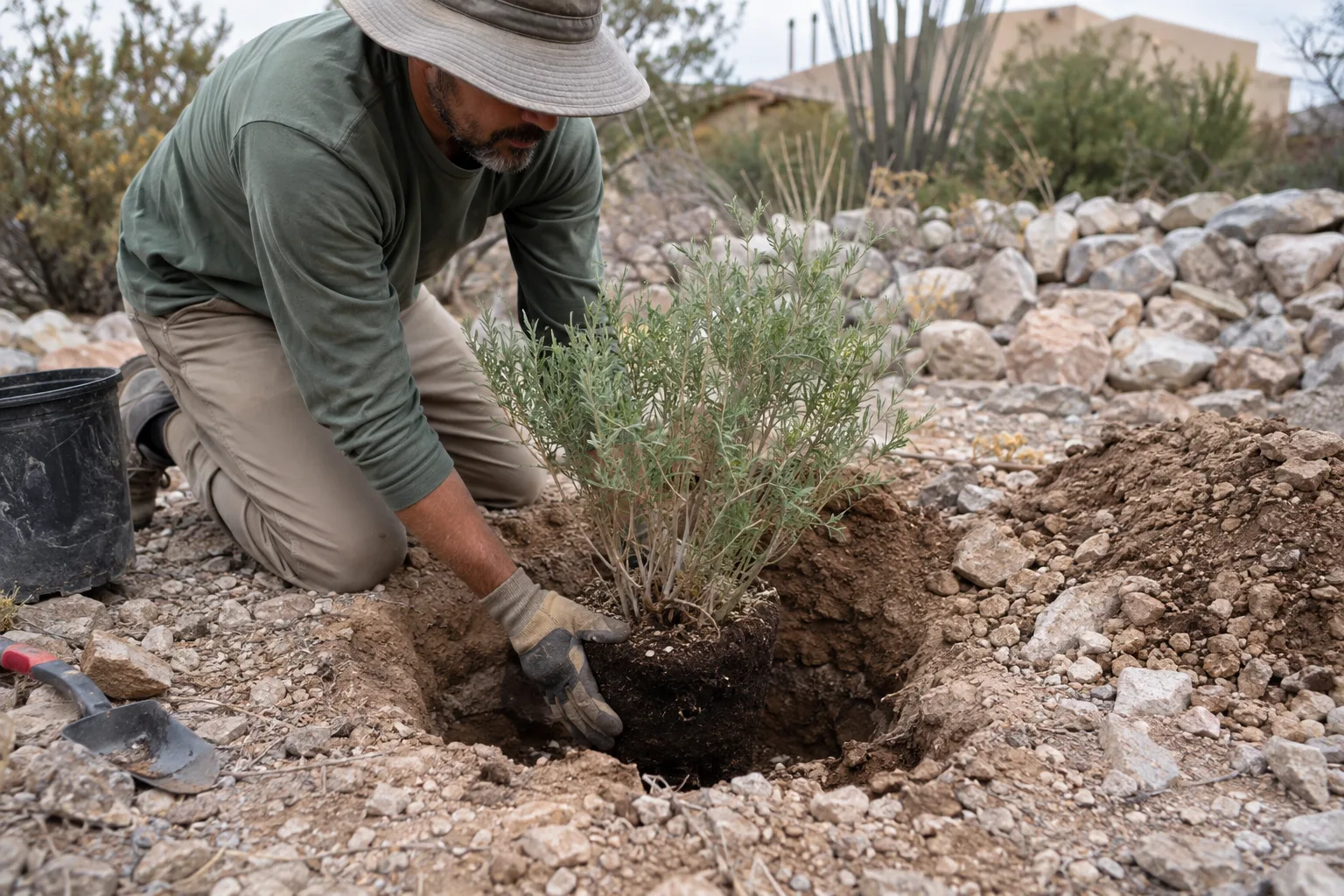
Dig the hole 2 to 3 times as wide as the root ball and no deeper than it. Break up any caliche at the bottom so water can drain. Backfill with the native soil, since heavy amendment can create a bowl that holds water around the roots. Water thoroughly, then follow a regular schedule for the first year.
Frost-tender plants such as chuparosa do better planted after the last frost risk passes, usually in March. Look at the classes and events page to see what is scheduled if you want hands-on planting help.
What February mistakes cost the spring bloom?
A few habits cut flowers short, and all of them are easy to change.
- Watering on a summer schedule. Cool soil and low evaporation mean roots stay wet longer, and overwatering invites rot.
- Piling mulch or gravel against stems and trunks. Keep it a few inches back so crowns stay dry.
- Planting in a low spot where water pools after irrigation or rain. Raise the planting slightly if your yard drains slowly.
- Judging your plants by the neighbor’s. A south or west wall radiates heat and can put plants a week or two ahead of a north-facing bed.
Frequently asked questions
Will a late frost kill the buds?
A light frost can brown buds and open flowers on tender plants such as chuparosa, while palo verde and brittlebush usually recover. Cover tender plants with frost cloth on nights forecast near or below 32°F and remove it the next morning. Most of these plants send out replacement buds, though the show may arrive weeks later.
How can I tell if my ocotillo is alive?
Scratch a thin strip of bark on a cane with your thumbnail. Green or pale moist tissue underneath means the cane is alive, and brown dry tissue means that cane is dead. A bare ocotillo is normal for much of the year, and it leafs out within days after rain. Wait until May before judging one that stays bare.
Do these plants need full sun to bloom?
Yes, plan on at least 6 hours of direct sun, with 8 or more giving the best bloom. Part shade tends to give leggy growth and fewer flowers on brittlebush, desert marigold and globe mallow. Fairy duster and chuparosa tolerate some afternoon shade, which helps them against the reflected heat of a west wall.
Do I need to deadhead these plants?
Most need no deadheading. Cut spent flower stalks on penstemon and desert marigold if you want to limit self-seeding, or leave a few so seedlings fill in over time. Brittlebush and globe mallow look tidier with a light shearing after the main bloom ends, but the plants stay healthy without it.
Which desert bloomers belong in your yard?
Match the plant to your space and sun. Palo verde and ocotillo need room, brittlebush and chuparosa fit mid-size beds, and desert marigold, globe mallow and penstemon fill front-of-bed gaps. If your yard is mostly shade, or your sprinklers keep the soil wet, most of these will struggle and you should choose differently. Anyone wanting steady color every week of the year will also be disappointed, since these bloom in waves. Stop by the nursery in Queen Creek and we will help you match plants to your light and soil.