

A coyote in your Arizona yard calls for a calm, loud response: bring pets and children inside, stand tall, shout, and wave your arms until it leaves. Coyotes return to yards that offer food.
Key takeaways
- Bring pets and young children inside first, then haze the coyote with a tall stance, waving arms and loud noise until it leaves your property.
- Pick up fallen citrus at least weekly and feed pets indoors, because food is the most common reason coyotes keep returning.
- Keep small dogs and cats supervised, keep cats indoors, and take extra care from dusk to dawn and during pup season, roughly April to June.
- A determined coyote can get over a 6-foot block wall, so clear climbing aids and check gates and wall bases for gaps.
- Call Arizona Game and Fish if a coyote looks sick, ignores repeated hazing, or bites or attacks a person or pet.

What should I do when a coyote walks into my yard?
Bring pets and children inside first, then make yourself loud and large. A healthy coyote usually leaves within a minute or two when a person stands tall, shouts and claps, so keep your voice firm and your movements steady. Do not run.
Coyotes (Canis latrans) are native to the Sonoran Desert and cross yards all over the East Valley, from Queen Creek and San Tan Valley to Gilbert, Chandler and Mesa. They move mostly around dawn and dusk, and a healthy one crossing your yard is following a route it already knows. Backing away quietly or standing to watch both tell the animal your yard is safe, so respond with noise instead.
Longer-term changes come after the immediate response. Choosing which plants for your yard go along a fence line is one of them, and we cover that below.
How do you haze a coyote step by step?
Hazing means making a coyote’s visit unpleasant with noise, movement and your own body, without hurting the animal. The Arizona Game and Fish Department recommends it for coyotes that have grown comfortable around homes.
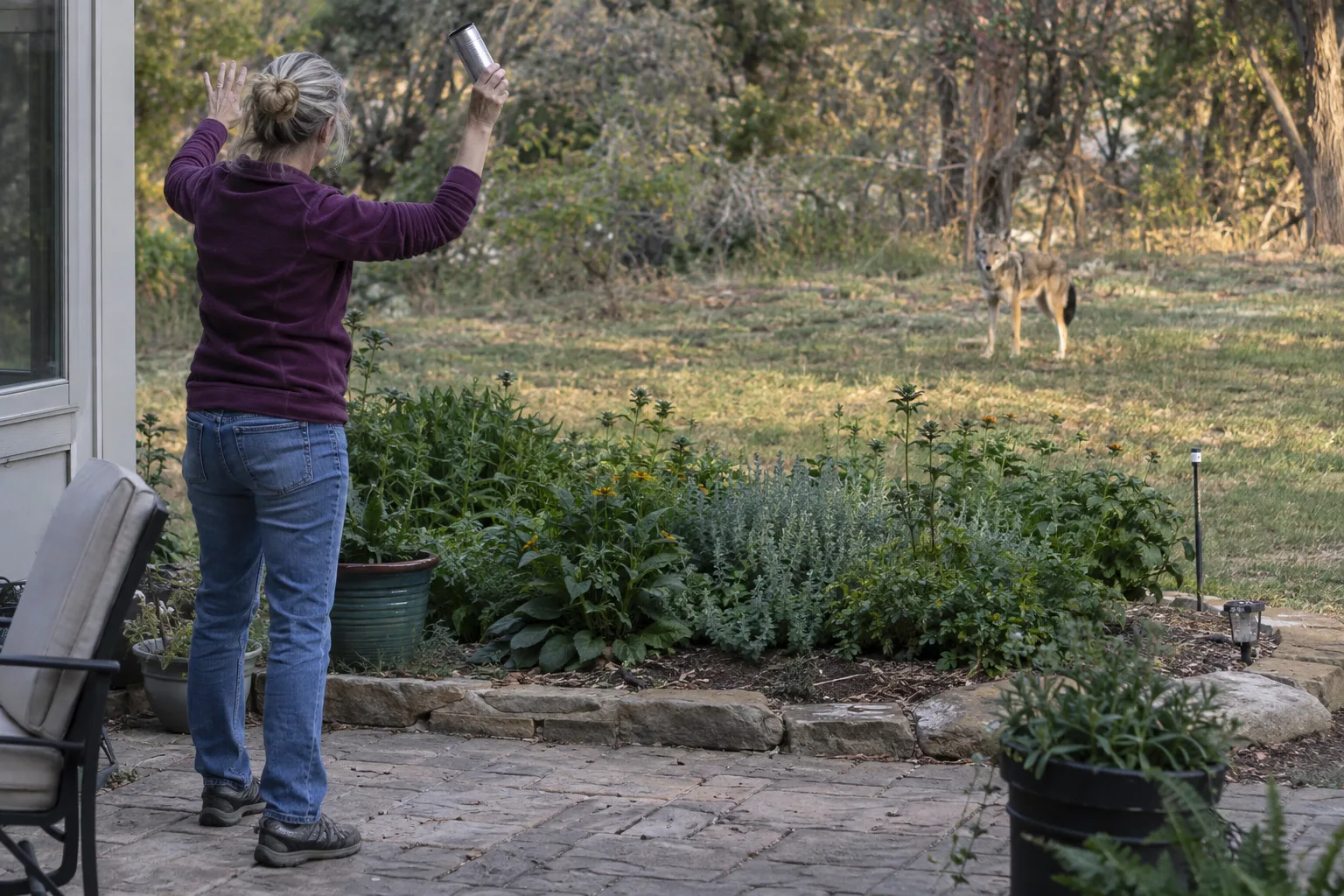
- Look at the animal first. A coyote that stumbles, circles, seems weak or shows no fear at all may be sick, so keep your distance and call Game and Fish instead of hazing.
- Stand up straight, raise your arms overhead, and shout in a firm, low voice.
- Add noise with an air horn, a shaker can filled with coins, or banging pots.
- Throw small objects or aim a hose spray toward the coyote, never at it. The aim is to startle, not to injure.
- Take a few steps toward the coyote while leaving it a clear path out of your yard. Stop if it does not retreat.
- Keep going until it is out of sight, then walk the yard to see how it got in.
Consistency matters. If every household on the street hazes in the same way for a week or two, coyotes learn to route around the whole block, but a single neighbor who feeds them can undo that work.
How do I protect my dog or cat from coyotes?
Supervise every trip outside, keep small pets indoors from dusk to dawn, and make sure the yard has no easy way in. Small dogs and cats are the pets most at risk, and attacks happen in established subdivisions as well as near desert open space.
Walk dogs on a short leash instead of a long retractable one, which gives a coyote room to close the distance before you can react. Stay with your dog in the yard, even in daylight, and go to the door with it at night instead of letting it out alone. Keep cats indoors. Larger dogs face less risk, but a big dog that chases a coyote can be pulled away from your yard and into trouble, so use a leash and secure fencing for them too.
Coyotes raise pups in spring, roughly April to June, and may act more defensive near dens. Extra care with leashes and early morning walks is sensible during those months.
What draws coyotes into Arizona yards?
Food, water and cover draw them, and most yards offer at least one without the owner realizing it. Removing those draws is the most dependable first step.

Fallen fruit
If you grow citrus trees, pick up dropped fruit at least once a week. Coyotes eat fruit, and a pile under the tree also draws rodents and rabbits.
Pet food, bird seed and trash
Feed pets indoors. Spilled seed from feeders draws mice and rats, which coyotes hunt, so a feeder can bring in a predator you never meant to invite. Keep compost bins tightly covered and trash cans latched.
Water
With summer highs above 110°F, any open water is attractive. Dripping emitters, pet bowls and low fountains can all serve as a drink stop, so fix leaks, bring bowls in at night, and think about whether a fountain is reachable from outside your wall.
Garden beds
Rabbits, pack rats and ground squirrels visit herb and vegetable beds, and predators follow them. Hardware cloth around raised beds holds up better than chicken wire, and regular harvesting keeps ripe produce from sitting out.
Will walls, fences and plants keep coyotes out?
A tall, solid, gap-free barrier helps the most, and we know of no strong evidence that any plant keeps coyotes away. Plants can add a physical screen, but food removal and a sound fence do the real work.
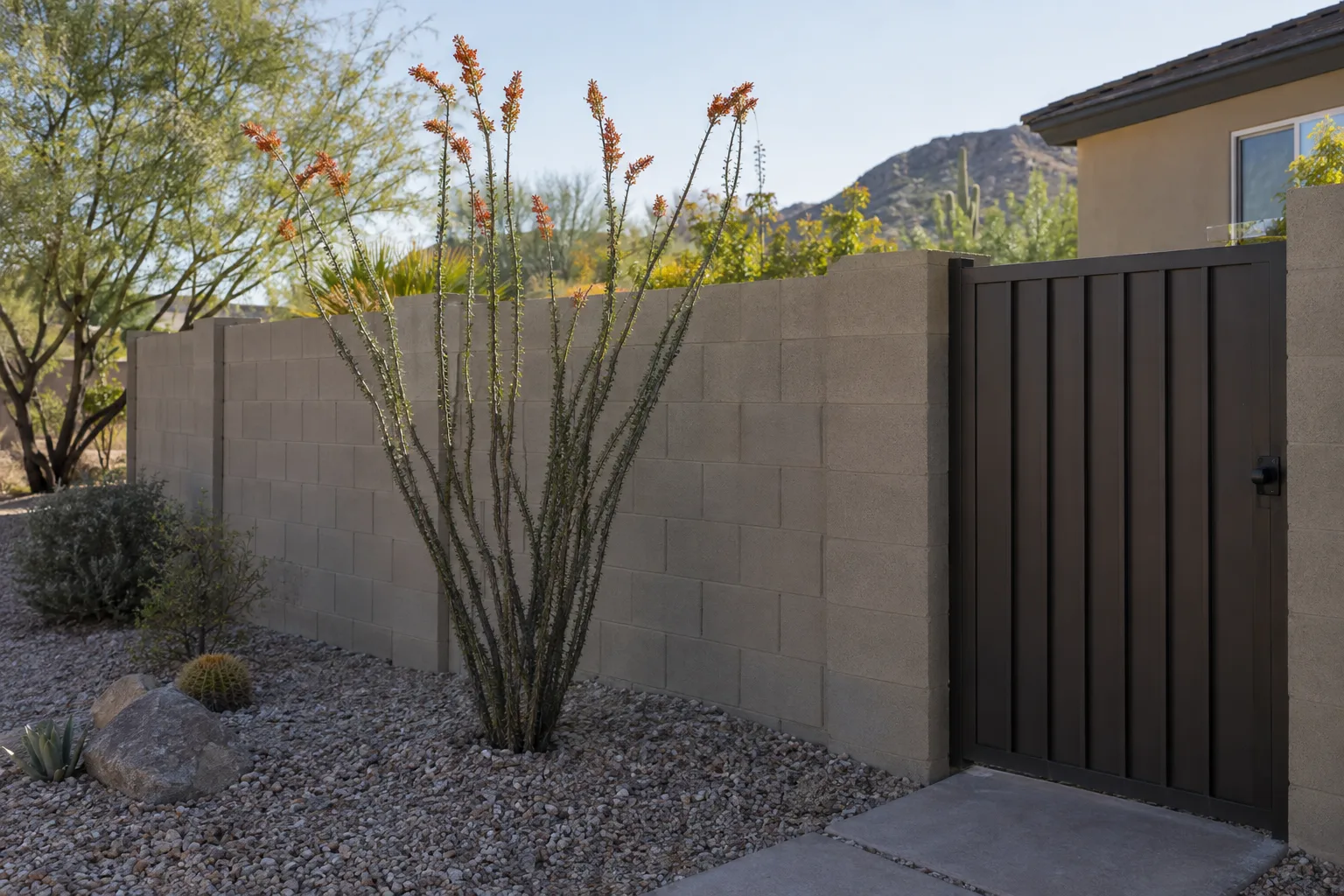
A motivated coyote can get over a standard 6-foot block wall, particularly when something sits against it to climb on. Move stacked pots, woodpiles, furniture and low branches away from walls. Check gates and the base of walls for gaps, since coyotes can squeeze through openings smaller than you might expect.
Some homeowners add roller bars or extensions along the top of a wall. Products vary in how well they work, and a homeowners association may have its own rules, so ask your HOA and the manufacturer before you buy.
Dense, spiny plants such as ocotillo (Fouquieria splendens) and large agaves (Agave americana) make a fence line harder to walk through and handle alkaline, caliche soil well once established. These are varieties we commonly carry, though availability changes week to week and season to season. Keep spiny plants back from paths, gates and play areas, because the spines can injure people and pets.
What mistakes make a coyote problem worse?
Feeding is the biggest mistake, whether on purpose or by accident. Coyotes that link people with food lose their natural caution and show up more often, and in some cases wildlife officials have to deal with them. Avoid these six.
- Feeding coyotes, or leaving pet food, fallen fruit and trash where they can reach it.
- Hazing once and then stopping, since coyotes learn through repetition over days and weeks.
- Letting children or pets approach a coyote for a closer look.
- Trying to trap or relocate a coyote yourself. Wildlife capture is regulated in Arizona, and the Arizona Game and Fish Department handles removal decisions.
- Leaving small pets outside unattended at night.
- Ignoring tracks or scat near the fence, which often point to a regular route through your yard.
When should I call Arizona Game and Fish?
Call when a coyote seems sick or injured, shows no fear after repeated hazing, or has bitten or attacked a person or pet. Signs of illness include stumbling, circling, heavy drooling, or an animal that stays calm while you shout and approach. Do not approach a sick animal.
Write down the date, time, place and behavior of each visit, since that record helps officials decide what to do. Seek medical care right away for any bite or scratch from a wild animal. You can find current contact details for the Department on its website, and it can also point you to community resources for neighborhoods dealing with repeat visits.
Frequently asked questions
Do motion-activated lights and sprinklers keep coyotes away?
They can help for a while, but coyotes tend to get used to them. A sudden spray or light startles a coyote the first few times, so move devices every few weeks and pair them with hazing and food removal. Treat them as a supplement, because nothing works well while food is still available in your yard.
What months are coyotes most active in Arizona?
Sightings tend to rise in winter breeding season, roughly January to March, and again in spring when pups are born, roughly April to June. Coyotes live here year-round, though, so any month can bring a visit. Dawn and dusk stay the busiest hours in every season, and summer heat pushes most movement into the cooler night and early morning.
What should I do if I meet a coyote while walking my dog?
Pick up a small dog or shorten the leash on a larger one, face the coyote, and make noise. Wave your arms and shout firmly while you move toward the nearest open area or door. Keep facing the animal if it follows, and do not run. Call Game and Fish if it follows closely or acts aggressive.
Is it safe for children to play in the yard if coyotes are nearby?
Yes, with supervision, because healthy coyotes avoid people and attacks on children are rare. Keep young children within sight, especially at dawn and dusk, and teach them to go inside and tell an adult if they see a coyote. Never let a child approach, feed or chase one. Close gates and clear food so coyotes have little reason to visit.
Do coyotes dig under fences?
Coyotes can dig under fences and gates where soil is loose or a gap already exists. Caliche, the hard layer under much East Valley soil, slows digging in some spots but not at gates or low points where water has softened the ground. Walk the fence line monthly, fill gaps, and add a buried wire apron if you see signs of digging.
Can you live alongside coyotes in your East Valley yard?
Yes, for most homeowners. Hazing, clearing food and water, supervising pets and closing gaps take a few minutes a week and work best together. These habits will not help if you leave small pets out alone overnight or feed wildlife, and no wall or plant will fix that. A coyote that acts sick or aggressive is a job for Arizona Game and Fish, not for a garden project. If you would like help planning a fence line or a safer yard layout, come visit us at the nursery in Queen Creek.
