

The cottony white fluff on your Arizona plants is almost always an insect, usually mealybugs, woolly aphids or cottony cushion scale. It is rarely mold. Poke it with a toothpick: if you find soft bodies or egg sacs, you are dealing with a pest.
Key takeaways
- Poke the white mass with a toothpick. Soft-bodied insects, egg sacs or sticky honeydew nearby mean a pest, not a fungus.
- Mealybugs, woolly aphids and cottony cushion scale cause most cottony white clusters on low desert plants.
- Spray in the early morning, and read the product label for temperature limits, since summer highs above 110°F can scorch wet foliage.
- Repeat any treatment after 7 to 14 days, then check weekly for 6 to 8 weeks.
- A trail of ants climbing a trunk or stem usually points to insects making honeydew higher up.
How can I tell cottony white pests from mold in the low desert?
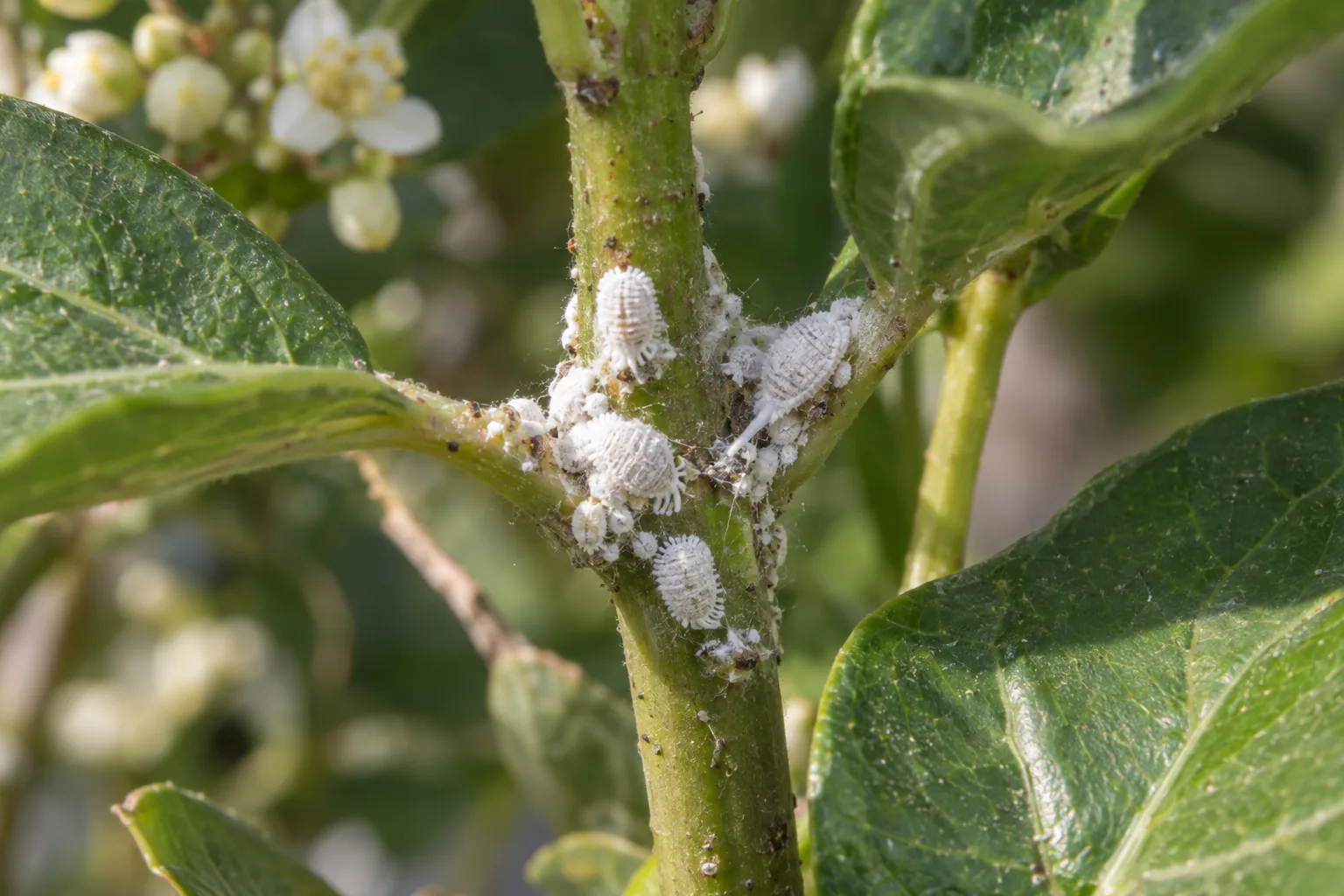
Poke the white mass with a toothpick. If it breaks apart into soft bodies, waxy threads or small egg sacs, it is an insect colony. Mold has no insects underneath it.
Our dry climate gives most fungi little moisture to work with, although powdery mildew does turn up on roses and squash during mild weather in spring and fall. Powdery mildew looks like a flat, dusty film that wipes off. Pest wax stands up in raised, fluffy tufts, usually tucked into leaf joints, stem forks and the undersides of leaves.
A shiny, sticky residue nearby is honeydew, the sugary waste these insects excrete. A black, sooty film on top of it is a true fungus, and it follows the insects rather than causing them. If you are trying to put a name to the shrub in front of you, our plant selection is a good place to match a name to a leaf.
Where do mealybugs hide, and how much damage do they do?
Mealybugs hide in tight, protected spots, and a heavy colony weakens a plant by draining its sap. Adults are oval, roughly 1/8 to 1/4 inch long, and covered in white wax with short fringe around the edges.
Check leaf joints, the undersides of leaves, new growing tips and the center of agave and aloe rosettes. On cactus, look between the ribs and at the base. Citrus is a common host, so inspect any citrus tree along the leaf midribs and inside fruit clusters before you bring it home.
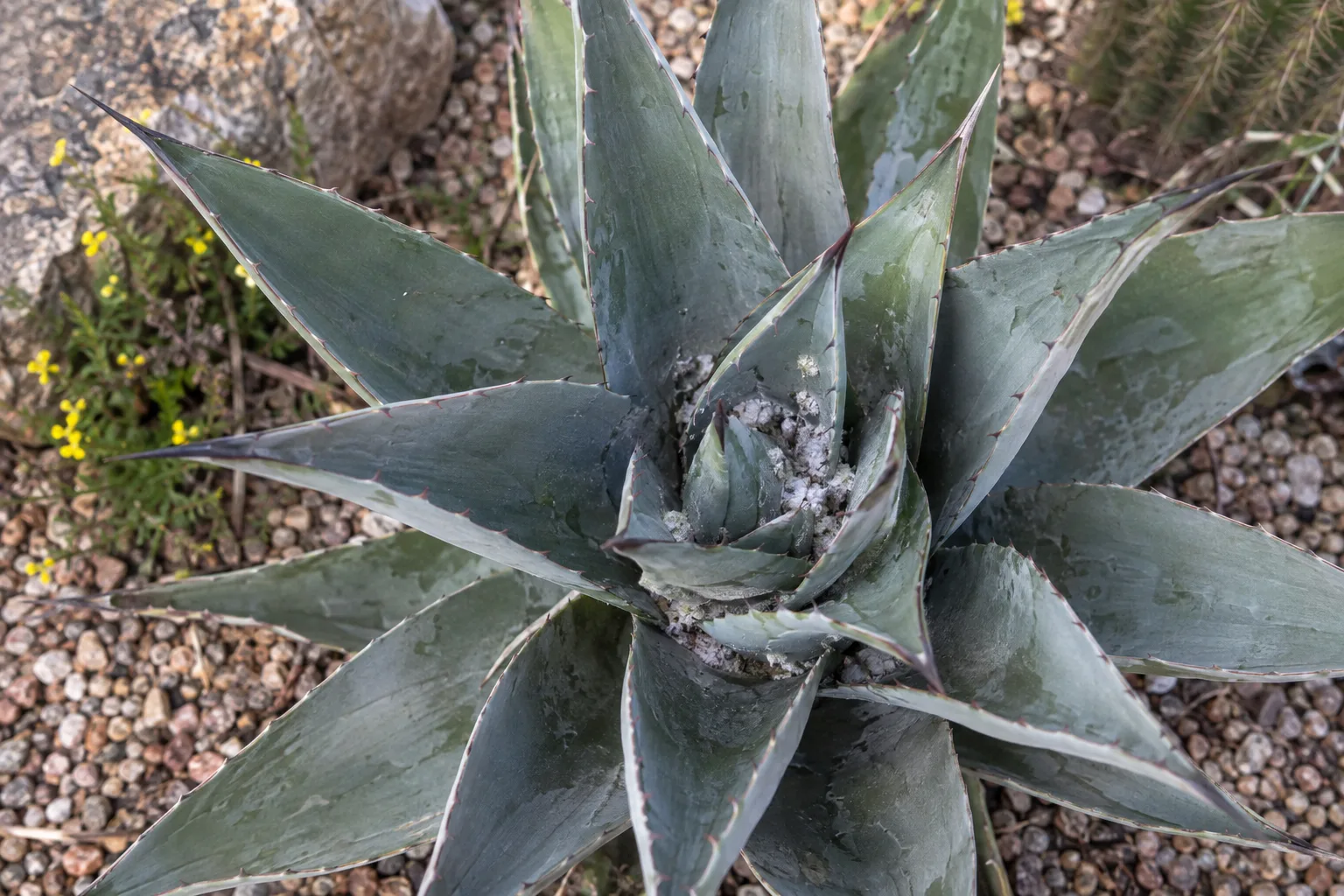
Potted jade, cactus and other succulents can also carry root mealybugs, which feed out of sight. A plant that declines despite good watering and light deserves a look at its roots.
What are woolly aphids, and when do they show up?
Woolly aphids are aphids that cover themselves in white, waxy threads, so a colony looks like cotton stuck to stems and branch undersides. They gather in dense groups on a range of trees and shrubs.
Up close you can see individual insects moving slowly, which is your confirmation that this is a pest and not a disease. Populations tend to build in the milder weather of spring and fall. A firm spray from the garden hose can knock many of them off a branch before you reach for anything else.
Why does cottony cushion scale look like a fungus?
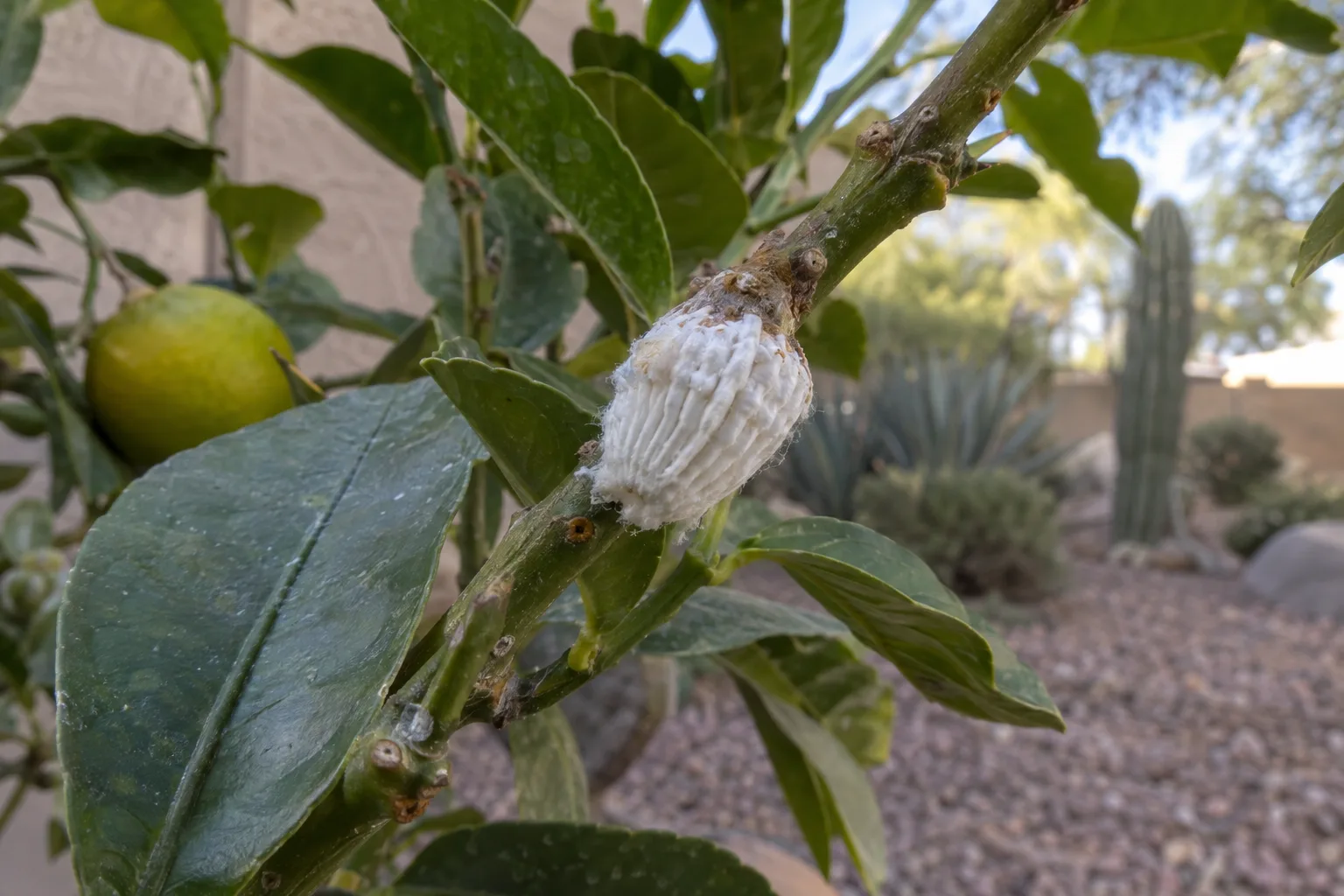
The adult female carries a fluted, white egg sac that can be several times larger than her own body, so it looks like a lump of foam or fungal growth stuck to a twig. It is a scale insect, and it does not behave like a mold.
Citrus and pittosporum are common hosts. A heavy infestation can yellow leaves, drop them and leave sticky honeydew everywhere. Cottony cushion scale also has a natural enemy, the vedalia beetle, a small red and black relative of the ladybug. If you see these beetles on an infested plant, hold off on spraying and let them work.
How do I get rid of cottony white pests?
Start with the gentlest method that reaches every insect, then repeat it. Waxy coatings and hidden egg sacs mean a single pass rarely clears a plant.
- Confirm the pest by poking the mass with a toothpick and looking for insects or egg sacs.
- Prune out heavily infested stems and seal them in a plastic bag before they go in the trash.
- Rinse the plant with a firm stream from the hose in the early morning, so the foliage dries before the heat builds.
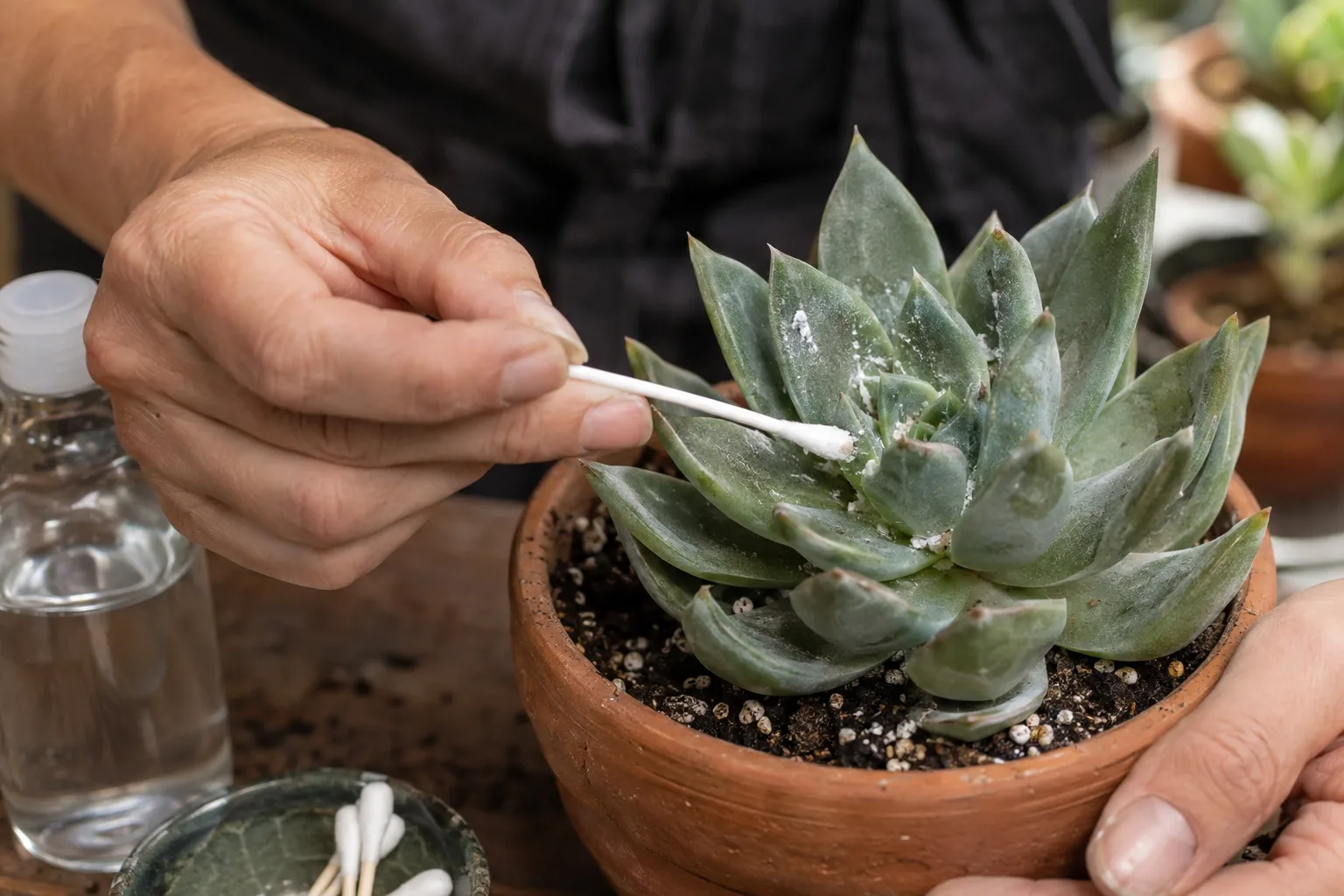
- Dab small colonies on succulents and potted plants with a cotton swab dipped in 70% isopropyl alcohol, after testing one leaf for damage.
- Spray insecticidal soap or horticultural oil on both sides of the leaves and into crevices, following the label directions and temperature limits.
- Repeat in 7 to 14 days to catch crawlers that hatched after the first pass.
- Check the same spots weekly for 6 to 8 weeks.
Heavy infestations on large trees sometimes call for a systemic insecticide applied to the soil. Labels for these products carry restrictions, including cautions around flowering plants that bees visit, so read the label fully before buying. If you are unsure, ask a licensed pest control professional or the University of Arizona Cooperative Extension.
Which treatment fits which plant?
Match the method to the plant and the size of the problem. Gentle, targeted methods suit small colonies, and stronger ones are for large trees.
| Method | Best for | Watch for |
|---|---|---|
| Hose spray | Woolly aphids on sturdy trees and shrubs | Does not reach insects packed into tight crevices |
| Isopropyl alcohol (70%) on a swab | Small colonies on potted succulents | Test one leaf first, since tender foliage can burn |
| Insecticidal soap | Soft-bodied insects on most plants | Works only on direct contact, and labels set temperature limits |
| Horticultural oil | Scale on citrus and other trees | Labels limit use in heat and on some plants |
| Systemic insecticide | Heavy infestations on trees and large shrubs | Follow the label, especially around blooms and bees |
| Natural predators | Cottony cushion scale (vedalia beetle) | Do not spray while beetles are present |
Does monsoon season make cottony pests worse?
It can. The monsoon runs roughly July through September, and warm nights, extra humidity and soft new growth after storms give sap-feeding insects more to eat.
Walk your yard a week or two after a good soaking rain and check the plants that hosted pests before. Catching a dozen insects on one branch is much easier than clearing a colony that has spread across a whole shrub for three weeks. Our gardening calendars list seasonal tasks that fit around these checks.
How do I keep cottony white pests from coming back?
Inspect before you plant, keep plants a little lean and open, and leave natural predators alone. These habits cut the odds of a repeat infestation, though no plant is fully immune.
- Check stems, leaf undersides and root crowns of any new plant, or plant swap, before it goes in the ground.
- Go easy on high-nitrogen fertilizer, which pushes the soft, lush growth that sap-feeders prefer.
- Prune dense shrubs so air moves through the interior.
- Water deeply and less often, which helps avoid the constantly damp soil that favors root mealybugs.
- Limit broad-spectrum sprays, since they also kill lacewings, parasitic wasps and ladybugs that feed on these pests.
Check our classes and events page to see which gardening workshops are scheduled.
Frequently asked questions
Do ants cause mealybug problems?
Ants protect mealybugs, aphids and scale from predators because they feed on the sticky honeydew these insects produce. A trail of ants climbing a citrus trunk or shrub stem points to a colony somewhere above. Check the branches and leaf undersides for white tufts.
Will the summer heat kill them off on its own?
No, heat alone rarely clears an infestation. Colonies shrink in the worst of the summer but shelter in protected spots such as the soil line, inside dense rosettes and under bark. They tend to rebuild when temperatures ease in fall. Treating while the colony is small works better than waiting for a cooler month.
Can I use dish soap instead of insecticidal soap?
Purpose-made insecticidal soap is the safer choice. Household dish soaps contain detergents and additives that can strip the waxy coating on leaves and cause burn, a bigger risk in strong sun and low humidity. If you only have dish soap on hand, test it on one leaf, wait a few days, and rinse the plant afterward with plain water.
Is the white stuff on my cactus dangerous to the plant?
Yes, a heavy infestation can seriously damage a cactus or succulent, especially in a pot. Root mealybugs feed underground, so the first sign is often a plant that declines despite good watering and light. Slide the plant out of its pot and look for white, waxy fuzz on the roots. A light infestation on a large, healthy cactus is far less urgent.
Should I worry if my neighbor’s tree has cottony white pests?
Yes, watch the plants nearest the fence. Crawlers, the mobile young stage, can walk between touching branches, and winged adults and ants move between properties. Inspect nearby susceptible plants weekly and treat at the first white tufts. Treating both sides of the fence at the same time works better than treating one yard.
Can I treat cottony white pests myself?
Most home gardeners can handle a light to moderate infestation on shrubs, potted succulents and small citrus with a hose, alcohol swabs and insecticidal soap, as long as they repeat the treatment and keep checking. A large tree with every branch coated, honeydew dripping, or branch dieback is a different job, and a licensed pest control professional or certified arborist is the better call. Anyone unwilling to inspect weekly for a month or two will likely see the pests return. If you want help identifying what is on your plants, stop by the nursery in Queen Creek.