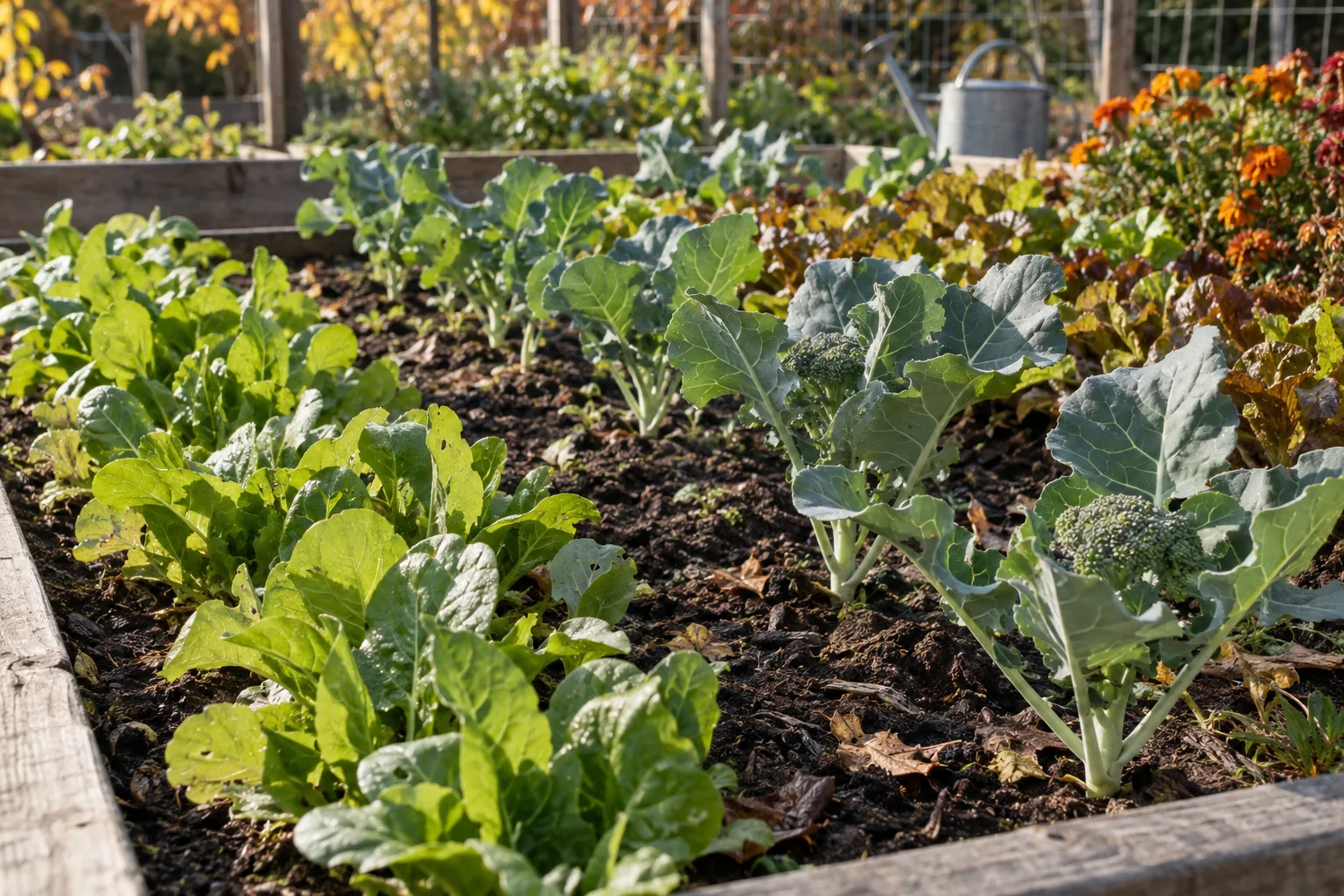
The best cool-season vegetables to plant in Arizona are lettuce, spinach, kale, broccoli, carrots, radishes, Swiss chard and peas. Start them from late September through November in the low desert, and harvest from late fall into spring.
Key takeaways
- Plant most cool-season vegetables from late September through November, when soil has cooled below about 85°F.
- Work 2 to 3 inches of compost into the top 8 to 12 inches of soil, since native Queen Creek soil is alkaline and often sits on caliche.
- Water deeply, so moisture reaches 6 to 8 inches down, and check the soil with a finger before every irrigation.
- Finish broccoli and peas early. Both stop producing well once days regularly pass the mid 80s°F.
- Keep frost cloth handy from December through February for young transplants on nights near 32°F.
When is the cool season for vegetables in Queen Creek?
Cool-season planting runs from roughly late September through November here, with a few quick crops going in through January or February. Harvest stretches from late fall into April, ending when highs push past the 80s and plants bolt (rush to flower and seed).
Early in the window, soil is still warm. Lettuce seed in particular can refuse to sprout when soil stays above about 80°F, so sow it in shade or wait for the first cool week in October. Transplants of broccoli and kale handle the warm soil better than seed does.
The University of Arizona Cooperative Extension publishes a vegetable planting calendar for Maricopa County with sowing dates for each crop. Our herbs, vegetables and berries department shows what is ready to plant, though availability changes week to week and season to season.
How should I prepare Queen Creek soil for vegetables?
Mix 2 to 3 inches of compost into the top 8 to 12 inches of the bed before planting. Native soil here is alkaline (often pH 7.5 to 8.5), low in organic matter, and frequently sits on caliche, a cement-like mineral layer that blocks roots and holds water.
Compost improves drainage, feeds the soil and buffers pH over time. If you dig down and meet caliche within a foot or so, a raised bed saves a lot of labor. Fill it with a mix of quality topsoil and compost, and give it at least 10 to 12 inches of depth.
Containers also work for most of the crops below. Browse pottery and planters if you want to grow greens on a patio, where you can move pots out of afternoon sun in March.
Which cool-season vegetables grow best in the low desert?
Eight crops give the most reliable harvests for East Valley home gardens. We commonly carry transplants and seed for these, but availability changes by season, so ask before you plan a bed around one variety.
Lettuce (Lactuca sativa)
Leaf lettuce grows 6 to 12 inches tall and wants full sun in fall and winter, with afternoon shade once March warms up. Keep the soil evenly moist. Loose-leaf types can be harvested leaf by leaf for weeks. The drawback is bolting: leaves turn bitter when daytime highs stay above the low 80s°F.
Spinach (Spinacia oleracea)
Spinach forms a low rosette 6 to 12 inches across and does best in full sun to light afternoon shade. Water it regularly, because dry spells push it to flower. Sow seed directly rather than transplanting. It is the quickest crop on this list to bolt, often by March as days lengthen and warm.
Kale (Brassica oleracea)
Kale reaches 18 to 30 inches tall and takes full sun. It tolerates light frost and keeps producing when you pick the outer leaves and leave the center. Water deeply about once or twice a week in winter. Aphids are its main drawback, and they cluster on new growth in spring.
Broccoli (Brassica oleracea var. italica)
Broccoli grows 2 to 3 feet tall and about 2 feet wide, in full sun. Set out transplants in September or October so heads form before the warm days of spring. After you cut the main head, smaller side shoots keep coming. The drawback is size: each plant needs roughly 18 to 24 inches of space, and heads loosen and flower quickly in warm weather.
Carrots (Daucus carota)
Carrot tops reach 8 to 12 inches, while roots grow 4 to 8 inches long depending on type. They need full sun and loose soil, so shorter types such as Nantes or Chantenay suit heavy ground. Seed is slow to sprout and must stay evenly moist for a week or two. Caliche and rocks make roots fork.
Radishes (Raphanus sativus)
Radishes stay 6 to 8 inches tall and are ready about 3 to 5 weeks after sowing. They want full sun and steady moisture. Tuck them between slower crops to use space well. The drawback is a short harvest window, because roots turn woody and hot-tasting if left in the ground once temperatures climb.
Swiss chard (Beta vulgaris subsp. cicla)
Chard grows 18 to 24 inches tall and takes full sun to light afternoon shade. It handles both frost and warm spring days better than most greens, and outer leaves can be picked for months. It takes more room than lettuce, so give each plant about a foot. Leaves turn tough and bitter once summer heat arrives.

Peas (Pisum sativum)
Sugar snap and snow peas climb 3 to 6 feet on a trellis, and compact types stay shorter. Give them full sun and regular water. Sow seed in October or November. Peas have the shortest season here, since vines slow down once days regularly reach the mid 80s°F. Plant early and expect a few weeks of heavy picking rather than months.
How often should I water cool-season vegetables?
Water deeply enough to moisten the top 6 to 8 inches of soil, and let the surface dry slightly before the next irrigation. Exact frequency depends on soil, bed type and weather. Fall beds may need water every 2 to 3 days, while midwinter beds often need it only every 4 to 6 days.
Check by pushing a finger 2 inches into the soil. If it is damp, wait. Overwatering is a common cause of yellow leaves and rot in slow-draining ground.
Drip irrigation puts water at the root zone and keeps leaves dry, which cuts down on fungal problems. A 2 to 3 inch layer of straw or shredded bark mulch holds moisture and moderates soil temperature. Keep mulch an inch or two back from stems. Our hard water leaves salts behind, so an occasional slow, deep soak helps flush them below the roots.

What mistakes cut a cool-season harvest short?
Planting at the wrong time causes most of the disappointment. Seeds sown in August often fail in heat, and broccoli transplanted in March bolts before it forms a usable head. Use a local calendar instead of the dates printed on a seed packet written for another climate. Our gardening calendars lay out the East Valley timing month by month.
Skipping soil prep is the second common problem. Seed pushed into bare, alkaline ground tends to sprout poorly and grow slowly.
Crowding comes next. Broccoli, kale and chard need room for air to move, and tight spacing invites aphids and mildew. Frost surprises also hurt. Most of these crops take a light frost, but newly planted seedlings can be damaged near 32°F, so cover them overnight with frost cloth or an old sheet.

Frequently asked questions
Can I plant tomatoes and peppers in fall?
Tomatoes and peppers are warm-season crops, and fall planting is risky because frost can arrive before fruit ripens. Most East Valley gardeners set transplants out in late winter, after frost danger drops, so fruit sets before extreme heat. Fall is better spent on the cool-season crops above.
Do I need to fertilize vegetables here?
Yes, most vegetables need feeding because desert soil is low in organic matter and frequent watering washes nutrients downward. Mix compost into the bed at planting, then side-dress leafy crops with a balanced vegetable fertilizer every 3 to 4 weeks. Follow the label rate, and watch for pale new leaves, which can signal iron or nitrogen shortage.
Why are my leaves yellow with green veins?
Yellow leaves with green veins usually point to iron chlorosis, which is common in alkaline soil because iron becomes harder for roots to absorb. Compost helps over time, and a chelated iron product can give quick relief. Overwatering and poor drainage cause similar symptoms, so check how the bed drains first.
Can I grow these vegetables in containers?
Yes, lettuce, spinach, radishes, chard and kale all grow well in containers at least 10 to 12 inches deep. Use a quality potting mix, not native soil, and make sure the pot drains freely. Pots dry out faster than beds, so check moisture daily during warm spells.
What can I grow through summer instead?
Very little thrives outdoors from June through August, and most gardeners rest their beds then. Heat-tolerant crops such as yard-long beans, Armenian cucumbers and okra can produce with regular water and some afternoon shade. Use summer to renew compost and plan your fall planting.
Is a cool-season vegetable garden right for your yard?
It is a good fit if you have at least 6 hours of winter sun, can water on a regular schedule, and enjoy eating greens and root crops in fall and spring. Start with three or four crops you already cook with. It suits you less well if your yard is shaded in winter or you travel for weeks at a time. Come see us in Queen Creek and we will help you choose.