
The best container plants for early color in Arizona are snapdragons, pansies, alyssum, petunias and calibrachoa, planted from October through March. Use a pot at least 14 inches wide and fresh potting mix.
Key takeaways
- Plant cool-season containers from mid-October through November and a spring round from late February through March.
- Choose a pot at least 14 inches wide with a drainage hole, and fill it with fresh potting mix instead of yard soil.
- Pansies, snapdragons, dianthus, alyssum and stock handle winter lows near 32°F, while petunias and calibrachoa carry color from March into May.
- Push a finger 1 inch into the mix before watering. Expect every 2 to 4 days in winter and daily or every other day by April.
- Replace cool-season annuals in April, once daytime highs hold in the 90s, with heat-tolerant plants such as vinca.

When should I plant containers for early color in Arizona?
Plant cool-season containers from mid-October through November, and plant a second round from late February through March. Fall plants root in warm soil and bloom through winter, while spring plants grow fast in lengthening days and flower until highs settle into the 90s, usually in late April or May. Both windows are short. Our gardening calendars list what to plant each month.
| Planting window | Good choices | Color period | Watch for |
|---|---|---|---|
| Mid-October to November | Pansies, snapdragons, dianthus, stock, alyssum | November to April | Frost near 32°F on the coldest nights |
| Late February to March | Petunias, calibrachoa, alyssum | March to May | Heat arriving fast in April |
| April | Vinca, portulaca | May to October | Highs above 105°F and reflected heat |
Frost is occasional in Queen Creek, and low spots in a yard can run several degrees colder than the Phoenix metro average. On nights forecast near 32°F, cover pots with frost cloth or slide them under a patio roof. Pansies, snapdragons, dianthus, alyssum and stock tolerate a light frost, but petunias and calibrachoa are more tender, so hold them until late February.
Which container plants give the best early color?
Pansies, snapdragons, alyssum, dianthus and stock carry the cool season, and petunias and calibrachoa take over as days lengthen in March. These are varieties we commonly carry in our annual flowers and foliage selection, though availability changes week to week and season to season. Sizes below are typical for plants grown in pots.

Pansy (Viola × wittrockiana)
Pansies stay 6 to 9 inches tall and 8 to 12 inches wide. They bloom best in full sun through winter, with afternoon shade helping as spring warms, and they want water when the top inch of mix dries. The drawback is a short season, because blooms fade once highs climb into the 80s and 90s.
Snapdragon (Antirrhinum majus)
Dwarf snapdragons reach 6 to 12 inches, while tall types run 24 to 36 inches and make a strong center plant in a large pot. Give them full sun and moderate water. Tall types can lean in wind and need a pot heavy enough to stay upright, and all of them slow down when warm weather settles in.
Sweet alyssum (Lobularia maritima)
Alyssum stays 4 to 8 inches tall and spills 12 to 18 inches over the rim with small, honey-scented flowers in white, pink or purple. It does well in full sun to part shade with moderate water. Its drawback is heat: blooming slows as temperatures rise, and a light shearing helps it refresh.
Petunia (Petunia × hybrida)
Petunias grow 6 to 12 inches tall, and trailing types can spread 2 to 3 feet. They need at least 6 hours of sun and regular water. The drawback is upkeep, since they are heavy feeders and turn leggy by May, so plan to cut them back or replace them as heat builds.
Calibrachoa (Calibrachoa hybrids)
Calibrachoa looks like a miniature petunia, growing 6 to 10 inches tall and 12 to 24 inches wide. It wants full sun and regular water. Its drawback is sensitivity to alkaline conditions, which can show up as yellow leaves with green veins, and it fades in summer heat like the others.
Dianthus (Dianthus chinensis)
Dianthus forms tidy clumps 6 to 12 inches tall, with fringed flowers in pink, red and white that often smell of clove. Plant it in full sun and water moderately. The drawback is poor tolerance of soggy mix, so a fast-draining potting blend matters more for dianthus than for most of these plants.
Stock (Matthiola incana)
Stock grows 12 to 30 inches tall and gives a strongly fragrant flower spike in late winter. It needs full sun and moderate water. The drawback is a narrow season, because it wants cool weather and declines quickly once March warms up, and the taller types need a large pot.
What size and type of container works best in the low desert?
Choose a pot at least 14 inches wide with a drainage hole. Large pots hold moisture and keep roots cooler, and a small pot can dry out in a single warm afternoon. Material changes how fast that happens.
- Terra cotta breathes and dries quickly, which suits winter but needs more watering by April.
- Glazed ceramic holds moisture longer and is a good fit for larger arrangements.
- Thick resin or foam insulates roots well and weighs less. Press the wall to check that it feels sturdy.
- Thin dark plastic against a west-facing wall can overheat roots in late spring.
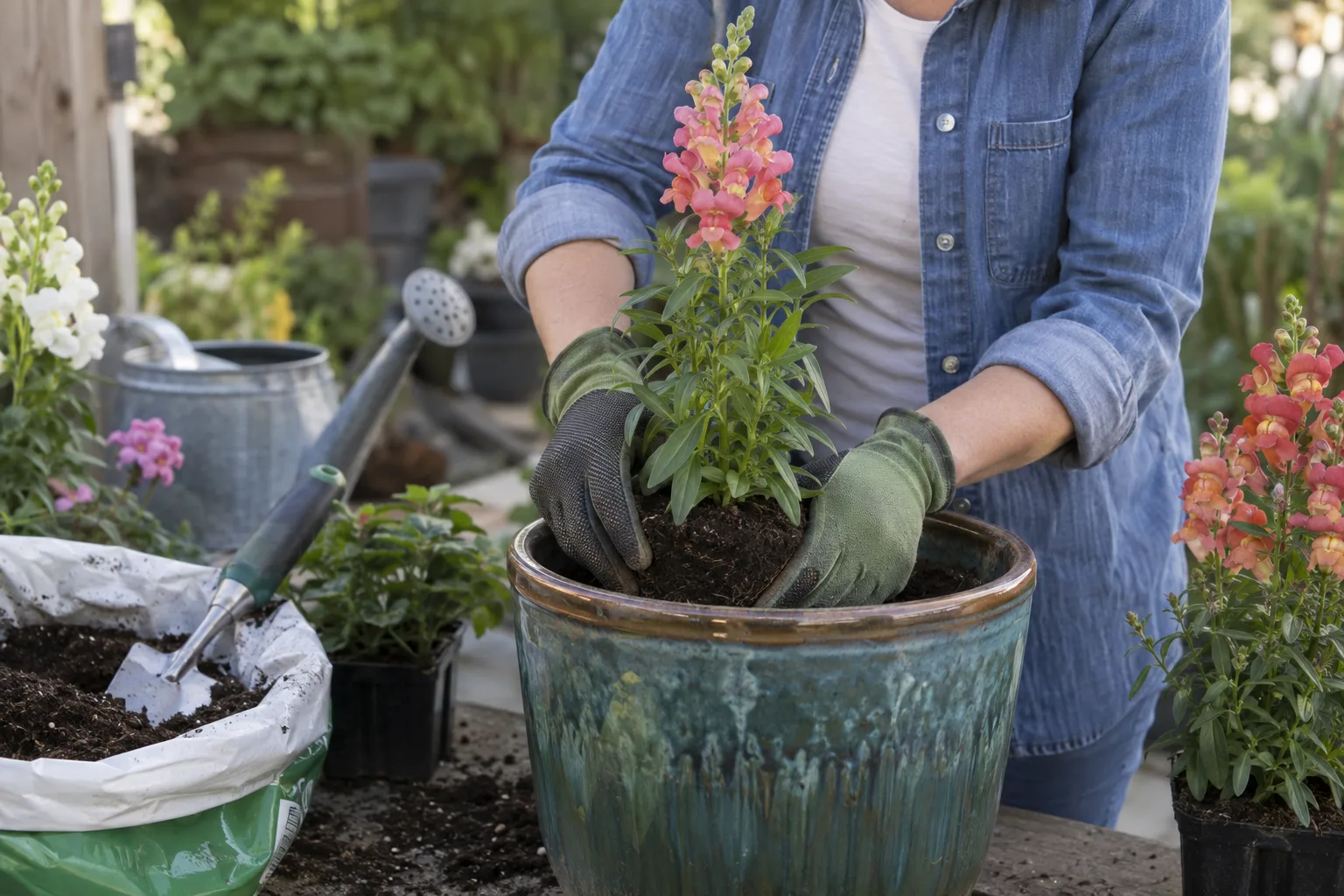
Browse our pottery and planters to compare sizes and materials in person. For the arrangement, set one taller plant such as a snapdragon slightly off center, fill around it with mounding plants like pansies or dianthus, and tuck alyssum or trailing petunias at the rim. Skip the gravel layer in the bottom, since it raises the soggy zone closer to the roots.
What potting mix and fertilizer should I use?
Use a quality bagged potting mix, not soil from your yard. Native soil here is alkaline and often laced with caliche, and it compacts in a pot until roots cannot get air. If the mix feels heavy, blend in perlite at roughly 1 part to 3 or 4 parts mix for extra drainage.
Container flowers use up nutrients fast. Mix a slow-release fertilizer into the soil at planting, following the label rate, and add a liquid bloom fertilizer about every 2 weeks during heavy flowering. Hard water adds to the problem. Over time it can raise the pH of the mix, and iron deficiency shows up as yellow leaves with green veins. A chelated iron product used at the label rate corrects it.
How often should I water container flowers in Arizona?
Water when the mix feels dry 1 inch below the surface, and check by finger rather than by calendar. In the cool season that usually means every 2 to 4 days. In March and April, expect daily or every other day, and in a sunny spot by May a pot may need water every day. Overwatering is the more common winter error.
Water in the morning and soak until water runs from the drainage hole. A light sprinkle wets only the top of the mix and leaves roots dry below. Deadhead spent blooms every few days to keep petunias, pansies and snapdragons flowering longer.

What do I plant when the heat arrives?
Swap cool-season annuals for heat-tolerant plants in April, once daytime highs hold in the 90s and before the old plants look tired. Vinca (Catharanthus roseus) and portulaca (Portulaca grandiflora) are common summer choices for containers in the low desert. Both need excellent drainage, and portulaca does best with its soil allowed to dry between waterings.
Summer highs here pass 110°F, and stucco walls and concrete reflect more heat onto a pot. Move containers to a spot with morning sun and afternoon shade if you can. The monsoon from roughly July through September brings heavy rain, so keep saucers empty and drainage holes clear.
Frequently asked questions
Can I mix cool-season and spring plants in one pot?
Yes, if the plants share sun and water needs. Alyssum, petunias and calibrachoa pair well in a March planting, and alyssum also works in a fall pot. Avoid combining stock or pansies with petunias, because the cool-season plants fade just as the petunias hit their stride.
Will a frost kill my container plants?
A light frost near 32°F rarely harms pansies, snapdragons, dianthus, alyssum or stock. Petunias and calibrachoa are more tender and can be damaged. Cover pots with frost cloth on cold nights, or move them under a patio roof or beside a south-facing wall, which holds some daytime warmth.
How many plants fit in a 14-inch pot?
A 14-inch pot usually holds 3 to 5 small plants, depending on how much they spread. Set them close enough to touch in 2 to 3 weeks, but leave room for airflow. Crowding a pot with 8 or 9 plants leads to constant watering and weak growth.
Can containers sit on a west-facing patio?
In winter and early spring, yes. A west exposure gives plenty of sun and the extra warmth helps flowers. By May, reflected heat from walls can scorch plants and overheat roots in thin pots. Move containers to afternoon shade, or choose heat-tolerant plants and a thick-walled pot.
Do I really need to deadhead?
Deadheading keeps most container annuals blooming longer. Pinch off spent flowers on pansies, petunias and snapdragons every few days, and trim straggly stems back by a third. Alyssum and calibrachoa need less attention, though a light trim keeps them tidy and encourages new growth.
Are container flowers the right choice for your patio?
Container flowers suit anyone who wants quick color near a door or seating area and can check the pots every day or two in spring. They are a poor fit if your schedule makes frequent watering unrealistic, or if the only open spot gets harsh afternoon sun with no shade. In that case, choose fewer, larger pots or heat-tolerant plants. Stop by our Queen Creek nursery to see what is available, and check our classes and events page for the current schedule.