

Snapdragons, petunias, sweet alyssum, calibrachoa, verbena, pansies, diascia and angelonia are the container plants to start for an early Arizona spring. Plant most from late January through March, in large pots with good drainage, and expect color until the heat arrives in May.
Key takeaways
- Plant hardy bloomers such as snapdragons, pansies and alyssum from late January, and tender ones such as angelonia after the last frost risk passes, usually March.
- Choose pots that hold 5 gallons or more, with several drainage holes, so roots stay evenly moist as days warm.
- Expect to water every 2 to 3 days in February and daily by late March or April.
- Keep frost cloth ready through February, since overnight lows near freezing can still happen in Queen Creek.
- Cool-season color fades in May, so start summer containers in late March.
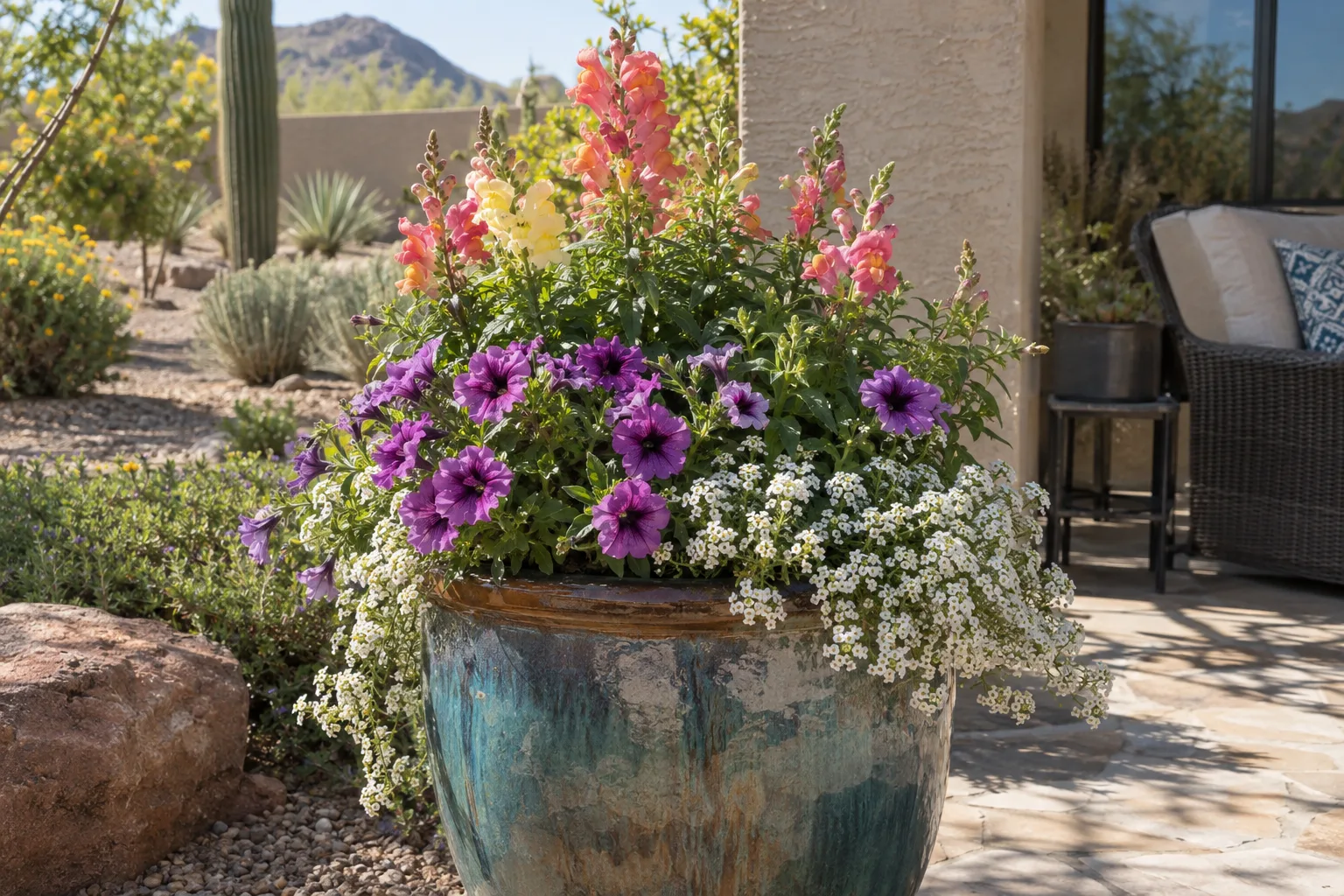
When can I start spring containers in the Arizona low desert?
Late January through March is the working window for spring containers in Queen Creek and the East Valley. Hardy plants go in first, tender ones follow, and everything should be settled in before the heat of April.
Our winters are mild, but frost is still possible into February in the lower, cooler pockets of the East Valley. Staging your planting over several weeks spreads that risk, and pots can be moved or covered when a cold night is forecast. The calendar below is a general guide, so adjust it to your own yard and the forecast.
| Window | What to plant | Frost risk |
|---|---|---|
| Late January | Snapdragons, pansies, sweet alyssum | Low, hardy to light frost |
| February | Petunias, diascia, calibrachoa | Moderate, cover on cold nights |
| March | Verbena, angelonia | Low once nights stay above 40°F |
You can browse many of these in our annual flowers and foliage department. These are varieties we commonly carry, though availability changes week to week and season to season.
What pot and potting mix work best for containers here?
Use a bagged potting mix, not yard soil, in a pot that holds at least 5 gallons. Native soil here is alkaline and often sits on caliche, and it packs down in a pot until water pools and roots rot.
Look for a mix that contains perlite or pumice for drainage. In a hot, sunny spot, a little extra perlite helps water move through quickly. Larger plants such as tall snapdragons do better in pots of 10 to 15 gallons, and a single big pot dries out far more slowly than several small ones.
Choose containers with more than one drainage hole. Glazed ceramic and resin hold moisture longer than unglazed terra cotta, which loses water through its walls. Our pottery and planters page shows the range of materials and sizes. Leave about 2 inches between the soil and the rim so water soaks in instead of running off.
Which container plants bloom earliest in Arizona?
Pansies, snapdragons and sweet alyssum tolerate the most cold, so they go in first. Each plant below is listed with its size, light needs and one drawback. Sizes are typical ranges and vary by variety.
Snapdragon (Antirrhinum majus)
Snapdragons reach 1 to 3 feet depending on the variety, with flower spikes from late winter into spring. They like full sun, but afternoon shade helps them last as April warms up. Water when the top inch of soil is dry. The drawback is a short season, because they fade once highs stay in the 90s.
Petunia (Petunia x hybrida)
Petunias grow 6 to 12 inches tall and spread 1 to 3 feet, so trailing types suit the edge of a large pot. They want full sun in winter and some afternoon shade by March. Pinch back leggy stems in mid-March to keep them full. The drawback is that they need regular feeding, and they decline quickly in early heat.
Sweet alyssum (Lobularia maritima)
Sweet alyssum stays 4 to 8 inches tall and spreads 8 to 12 inches, with small, fragrant white or purple flowers. It tolerates cold well and fills gaps around taller plants. Give it sun to light shade and steady moisture. Its drawback is that it stops blooming and goes ragged when temperatures climb.
Calibrachoa (Calibrachoa hybrids)
Calibrachoa looks like a small petunia, growing 6 to 10 inches tall with a trailing spread of 1 to 2 feet. It wants full sun and a well-drained mix, and it prefers the soil to dry slightly between waterings. The drawback is that it yellows easily in alkaline conditions and shows it fast when overwatered.
Verbena (Glandularia and Verbena hybrids)
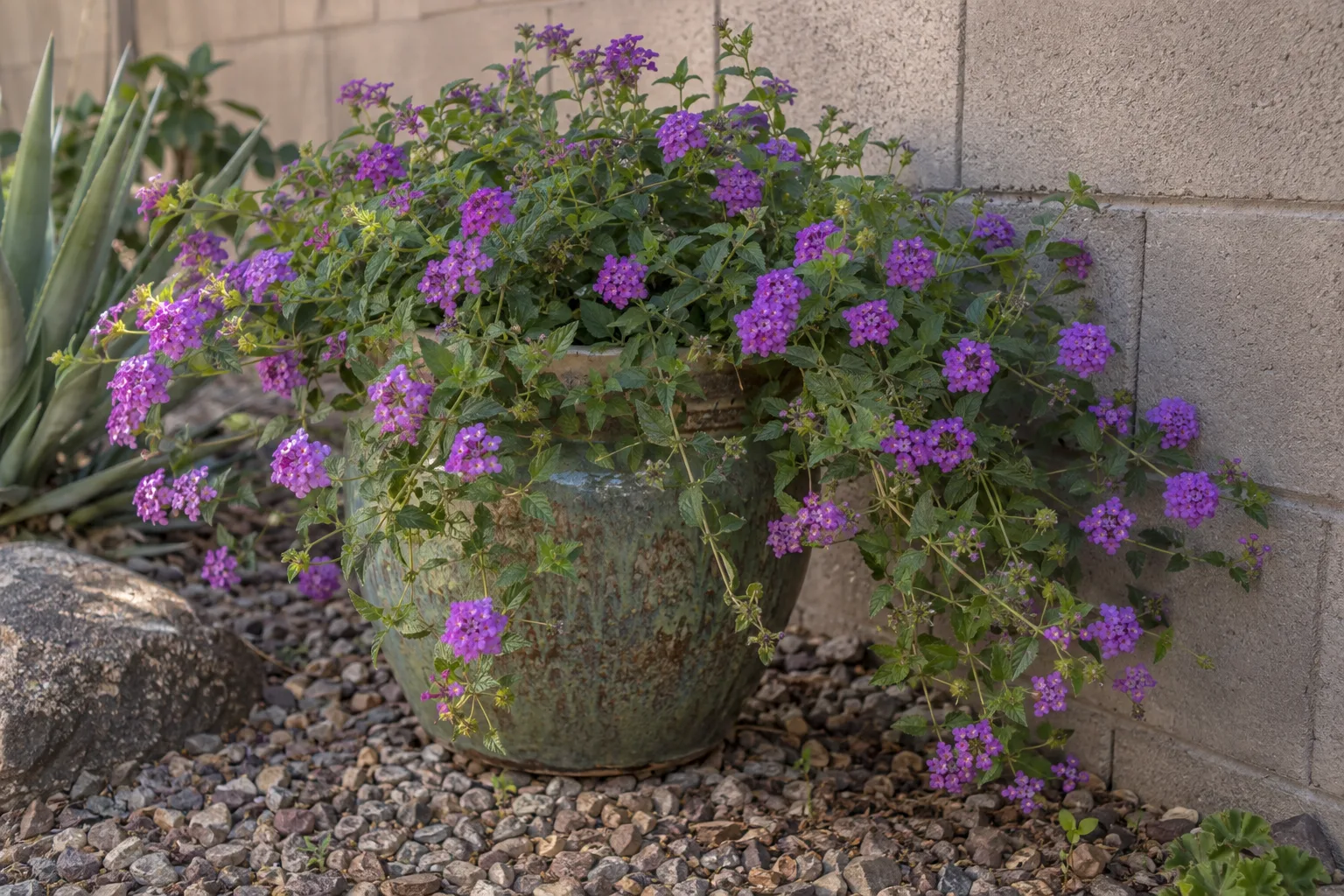
Garden verbena grows 6 to 12 inches tall and spreads 1 to 3 feet, with clusters of flowers in purple, pink, red and white. It likes full sun and handles dry spells better than most annuals. Plant it in March for the longest run. The drawback is mildew on the leaves if water sits on them in cool, damp weather.
Pansy (Viola x wittrockiana)
Pansies stay 6 to 9 inches tall and tolerate cold better than nearly any other annual here. They prefer sun in winter and shade by spring. Use them at the front of a pot or in a bowl of their own. The drawback is timing, since they do best when planted in fall and decline quickly with the first real heat, so a late January planting gives a short show.
Diascia (Diascia barberae)
Diascia grows 8 to 12 inches tall and sends up small flowers in coral, rose and pink. It pairs well with snapdragons and alyssum in mixed pots. Give it morning sun and afternoon shade. The drawback is a modest heat tolerance, so expect it to slow down by late April.
Angelonia (Angelonia angustifolia)
Angelonia reaches 1 to 2 feet, with upright spikes in purple, pink and white. It likes warmth, so wait until March before planting. Once settled, it handles heat better than the cool-season plants above and can bloom into summer with regular water and some afternoon shade. The drawback is frost, which damages it quickly.

How do I water and feed spring containers?
Check the soil with a finger, and water deeply when the top inch feels dry. Plan on every 2 to 3 days in February, then daily as March warms and days lengthen. A pot in reflected heat from a wall may need water twice a day by April.
Water until it runs out of the bottom holes. That flushes the salts that build up from our hard water. Overwatering is the other risk, because roots in soggy mix lose oxygen and die.
For feeding, a liquid fertilizer every 2 weeks supports steady bloom. Yellow leaves with green veins point to iron chlorosis, common in alkaline mixes and hard water, and a chelated iron product used according to its label usually helps. A thin layer of fine mulch or decomposed granite on the surface slows evaporation.
How do I protect containers from a late frost?
Move pots under a patio roof or against a south-facing wall, or cover them with frost cloth before sunset. Pots are easier to protect than a planting bed because you can relocate them in a few minutes.
Use frost cloth or an old sheet rather than plastic, which can pass cold directly to the leaves. Remove the cover in the morning once temperatures rise. Angelonia and other tender plants are the first to suffer, so hold them until March if you are unsure. The gardening calendars on our site help you line planting up with the season.

When do spring containers end, and what comes next?
Most cool-season containers fade in May as highs pass 95°F. Start your summer pots in late March so they are rooted and ready before the spring plants finish. Angelonia carries on into summer with water and some shade, while heat-lovers such as portulaca and vinca take over from there.
When the cool-season plants decline, pull them out and refresh the mix before replanting. Old potting mix packs down and holds salts after a season of hard water, so blend in fresh mix rather than reusing it straight.
Frequently asked questions
Can I grow salad greens in containers too?
Yes, loose-leaf lettuce, arugula and spinach do well in a wide pot from late January through March. Use a pot 10 to 12 inches deep and keep it where it gets morning sun. The University of Arizona vegetable planting calendar for Maricopa County lists planting dates.
Can I reuse last season’s potting mix?
You can, but only after refreshing it. Blend about half used mix with half fresh mix, and add new perlite for drainage. Used mix packs down and collects salts from hard water. Discard mix from any pot where plants died from root rot or disease.
Why are my container plants yellow even though I fertilize?
Yellow leaves with green veins usually mean iron chlorosis, which is common in alkaline soil and hard water. The iron is in the mix but plants cannot absorb it. A chelated iron product applied as directed on the label often restores green growth within a couple of weeks.
Should I use terra cotta pots?
Terra cotta works, but it dries out faster because water moves through the clay. In March and April you may water it twice as often as a glazed or resin pot of the same size. If you choose terra cotta, pick a larger pot and check the soil daily.
Which of these lasts longest into summer?
Angelonia lasts longest, often into summer with regular water and afternoon shade. Verbena and calibrachoa usually hold on a few weeks past petunias and snapdragons, into May in many yards. Pansies and alyssum are the first to finish when highs reach the 90s.
Are early spring containers worth the effort here?
Yes, if you want color from late winter and can water regularly. A few large pots give you 2 to 3 months of bloom with little ground preparation, and they can be moved when frost or heat threatens. Skip them if you travel often or cannot water daily from late March, because small pots dry out fast. Stop by our Queen Creek nursery and we will help you choose plants for your sun exposure.
