
Fig, pomegranate, jujube, mulberry, loquat, dwarf citrus, Barbados cherry and strawberry guava are eight fruits that handle Arizona heat in containers. Use a 15 to 30 gallon pot, give it afternoon shade from June through September, and water deeply.
Key takeaways
- Start with a pot of 15 gallons or more, and go to 20 to 30 gallons for any tree that will stay in its container for several years.
- Move pots into afternoon shade when highs pass 110°F, since the roots in a sun-baked pot suffer before the leaves show it.
- Fig, pomegranate, jujube and mulberry go dormant in winter and need far less water from December through February.
- Citrus, Barbados cherry and strawberry guava are frost-tender, so plan to cover or move them when nights approach freezing.
- Plant most container fruit in March or April, before summer heat arrives.
Why grow fruit in containers in the Arizona low desert?
Containers get around the two biggest local problems, alkaline caliche soil and summer heat above 110°F. A pot of fresh potting mix skips the hard caliche layer that can sit a foot or two under many Queen Creek yards, and you can roll the plant into shade when the forecast turns extreme.
The trade is more routine work. Pots dry out fast, sometimes needing water every day in July, and frequent watering washes nutrients out of the mix. Our hard irrigation water also leaves mineral salts behind in a closed pot. None of this is difficult once you have a schedule.
If you want a feel for the range of trees available, browse our fruit trees and ask what suits the size of pot you have in mind.
What size and type of container works best in summer heat?
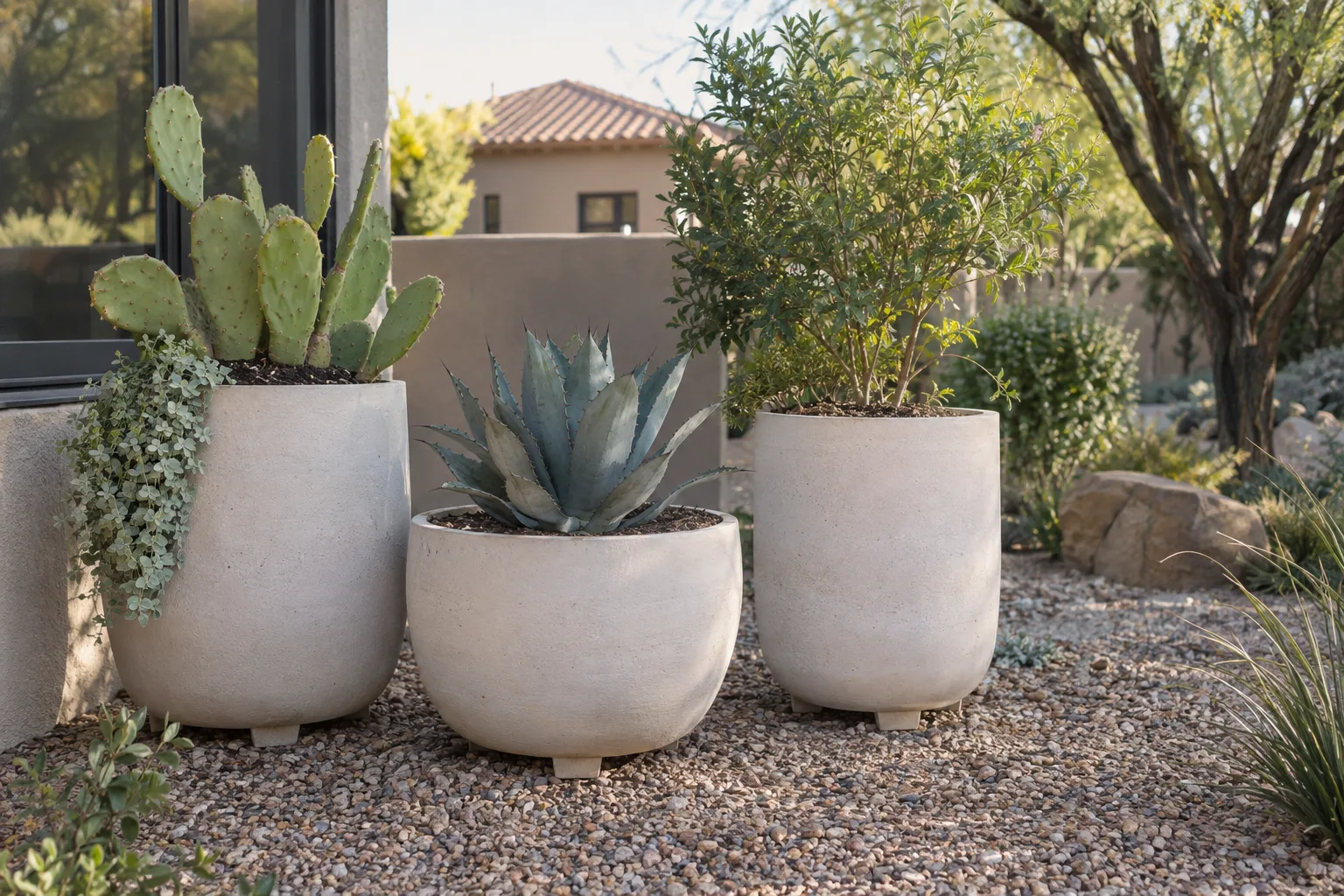
A 15-gallon pot is the practical minimum for a fruit tree here, and 20 to 30 gallons is better for anything that will stay put for years. Small pots heat quickly and can dry out within hours on a July afternoon. Bigger pots hold moisture and keep roots cooler.
Color and material matter. A dark pot in direct afternoon sun can run much hotter than the air around it. Good options include:
- Light-colored plastic or resin: reflects heat and is light enough to move.
- Double-walled planters: the air gap between the walls insulates the roots.
- Glazed ceramic: holds up well but is very heavy once filled.
- Fabric grow bags: cool through evaporation, though they dry out faster.
You can look through our pottery and planters to compare sizes and materials in person.
Every pot needs several large drainage holes. Raise it on feet or risers so water leaves freely after irrigation and after monsoon storms. Roots sitting in soggy mix for a couple of days can rot.
Which fruits handle Arizona heat in containers?
These eight can produce in pots in the low desert when sized and placed correctly. They are types and varieties we commonly carry, but availability changes week to week and season to season, so ask us what is on hand before you plan around one.
Fig (Ficus carica)
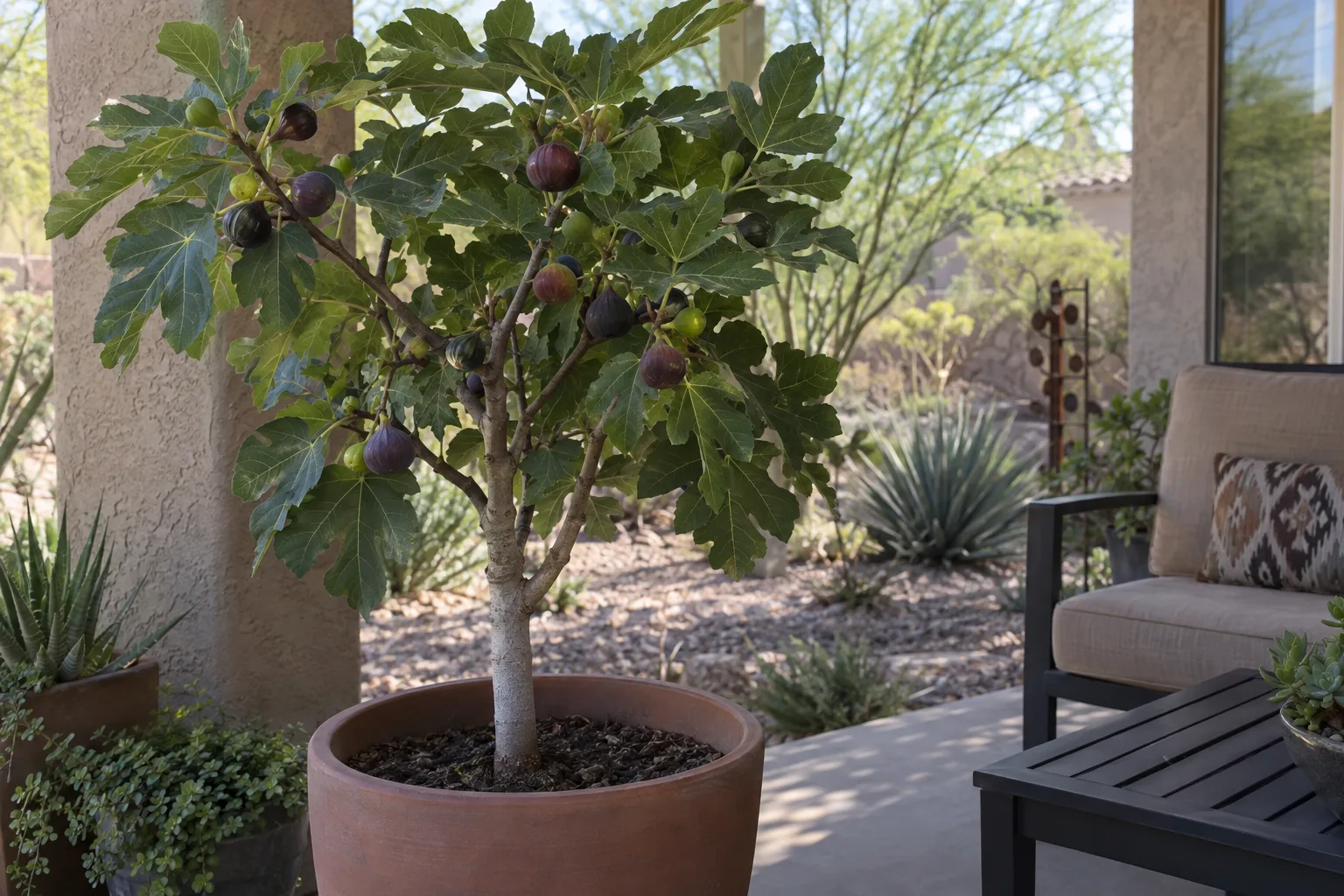
A fig is a deciduous tree that reaches 8 to 10 feet in a large pot with pruning. It wants full sun, with some afternoon shade during the hottest weeks. Water deeply and often in summer, then barely at all while it is leafless in winter. The drawback is the sap and the fruit-hungry birds, so netting may be needed at ripening.
Pomegranate (Punica granatum)
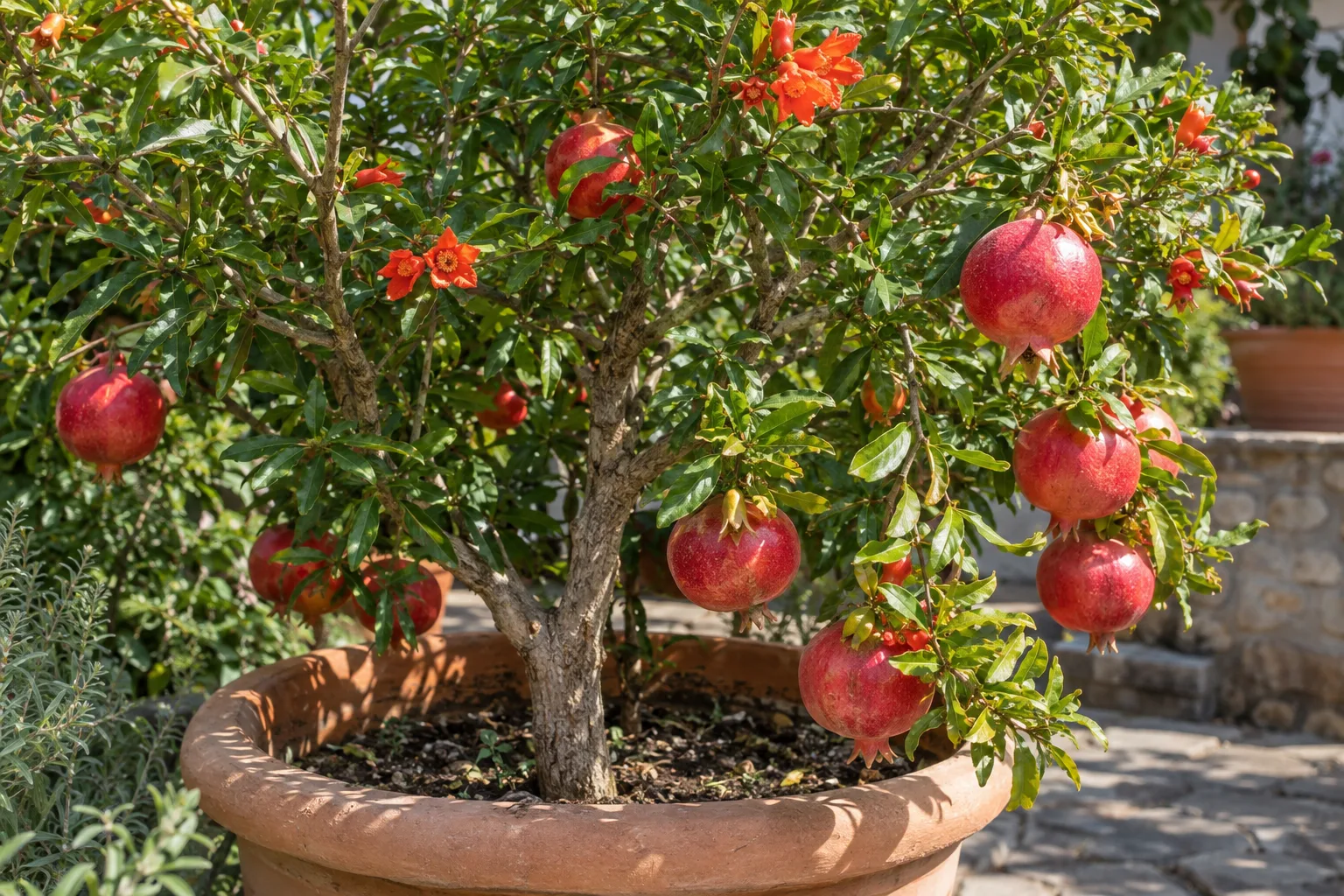
Pomegranate grows as a deciduous large shrub or small tree, usually 6 to 10 feet in a 20 to 30 gallon pot. It takes full sun and handles heat well. Water moderately once established. Its drawback is fruit splitting when watering swings from dry to soaked, so keep moisture steady as the fruit ripens.
Dwarf citrus (Citrus spp.)
Dwarf lemons, oranges and mandarins grow 5 to 8 feet in a 20 to 30 gallon pot. They want full sun with some relief from afternoon heat in summer, and regular water year-round. Our citrus trees are worth a look. The drawback is frost: young trees need cover when nights drop to freezing.
Jujube (Ziziphus jujuba)
Jujube is a deciduous tree that can reach 10 feet or more, though a pot and pruning keep it smaller. It likes full sun and tolerates heat and alkaline soil well. Water deeply but less often than most fruit trees. Its drawback is late leaf-out in spring, which can make a healthy tree look dead until warm weather arrives.
Mulberry (Morus spp.)
Mulberry is a fast, deciduous tree, and dwarf types stay around 6 to 8 feet in a 25 to 30 gallon pot. It takes full sun and grows well in alkaline soil. Water regularly in spring while fruit sizes up. The drawback is mess: ripe berries drop and stain patios, so place the pot over gravel or a surface you can hose off.
Loquat (Eriobotrya japonica)
Loquat is an evergreen tree that stays 6 to 10 feet in a large pot with light pruning. It prefers morning sun and afternoon shade in summer, with moderate, steady water. It fruits in late winter to spring. The drawback is that its flowers and young fruit can be damaged by a hard frost.
Barbados cherry (Malpighia emarginata)
Barbados cherry is a tropical evergreen shrub reaching 4 to 6 feet in a 15 to 20 gallon pot. It wants morning sun and afternoon shade, with regular water. Look through our tropical fruit trees for similar options. Its drawback is cold sensitivity, so it needs protection or a move indoors during frost.
Strawberry guava (Psidium cattleianum)
Strawberry guava is an evergreen shrub of about 5 to 8 feet in a 20 gallon pot. It does best with morning sun, afternoon shade and regular water. Its drawback is that it is less proven in the low desert than the others here, and it dislikes frost and drying winds, so treat it as an experiment.
How do I water container fruit through the year?
Water by season and by touch, not by a fixed calendar. A pot that holds a tree through a 112°F afternoon can need water every day, while the same tree in January may go two weeks. Push a finger 2 inches into the mix before you water.
| Season | Typical frequency | Notes |
|---|---|---|
| Winter (December to February) | Every 7 to 14 days | Deciduous trees need very little. Evergreens and citrus need more. |
| Spring (March to May) | Every 2 to 4 days | Increase as temperatures climb and trees flower and set fruit. |
| Summer (June to September) | Daily, adjusted for rain | Check drainage after monsoon storms. |
| Fall (October to November) | Every 2 to 3 days | Taper off as nights cool. |
Lifting the pot is a quick test. A light pot is a dry pot. A drip emitter on a timer takes the guesswork out of July, and it covers you on the days you forget.
How do I plant and feed a container fruit tree?
Plant in fresh potting mix lightened with perlite or pumice, never in yard soil, which compacts and drains poorly in a pot. Then follow these steps.
- Fill the pot partway with a mix of roughly two parts potting soil to one part perlite or pumice.
- Set the tree so the root flare, where trunk meets roots, sits at or slightly above the mix.
- Fill around the roots and water until it runs freely from the drainage holes.
- Add 1 to 2 inches of mulch, keeping it a few inches away from the trunk.
- Place the pot where it gets morning sun and afternoon shade.
Feed on a schedule suited to each fruit. Citrus is a heavy feeder and does well with a citrus fertilizer that includes micronutrients through the growing season. Fig, pomegranate and jujube need much less. Yellow leaves with green veins point to iron deficiency, common with our alkaline water, and a chelated iron product usually helps.
Every couple of months, flush the pot with extra water to carry salts out of the mix. Skip fertilizer on any plant that is wilting from heat. Water and shade come first.
When should I plant and protect container fruit?
March and April are the best planting window for most of these fruits, because roots establish before summer. Many gardeners also plant in October. Our gardening calendars lay out month-by-month timing for the East Valley.
In January and February, prune deciduous fruit trees while they are dormant. From December through February, watch overnight lows and be ready to cover or move citrus, Barbados cherry and strawberry guava. In May and June, increase watering and shift stressed pots into afternoon shade. From July through September, hold back fertilizer and focus on moisture and drainage. Pomegranate and jujube fruit ripen later in the season.
Shade cloth rated around 30 to 40 percent can be draped over plants during heat waves. Watch for leaf curl, scorched leaf edges and wilting that does not recover by evening, and move the pot to shade right away.

Frequently asked questions
How often do I repot a fruit tree in a container?
Most container fruit trees need repotting or root pruning every 2 to 3 years. Signs include roots circling the pot, water running straight through, and slowing growth despite feeding. Late winter to early spring is a good time. Trim circling roots and replace at least a third of the old mix with fresh.
Do I need two trees for fruit to set?
Most of the fruits here set fruit with a single plant, which suits a small patio. Figs, pomegranates, citrus, jujube and loquat are commonly grown this way. Some varieties differ, so check the tag for pollination needs, especially for jujube and mulberry, before you buy.
Can I grow fruit trees on a balcony?
Yes, if the structure can carry the weight. A large pot of wet mix can weigh well over 100 pounds, so choose smaller plants such as Barbados cherry or a dwarf citrus, and consider rolling caddies. East-facing balconies suit most fruit best. Check your lease or HOA rules on planters before you start.
Should I thin the fruit on a container tree?
Thinning helps when a tree sets more fruit than its roots can support. Removing a portion of young fruit lets the rest grow larger and keeps the branches from overloading. It matters most on young trees and heavy-setting types such as citrus. Leave a handful of spaced fruit and remove the crowded ones early.
Can I leave a fruit tree outside all winter?
Deciduous fruit trees such as fig, pomegranate, jujube and mulberry can stay outside through winter. Citrus, Barbados cherry and strawberry guava may need frost protection on cold nights. Cover them with frost cloth or move them under a patio roof, and keep pots off bare cold ground when possible.
Is container fruit right for your patio?
Container fruit suits you if you have a spot with morning sun, afternoon shade and room for a 20 to 30 gallon pot. Start with a fig, pomegranate or jujube for the least fuss. It is a poor fit if you travel through summer with no irrigation timer, or cannot move a heavy pot. Come see the options at our Queen Creek nursery, and we will help you match a fruit to your patio.