
Growing bulbs in containers in Arizona works when you plant cool-season bulbs between October and January, use large, light-colored, thick-walled pots, and keep the root zone out of afternoon sun. Summer heat is the main threat to bulbs in pots here.
Key takeaways
- Plant paperwhites, amaryllis and freesia from October to January, and gladiolus in February or March.
- Choose light-colored, thick-walled pots at least 12 inches wide and deep, because more soil heats more slowly.
- Chill tulip bulbs in the refrigerator for roughly 10 to 14 weeks before planting, and treat them as one-season color.
- Use a fast-draining mix and water only when the top inch of soil is dry.
- Give pots morning sun and afternoon shade, and lift them off hot concrete on pot feet.

Why do container bulbs overheat in the low desert?
Container bulbs overheat because a pot holds far less soil than a garden bed, so sun and hot paving warm the whole root zone quickly. Most popular bulbs come from regions with milder summers than our highs above 110°F. A dark or thin-walled pot soaks up radiant heat and passes it straight to the roots.
Pots on concrete heat from below too. Low humidity dries the soil surface fast, which can hide how warm the soil is a few inches down. The danger window runs from late spring through early fall, when dormant bulbs and spent plants are sitting in pots.
Which containers protect bulbs from heat?
Large, thick-walled, light-colored pots protect bulbs best, because more soil and more wall material slow the rate at which heat reaches the roots. Glazed ceramic and light-colored fiberglass or resin are good choices. Terra cotta breathes well but absorbs heat and dries quickly. Thin black plastic offers almost no insulation.
Aim for a pot at least 12 inches wide and deep, and go 16 to 18 inches deep for tall bulbs like amaryllis. Every pot needs drainage holes. Browse our pottery and planters for light-colored, thick-walled styles; we commonly carry glazed and resin pots, though availability changes week to week and season to season.
Place pots where they get morning sun and afternoon shade, such as along an east-facing wall. On a west-facing patio, stretch 30 to 40 percent shade cloth over them from midday on. Lift pots on pot feet or a wooden platform so heat from paving does not pass up through the base, and group pots together so they shade each other’s sides.

When should I plant bulbs in containers in Arizona?
Plant most bulbs in containers between October and January, gladiolus in February or March, and caladium in April once the soil has warmed. The table shows a typical calendar for the low desert. Our gardening calendars are a good place to check monthly timing for other plants.
| Bulb | Plant | Bloom | After bloom |
|---|---|---|---|
| Paperwhites | October to December | December to February | Let leaves die back |
| Amaryllis | October to January | Late winter to spring | Keep leaves green, shade in summer |
| Freesia | October to November | February to March | Let leaves die back, lift corms in late spring |
| Pre-chilled tulips | November to December | January to March | Treat as one season |
| Gladiolus | February to March | April to May | Lift corms before June |
| Caladium | April | Foliage from late spring to fall | Store tubers dry over winter |
Dates shift a few weeks with each winter and with your patio’s exposure. Spring bulbs are cool-season plants here, so plan to finish most of them before the heat of late May. Watch the forecast in winter. Occasional frost can nip leaves, so move pots under a patio cover on nights forecast near freezing.
Which bulbs grow well in Arizona containers?
Paperwhites, amaryllis and freesia are the easiest to grow here, while pre-chilled tulips, gladiolus and caladium work if you accept a shorter season. These are bulbs we commonly carry in their planting seasons, though availability changes week to week and season to season.
Paperwhites (Narcissus tazetta)
Paperwhites need no chilling and bloom several weeks after planting, usually between December and February. Their fragrance is strong enough that some people find it heavy near a doorway.
Amaryllis (Hippeastrum hybrids)
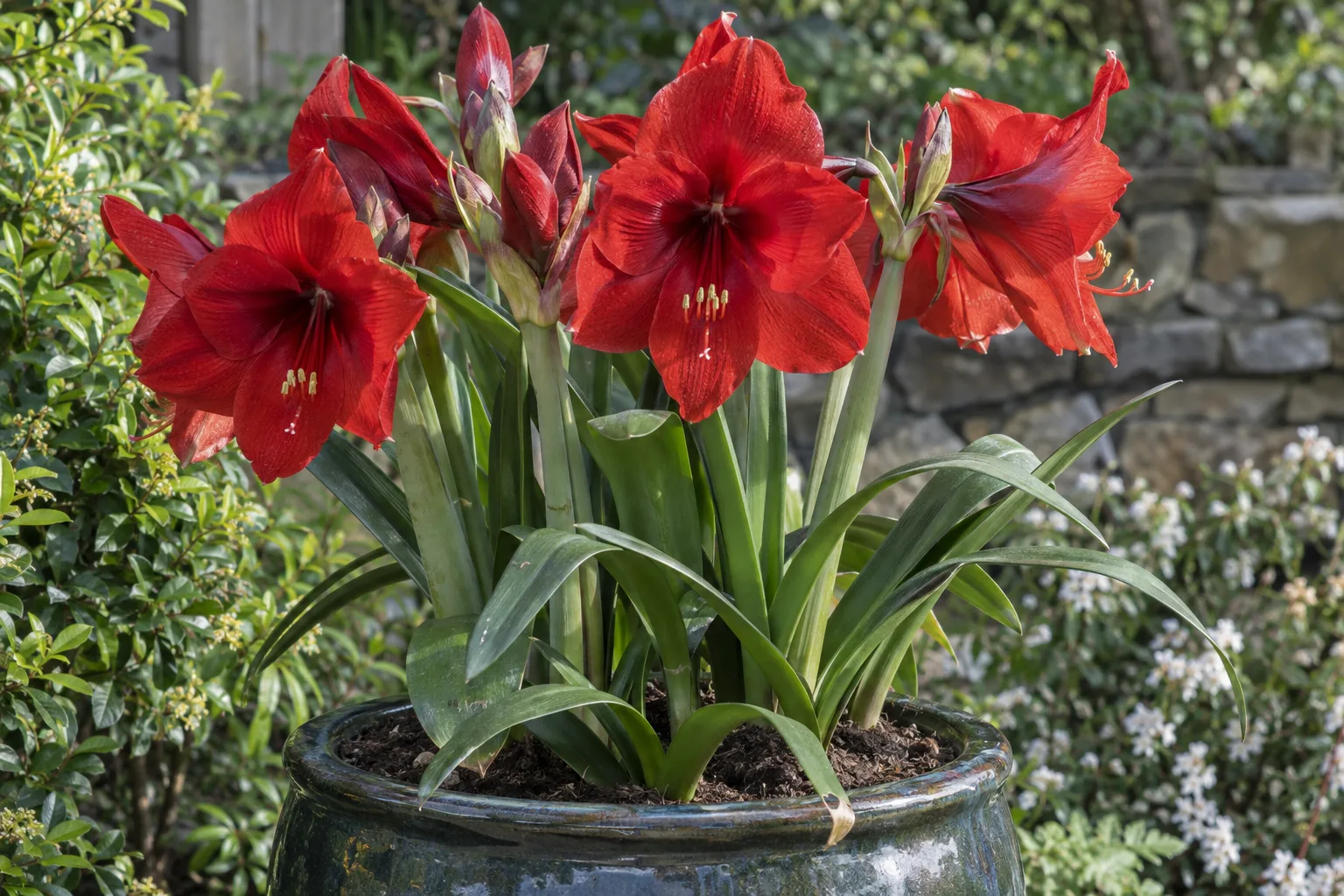
Amaryllis sends up large red, white, pink or bicolor blooms from late winter into spring. After bloom, keep the leaves green with water and feeding, then give the pot bright shade through summer. Each flower stalk lasts only a few weeks, and the leaves take space the rest of the year.
Freesia (Freesia hybrids)
Freesia corms go in during October or November and bloom from about February into March. The flowers are intensely fragrant, and the arching stems often need a little support. Give them morning sun and afternoon shade.
Pre-chilled tulips (Tulipa hybrids)
Tulips need roughly 10 to 14 weeks of cold to bloom, and our winters do not supply it. Buy pre-chilled bulbs, or chill your own in a paper or mesh bag in the refrigerator, away from apples and bananas, which give off ethylene gas that can harm the flower inside the bulb. Plant in November or December. Expect a single season of bloom.
Gladiolus (Gladiolus hybrids)
Gladiolus planted in February or March send up tall flower spikes in April and May, before the heat ends the show. Stake them, since the spikes tip easily, and lift the corms before June.
Caladium (Caladium hybrids)
Caladiums grow for their colorful foliage in pink, red, white and green. Plant the tubers in April once the soil is warm, keep the pot in shade and keep the soil evenly moist through summer. They need more regular water than the other bulbs here, and the tubers should be stored dry over winter.
When the show ends, our annual flowers and foliage can fill the pot for the next season.
What potting mix do bulbs need in containers?
Bulbs need a mix that drains quickly, and a good starting recipe is about half quality potting mix with the rest split between perlite or pumice, coarse grit and compost.
- 50% quality potting mix (choose one that is not heavy on peat, which can repel water when dry)
- 25% perlite or pumice
- 15% coarse horticultural grit (not play sand)
- 10% compost or worm castings
Skip native soil in the pot. It packs hard, drains slowly and is alkaline, so water collects around the bulb and invites rot. Add a small amount of slow-release fertilizer at planting if you like, but go light, since bulbs carry their own food for the first flush of growth.
How do I plant bulbs in a container?
Fill the pot with fast-draining mix, set the bulbs pointed end up at roughly two to three times their height deep, and water once until it runs from the drainage holes. You need a pot with drainage holes, the mix above, bulbs, pot feet and a spot with morning sun.

- Check the drainage holes and add more if the pot has only one small hole.
- Fill the pot with mix to a level that puts the bulb tips at the right planting depth.
- Set bulbs pointed end up. Space small bulbs 2 to 3 inches apart, and plant each amaryllis with the top third of the bulb above the soil.
- Add mix around and over the bulbs, leaving about an inch below the rim.
- Water until water runs from the holes, then wait until the top inch of soil is dry.
- Set the pot on pot feet in morning sun and afternoon shade.
- After leaves appear, feed every 2 to 3 weeks with a balanced liquid fertilizer at half strength, and stop when leaves begin to yellow.
How often should I water container bulbs?
Water when the top inch of soil feels dry, which in winter often works out to every 3 to 7 days depending on pot size and sun exposure. Push a finger into the soil first. Bulbs store their own water, so a pot that stays soggy rots them from the base up.
Empty saucers after watering, and water deeply enough that liquid drains out each time. Hard irrigation water leaves mineral salts in pots, and a thorough soak helps flush them. During summer dormancy, give a potted amaryllis only a light watering every 3 to 4 weeks, and move pots under a patio cover during monsoon storms so rain cannot fill them.
What mistakes damage container bulbs here?
The most common mistakes are heat exposure, poor drainage and mistimed planting, and nearly all of them come from treating a pot like a garden bed that buffers temperature and moisture on its own. A few changes prevent most losses.
- Setting a dark, thin-walled pot in afternoon sun, where the root zone overheats.
- Planting unchilled tulips, which leaf out but rarely bloom.
- Following a national planting calendar, when most bulbs here go in from October to January and finish by late May.
- Leaving dormant bulbs in a pot in full summer sun.
- Letting a saucer or monsoon rain keep the soil waterlogged.
- Fertilizing dormant bulbs, which adds salts with no growth to use them.
- Cutting green leaves before they yellow.
If you want hands-on help getting started, check our classes and events page to see what is scheduled.
Frequently asked questions
Can I leave bulbs in their pots over summer?
Amaryllis can stay in its pot through summer if the pot sits in bright shade and you water lightly. Gladiolus and freesia corms are better dug up in late spring, dried, and stored somewhere cool and dry until the next planting season. Tulips are best discarded. Check that no pot sits in a spot where monsoon storms can fill it with water.
When should I cut back bulb leaves after bloom?
Cut leaves only after they turn yellow and die back on their own, usually several weeks after the last flower fades. Green leaves are still making food that the bulb stores for next season. Removing spent flower stalks right away is fine and keeps the plant from spending energy on seed. Once foliage is fully brown, it pulls away easily.
Can I grow bulbs in pots on a west-facing patio?
Yes, if you add afternoon shade. West walls and paving hold and radiate heat well into the evening, so stretch 30 to 40 percent shade cloth over the pots from midday on, or move them to the east side of the house. Light-colored pots, pot feet and grouped containers also help. Cool-season bulbs finish blooming before the worst heat arrives.
How can I tell if a bulb has rotted?
A rotted bulb feels soft or mushy, may smell sour, and produces no growth. A healthy dormant bulb is firm with a papery skin. Tip the pot out gently and check the base where the roots attach. If only the outer layer is soft, peel it, let the bulb dry for a few days, and repot in fresh, fast-draining mix.
Why are my paperwhite stems floppy?
Paperwhite stems flop when the pot gets too little light or sits somewhere warm, and heavy flower clusters add to the problem. Move the pot into bright light with cooler air once shoots appear. A few thin stakes and loose twine around the clump hold stems upright without crushing flowers.
Are container bulbs worth the effort in a hot yard?
Yes, for most patios with a spot that gets morning sun and afternoon shade. Start with one or two pots. Paperwhites, amaryllis and freesia repay a small effort with color from winter into spring, and good pots last for years. Skip tulips if you will not chill them first, and skip all of it if your only space is a full-sun west wall with no way to add shade. Stop by our Queen Creek nursery and we will help you match bulbs and pots to your patio.