
Companion herbs grow best side by side in Arizona when they share a water schedule and a season. Pair rosemary with thyme, basil with Mexican oregano, and cilantro with parsley, and give mint its own pot.
Key takeaways
- Sort herbs by water first: rosemary, thyme and Mexican oregano want deep watering about every 7 to 14 days once established, while basil, cilantro and parsley want moisture every few days.
- Plant cilantro and parsley from October through January, and plant basil and lemongrass in March or April after frost danger has passed.
- Put tall, woody herbs on the west side of the bed so they shade basil and parsley after 2 p.m.
- Keep mint in its own container, and plant fennel at least 18 inches from its neighbors.
- Spread 2 to 3 inches of mulch around each plant, and keep it a few inches away from the stems.

What makes herbs good companions in the low desert?
Good companions share a water schedule, a growing season and a similar size. Rosemary and thyme want to dry out between deep waterings, while basil and parsley want steadier moisture, so those two pairs belong in different parts of the yard. Sorting by water first prevents most failures.
Height matters too. A 4 foot Mexican oregano or a clump of lemongrass on the west side of a bed can shade basil from the harshest sun after 2 p.m., when summer highs sit above 110°F. Our herbs, vegetables and berries department is a good place to see how big each plant looks before you plan the layout.
Which herbs pair well together in Arizona?
Seven herbs cover the whole year here, and they sort into three natural pairs plus a few anchors. We commonly carry varieties of each, though availability changes week to week and season to season.
Rosemary (Salvia rosmarinus)
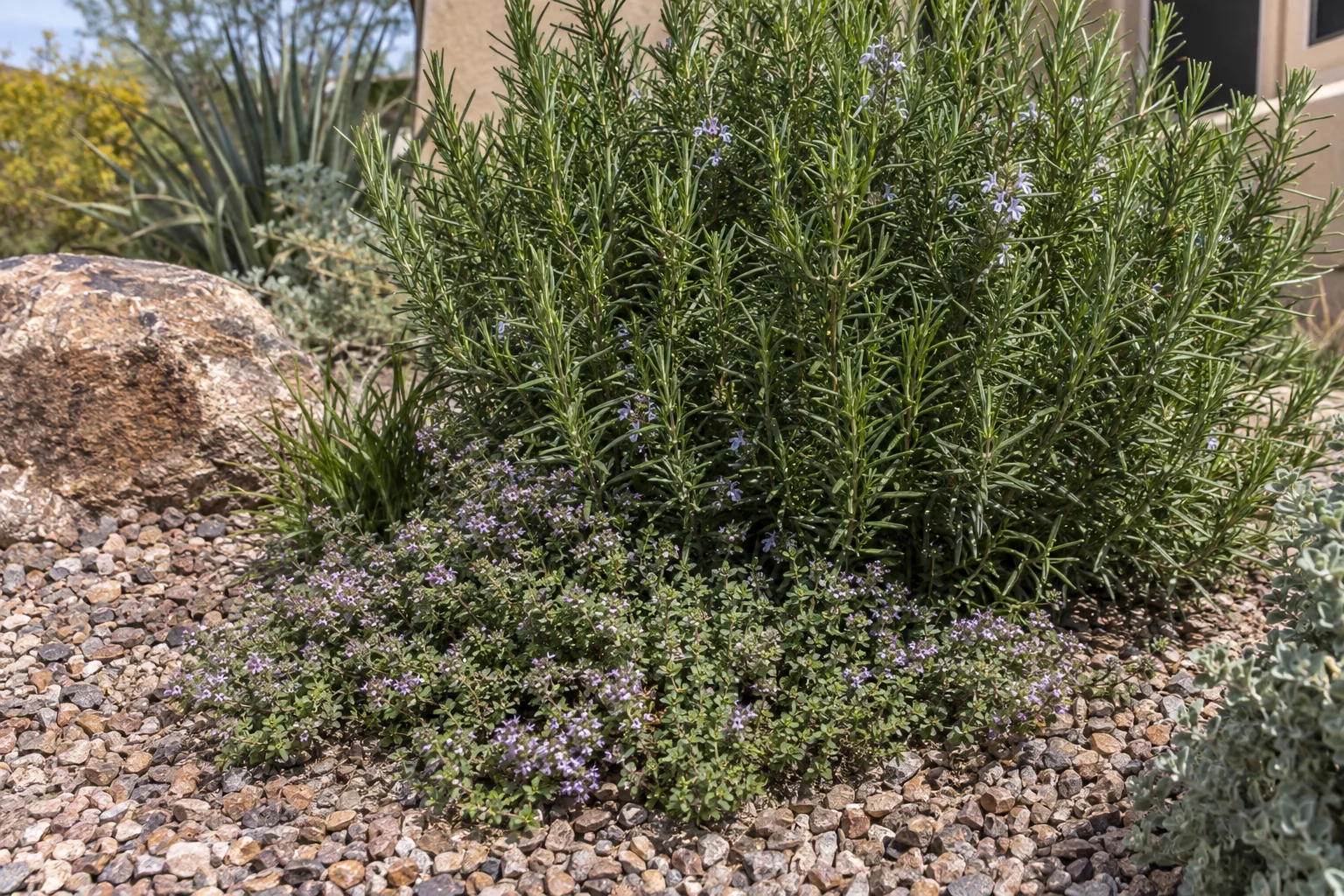
Rosemary grows 3 to 5 feet tall and wide in full sun, and an established plant needs deep watering about every 7 to 14 days in summer. Soggy soil kills it. The drawback is size, because an upright plant fills a small bed within a few years. Plant it at the back, with thyme at its feet.
Thyme (Thymus vulgaris)
Thyme stays 6 to 12 inches tall and spreads 12 to 18 inches, taking full sun in cool months and a little afternoon shade in July and August. It shares rosemary’s love of fast drainage and infrequent watering. The drawback is that it can thin out during humid monsoon weeks, so give it room for air to move.
Mexican oregano (Lippia graveolens)
Mexican oregano forms a woody shrub 3 to 5 feet tall in full sun and needs little water once established. It handles summer heat well and shades basil planted on its east side. The drawback is sprawl, so plan to cut it back by about a third each year. Its flavor is stronger and earthier than Mediterranean oregano, which is a different plant.
Basil (Ocimum basilicum)
Basil grows 1 to 2 feet tall and wants morning sun with afternoon shade from May through September, plus deep watering every 2 to 3 days in summer heat. Frost damages it, and it can pick up downy mildew when monsoon humidity arrives. African Blue basil is a perennial type that often survives mild winters here.
Lemongrass (Cymbopogon citratus)
Lemongrass makes a clump 3 to 4 feet tall and wide in full sun and likes regular water. It tolerates summer heat well and works as a living screen on the west side of a basil bed. The drawback is frost, which browns the leaves, and the leaf edges are sharp enough to cut bare arms during harvest.
Cilantro (Coriandrum sativum)
Cilantro reaches 1 to 2 feet in sun during the cool months, with afternoon shade as days warm, and needs regular water. It bolts, sending up a flower stalk, once temperatures climb in March or April. That is the drawback, and the answer is to sow a new batch every few weeks through the cool season. Parsley makes a calm neighbor.
Parsley (Petroselinum crispum)
Parsley grows 1 to 2 feet tall with morning sun and afternoon shade, and wants water on a schedule similar to cilantro. It grows more slowly, so it does not crowd cilantro during its short season. The drawback is summer: most plants decline once highs stay above 100°F, so treat it as a cool-season herb.
Which herbs should not share a bed?
Mint, fennel, and the rosemary and basil combination are the three to separate. Each causes a different problem, and all three are easy to avoid.
Mint spreads by underground runners and can fill a shared bed in a single season, so grow it in its own container. Fennel reaches 3 to 5 feet and many gardeners report it stunts nearby plants, so give it at least 18 inches of clearance or a pot of its own.
Rosemary and basil clash over water. Watering for basil leaves rosemary’s roots wet, and watering for rosemary leaves basil wilting by mid-afternoon in July.
How do I match herbs by season and water?
Plant by season first, then group by water within each season. Cool-season herbs go in from October through January, and warm-season herbs go in after the last frost risk, usually March or April in Queen Creek. Planting Mediterranean perennials in cool months gives them time to root before summer.
| Months | Plant together | Note |
|---|---|---|
| October to January | Cilantro and parsley | Cool-season pair with matching water needs; add afternoon shade as days warm |
| October to February | Rosemary and thyme | Cool months let perennials root before summer; water deeply but infrequently |
| March to April | Basil and Mexican oregano | Put basil on the east side of the oregano for afternoon shade |
| March to April | Lemongrass and basil | Lemongrass on the west side shades the basil |
| May to September | Established rosemary, thyme, Mexican oregano and lemongrass | Add new plants only with shade and daily checks during peak heat |
The University of Arizona Cooperative Extension vegetable planting calendar for Maricopa County is a useful cross-check for timing. Our gardening calendars lay out the same seasons month by month.
How should I prepare soil and water a mixed herb bed?
Prepare for fast drainage and plan separate watering zones. Queen Creek soil is alkaline, often with a pH around 7.5 to 8.5, and many yards have caliche, a hard calcium carbonate layer, a foot or two down. Water that cannot drain through it sits around roots.
Before planting, dig a test hole and fill it with water. If it is still full after several hours, plant in a raised bed or mound the soil instead of forcing herbs into a basin.
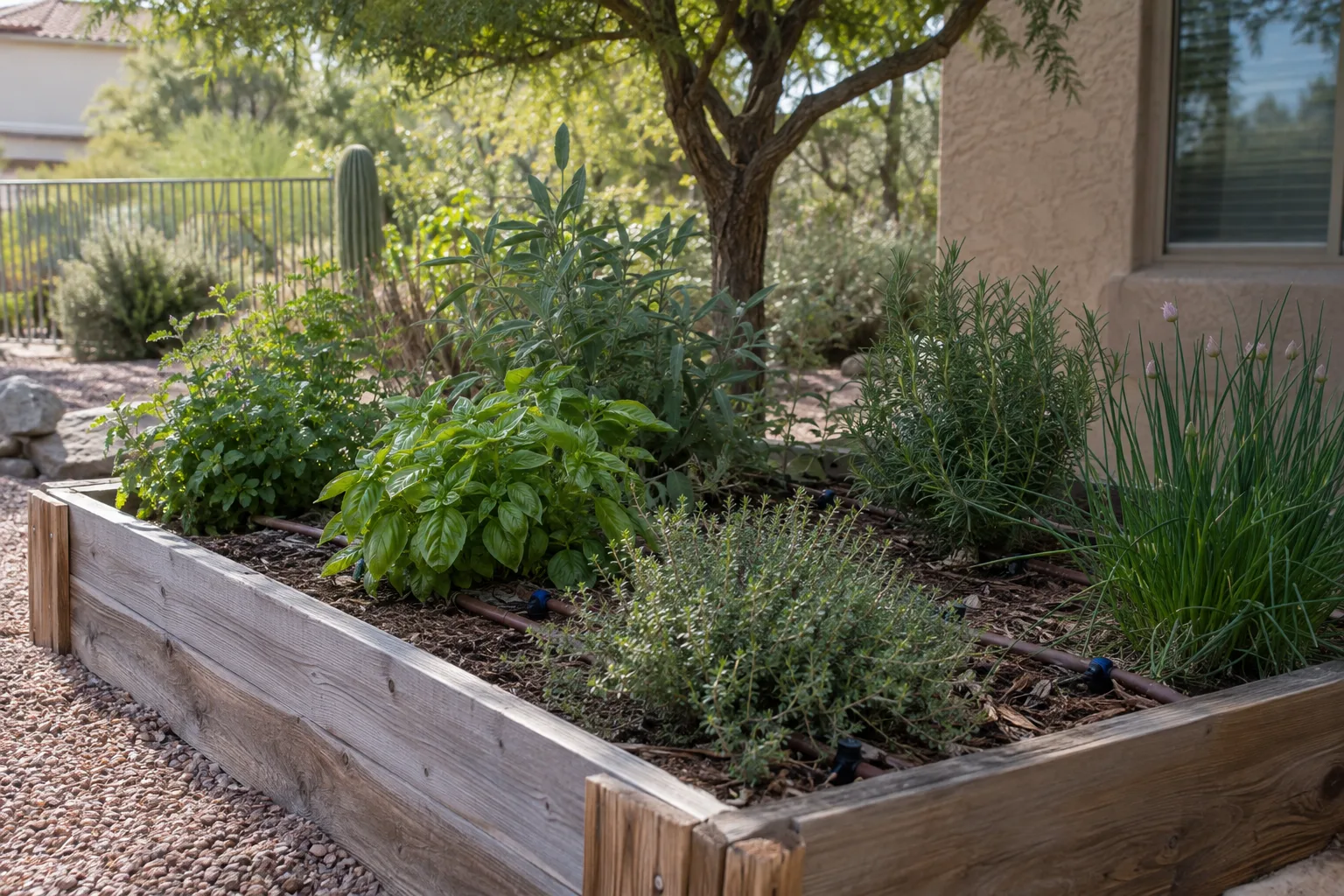
Rosemary, thyme and Mexican oregano like lean soil and need little amendment. Basil, cilantro and parsley grow better with compost worked into the top 8 to 12 inches. Hard irrigation water leaves salts behind, so give each bed an occasional long, slow soak that flushes them below the roots.
Put drought-tolerant herbs and moisture-loving herbs on separate drip lines so each group gets its own schedule. Finish with 2 to 3 inches of mulch kept clear of the stems.
Do companion herbs really keep pests away?
Strong-smelling herbs may confuse some insects, but the evidence is mixed, and you should not count on them as pest control. Gardeners often report fewer aphids around aromatic plantings, while research results vary by pest and setting.
Herbs earn a place in a mixed bed for shade, water matching and harvest. Check plants weekly, especially in the dry weeks before the monsoon, when spider mites build up. Cilantro and parsley left to flower can attract small beneficial insects such as hoverflies. Lemongrass is not a proven mosquito barrier.
Can I grow companion herbs in containers?
Yes, and containers give you control over soil and drainage. Use a pot 14 to 20 inches wide for a pair, and fill it with a mix that drains quickly. Rosemary with thyme is an easy first pot, and basil with parsley works in cooler months.

Terra cotta dries quickly and heats up in direct sun, so light-colored glazed or fabric pots protect roots better in July. Browse our pottery and planters for options with large drainage holes. Keep pots on casters or a cart so you can slide them into shade during a heat wave.
Frequently asked questions
Can I grow basil all year in Queen Creek?
Standard basil will not make it through winter frost, so plan on replanting each spring. African Blue basil is a perennial type that often survives mild winters, especially near a south-facing wall. Cover any basil with frost cloth when temperatures head toward freezing, and expect some leaf loss even then.
Why does my cilantro bolt so fast?
Cilantro bolts because rising temperatures and longer days signal it to make seed. In the East Valley, that usually starts in March. Afternoon shade, steady watering and frequent harvesting slow it a little. Sowing a new patch every 3 weeks from October through January keeps leaves coming into spring.
Should I cut back woody herbs before the monsoon?
A light trim helps. Taking about a third off rosemary and Mexican oregano in late June reduces wind damage from storm gusts and improves airflow. Avoid hard cuts into bare wood, because rosemary often fails to resprout from old stems.
How far apart should I space herbs in a shared bed?
Space small herbs such as thyme, parsley and cilantro 8 to 12 inches apart, and give basil about 12 inches. Rosemary, Mexican oregano and lemongrass need 3 to 4 feet because they grow into large clumps. Crowding traps humidity around leaves, which invites mildew during the monsoon.
Can I plant herbs in September?
Cilantro and parsley can go in once soil starts to cool, usually late September to October. Start them under 30 percent shade cloth if daytime highs still reach the 100s. Wait for October to plant rosemary and thyme, so they root during mild weather.
Is a companion herb bed right for your yard?
A mixed herb bed makes sense if you have 6 hours of sun, decent drainage and a few herbs you cook with weekly. It saves water and gives you something to harvest nearly year-round. Skip it if your yard has under 4 hours of sun or you use only basil now and then, since a single pot is easier. If you are weighing pairings, check our classes and events, or come see the herbs in person at our nursery in Queen Creek.